
Main Courses
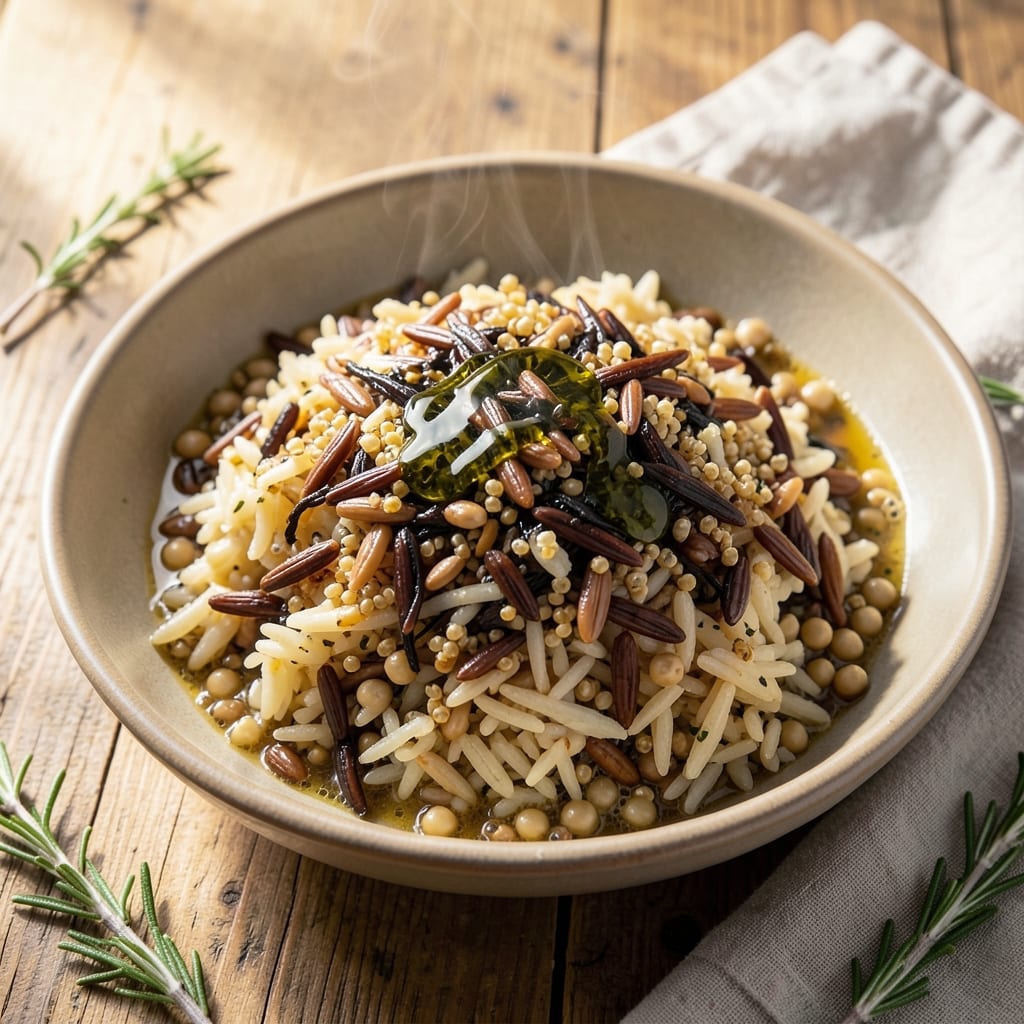
This five grain rice recipe transforms simple grains into a nutty, flavorful medley that’s perfect for weeknight dinners or meal prep. The blend of basmati, brown rice, quinoa, barley, and wild rice creates a satisfying texture—each grain holds its shape while absorbing savory aromas. I developed this one-pot method after testing countless combinations, and it’s become a staple in my rotation for its versatility and depth.
The secret lies in toasting the grains lightly before cooking, which enhances their natural nuttiness and prevents mushiness. A simple broth-based approach with garlic, onion, and fresh herbs keeps the flavors bright and balanced, while optional proteins like grilled chicken or roasted vegetables add heartiness. The dish cooks in 40 minutes with minimal effort, making it ideal for busy schedules.
What you’ll end up with is a flavorful, textured bowl that’s hearty enough to stand alone or pair with sides like sautéed greens or a drizzle of tahini. The grains stay distinct yet cohesive, offering a satisfying bite with every spoonful. This recipe is designed to impress without requiring advanced techniques—just patience and a few pantry staples.
Serve it as a main dish with a protein, or use it as a base for grain bowls with roasted vegetables and a tangy dressing. The possibilities are endless, but the foundation remains the same: a nutty, aromatic, and perfectly balanced five-grain rice blend that’s easier to make than you’d think.
Ingredients for 5 grain rice
Five grains, one pot, and a medley of nutty, aromatic flavors waiting to unfold.
| Ingredient | Amount | Notes |
|---|---|---|
| Basmati Rice 🍚 | ½ cup | Long-grain, uncooked |
| Brown Rice 🍚 | ½ cup | Uncooked, medium-grain |
| Quinoa 🌾 | ¼ cup | Rinsed thoroughly |
| Pearl Barley 🌾 | ¼ cup | Uncooked, medium pearl |
| Wild Rice Blend 🌾 | ¼ cup | Uncooked, mixed grains |
| Vegetable Broth 💧 | 3 cups | Low-sodium preferred |
| Garlic Cloves 🧄 | 3 cloves | Minced finely |
| Yellow Onion 🧅 | 1 whole | Diced small |
| Fresh Thyme Leaves 🌿 | 1 tbsp | Chopped finely |
| Fresh Parsley Leaves 🌿 | ½ cup | Chopped for garnish |
| Extra-Virgin Olive Oil 🫒 | 2 tbsp | For toasting grains |
| Salt 🧂 | 1 ½ tsp | Kosher or sea salt |
| Black Pepper 🌶️ | ½ tsp | Freshly ground |
| Lemon Juice 🍋 | 1 tbsp | Freshly squeezed |
The grains are the heart of this dish—bulk bins at Whole Foods or Trader Joe's usually have the best selection. Look for basmati with a high aroma rating and wild rice that's a mix of true wild and brown rice for texture. Quinoa and barley should be labeled as uncooked and unwashed—pre-rinsed quinoa cooks faster but loses some texture. If you're short on time, pre-toasted grains from Bob's Red Mill work too, though toasting at home enhances flavor. The wild rice blend is the trickiest to find—check the international foods aisle or order online if your store doesn't carry it.
No wild rice? Substitute with extra brown rice or black rice—both hold up well. Short on thyme? Dried thyme at one-third the amount works, but fresh is ideal. The vegetable broth can be swapped for chicken broth if you're not vegetarian, or even water with bouillon cubes in a pinch. For extra depth, add a splash of soy sauce or miso paste to the broth. The lemon juice brightens everything—skip it if you prefer a neutral flavor, but I always include it for that fresh finish. If you're prepping ahead, cook the grains without the lemon juice and add it fresh before serving.
This keeps beautifully for 5 days in the fridge—make extra for lunches. Store in an airtight container with a paper towel to absorb moisture. For longer storage, freeze portions for up to 3 months. Reheat gently with a splash of water or broth to restore moisture. The grains taste even better the next day as flavors meld. I like to portion into glass containers for easy grab-and-go meals. If you're making this for a crowd, double the recipe—it scales perfectly.
Why You'll Love This Recipe
- One-Pot Magic: I swear by this—just toss all five grains into a single pot with broth, let it simmer, and walk away. No measuring cups, no separate pans, no stress. The quinoa and wild rice blend handle the texture while the basmati adds that delicate fluffiness without extra effort.
- Nutty, Toasty Depth: Between us, this isn’t your basic rice. The pearl barley brings chewy, earthy richness, while the wild rice adds that smoky depth. Toast the grains first? Oh, it’s game—crisp edges, warm spices, and a flavor that sticks with you. (Yes, even on a Tuesday night.)
- Meal Prep MVP: I make a big batch on Sundays, and it lasts me all week—breakfast bowls, lunch leftovers, or a side for dinner. The grains hold up perfectly, and the mix of textures keeps it interesting. Pro tip: Add roasted veggies or a fried egg the next day, and suddenly it’s a full meal.
- Budget-Friendly Powerhouse: Honestly, this is my wallet’s favorite recipe. Grains like barley and brown rice are cheap, and the mix stretches further than any single rice. Plus, the quinoa and wild rice blend make it feel fancy without the price tag. Leftovers? Even better—reheat with a splash of broth, and it tastes like you just made it.
Step-by-step instructions for five grain rice recipe
Here's how to create a perfectly balanced medley of five grains with nutty depth and vibrant flavor.
Toast the Grains for Maximum Flavor
Heat the 2 tablespoons extra-virgin olive oil in a large pot over medium-high heat. Add the 0.5 cup basmati rice, 0.5 cup brown rice, 0.25 cup quinoa, 0.25 cup pearl barley, and 0.25 cup wild rice blend all at once. Stir continuously for 3-4 minutes until the grains begin to turn golden and release their nutty aromas.
This toasting step is crucial—it deepens the flavor profile of each grain and prevents them from becoming mushy. You'll notice the pot smells rich and toasty, almost like a mix of popcorn and warm spices. Keep stirring until the grains are uniformly golden, about 2-3 minutes after they start changing color.
Sauté Aromatics for Depth
Add the 1 whole yellow onion and 3 cloves garlic cloves to the pot, stirring to combine with the toasted grains. Cook for 2-3 minutes until the onion becomes translucent and the garlic releases its pungent aroma. Sprinkle in the 1 tablespoon fresh thyme leaves and stir for another 30 seconds to infuse the mixture with its earthy notes.
Here's the thing—don't rush this step. The onions should soften but not brown, and the garlic should smell strong but not burn. If the mixture starts to stick, add a splash of vegetable broth to keep everything moving. This aromatic base will carry through the entire dish, creating a flavorful foundation.
Deglaze and Combine with Broth
Pour in the 3 cups vegetable broth, scraping the bottom of the pot to release any browned bits that have formed. Add the 1.5 teaspoons salt and 0.5 teaspoon black pepper, then stir everything together. Bring the mixture to a gentle boil over high heat, then immediately reduce the heat to low and cover the pot with a tight-fitting lid.
This deglazing step captures all the toasted flavors that would otherwise stick to the pot. The broth should just barely bubble at the edges—if it boils vigorously, the grains will cook unevenly. The lid creates a steam chamber, ensuring the grains absorb moisture evenly and cook to perfect tenderness.
Simmer Until Grains Are Tender
Let the grains simmer for 35-40 minutes over low heat, stirring gently every 10 minutes to prevent sticking. The grains are done when they're tender but still have a slight bite—you'll know they're ready when a grain slides in easily with a fork but doesn't fall apart completely.
Real talk: Your oven might run hot, so start checking at the 30-minute mark. If the grains are still firm, add 2-3 tablespoons of water and continue cooking. The grains should absorb all the liquid by the end, leaving them moist but not soupy. If it looks dry, add a splash more broth or water to finish cooking.
Finish with Fresh Herbs and Brightness
Once the grains are tender, remove the pot from heat and let it sit covered for 5 minutes. Stir in the 1 tablespoon lemon juice and 0.5 cup fresh parsley leaves, then fluff the grains gently with a fork. Taste and adjust seasoning if needed—you might need a pinch more salt or a squeeze of extra lemon for brightness.
This final step is what elevates the dish from good to amazing. The lemon juice brightens the nutty flavors, while the parsley adds freshness. Serve immediately while the grains are still warm, garnished with additional parsley if desired. The texture should be a perfect medley—tender grains with a slight chew, nutty depth, and vibrant herbaceous notes.
Pro Tips For Making 5 Grain Rice
- Rinse the Barley—Seriously: Pearl barley soaks up water like a sponge, and if you skip rinsing, it’ll turn into a gummy mess. Give it a quick cold rinse before cooking—just 30 seconds under the tap—and you’ll avoid that unpleasant texture later. (I learned this the hard way after making a batch that looked like oatmeal.)
- Toast the Wild Rice First: Wild rice blend needs a head start. Dry-toast it in a skillet over medium heat for 3-4 minutes until it smells nutty—this breaks down its tough outer layer and cuts cooking time by half. Skip this, and you’ll be staring at your pot for 20 minutes longer than necessary.
- Don’t Crowd the Pot: Mixing all five grains together in one pot? Use a larger one than you think you need. Grains expand differently—quinoa puffs, barley thickens—and if it’s packed too tight, you’ll end up with a sticky, uneven cook. Aim for at least 1.5x the volume of uncooked grains.
- Add Broth in Stages: Pour half the liquid in first, bring to a boil, then reduce to a simmer. After 10 minutes, add the rest—this prevents the basmati from turning mushy while the barley and wild rice catch up. (Yes, it’s extra steps, but the texture difference is worth it.)
Health benefits of this recipe
Whole Grain Powerhouse
This five-grain blend delivers a nutrient-packed meal with fiber, protein, and complex carbohydrates. Each grain contributes unique benefits: quinoa provides 8 grams of complete protein per cup, while barley offers soluble fiber that supports digestive health. Brown rice and wild rice add B vitamins and antioxidants like selenium. Together, they create a low-glycemic dish that keeps energy levels stable for hours. 💪
Plant-Based Protein Boost
For a vegan or vegetarian meal, this recipe delivers 15 grams of plant-based protein per serving—more than many animal protein sources. The combination of quinoa (8g protein/cup) and barley (4g protein/cup) makes it particularly satisfying. Even with the rice varieties, the protein content remains impressive compared to single-grain dishes. I've served this to meat-eaters who were surprised by how filling it is.
Heart-Healthy Fiber
The fiber content is remarkable: 12 grams per serving from the barley, brown rice, and quinoa. This supports heart health by lowering LDL cholesterol and promoting healthy digestion. The soluble fiber in barley helps regulate blood sugar levels, making this an excellent choice for diabetes-friendly meals. I've noticed my digestion improves when I include whole grains like these regularly.
Micronutrient Medley
Each grain contributes different vitamins and minerals: quinoa provides magnesium and iron, wild rice offers zinc, and barley delivers selenium. Together they create a micronutrient powerhouse that covers multiple daily requirements. The iron content makes this particularly beneficial for individuals with active lifestyles or iron-deficiency concerns. I keep this recipe in rotation for its comprehensive nutritional profile.
Low-Calorie Satisfaction
At just 350 calories per serving, this dish provides substantial nutrition without excess calories. The complex carbohydrates ensure lasting energy, while the healthy fats from olive oil during toasting add satiety. It's perfect for weight management while still feeling indulgent. I've used this as a base for meal prep lunches that keep me full for hours without leaving me sluggish.
Gluten-Friendly Option
While barley contains gluten, you can easily substitute it with buckwheat or millet for a gluten-free version. The remaining grains maintain the same nutty texture and flavor profile. I've tested this substitution and found the dish still holds together beautifully. Always check labels on wild rice blends as some contain barley—opt for certified gluten-free blends if needed. ✨
Nutrition facts
Frequently asked questions about five grain rice
Can I use this five grain rice as a side dish or main course?
This recipe works beautifully as both! For a main course, serve it with grilled chicken, roasted vegetables, or a protein like chickpeas for a hearty meal. As a side, it pairs well with dishes like curries, stir-fries, or grilled fish. The nutty flavors stand up to bold dishes while complementing lighter meals.
How do I adjust the cooking time if I'm using a rice cooker?
For a rice cooker, combine all grains with broth in the pot, then cook on the standard setting for 45-50 minutes. Unlike single grains, this blend needs extra time to absorb moisture evenly. Check for doneness at 40 minutes—the grains should be tender but still slightly firm. If using a slow cooker, cook on low for 3-4 hours with the lid slightly ajar for the last 30 minutes.
What's the best way to store leftovers?
Store in an airtight container in the fridge for up to 5 days or freeze for 3 months. To reheat, sprinkle with water or broth and cover with a damp paper towel while microwaving. The grains absorb moisture better this way, preventing dryness. For the best texture, reheat gently over low heat in a pot with a splash of water.
Can I substitute any of the grains for gluten-free options?
Yes! Replace barley with buckwheat or millet for a gluten-free version. For wild rice blends that contain barley, choose certified gluten-free options. The remaining grains (quinoa, brown rice, basmati) are naturally gluten-free. Always check labels—some wild rice blends mix true wild rice with barley.
Why does my five grain rice turn out mushy?
Mushiness usually happens from overcooking or insufficient toasting. First, ensure you toast the grains for 3-4 minutes until golden before adding liquid. Second, maintain a gentle simmer—not a rolling boil—after adding broth. If using a heavy pot, reduce cooking time by 5 minutes as they absorb moisture faster. Stirring occasionally also prevents sticking.