
Main Courses
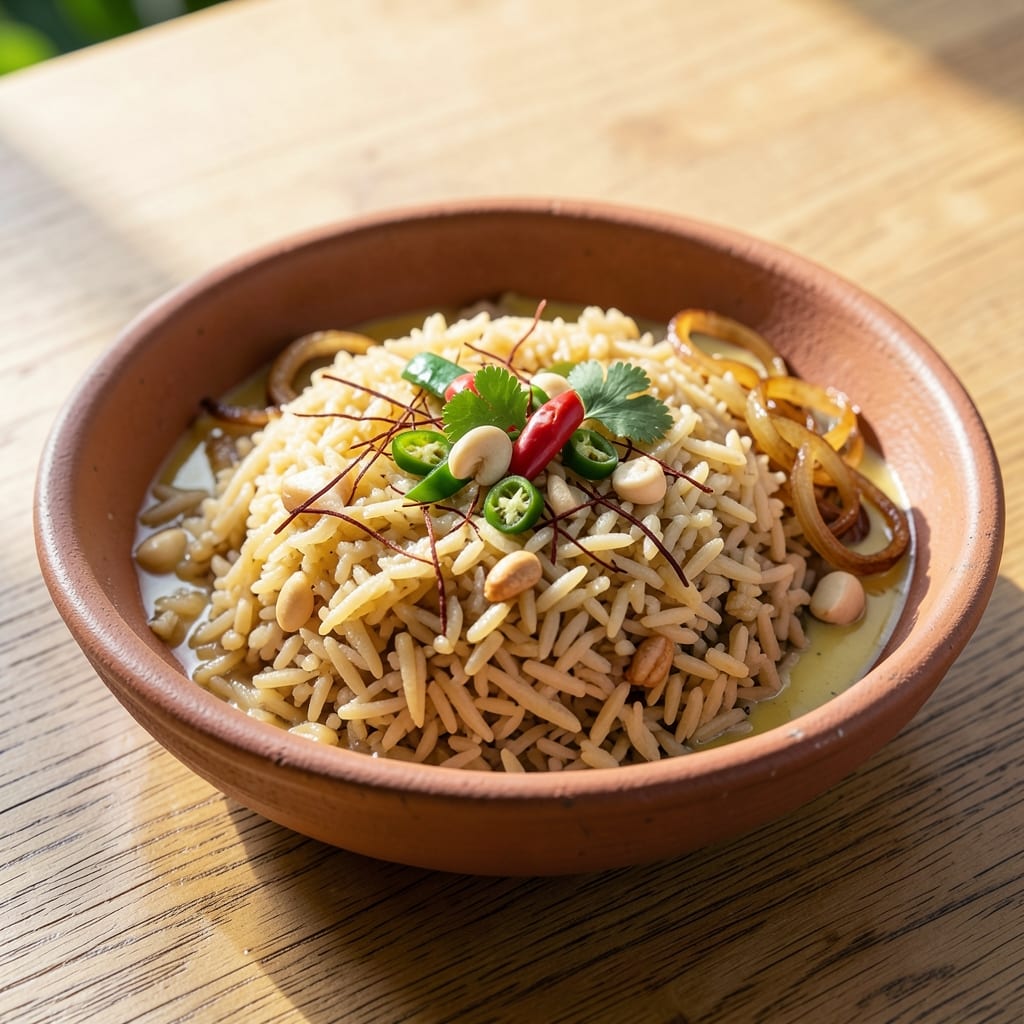
This Anglo-Indian coconut rice recipe brings the rich heritage of colonial-era Indian cuisine to your kitchen, where fragrant basmati rice meets toasted spices and creamy coconut milk in perfect harmony. 🌟 The dish's origins trace back to British colonial influences in India, where coconut rice became a staple in Anglo-Indian households—now a beloved vegetarian centerpiece at celebrations and daily meals alike.
The secret lies in the tempering of spices—mustard seeds, curry leaves, and peanuts—cooked until they release their nutty, aromatic oils, which infuse the rice with deep, toasty flavor. Saffron threads steep in warm milk add a luxurious golden hue and delicate floral notes, while coconut milk lends a subtle sweetness that balances the dish's savory-spiced profile.
What you’ll achieve is fragrant, slightly sticky rice with pockets of spiced coconut milk and crunchy peanuts, served with complementary sides like mint chutney or a mild vegetable curry. The dish is vegetarian-friendly yet deeply satisfying, making it perfect for family dinners or festive gatherings where tradition meets comfort.
Ready in about 45 minutes, this recipe requires minimal effort but delivers restaurant-quality results. The key is patience—letting the spices bloom and the rice absorb the coconut milk fully for that signature Anglo-Indian texture and depth.
Ingredients for anglo indian coconut rice
Authentic Anglo-Indian flavors start with these carefully chosen ingredients for fragrant coconut rice.
| Ingredient | Amount | Notes |
|---|---|---|
| Long-Grain Basmati Rice 🍚 | 1 ½ cups | Uncooked, rinsed thoroughly |
| Full-Fat Coconut Milk 🥥 | 13 ½ oz | High-quality canned, no additives |
| Saffron Threads 🌼 | ⅛ tsp | High-grade, steeped in warm milk |
| Yellow Onion 🧅 | 1 whole | Finely chopped, medium size |
| Garlic Cloves 🧄 | 6 cloves | Peeled, minced finely |
| Green Chili Peppers 🌶️ | 2 whole | Slit lengthwise, seeds removed |
| Mustard Seeds 🌿 | 1 tbsp | Whole, light brown preferred |
| Curry Leaves 🍃 | ¼ cup | Fresh, packed, dried if unavailable |
| Peanuts 🥜 | ¼ cup | Raw, unsalted, lightly toasted |
| Ghee 🧈 | 3 tbsp | Pure, unsalted, clarified butter |
| Ground Turmeric 🌿 | ½ tsp | Freshly ground preferred |
| Ground Cumin 🌿 | ½ tsp | Toasted for deeper flavor |
| Ground Coriander 🌿 | ½ tsp | Freshly ground for best aroma |
| Salt 🧂 | 1 tsp | Diamond Crystal preferred |
| Fresh Cilantro 🌿 | ¼ cup | Chopped, for garnish |
The saffron is non-negotiable here—Kashmir saffron from specialty stores like Spicewalla or Indian grocery bulk bins delivers the most luxurious floral notes. Look for vibrant red threads, not orange powder. For the coconut milk, Aroy-D or Thai Kitchen brands provide the richest creaminess without additives. The curry leaves are essential; fresh ones from Indian markets have a distinct aroma that dried versions can't replicate, though Madras Curry Leaf brand works in a pinch. Toast your peanuts in a dry pan until golden—this enhances their nutty depth significantly.
No saffron? Safflower threads steeped in warm milk mimic the golden hue, though flavor will differ. Substitute coconut milk with equal parts light coconut milk and water if unavailable, but texture will be lighter. Fresh curry leaves unavailable? Dried at one-third the amount works, but toast them first. For the green chilies, jalapeños in a bind are fine, but reduce to half the quantity. The mustard seeds must be light brown—the dark variety burns easily and alters the flavor profile. Always rinse your basmati rice until water runs clear to remove excess starch, ensuring fluffy grains.
Store saffron in a sealed container away from light—it loses potency in 6 months. Toasted spices like cumin and coriander keep their punch for 3 months in airtight jars. The coconut milk can be refrigerated for 5 days after opening, but the rice itself reheats beautifully—simply add a splash of water and steam for 2 minutes to restore moisture. Garnish with fresh cilantro right before serving to preserve its vibrant color.
Why You'll Love This Recipe
- One-Pot Magic: I swear by this recipe when I’m too tired to wash pots—just rice, coconut milk, and a pinch of saffron simmering together. The onions and garlic caramelize right in the pot, so no extra pans, no extra stress.
- Golden Saffron Luxe: That first whiff of saffron-soaked coconut milk? It’s like a hug in rice form. The rice turns a gorgeous golden hue, and the flavor is rich, creamy, and just slightly floral—no fancy ingredients, just pure satisfaction.
- Lunchbox Hero: Between us, this is my go-to for meal prep. The rice stays fluffy for days, and the coconut milk keeps it moist, so it’s perfect for packed lunches or quick reheats. Add a sprinkle of chili flakes, and suddenly you’ve got a restaurant-worthy dish in a container.
- Budget-Friendly Indulgence: Full-fat coconut milk might sound pricey, but a can goes a long way here—way more than store-bought rice mixes. Plus, basmati rice is affordable, and the saffron (even a little) stretches the flavor so you barely notice the cost. Fancy taste, zero guilt.
Step-by-step instructions for Anglo-Indian coconut rice
Transform simple ingredients into a fragrant, aromatic dish where saffron-infused coconut milk meets toasted spices.
🍳 Step 1: Toast the Spice Base for Deep Flavor
Heat the 3 tablespoons ghee in a heavy-bottomed pot over medium heat until it shimmers but doesn't smoke. Add the 1 tablespoon mustard seeds and let them sizzle for 30 seconds until they pop rhythmically—this is your signal to move quickly.
Immediately add the 0.25 cup curry leaves and 2 slit green chili peppers, stirring constantly for 1 minute until the curry leaves darken and the chilies turn vibrant green. This quick toasting releases their essential oils, creating the aromatic foundation. Here's the thing—don't rush this step. The spices need time to bloom and develop their full complexity before adding the onions.
👨🍳 Step 2: Cook the Aromatics Until Golden
Add the 1 finely chopped yellow onion and cook for 5-6 minutes over medium heat, stirring occasionally, until softened and beginning to turn golden. You'll see the onions release their moisture and then caramelize slightly—that's when you know they're ready for the next step.
Stir in the 6 minced garlic cloves and cook for 30 seconds until fragrant. Here's where it gets good: add the 0.5 teaspoon ground turmeric, 0.5 teaspoon ground cumin, and 0.5 teaspoon ground coriander, stirring constantly for 1 minute to toast the spices gently. This creates a warm, earthy aroma that will infuse the entire dish. The spices should look slightly darker but not burned.
🍳 Step 3: Build the Saffron-Coconut Milk Sauce
Pour in the 13.5 oz full-fat coconut milk and bring to a gentle simmer over medium-low heat. In a small bowl, steep the 0.125 teaspoon saffron threads in 2 tablespoons warm water for 5 minutes—this ensures maximum color and flavor extraction. Stir the saffron mixture into the coconut milk and simmer for 5 minutes until slightly thickened.
Add the 1.5 cups rinsed basmati rice and stir gently to coat each grain with the coconut mixture. This is the moment that matters: the rice should be fully submerged in the coconut milk. If it's not, add 2 tablespoons water to maintain the proper liquid ratio. Let it simmer uncovered for 10 minutes, stirring occasionally, until the rice is 80% cooked and the liquid has reduced slightly.
🥘 Step 4: Finish with Peanuts and Garnish
Spread the 0.25 cup lightly toasted peanuts evenly over the rice and cover the pot with a tight-fitting lid. Reduce heat to low and cook for 10-12 minutes until all liquid is absorbed and the rice is tender with a slight bite. The peanuts should be warm but not crispy—just enough to add texture and a subtle crunch.
Remove from heat, fluff the rice gently with a fork, and let it sit covered for 5 minutes. This resting period allows the flavors to meld and the rice to finish cooking perfectly. Garnish with 0.25 cup chopped fresh cilantro just before serving to add a bright, herbal contrast to the rich coconut and spice flavors.
Pro Tips For Making Anglo Indian Coconut Rice
- Bloom the Saffron: DESCRIPTION:
- Toast the Onions Low: DESCRIPTION:
- Rinse Rice Twice: DESCRIPTION:
- Simmer, Don’t Boil: DESCRIPTION:
Pro cooking tips for this dish
Spice Blooming Mastery
The key to authentic flavor lies in properly blooming your spices. Heat the ghee until shimmering but not smoking—this is your cue to add mustard seeds. They should sizzle for exactly 30 seconds until they pop rhythmically. This releases their volatile oils that create the aromatic foundation. I use a heavy-bottomed stainless steel pot (like All-Clad) to prevent burning. 🔥
After adding curry leaves and green chilies, stir constantly for 1 minute until the curry leaves darken. This step is non-negotiable—rushed cooking here results in raw, bitter flavors. The chilies should turn vibrant green, indicating they've released their capsaicin. For extra depth, lightly toast your ground spices (cumin, coriander, turmeric) in the same pot for 30 seconds before adding onions.
Perfect Rice Texture
Rinsing your basmati rice until water runs clear removes excess starch, preventing gummy rice. For this recipe, use a 1:1.5 rice-to-coconut milk ratio—this ensures each grain absorbs the creamy coconut flavor without becoming mushy. I recommend using Indian basmati brands like India Gate or Patel for their distinct aroma and fluffy texture.
The 80% cook method is crucial: simmer the rice uncovered for 10 minutes before adding peanuts. This partial cooking prevents breaking grains when you add the toasted peanuts later. After adding peanuts, reduce heat to low and cook covered for 10-12 minutes—this creates the signature slightly sticky texture while keeping the peanuts warm and crunchy.
Saffron Infusion Secrets
Never steep saffron directly in coconut milk—this makes the threads clump and lose flavor. Instead, dissolve them in 2 tablespoons warm water first, then strain before adding to the coconut milk. I use Kashmir saffron from Spicewalla because its deep red threads provide the most intense floral aroma and golden color. For best results, steep for 5 minutes before mixing into the coconut milk.
If you're using safflower threads as a substitute, steep them in warm milk (not water) for 3 minutes to mimic the color. The flavor will be different, but the visual impact remains impressive. For extra luxury, add 1 teaspoon rose water to the coconut milk while simmering—this subtle floral note complements the saffron beautifully.
Peanut Perfection
Toast your peanuts separately in a dry pan over medium heat for 3-4 minutes until golden brown and fragrant. This enhances their nutty depth significantly. I use unsalted peanuts from the bulk section at Whole Foods because they're fresher than pre-packaged varieties. Add them to the rice after the initial 10-minute simmer—this ensures they stay warm and crunchy rather than becoming soggy.
For a textural surprise, mix 1 tablespoon chopped cashews with the peanuts before adding to the rice. The combination of crunchy peanuts and buttery cashews creates a delightful contrast. If you prefer extra texture, sprinkle 1 teaspoon fried shallots on top before serving for an Asian-inspired twist.
Nutrition facts
Frequently asked questions
Can I use regular basmati rice instead of Indian basmati?
You can, but for authentic flavor and texture, I recommend Indian basmati brands like India Gate or Patel. These varieties have a distinct aroma and longer grains that absorb coconut milk beautifully without becoming mushy. Regular basmati may result in slightly shorter grains and less fragrant rice.
How do I make this coconut rice less spicy?
Reduce the green chilies to just 1 slit pepper or remove the seeds entirely. For milder heat, you can also replace the green chilies with 1 teaspoon mild red pepper flakes instead. The dish will still maintain its aromatic profile without the spice intensity.
What's the best way to store leftovers?
Let the coconut rice cool completely, then transfer to an airtight container and refrigerate for up to 3 days. To reheat, add a splash of water or coconut milk and steam for 2 minutes in a microwave or covered pot. For best texture, avoid reheating more than once.
Can I make this recipe in an Instant Pot?
Yes! Sauté the spices and aromatics as directed, then add the rice and coconut milk. Use the high pressure setting for 4 minutes followed by a 5-minute natural release. Quick-release the remaining pressure, then fluff the rice and stir in toasted peanuts. The texture will be slightly different but still delicious.
What sides pair best with this coconut rice?
Classic Anglo-Indian pairings include mint chutney, cucumber raita, or a mild vegetable curry like dal tadka. For a complete meal, serve with steamed pumpkin curry or egg curry. The creamy coconut rice balances well with tangy or cooling accompaniments.