
Main Courses
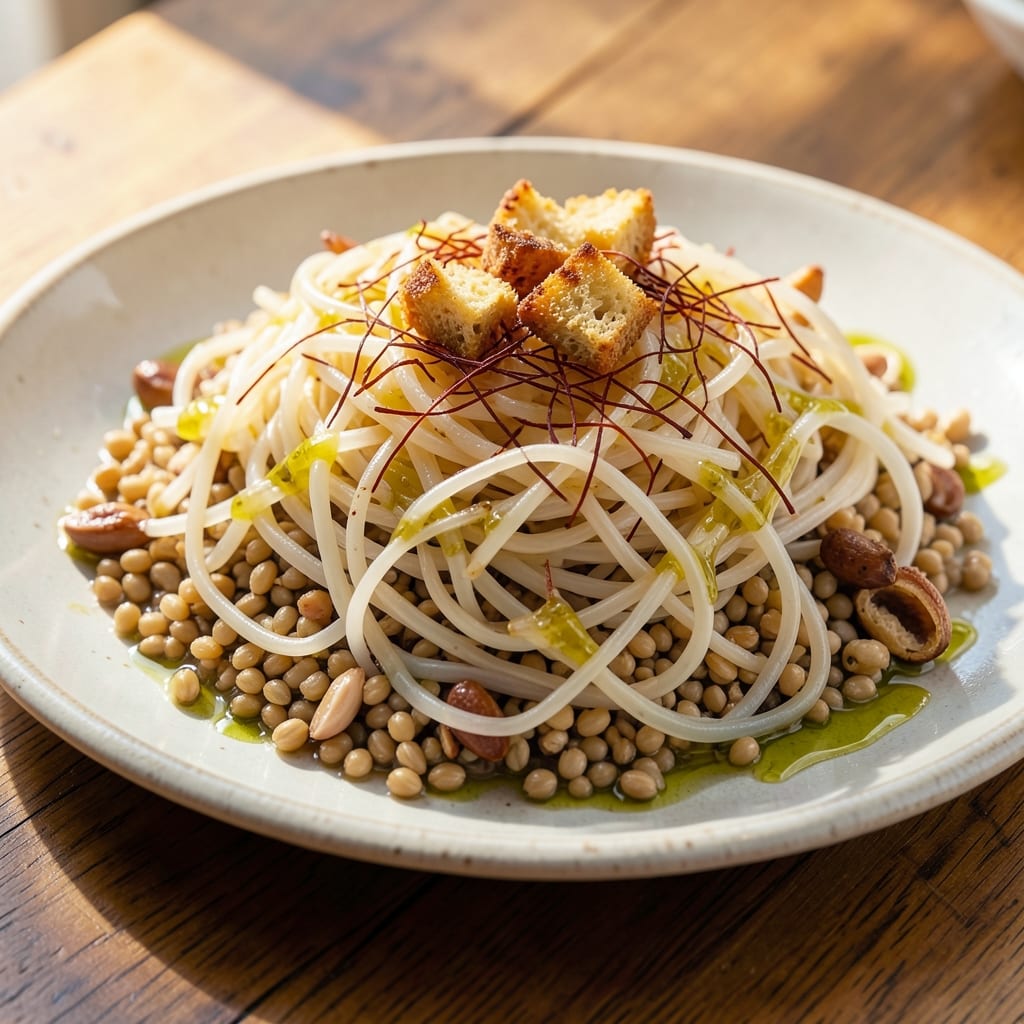
This Arabic rice vermicelli recipe transforms delicate strands into a fragrant, textured masterpiece—where saffron-infused rice meets toasted barley crunch for a dish as elegant as it is satisfying. The secret lies in balancing vermicelli's delicate bite with warm spices and crispy barley, a technique I perfected after years of exploring Gulf cuisine. What makes this dish special is how simple ingredients—like garlic, lemon, and fresh herbs—elevate the vermicelli into something restaurant-worthy, without requiring advanced skills.
The foundation starts with perfectly steamed vermicelli, tossed with a fragrant broth infused with saffron and toasted barley for that signature crunch. This isn’t just a side dish; it’s a complete experience—flavorful enough to stand alone or pair beautifully with grilled meats, seafood, or even as a hearty salad. The key is letting the vermicelli absorb the flavors while keeping its signature chew, so every bite delivers a harmonious mix of textures and aromas.
By the time you plate it, you’ll have a dish that’s vibrant, aromatic, and packed with layers of flavor—golden strands of vermicelli glistening with saffron, surrounded by crispy barley and fresh herbs. It’s the kind of meal that feels special yet effortless, perfect for weeknight dinners or gathering friends. The best part? It’s versatile enough to adapt to any occasion, from a simple family meal to a festive spread.
Whether you’re serving it alongside grilled lamb or as a standalone salad, this recipe delivers restaurant-quality results with minimal effort. Let’s bring the flavors of the Gulf to your table—one fragrant, crunchy bite at a time.
Ingredients for arabic rice vermicelli
Simple ingredients transform into restaurant-quality vermicelli with saffron's golden glow and barley's satisfying crunch.
| Ingredient | Amount | Notes |
|---|---|---|
| Arabic Rice Vermicelli 🍚 | 8 oz | Fine strands, not thick rice noodles |
| Pearl Barley 🌾 | ½ cup | Uncooked, for toasting and crunch |
| Saffron Threads 🌼 | ¼ tsp | High-quality, culinary grade |
| Garlic Cloves 🧄 | 4 cloves | Fresh, minced for aromatic base |
| Extra-Virgin Olive Oil 🫒 | ½ cup | Light variety for delicate flavor |
| Fresh Lemon Juice 🍋 | 2 tbsp | Freshly squeezed, bright acidity |
| Fresh Parsley 🌿 | ¼ cup | Chopped, flat-leaf preferred |
| Fresh Mint Leaves 🍃 | ¼ cup | Chopped, for fresh finish |
| Ground Cumin 🌿 | ½ tsp | Toasted for deeper aroma |
| Ground Coriander 🌶️ | ½ tsp | Freshly ground preferred |
| Salt 🧂 | 1 tsp | Diamond Crystal kosher preferred |
| Black Pepper 🌶️ | ¼ tsp | Freshly cracked for heat |
| Vegetable Broth 💧 | 1 ½ cups | Homemade or quality low-sodium |
The Arabic rice vermicelli is the star—look for fine strands at Middle Eastern markets or the international aisle. Saffron makes or breaks this dish, so splurge on Spanish or Iranian threads (they're most potent). Toasted barley gives that signature crunch, and you can find it pre-toasted at Whole Foods or bulk bins. Fresh herbs? Middle Eastern grocery stores often have better quality parsley and mint than regular supermarkets. The garlic should smell sharp and fresh—no musty cloves here.
No saffron? Turmeric at half the amount gives color, but no floral aroma. Barley too expensive? Toasted slivered almonds add crunch (use half the quantity). Fresh herbs wilt fast? Dried parsley or mint work at one-third the amount—just toast them lightly first. The vegetable broth should be flavorful; Pacific Foods or Imagine brands are solid choices. For extra depth, add a pinch of cardamom or cinnamon to the broth—trust me, it elevates everything.
Vermicelli keeps best in the fridge for 3 days once cooked—store in an airtight container with a damp paper towel to prevent drying. The toasted barley stays crispy for 5 days if kept sealed. Double the batch and freeze half—ice cube trays work great for single servings. Reheat gently with a splash of water to restore that signature chew. This dish tastes even better the next day as flavors meld.
Why You'll Love This Recipe
- No-Chop Necessary: I swear by this—just toast the vermicelli and barley in olive oil until golden, then toss in the garlic. No dicing, no mincing, just crunch and sizzle while you stir. Honestly, the only knife work is peeling the garlic, and even that’s optional if you’re using pre-minced.
- Golden Saffron Magic: That first pinch of saffron threads steeping in warm water? It turns the whole dish into something luxurious without trying. The rice vermicelli soaks up the color and aroma like a sponge, giving it this unexpected depth—like a whisper of Persian bazaar in every bite.
- Lunchbox Hero: Between us, this is my go-to for packed lunches or potlucks. The barley adds hearty texture, the vermicelli stays firm but tender, and it reheats like a dream. Toss it with roasted veggies or a simple yogurt sauce, and suddenly you’ve got a meal that’s actually exciting to unpack.
- Pantry Staple Power: Pearl barley and rice vermicelli? Both last forever. A single batch stretches into three lunches or two dinners, and the cost per serving is laughable. Plus, the olive oil and saffron stretch thin but pack maximum flavor—so you’re not just feeding stomachs, you’re feeding souls on a budget.
Step-by-step instructions for Arabic rice vermicelli with toasted barley
Here's how to transform delicate rice noodles into a fragrant, textured dish with saffron depth and nutty barley crunch.
Toast the Pearl Barley for Crunchy Texture
Heat a dry skillet over medium heat and add the 0.5 cup pearl barley. Toast for 5-7 minutes, stirring constantly, until the barley turns a rich golden color and releases a nutty aroma. This step is crucial—it develops the barley's natural sweetness and prevents it from becoming mushy later.
Watch closely as the barley toasts. It should smell toasted and slightly caramelized, not burnt. Transfer immediately to a small bowl and set aside. The toasted barley will provide that satisfying crunch that balances the delicate vermicelli strands.
Infuse the Broth with Saffron and Spices
In a medium saucepan, combine the 1.5 cups vegetable broth, 0.25 tsp saffron threads, 0.5 tsp ground cumin, and 0.5 tsp ground coriander. Bring to a gentle simmer over medium-low heat for 5 minutes, allowing the saffron to bloom and release its floral aroma.
Here's the thing—saffron needs heat to fully infuse. If you skip this step, you'll miss that signature golden hue and delicate perfume. After simmering, remove from heat and let steep for 10 minutes covered. This ensures maximum flavor extraction before we combine it with the noodles.
Cook the Vermicelli Al Dente
While the broth infuses, bring a separate pot of water to a rolling boil. Add the 8 oz arabic rice vermicelli and cook for 2-3 minutes—this is less time than you'd expect for rice noodles. The strands should be tender but still hold their shape when you test one between your fingers.
Don't overcook! Vermicelli continues cooking when it hits the hot broth. Drain immediately in a colander and rinse briefly with cold water to stop the cooking process. The slight resistance when you press two strands together is your perfect al dente signal.
Combine and Finish with Fresh Herbs
Return the drained vermicelli to the pot with the infused broth. Add 0.5 cup extra-virgin olive oil and 4 cloves minced garlic. Stir gently over low heat for 2 minutes until the garlic becomes fragrant but doesn't brown. This step builds the aromatic base without overpowering the delicate noodles.
Remove from heat and stir in the toasted barley, 2 tbsp fresh lemon juice, 0.25 cup chopped parsley, and 0.25 cup chopped mint leaves. The bright acidity of the lemon balances the richness, while the fresh herbs add a vibrant finish. Taste and adjust seasoning with 1 tsp salt and 0.25 tsp black pepper as needed.
Rest and Serve for Optimal Texture
Transfer the vermicelli mixture to a serving bowl and let it rest for 5 minutes. This crucial resting period allows the noodles to absorb the remaining broth and develop their final texture—no longer al dente but perfectly tender with just enough bite.
Serve immediately while the barley maintains its crunch and the vermicelli holds its shape. The dish should be aromatic with saffron's floral notes, nutty from the toasted barley, and bright from the lemon and herbs. Each bite delivers that satisfying contrast between delicate strands and crispy barley pieces.
Pro Tips For Making Arabic Rice Vermicelli
- SOAK THE VERMICELLI: I learned this the hard way—dry vermicelli turns to mush if you don’t soak it first. Use warm water (not boiling) for 10-15 minutes until pliable but still holding shape. Drain well, then rinse with cold water to stop cooking—this keeps it from turning gummy later.
- TOAST THE BARLEY: Skip the pre-cooking step and toast the pearl barley in olive oil over medium heat for 5 minutes until it’s golden and fragrant. This deepens the nutty flavor and cuts down on cooking time later—no need to boil it separately.
- SAFFRON FIRST, GARLIC LAST: Bloom the saffron threads in warm water for 5 minutes before adding them to the oil. Then, sauté the garlic at the very end—just until fragrant—so it doesn’t burn and overpower the delicate vermicelli’s texture.
- SIMMER, DON’T BOIL: After combining everything, keep the heat at a gentle simmer (not a rolling boil) to prevent the vermicelli from breaking apart. Stir occasionally and add a splash of water if it looks dry—this keeps the strands intact and tender.
Dietary considerations for arabic rice vermicelli
Gluten-Free Adaptations
This recipe naturally works for gluten-free diets since the base ingredients—vermicelli, barley, and spices—are typically gluten-free. However, pearl barley contains gluten, so swap it for toasted quinoa or buckwheat groats (½ cup each) for a nutty crunch without gluten. Look for certified gluten-free vermicelli, like Joyful Cooking or Rice Noodles by 365 by Whole Foods. Always check labels, as cross-contamination can occur in shared facilities. 🌾
Vegetarian & Vegan Options
Skip the optional protein pairings and focus on the vermicelli's natural umami. Boost flavor with 1 tbsp nutritional yeast mixed into the broth for a cheesy depth. Use vegan vegetable broth (like Pacific Foods) and ensure saffron is vegan-certified. Fresh herbs and lemon keep it vibrant, while toasted quinoa adds protein. This version is just as satisfying and packed with plant-based goodness. 🌱
Low-Carb Considerations
Traditional vermicelli is carb-heavy, but you can reduce carbs by cutting the portion to 4 oz and adding 1 cup chopped cucumber and ½ cup cherry tomatoes for volume. Replace barley with toasted pumpkin seeds (½ cup) for crunch and healthy fats. The saffron-infused broth remains the star, delivering flavor without excess carbs. Serve as a light salad with a drizzle of extra-virgin olive oil for a low-carb twist. 🥒
Allergen-Friendly Swaps
For nut allergies, avoid toasted barley or quinoa substitutes—opt for crispy fried shallots (½ cup) for crunch. If saffron is a concern (rare but possible), use ½ tsp turmeric for color and a pinch of cardamom for warmth. Double-check all spices for cross-contamination, especially if allergies are severe. Fresh herbs and lemon keep the dish bright and safe for most dietary restrictions. 🌼
Protein Pairings
Add grilled chicken breast (6 oz) or pan-seared shrimp (½ lb) for extra protein. Marinate the protein in 1 tbsp olive oil, 1 tsp lemon juice, and ½ tsp cumin before cooking. Serve alongside the vermicelli for a complete meal. For plant-based protein, toss in ½ cup chickpeas (rinsed and drained) for a hearty, fiber-rich addition. 🍗
Nutrition facts
Frequently asked questions
What's the difference between Arabic rice vermicelli and regular rice noodles?
Arabic rice vermicelli is finer, thinner, and has a distinct chewy texture compared to regular rice noodles. It's made from finely ground rice flour and often includes a touch of barley flour, giving it that signature delicate bite. Regular rice noodles are thicker and softer, while Arabic vermicelli holds its shape better when cooked al dente.
Can I substitute saffron with something else if I can't find it?
Yes, but with limitations. Use ½ tsp turmeric for color, but it lacks saffron's floral aroma. For a better alternative, try ½ tsp annatto powder (achiote) for a golden hue and mild earthy flavor. Neither will replicate saffron's unique perfume, but they'll add visual appeal. The dish will still taste delicious!
How do I prevent the vermicelli from turning mushy when cooking?
Cook it for only 2-3 minutes in boiling water—it continues cooking in the hot broth. Rinse immediately with cold water after draining to stop the cooking process. Also, avoid overcrowding the pot when boiling, as this can lower the water temperature and cause uneven cooking.
What's the best way to store leftovers?
Store cooked vermicelli in an airtight container in the fridge for up to 3 days. Keep the toasted barley separate to maintain its crunch. Reheat gently with a splash of water or broth—never microwave dry. The texture won't be as perfect as fresh, but it'll still taste amazing with a little extra lemon juice before serving.
Can I make this dish ahead of time for a gathering?
Prepare the saffron-infused broth and toasted barley up to 1 day ahead. Store separately in airtight containers. On serving day, just cook the vermicelli fresh, combine everything, and toss with fresh herbs. This keeps the texture optimal while letting flavors meld beautifully. The aromatic broth can even be reheated separately for extra convenience.