
Main Courses
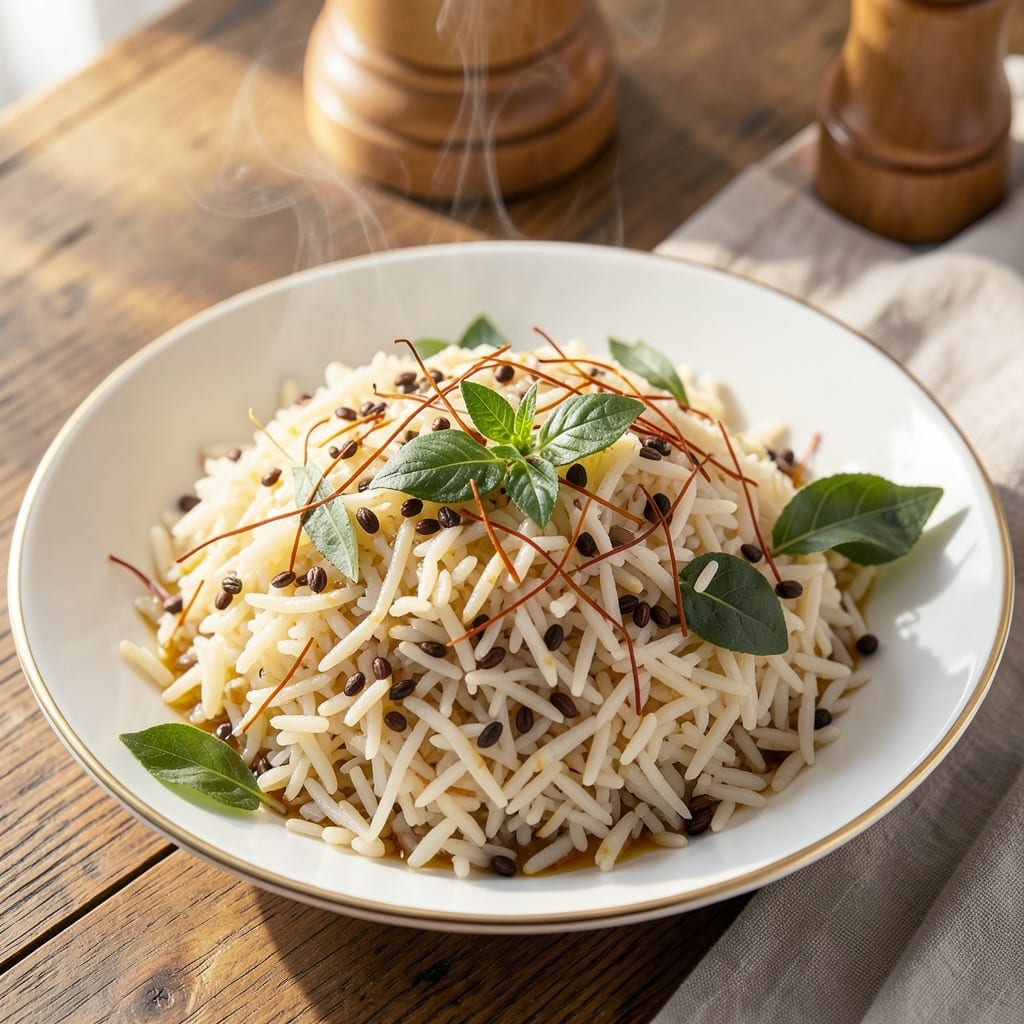
This aromatic basmati rice recipe transforms simple grains into a fragrant, golden masterpiece that pairs perfectly with curries and pilafs. The secret lies in toasting whole spices and infusing the rice with saffron and cumin, creating layers of warm, earthy flavor that elevate every bite. With just 20 minutes of active time and precise techniques, you'll achieve restaurant-quality results at home.
The process begins with soaking the rice to remove excess starch, ensuring each grain stays distinct and fluffy. As the rice cooks, toasted cumin and saffron threads release their aromatic magic, while bay leaves add subtle depth. The final result is fragrant, tender rice with a delicate texture that's impossible to resist—ideal for serving alongside your favorite dishes or as a standalone centerpiece.
Ingredients for aromatic basmati rice
Toasted spices and fragrant saffron turn simple rice into a flavorful centerpiece.
| Ingredient | Amount | Notes |
|---|---|---|
| Long-Grain Basmati Rice 🍚 | 1 ½ cups | Uncooked, rinsed well |
| Whole Cumin Seeds 🌿 | 1 tbsp | Toasted until fragrant |
| Saffron Threads 🌼 | ¼ tsp | High-quality, soaked in 1 tbsp warm water |
| Bay Leaves 🌿 | 2 whole | Fresh or dried |
| Vegetable Oil 🫒 | ½ cup | Light or neutral flavor |
| Water 💧 | 3 cups | Filtered preferred |
| Salt 🧂 | 1 ½ tsp | Kosher or sea salt |
| Ground Black Pepper 🌶️ | ¼ tsp | Freshly ground |
| Fresh Cilantro 🌿 | ¼ cup | Chopped, for garnish |
| Lemon Juice 🍋 | 1 tbsp | Freshly squeezed |
| Ghee or Butter 🧈 | 1 tbsp | For finishing |
The rice needs to be Basmati—it's the only kind with that signature long grain and nutty aroma. Lundberg or Patna Basmati from the grocery store work great, but avoid pre-washed packets—they lose flavor fast. For the cumin, toast it whole in the oil first—that's where the magic happens. The saffron? Buy threads, not powder—it's way more potent and worth the splurge. I grab mine from Trader Joe's or Indian specialty stores; they carry the good stuff. Bay leaves add depth, but skip them if you're sensitive to strong flavors—they're easy to remove after cooking.
No saffron? Turmeric at half the amount gives you that golden color, though it won't taste the same. Running out of cumin? Ground cumin works in a pinch**, but toasted is better. The cilantro is optional—some people love it, others hate it. If you're not a fan, just skip it. For the oil, vegetable or canola are neutral and affordable; olive oil adds too much flavor. And if you're feeling fancy, infuse the oil with a few cardamom pods before toasting the cumin—game changer.
Rice keeps best in an airtight container for 4-5 days in the fridge, though it's best eaten fresh. For leftovers, reheat gently with a splash of water to restore moisture. The saffron-infused water? Save it—it's perfect for making golden milk or drizzling over soups. Store the ghee in the fridge after opening to preserve its flavor. And if you make extra, freeze portions in ice cube trays for quick rice additions later.
Why You'll Love This Recipe
- No-Fuss Stovetop Magic: The moment you toast those cumin seeds in the oil—popping like tiny fireworks—you’re already halfway to dinner. Just rinse the rice, simmer with bay leaves, and let the saffron work its golden spell while you prep whatever’s next.
- Golden Threads of Luxury: Between us, saffron makes everything feel special. A pinch steeping in warm water transforms plain rice into something that tastes like a restaurant’s secret—crisp at the edges, fragrant with that unmistakable floral warmth.
- Weeknight to Dinner Party: Same rice, endless uses. Serve it under curry for a quick weeknight meal or pile it high for guests with grilled chicken and roasted veggies. The bay leaves add depth, so it never tastes boring—even when you’re winging it.
- Leftovers That Don’t Let You Down: This rice actually improves the next day. The cumin’s earthiness softens into comfort, and the saffron’s color deepens like a well-loved sweater. Store it in the fridge for up to four days—perfect for lazy lunches or repurposing into fried rice.
Step-by-step instructions for aromatic basmati rice
Transform simple basmati rice into a fragrant, golden masterpiece with these foolproof steps.
Toast the Spices for Maximum Flavor
Heat the 0.5 cup vegetable oil in a medium saucepan over medium heat until shimmering. Add the 1 tbsp whole cumin seeds and toast for 30-45 seconds until they begin to sizzle and release their aroma—you'll smell that warm, earthy cumin scent filling your kitchen. This step is crucial; it develops the spices' full flavor potential.
Immediately add the 2 whole bay leaves and continue cooking for another 15 seconds until the leaves darken slightly. Remove the pan from heat and let the spices cool for 1 minute. This brief cooling prevents the oil from burning when you add the rice later. The toasted spices will form the aromatic base for your rice.
Cook the Rice to Perfect Texture
Add the 1.5 cups long-grain basmati rice to the warm oil and stir for 1 minute to coat each grain evenly. This ensures every bite carries that nutty, toasted cumin flavor. Pour in the 3 cups water and add the 1.5 tsp salt and 0.25 tsp ground black pepper.
Bring to a rolling boil over high heat, then immediately reduce to low heat. Cover tightly with a lid and cook for 12-15 minutes without lifting it. You'll notice the rice absorbs all the water and the lid creates a steam chamber—this is how you get that signature fluffy texture. The rice is done when all liquid has been absorbed and the grains are tender but still firm to the bite.
Infuse with Saffron and Finish
While the rice cooks, prepare the saffron by soaking the 0.25 tsp saffron threads in 1 tbsp warm water for 5 minutes. This releases the saffron's vibrant color and delicate floral aroma. When the rice is cooked, remove the pan from heat and stir in the saffron mixture along with the 1 tbsp lemon juice.
Let the rice sit covered for 5 minutes to steam and absorb the saffron's color and flavor. This resting period is essential—it allows the rice to fully hydrate and develop its characteristic texture. The lemon juice brightens the dish with a subtle tang that cuts through the richness of the spices.
Finish with Ghee and Garnish
Transfer the rice to a serving bowl and gently fold in the 1 tbsp ghee or butter until melted and evenly distributed. The ghee adds a luxurious richness while keeping the rice light. Top with the 0.25 cup chopped fresh cilantro for a fresh, herbal finish that balances the warm spices.
Serve immediately while still hot. The rice should be fluffy with individual grains separated, infused with saffron's golden hue, and carrying that complex aroma of toasted cumin and bay leaves. Each bite should deliver perfect texture with layers of flavor—nutty, earthy, floral, and slightly tangy all in one aromatic package.
Pro Tips For Making Aromatic Basmati Rice
- Bloom the Saffron First: Toss the saffron threads into a teaspoon of warm water and let them steep for 5 minutes before adding to the rice—this unlocks their full aroma instead of just sprinkling dry threads. I used to skip this, and the rice always tasted underwhelming until I tried it. ---
- Toast Cumin Until Golden: Heat the cumin seeds in oil over medium-low until they’re just golden and smell nutty—about 30 seconds, not until they burn. I learned this the hard way after my rice tasted bitter from over-toasted seeds. ---
- Rinse Rice Until Water Runs Clear: Swirl the basmati in a bowl of cold water, drain, and repeat twice—this removes excess starch so the grains stay separate and fluffy. I used to rinse once, and the rice always turned gummy. ---
- Use a Tight-Fitting Lid: Cover the pot with a lid and press a damp paper towel under the rim to seal the steam—this keeps the rice moist without sticking. My rice used to dry out until I stole this trick from my mom.
Wine and beer pairings for these flavors
Crisp White Wine
For this aromatic basmati rice, I recommend a dry Riesling or Sauvignon Blanc—both wines complement the saffron's floral notes and the cumin's earthiness beautifully. A German Riesling like Dr. Loosen Blue Slate has crisp acidity that cuts through the richness, while a New Zealand Sauvignon Blanc like Cloudy Bay adds a zesty citrus contrast. Serve slightly chilled (45-50°F) to let the wine's brightness shine alongside the rice's warm spices. 🍷
Light-Bodied Red
If you prefer red wine, a Pinot Noir is your best bet—its delicate fruitiness pairs wonderfully with the saffron and cumin. Look for a Willamette Valley or Burgundy Pinot Noir with notes of red berries and subtle earthiness. Avoid heavy, tannic reds like Cabernet Sauvignon, as they can overpower the rice's delicate flavors. A chilled Pinot Noir (50-55°F) works best to highlight its subtle complexity. 🍇
Indian-Inspired Beer
For beer lovers, a light lager or session IPA bridges the gap between rice and spice. A German Helles like Weihenstephaner offers a clean, malty backdrop, while a hazy IPA like Hazy Little Thing adds a touch of tropical fruit to complement the saffron. If you want something bolder, try a Belgian witbier like Stella Artois—its coriander and citrus notes echo the cumin and lemon in the rice. Serve all beers at 40-45°F for the best balance. 🍺
Non-Alcoholic Options
Skip the alcohol? No problem. A sparkling mint lemonade made with muddled mint, lemon juice, and soda water refreshes the palate between bites. For something warmer, try golden milk (infused with turmeric and saffron from the rice's leftover water) sweetened with honey. Both options enhance the rice's aromatic profile without competing flavors. 🌿
Pairing Pro Tips
Let your wine or beer breathe for 10-15 minutes before serving to open up their aromas. If using a white wine, decant it briefly to release any sulfur notes. For beer, pour it into a tulip-shaped glass to concentrate the flavors. And here’s a secret: Add a pinch of salt to your glass of wine—it enhances the saffron’s floral notes and balances the cumin’s earthiness. Trust me, it’s a game-changer. ✨
Nutrition facts
Frequently asked questions
Why is toasting the cumin seeds so important?
Toasting whole cumin seeds releases their essential oils, creating that warm, earthy aroma that sets this rice apart. When toasted properly, the seeds develop a deep nutty flavor that ground cumin can't match. Skipping this step means missing out on the dish's signature aromatic profile—it's the secret to restaurant-quality results at home.
Can I substitute saffron with turmeric?
Yes, but there's a trade-off: ½ tsp turmeric will give you the golden color, but it won't replicate saffron's delicate floral aroma. For best results, use both—¼ tsp saffron + ¼ tsp turmeric—to get both the color and some of the floral notes. If you're on a tight budget, turmeric works in a pinch for color, though the flavor will be more earthy.
What's the best way to store leftover aromatic basmati rice?
Keep leftovers in an airtight container in the fridge for up to 4-5 days. To reheat, sprinkle 1 tsp water per cup of rice and cover with a damp paper towel before microwaving for 1-2 minutes. The steam prevents drying. For longer storage, freeze portions in ice cube trays with a little ghee—perfect for quick rice additions later!
Why does my basmati rice turn out mushy?
Mushy rice usually means one of two things: either you lifted the lid too soon (breaking the steam chamber) or used too much water. For perfect texture, use a 1:2 rice-to-water ratio and never peek during cooking. If it's still mushy after cooking, try spreading it on a baking sheet and drying it in a 200°F oven for 10 minutes—this restores the fluffy texture.
Can I make this recipe without ghee?
Use 1 tbsp butter or even olive oil for finishing. Ghee adds richness, but butter works perfectly fine. For a dairy-free option, use coconut oil—it complements the cumin's earthiness beautifully. Just remember, the final fold should be gentle to keep the rice light and fluffy.