
Main Courses
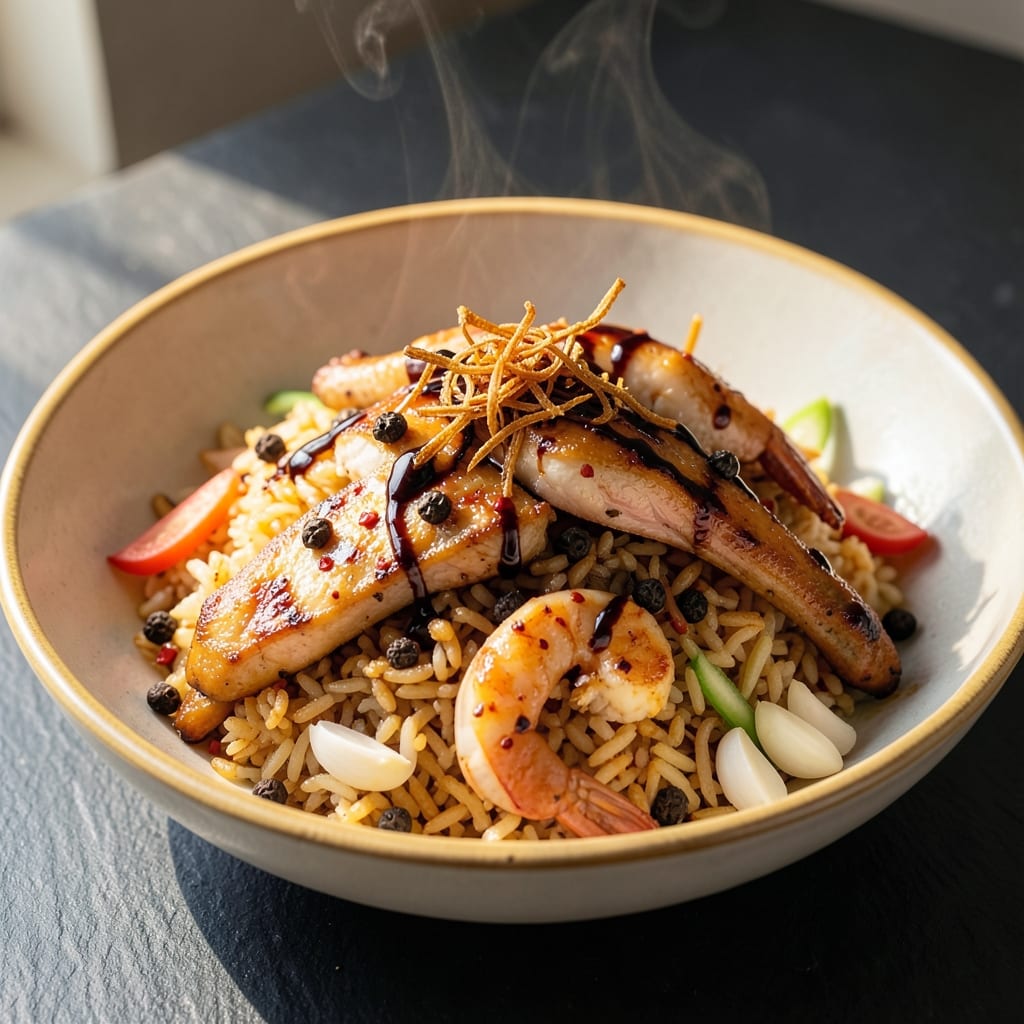
This Asian spicy rice recipe delivers restaurant-quality heat in every fragrant, wok-tossed grain—where fiery chili meets sweet star anise crunch for a dish that's equal parts bold and balanced. The secret lies in perfectly cooked jasmine rice that stays tender while absorbing the complex flavors of Szechuan peppercorns, garlic, and ginger, then gets tossed with proteins and vegetables in a single pan for maximum flavor infusion.
What sets this recipe apart is the layered approach to spice—starting with a dry wok-fry of aromatics that bloom into deep, toasty notes before adding heat. The star anise and chili flakes create a crunchy contrast that cuts through the richness, while lime juice and fish sauce add brightness that keeps the dish from feeling overwhelming. This isn't just another fried rice; it's a complete meal with protein options that adapt to your preferences.
By the time you're done, you'll have a dish that's vibrant, aromatic, and packed with texture—golden rice grains with crisp edges, tender protein, and vegetables that pop with every bite. The star anise seeds add a subtle licorice note that lingers, while the chili delivers heat that's balanced by the dish's natural sweetness. It's the kind of meal that transforms a simple weeknight dinner into something memorable.
Perfect for feeding a crowd or meal prepping for the week, this recipe scales beautifully while maintaining its restaurant-quality depth. The technique is straightforward but yields professional results—ideal for both beginners and experienced cooks looking to elevate their rice game. Let's get started with the ingredients you'll need.
Ingredients for asian spicy rice
Jasmine rice, aromatic spices, and protein of choice create this bold, restaurant-style dish.
| Ingredient | Amount | Notes |
|---|---|---|
| Jasmine Rice 🍚 | 2 cups | Uncooked, long-grain preferred |
| Szechuan Peppercorns 🌶️ | 1 ½ tbsp | Toasted for aromatic depth |
| Star Anise 🌿 | 2 whole | Whole pods, crushed lightly |
| Dried Chili Flakes 🔥 | 1 ½ tbsp | Adjust for preferred heat |
| Garlic Cloves 🧄 | 6 cloves | Minced for aromatic base |
| Fresh Ginger 🌿 | 2 tbsp | Finely grated, fresh preferred |
| Lime Juice 🍋 | ¼ cup | Freshly squeezed, bright flavor |
| Fish Sauce 🍶 | 1 ½ tbsp | Red Boat preferred for quality |
| Vegetable Oil 🫒 | 3 tbsp | High smoke point for wok-frying |
| Protein (Choice of One) 🍗 | 1 lb | Chicken thigh, shrimp, or tofu |
| Mixed Vegetables 🥕 | 3 cups | Carrots, peas, bell peppers |
| Green Onions 🧅 | ¼ cup | Sliced, for garnish |
| Sesame Oil 🫒 | 1 tbsp | For finishing aroma |
| Salt 🧂 | 1 tsp | Adjust to taste |
| Black Pepper 🌶️ | ½ tsp | Freshly ground |
The star anise and Szechuan peppercorns are the flavor anchors here. Whole Foods or Asian markets carry the best quality—look for star anise pods that are plump and fragrant, not dried out. Toast the peppercorns in a dry pan for 30 seconds before grinding to unlock their full nutty aroma. Red Boat fish sauce is worth the investment for that authentic umami punch, but Three Crabs brand works in a pinch. For the protein, chicken thighs stay juicy during the wok-toss, while shrimp adds a luxurious touch—both work beautifully. If you're using tofu, press it first to remove excess water for better texture.
No Szechuan peppercorns? Substitute with a mix of black pepper and a pinch of cayenne—it won't be identical, but it adds complexity. Short on star anise? One cinnamon stick gives a similar sweet depth, though the licorice note will be milder. The fish sauce can be swapped for soy sauce plus a splash of coconut aminos, though the flavor profile shifts slightly. For the vegetables, frozen peas and carrots work perfectly—they won't overcook in the quick stir-fry. The lime juice is non-negotiable for brightness, but if you're out, lemon juice works in a bind. Just remember it's tangier, so start with half the amount.
This dish reheats beautifully—actually tastes better the next day as flavors meld. Store in an airtight container for 4-5 days in the fridge, or freeze portions for up to 3 months. For meal prep, cook the rice and protein separately, then combine with the sauce just before eating to keep the grains from getting mushy. The star anise pods can be removed after cooking and reused in soups or stews—they're worth saving. If you're feeding a crowd, double the spices and scale up the protein and veggies proportionally, but keep the wok-frying in batches to maintain that signature crisp-tender texture.
Why You'll Love This Recipe
- One-Pot Magic: I swear by this—just toast the peppercorns and star anise in oil, toss in the garlic, then dump in rice and broth. No separate pans, no fuss. The rice absorbs all that smoky, spicy goodness right in the pot.
- Flavor Bomb: That first bite? Warm jasmine rice with a slow-building heat from the chili flakes, a nutty kick from the peppercorns, and garlic so fragrant it’ll make your kitchen smell like a street food stall. Honestly, it’s the kind of flavor that lingers.
- Lunchbox Hero: Pack this cold or at room temp—it’s just as good the next day. My kids actually eat their rice now (a miracle), and the heat mellows slightly, making it perfect for school lunches or office meals. No sad, soggy leftovers here.
- Pantry Powerhouse: You’re probably already using these ingredients—garlic, rice, maybe even star anise for other dishes. The peppercorns and chili flakes add drama without breaking the bank. I’ve made this for date nights, lazy Sundays, and even as a side for takeout. Always works.
Step-by-step instructions for wok-tossed spicy Asian rice
Here's the method for perfectly balanced spicy rice with fragrant aromatics and a satisfying crunch.
Prepare the Spice Base and Protein
Heat a large wok or deep skillet over medium-high heat with 3 tablespoons vegetable oil. Add the 1 lb protein (chicken thigh, shrimp, or tofu) and cook until browned and cooked through—about 5-7 minutes for chicken thighs, 3-4 minutes per side for shrimp, or 4-5 minutes for tofu. Remove and set aside.
In the same wok, add 1.5 tablespoons Szechuan peppercorns and toast for 30 seconds until fragrant and lightly browned. Add the 2 whole star anise (lightly crushed) and 1.5 tablespoons dried chili flakes, stirring constantly for 20 seconds to release their aromatic oils. This step builds the foundation for the dish's complex flavor profile.
Sauté Aromatics and Cook Vegetables
Add 6 cloves minced garlic cloves and 2 tablespoons fresh ginger to the wok, cooking for 30 seconds until the garlic turns golden and the ginger becomes fragrant. Push the aromatics to one side of the wok and add the 3 cups mixed vegetables (carrots, peas, and bell peppers). Stir-fry for 3-4 minutes until the vegetables are tender-crisp but still vibrant in color.
If using shrimp or tofu, return the cooked protein to the wok now and toss with the vegetables. The residual heat will finish cooking the protein while absorbing the aromatic flavors. Real talk: this is where the dish comes together—don't rush this step.
Cook the Jasmine Rice with Seasonings
In a separate pot, rinse the 2 cups jasmine rice under cold water until the water runs clear. Drain well and return to the pot. Add 4 cups water (double the rice amount) and bring to a boil. Once boiling, reduce heat to low-medium and simmer uncovered for 12-15 minutes until the water is absorbed and the rice is tender.
Remove the pot from heat and stir in 1.5 tablespoons fish sauce, 0.25 cup lime juice, 1 teaspoon salt, and 0.5 teaspoon black pepper. The rice should be seasoned but still bright in color. If the rice is dry, add 1-2 tablespoons water to maintain moisture—this ensures each grain remains distinct and fluffy.
Combine and Finish with Sesame Oil
Transfer the cooked rice to the wok with the protein and vegetables. Stir-fry over medium heat for 2-3 minutes until the rice is evenly coated with the aromatic spices and heated through. The rice should be fragrant with a balance of spicy, savory, and citrus notes.
Remove from heat and drizzle with 1 tablespoon sesame oil while tossing gently. The sesame oil adds a nutty aroma and helps bind the flavors together. Garnish with 0.25 cup sliced green onions for a fresh, crisp contrast. Serve immediately while the rice is hot and the flavors are at their peak.
Pro Tips For Making Asian Spicy Rice
- CRUSH PEPPERCORNS FIRST: Toss the whole Szechuan peppercorns in a dry skillet over medium heat for 30 seconds before grinding—this wakes up their numbing oils. I used to add them raw, and the flavor was half as bold. (Yes, even if you're impatient like me, wait for the aroma to hit.)
- TOAST SPICES LOW AND SLOW: Bloom the star anise and chili flakes in oil over low heat for 1-2 minutes—just until fragrant, not browned. High heat burns star anise bitter, and that’s the last thing you want in delicate jasmine rice. Think "whisper-hot," not "sear."
- RINSE RICE UNTIL CLEAR: Swirl jasmine rice in a bowl of cold water for 30 seconds, then drain. Repeat until the water runs nearly clear—this removes excess starch that’ll make your rice gluey. I skipped this once and ended up with a sad, sticky pile. (Your future self will thank you.)
- GARLIC: MINCE, DON’T CHOP: Finely mince the garlic (not slice or crush) so it melts into the rice instead of sitting as chunks. I learned this the hard way when I used a knife—now I just smash cloves flat with the side of my knife first. Smaller pieces = better flavor distribution.
Serving suggestions for asian spicy rice
Protein Pairings
Chicken thighs stay juicy during the wok-toss and absorb the star anise and chili flavors beautifully. For extra richness, marinate them in 1 tbsp soy sauce and 1 tsp honey for 30 minutes before cooking. Shrimp adds a luxurious touch—toss cooked shrimp with ½ tsp smoked paprika and 1 tsp lime zest right before serving to enhance their natural sweetness. 🍗
Vegetable Contrasts
Bell peppers add vibrant color and a slight sweetness that balances the heat, while shredded carrots provide natural sweetness. For extra crunch, stir-fry ½ cup snap peas separately and add them last to maintain their crisp texture. If you prefer softer veggies, swap in ½ cup corn kernels for a buttery contrast.
Garnish Game-Changers
Fresh cilantro leaves add a bright, herbaceous note that cuts through the richness. For a smoky finish, sprinkle ½ tsp crushed toasted cumin seeds over the top. A drizzle of chili oil (mix ¼ cup neutral oil with 1 tbsp chili flakes) elevates the dish to restaurant-quality drama. 🌿
Sauce Elevations
Add a spoonful of hoisin sauce (about 1 tbsp) when combining the rice and protein for a deeper, slightly sweet contrast. For a tangy twist, mix 1 tbsp rice vinegar with 1 tsp sugar and drizzle over the finished dish. Both options enhance the dish's complexity without overpowering the star anise and chili.
Serving Style Tips
Serve in shallow bowls with a small side of quick-pickled cucumbers (slice ½ cucumber, toss with 1 tbsp rice vinegar, ½ tsp sugar, and pinch of salt) to refresh the palate. For a heartier meal, pair with steamed bok choy or a simple miso soup. The rice holds up well for family-style dining—just keep it covered until serving to maintain heat. ✨
Nutrition facts
Frequently asked questions
Can I make this spicy rice dish with basmati rice instead of jasmine?
Yes, but there will be a noticeable difference in flavor and texture. Jasmine rice has a naturally fragrant, floral aroma that pairs beautifully with the star anise and chili. Basmati will work, though—just use the same 1:2 rice-to-water ratio and expect slightly firmer grains. For extra aroma, toast the basmati in a dry pan for 1 minute before cooking.
How do I adjust the spice level for sensitive eaters?
Start by reducing the chili flakes to 1 teaspoon and omit the Szechuan peppercorns—they contain mild heat. For extra safety, add lime juice gradually (begin with 2 tablespoons) to balance any residual heat. The star anise and fish sauce provide depth without spice, so you'll still get rich flavors.
What's the best way to store leftovers to keep the rice from getting mushy?
Let the dish cool completely, then store in an airtight container with parchment paper between layers. Reheat gently in a skillet over low heat with 1 tablespoon water per serving. For best texture, reheat only what you need—this rice reheats best fresh. The spices actually intensify overnight, so flavors improve!
Can I make this recipe vegetarian?
Swap the protein for extra-firm tofu (pressed for 30 minutes) or mushrooms (shiitake or oyster). For extra umami, add 1 tablespoon soy sauce to the rice seasoning. The star anise and chili will still shine while keeping the dish hearty. Tofu absorbs flavors beautifully—just pat it dry before cooking.
Why does my rice turn out sticky instead of separate grains?
This usually happens from overcooking or insufficient water. Use exactly 4 cups water for 2 cups rice and cook uncovered. If it's still sticky, fluff with a fork immediately after cooking. For extra insurance, spread the cooked rice on a tray and let it cool uncovered for 5 minutes before combining with other ingredients.