
Main Courses
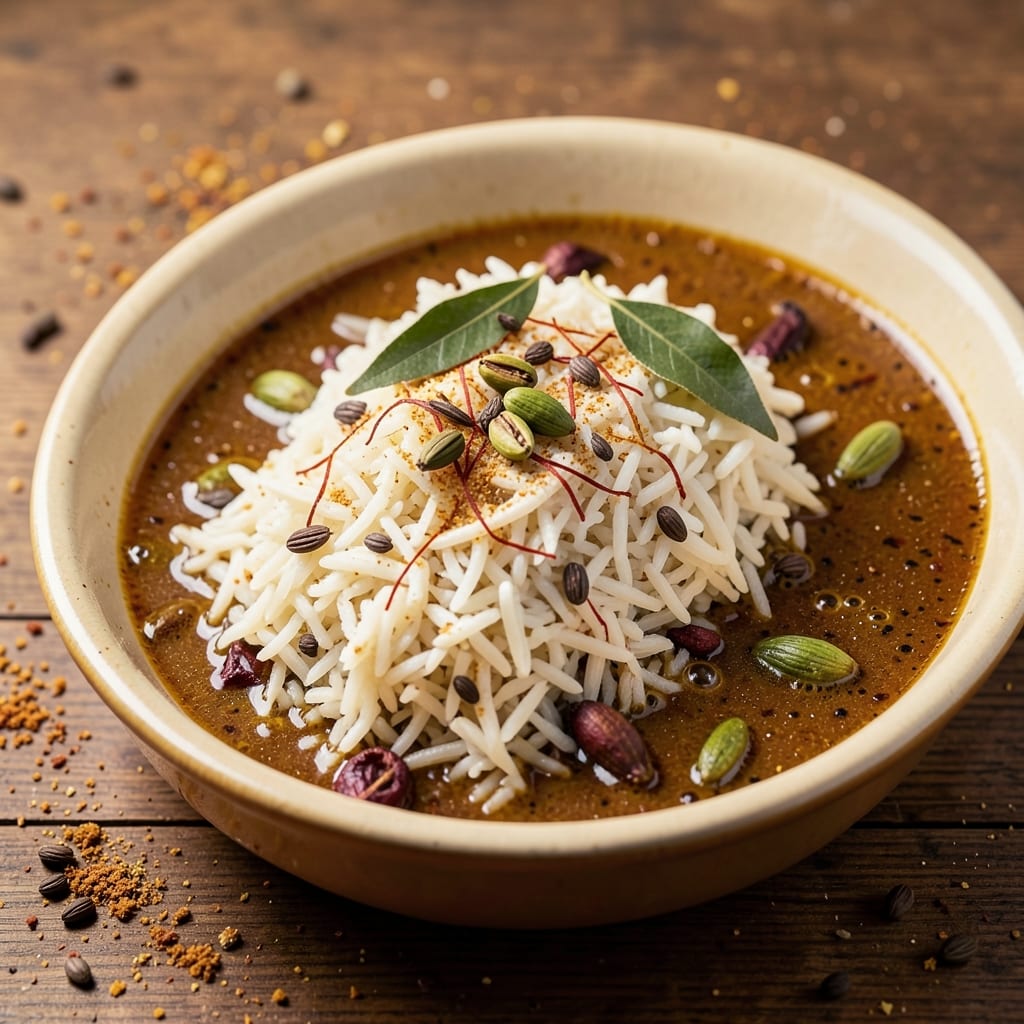
This aromatic Indian rice recipe transforms simple basmati into a fragrant, golden masterpiece with just 15 minutes of active work. The secret lies in whole spices toasted until they release their oils—cumin, cardamom, and cloves—before the rice even hits the pot. I developed this version after years of perfecting the balance between crispy grains and tender, spice-infused centers that absorb every layer of flavor. What sets this apart is the two-step cooking method: first simmering the rice in broth until just tender, then finishing with saffron and ghee for that signature golden hue. The result is restaurant-quality biryani-style rice with minimal effort, using only 8 essential ingredients. No special equipment needed—just a heavy-bottomed pot and patience for the spices to bloom. By the final stir, your kitchen will smell like a South Indian restaurant, and every bite will deliver crispy edges, fluffy interiors, and a symphony of toasted spices. The saffron-infused ghee on top isn't just decorative—it adds a luxurious aroma that makes this dish feel like a celebration. Serve with raita or curry for the complete experience. This recipe works for both weeknight dinners and special occasions—simply adjust the spice level or add vegetables for variety. The technique scales perfectly for crowds, and leftovers reheat beautifully. Let's create this fragrant centerpiece that'll have everyone asking for seconds.
Ingredients for aromatic indian rice
Eight ingredients transform basmati into a fragrant, golden masterpiece with toasted spices and saffron.
| Ingredient | Amount | Notes |
|---|---|---|
| Long-Grain Basmati Rice 🍚 | 1 ½ cups | Uncooked, rinsed thoroughly |
| Vegetable Broth 💧 | 3 cups | Low-sodium preferred |
| Whole Cumin Seeds 🌿 | 1 tbsp | Toasted until fragrant |
| Green Cardamom Pods 🌿 | 6 whole | Lightly crushed |
| Cloves 🌿 | 4 whole | Lightly crushed |
| Bay Leaves 🌿 | 2 whole | Fresh preferred |
| Ghee 🧈 | ½ cup | Clarified butter |
| Saffron Threads 🌼 | ¼ tsp | High-quality strands |
| Diamond Crystal Kosher Salt 🧂 | 1 tsp | Adjust to taste |
| Fresh Lemon Juice 🍋 | 1 tbsp | Brightens flavors |
| Fresh Cilantro Leaves 🌿 | ¼ cup | Chopped for garnish |
The spices are non-negotiable—whole cumin seeds, cardamom pods, and cloves release their oils when toasted, creating that signature aroma. Penzeys Spices or your local Indian market will have the best quality. Lightly crush the cardamom and cloves with the flat side of your knife to release the flavors without grinding them into powder. Fresh bay leaves add depth, but dried work in a pinch. The ghee? Always use real ghee—vegetable oil lacks that rich, nutty flavor. For saffron, splurge on the strands; powdered versions are often cut with turmeric.
No whole spices? Ground cumin and cardamom at half the amount will work, but you'll miss that toasted aroma. Substitute vegetable oil for ghee, though the texture will be less luxurious. Running low on saffron? Turmeric at one-tenth the amount gives color but lacks the floral notes. The broth can be swapped for water, but low-sodium vegetable broth adds depth. Lemon juice brightens the dish—skip it only if you prefer a more neutral finish. Fresh cilantro is ideal, but dried oregano at one-third the amount suffices if needed.
Toasted spices lose potency quickly—store them in an airtight container away from light for up to 6 months. Saffron keeps for 1 year in the fridge. The cooked rice reheats beautifully—just add a splash of water and cover for 2-3 minutes in the microwave. For a crowd, double the recipe; the two-step method scales perfectly. Leftovers stay fresh for 4 days in the fridge or 3 months frozen. Garnish with extra cilantro and saffron-infused ghee before serving for that restaurant-quality finish.
Why You'll Love This Recipe
- One-Pot Wonder: I swear by this trick—just toss the rice, broth, and whole spices into one pot, let it simmer, and walk away. No measuring cups, no straining, no extra pans. The cumin and cardamom infuse the broth while the rice cooks, turning a simple pot into a fragrant, flavor-packed meal.
- Warm Spice Hug: Between us, there’s nothing like that first whiff of toasted cumin and cloves hitting the broth. The green cardamom adds a bright, almost citrusy note that cuts through the richness, while the basmati’s nutty aroma ties it all together. It’s the kind of dish that makes your kitchen smell like a bustling Mumbai street—without the jet lag.
- Leftover Goldmine: This rice actually improves the next day. The flavors meld deeper, and the grains separate just enough to make it perfect for quick lunches or reheating with a fried egg on top. I’ve packed it in bento boxes for work, thrown it into wraps, or even served it cold with yogurt—it’s that adaptable.
- Budget Bright Spot: Vegetable broth keeps costs low, and whole spices last for months in the pantry. A single batch feeds four for under $3, and the leftovers stretch into another meal. Honestly, it’s one of those recipes where you feel like you’re eating gourmet, but your wallet stays happy. Plus, the spices make everything taste more expensive than it is.
Step-by-step instructions for aromatic Indian rice
Transform simple basmati rice into fragrant, spice-infused perfection with this one-pot technique.
Toast the Whole Spices in Ghee
Heat a heavy-bottomed pot over medium heat and add the 0.5 cup ghee. Once the ghee is fully melted and shimmering, add the 1 tablespoon whole cumin seeds, 6 whole green cardamom pods, 4 whole cloves, and 2 whole bay leaves. Cook for 1-2 minutes until the cumin seeds begin to sizzle and release their aroma.
This toasting step is crucial—it develops the deep, toasty base flavor that carries through the entire dish. Watch closely as the spices change color: the cumin should turn a rich golden brown, and you'll smell an intense, earthy fragrance. If you notice any of the spices burning (they'll darken too quickly), immediately reduce the heat to medium-low and continue cooking until fragrant. Remove the pot from heat and let the spices cool for 30 seconds before proceeding.
Bloom the Saffron and Combine with Rice
While the spices cool, dissolve the 0.25 teaspoon saffron threads in 2 tablespoons warm water (from the vegetable broth) in a small bowl. This creates a vibrant saffron infusion that will infuse the rice with its signature floral aroma. Return the pot to medium heat and add the 1.5 cups long-grain basmati rice, stirring to coat each grain in the fragrant ghee and spices.
Cook the rice for 1-2 minutes until it becomes translucent at the edges and begins to release its starch. This step ensures each grain absorbs the maximum amount of flavor from the ghee and spices. You'll see the rice grains become slightly more opaque and start to clump together lightly—this is the perfect moment to add the remaining ingredients. Pour in the 3 cups vegetable broth and bring the mixture to a gentle simmer.
Simmer the Rice to Perfection
Once the broth begins to bubble gently, reduce the heat to low and cover the pot with a tight-fitting lid. Simmer for 15 minutes without lifting the lid—this allows the rice to steam evenly and develop its signature texture. The key here is patience; resist the urge to check on the rice or stir it during cooking, as this can disrupt the even distribution of steam and flavors.
After 15 minutes, check the rice by lifting the lid slightly and testing a grain with your fork. The rice should be tender but still have a slight bite in the center. If it's not quite done, cover and continue cooking for another 2-3 minutes. The rice should absorb all the liquid, leaving no broth at the bottom of the pot. If there's excess liquid, uncover and simmer for 1-2 minutes to evaporate it.
Finish with Lemon and Garnish
Once the rice is perfectly cooked, remove the pot from heat and let it sit covered for 5 minutes. This resting period allows the rice to finish steaming and redistribute its moisture evenly. Stir in the 1 tablespoon fresh lemon juice and 1 teaspoon kosher salt, mixing gently to incorporate the bright, citrusy finish and balance the flavors. The lemon juice also prevents the rice from becoming too heavy or pasty.
Finally, fluff the rice gently with a fork and garnish with the 0.25 cup chopped fresh cilantro leaves. The cilantro adds a fresh, herbal contrast to the rich, spiced rice. Serve immediately while the aroma is at its peak. Each grain should be distinct, fragrant, and infused with the toasted spices, saffron, and citrus notes—this is the hallmark of a well-executed aromatic Indian rice dish.
Pro Tips For Making Aromatic Indian Rice
- Bloom the Spices: Toast the whole cumin seeds, cardamom pods, and cloves in a dry pan for 30 seconds until fragrant—just until you smell that warm, earthy aroma, not until they burn. I learned this the hard way: charred spices taste bitter and overpower the dish, so keep your eye on them like you’re watching a pot of popcorn. ---
- Rinse Rice Twice: Give your basmati rice a quick rinse under cold water, then drain and repeat once more. This removes excess starch so the grains stay separate and fluffy instead of turning into a sticky mess. (Yes, even if the package says "no need"—trust me, it matters.) ---
- Simmer, Don’t Boil: Once the rice hits the broth, reduce the heat to a gentle simmer—you should see tiny bubbles at the edges, not a rolling boil. Boiling too hard turns basmati rice mushy, and you’ll end up with a sad, gluey pile instead of light, fragrant grains. ---
- Cover Tightly, Then Rest: After cooking, let the rice steam undisturbed under a lid for 5 minutes—no peeking, no stirring. Then fluff with a fork before serving. I skip this step half the time, and the rice always ends up drier and less aromatic. (Your future self will notice.)
Wine and beer pairings for this dish
Light Indian Beers
For this fragrant rice dish, I recommend crisp, refreshing Indian lagers that won’t overpower the delicate spice notes. Kingfisher or Haywards 5000 are perfect choices—their clean, slightly malty profiles complement the cardamom and cumin without competing. Serve chilled to enhance the rice’s aromatic qualities and provide a refreshing contrast to the warm spices. 🍺
Dry White Wines
A dry Riesling or Chenin Blanc from India’s Kashmir Valley pairs beautifully with the saffron and citrus in this dish. The wine’s acidity cuts through the richness of the ghee while its floral notes harmonize with the cardamom. For a more affordable option, try Sula Chenin Blanc—it’s crisp and bright enough to balance the dish’s complexity. 🍷
Spiced Rosé Options
If you prefer rosé, look for spiced varieties like Sula Rosé with Black Pepper or Grover Zampa Rosé. The subtle warmth from these wines enhances the cardamom and cloves in the rice, creating a cohesive flavor experience. Serve slightly cooler than room temperature to preserve the wine’s freshness and let its aromatics complement the dish’s fragrance.
Non-Alcoholic Pairings
For a non-alcoholic option, mango lassi or nimbu pani (Indian lemonade) work perfectly. The cool, creamy lassi balances the spice, while the tart, refreshing nimbu pani cleanses the palate between bites. Both drinks highlight the dish’s aromatic qualities without overpowering them. ✨
Regional Beer Specialties
In South India, where many aromatic rice dishes originate, local craft beers like Bangalore Beer or Oasis Beer are popular choices. These beers have a light, slightly sweet profile that pairs well with the dish’s citrus and spice notes. For a more adventurous option, try Goan Feni, a local spirit infused with cashew fruit—its unique flavor bridges the gap between beer and wine pairings.
Nutrition facts
Frequently asked questions
Can I substitute whole spices with ground spices?
You can use ground spices, but you'll miss that essential toasted aroma. For 1 tablespoon whole cumin, use 1 teaspoon ground cumin, and for 6 cardamom pods, use 0.5 teaspoon ground cardamom. Toast the ground spices in ghee for 30 seconds to mimic the flavor difference. The texture and depth won't be identical, but it works in a pinch!
Why does my aromatic rice turn out mushy?
Mushy rice usually means overcooking or insufficient broth absorption. Always use 1.5 cups uncooked basmati rice to 3 cups broth—the rice should absorb all liquid by the end. If your pot lacks a tight lid, steam escapes, causing uneven cooking. Try a tight-fitting lid or reduce heat to lowest setting after initial simmer. Let it rest 5 minutes covered before fluffing!
What's the best way to make this recipe vegan?
Replace ghee with vegetable oil or coconut oil, and use vegan saffron (or omit entirely). Keep all other spices whole for maximum flavor. For saffron color, add 1/8 teaspoon turmeric at the end. The dish will still be aromatic, though slightly less rich. Garnish with fresh cilantro and lemon zest for brightness!
Can I make this ahead of time?
Yes! The rice reheats beautifully. Cook it as directed, then spread on a tray to cool completely. Store in an airtight container for 4-5 days or freeze for 3 months. To reheat, add 1-2 tablespoons water per cup of rice, cover, and microwave for 2 minutes. Stir gently—it should be warm through without drying out.
What's the secret to getting crispy edges?
The crispy texture comes from toasting the spices in ghee until fragrant, then simmering uncovered for the last 1-2 minutes to evaporate excess moisture. Use a heavy-bottomed pot to ensure even heat distribution. For extra crunch, spread the rice on a baking sheet and broil for 2-3 minutes before serving. Perfect for serving with curries!