
Salads
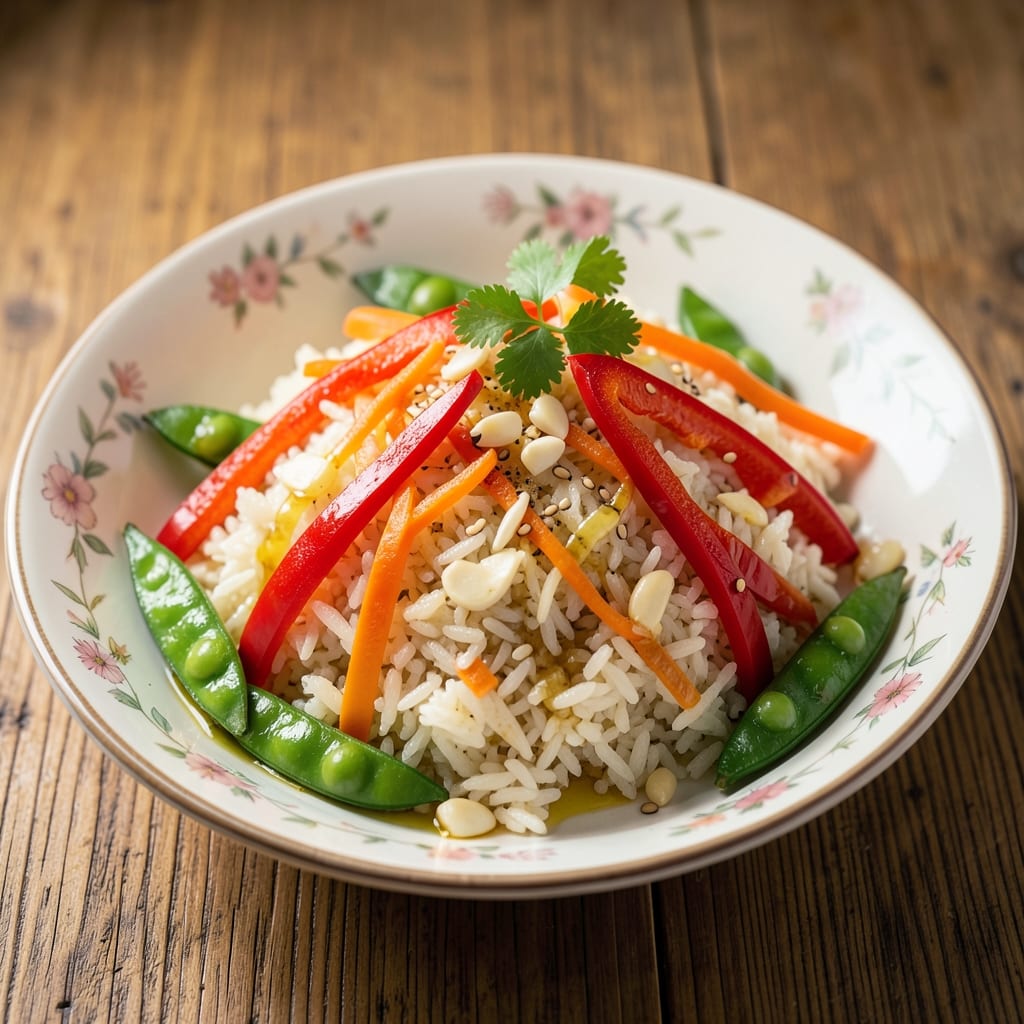
This Asian rice and vegetables recipe transforms simple ingredients into a fragrant, textured masterpiece that balances wok-tossed vegetables with perfectly seasoned rice. The secret lies in high-heat stir-frying—where garlic, ginger, and soy create an aromatic base while preserving the vegetables' crisp-tenderness. I developed this after years of perfecting stir-fry techniques, ensuring every bite delivers that perfect harmony of toasted sesame crunch and umami depth.
The foundation is jasmine rice cooked just slightly sticky, then tossed with vibrant vegetables like bell peppers, carrots, and snap peas that stay crisp after the quick stir-fry. A splash of rice vinegar brightens the dish, while toasted sesame seeds add nutty contrast. This recipe delivers restaurant-quality results with minimal effort—ideal for weeknight dinners or meal prep.
What makes this dish special is its versatility. Swap in broccoli for extra texture or add mushrooms for earthy depth. The rice absorbs all the savory flavors, creating a cohesive bowl where every component shines. Serve with a fried egg on top for extra richness or keep it light with fresh cilantro and lime wedges.
Perfect for feeding a family or meal prepping for the week, this dish proves Asian-inspired cooking doesn't require complicated techniques—just the right balance of heat, seasoning, and timing. Let's get cooking!
Ingredients for asian rice and vegetables
Jasmine rice and vibrant vegetables create a fragrant, textured wok-tossed masterpiece with toasted sesame crunch and umami depth.
| Ingredient | Amount | Notes |
|---|---|---|
| Jasmine Rice 🍚 | 1 ½ cups | Uncooked, long-grain preferred |
| Red Bell Pepper 🍅 | 1 whole | Thinly sliced, seeds removed |
| Carrots 🥕 | 2 whole | Julienned, medium size |
| Snap Peas 🌿 | 1 cup | Fresh or frozen, trimmed |
| Garlic Cloves 🧄 | 4 cloves | Minced, fresh preferred |
| Fresh Ginger 🌿 | 1 ½ tbsp | Grated, peeled |
| Low-Sodium Soy Sauce 🍶 | 3 tbsp | For umami depth |
| Rice Vinegar 💧 | 2 tbsp | Seasoned preferred |
| Toasted Sesame Oil 🫒 | 1 tbsp | For aroma, not cooking |
| Sesame Seeds 🌰 | 2 tbsp | Toasted, for crunch |
| Vegetable Oil 🫒 | 2 tbsp | High smoke point |
| Salt 🧂 | 1 tsp | Diamond Crystal preferred |
| Black Pepper 🌶️ | ½ tsp | Freshly ground |
| Fresh Cilantro 🌿 | ¼ cup | Chopped, for garnish |
| Lime Juice 🍋 | 2 tbsp | Freshly squeezed |
The jasmine rice is non-negotiable—its floral aroma elevates everything. Lundberg Family Farms or Koshihikari brands deliver the best texture. For the vegetables, Trader Joe's has excellent pre-sliced bell peppers and snap peas, saving prep time. Fresh ginger should be knobby and firm—no wrinkles. The low-sodium soy sauce is crucial; regular versions add too much salt. Toast your own sesame seeds in a dry pan for 30 seconds**—they should smell nutty and warm, not burnt.
No fresh ginger? Substitute 1 tbsp paste—just measure carefully. Out of snap peas? Broccoli florets or snow peas work equally well. The rice vinegar can be swapped for apple cider vinegar in a pinch, though it lacks the delicate sweetness. For extra umami, add 1 tsp fish sauce (if not vegetarian) or 1 tbsp coconut aminos. The sesame oil should be toasted—not the cooking oil—so you're not adding extra calories. If your lime juice is weak, zest the rind** for extra brightness.
Cook the rice 1 day ahead**—it reheats beautifully and absorbs flavors better. Store components separately: rice in an airtight container, veggies in a sealed bag with paper towels to prevent sogginess. The dish holds for 4 days refrigerated or 3 months frozen. For meal prep, portion into bento boxes with compartments—keeps everything crisp. Garnish with cilantro and lime right before serving to preserve freshness.
Why You'll Love This Recipe
- One-Pot Magic: The rice and veggies cook together—no shifting pans, no extra bowls. Just toss in the jasmine rice, bell peppers, carrots, and snap peas with a splash of water, and let it all steam into golden perfection. Honestly, I’ve made this while scrolling through my phone mid-convo with my partner.
- Garlic Kiss: Those minced garlic cloves? They caramelize just enough to coat every grain and crispy veggie edge. Between us, that’s the secret weapon—simple, but it turns this into something that tastes like it took hours (when it really didn’t).
- Lunchbox Hero: Pack it cold for work or school—rice stays fluffy, veggies hold their crunch, and the garlic flavor only gets better overnight. My kid’s been bringing it back with half eaten, and I’ve caught him sneaking bites at the bus stop. (Yes, even on a Tuesday morning.)
- Budget Bright Spot: Carrots, bell peppers, and snap peas stretch across multiple meals—this recipe feeds four for under $8, and leftovers reheat like a dream. I’ll be real: it’s my go-to when grocery money’s tight, but somehow it still feels special.
Step-by-step instructions for wok-tossed Asian rice and vegetables
Master this technique for vibrant, aromatic rice and vegetables with perfect texture and balance.
Prepare the Jasmine Rice for Perfect Texture
Rinse the 1.5 cups jasmine rice thoroughly under cold water in a fine-mesh strainer until the water runs clear. This removes excess starch that would make the rice mushy. Transfer the rinsed rice to a medium saucepan and add 3 cups water (twice the rice volume). Bring to a boil over high heat, then immediately reduce to a simmer, cover tightly with a lid, and cook for 15 minutes.
Resist the urge to peek during cooking—steam escape disrupts the cooking process. After 15 minutes, turn off the heat and let the rice sit covered for 10 minutes. This resting period allows the steam to redistribute, resulting in fluffy, individual grains. Fluff gently with a fork before proceeding.
Prep and Sauté the Vegetable Base
Heat 2 tablespoons vegetable oil in a wok or large skillet over medium-high heat until shimmering. Add the 4 cloves minced garlic and 1.5 tablespoons grated fresh ginger, cooking for 30 seconds until fragrant but not browned. Add the 1 whole thinly sliced red bell pepper, 2 whole julienned carrots, and 1 cup snap peas, stirring constantly for 4-5 minutes until the vegetables soften but retain crisp-tender texture.
Season immediately with 3 tablespoons low-sodium soy sauce, 1 teaspoon salt, and 0.5 teaspoon black pepper. Taste and adjust seasoning—this is your flavor foundation. The vegetables should be well-coated and vibrant in color, with no raw spots remaining.
Combine Rice and Vegetables with Aromatics
Add the cooked jasmine rice to the wok, breaking up any clumps with your spatula. Drizzle over 2 tablespoons rice vinegar and 1 tablespoon toasted sesame oil, tossing everything together for 2-3 minutes over medium heat. The sesame oil will infuse the dish with its nutty aroma, while the vinegar brightens the flavors.
This is where the dish comes together—watch carefully as the rice absorbs the vegetable juices and develops a glossy finish. The mixture should be evenly distributed with no dry spots. If the rice seems too dry, add 1-2 tablespoons water and toss again.
Finish with Toasted Sesame and Fresh Herbs
Transfer the wok-tossed mixture to a serving platter. Sprinkle evenly with 2 tablespoons toasted sesame seeds and 0.25 cup chopped fresh cilantro, tossing gently to distribute. Drizzle with 2 tablespoons freshly squeezed lime juice just before serving—this adds a bright, citrusy finish that cuts through the richness of the dish.
Serve immediately while the rice is still warm and the vegetables retain their crisp texture. The toasted sesame seeds will add a delightful crunch with each bite, while the lime juice ensures the flavors remain vibrant. This dish balances textures perfectly—fluffy rice, tender-crisp vegetables, and nutty sesame crunch.
Pro Tips For Making Asian Rice And Vegetables
- STEAM NOT BOIL RICE: Jasmine rice turns mushy when boiled—it needs to steam to stay fluffy. Use a rice cooker or pot with a tight lid, and add just enough water (1.5:1 rice-to-water ratio). After bringing to a boil, reduce to the lowest heat possible, then walk away. The residual heat will finish cooking it perfectly while keeping the grains separate.
- CUT PEPPERS AND CARROTS SMALL: Big chunks of bell pepper or carrot stay tough and undercooked. Dice them into ½-inch pieces so they soften evenly with the snap peas. I learned this the hard way—crunchy veggies in an otherwise tender dish ruin the texture balance.
- SAUTE GARLIC UNTIL GOLDEN: Raw garlic dominates the dish; cooked garlic adds depth. Sauté the minced cloves in oil over medium heat until they’re just golden (about 30 seconds), not browned. This prevents bitterness and lets the garlic’s sweetness shine without overpowering the veggies.
- USE COLD RICE FOR STIR-FRY: Hot rice sticks together like glue when tossed with veggies. Spread freshly cooked rice on a tray to cool for 10 minutes before stir-frying—it’ll stay loose and absorb flavors better. (Yes, even if you’re impatient like me.)
Flavor customization for this dish
Spicy Kick Boost
For heat lovers, add 1 teaspoon gochujang (Korean chili paste) or ½ teaspoon sriracha to the soy sauce mixture. This introduces a fermented, slightly sweet heat that pairs beautifully with the crisp vegetables. For extra depth, mix in ½ teaspoon chili crisp or 1 tsp sambal oelek at the end—just before serving to preserve the vegetables' texture. 🌶️
Sweet and Tangy Twist
Balance the savory flavors with a 1 tablespoon honey or agave syrup mixed into the rice vinegar. This creates a subtle sweetness that complements the umami from the soy sauce. For a tropical touch, add 1 teaspoon lime zest to the rice while cooking—it infuses the grains with bright citrus notes. Serve with extra lime wedges for guests to squeeze over their bowls.
Umami Depth Enhancers
Elevate the dish with 1 tablespoon fish sauce (if not vegetarian) or 1 tablespoon coconut aminos for extra umami richness. For a vegetarian option, stir in 1 teaspoon miso paste or 1 tablespoon nutritional yeast into the vegetable base. These additions deepen the savory profile without overpowering the natural flavors of the vegetables.
Herb and Citrus Variations
Swap cilantro for thai basil or mint to introduce a fresh, aromatic twist. The basil adds a licorice-like sweetness, while mint brings a bright, cooling contrast. For a citrusy finish, drizzle with 1 tablespoon yuzu juice (if available) or orange juice instead of lime. Garnish with toasted pumpkin seeds for added crunch and a nutty flavor.
Protein Add-Ins
Transform this into a complete meal by adding 1 cup cooked shrimp, 2 scrambled eggs, or ½ cup crumbled tofu. For shrimp, toss them in the wok with the vegetables for the last 2 minutes of cooking. Eggs can be fried separately and placed on top for a runny yolk surprise. Tofu should be pressed, cubed, and pan-fried until crispy before adding to the mix.
Texture Contrast Upgrades
Add ¼ cup crushed peanuts or toasted cashews for extra crunch. For a crunchier texture, include ½ cup shredded coconut (toasted lightly in the wok for 1 minute). These additions provide a delightful contrast to the soft rice and tender vegetables, making each bite more exciting. 💛
Nutrition facts
Frequently asked questions
What's the best rice for this Asian stir-fry?
Use jasmine rice—its floral aroma and slightly sticky texture make it perfect for absorbing all the wok-tossed flavors. For extra fragrance, try Koshihikari or Thai fragrant rice. Avoid long-grain white rice as it can turn dry when tossed with vegetables.
Can I make this dish ahead of time?
Yes! Cook the rice and vegetables separately, then store them in airtight containers for up to 4 days refrigerated. When ready to serve, quickly reheat the vegetables in a wok and toss with the rice. For best texture, add fresh lime juice and sesame seeds just before eating.
How do I prevent the rice from getting mushy?
Rinse the rice thoroughly to remove excess starch, then cook it with twice the volume of water (1.5 cups rice to 3 cups water). Let it steam 10 minutes covered after turning off the heat. When tossing with vegetables, use medium heat and add just enough water (1-2 tbsp) to keep it moist but not soggy.
What vegetables work best for this recipe?
The original uses bell peppers, carrots, and snap peas for their crisp texture, but you can swap in broccoli, snow peas, or green beans. For heartier dishes, add mushrooms or bok choy. Just cut them uniformly so they cook evenly during the 4-5 minute stir-fry.
Can I make this gluten-free?
Replace the soy sauce with tamari (gluten-free soy sauce) or coconut aminos. For extra umami, add 1 tsp fish sauce (if not vegetarian) or 1 tbsp nutritional yeast to maintain depth. The rest of the recipe remains the same.