
Side Dishes
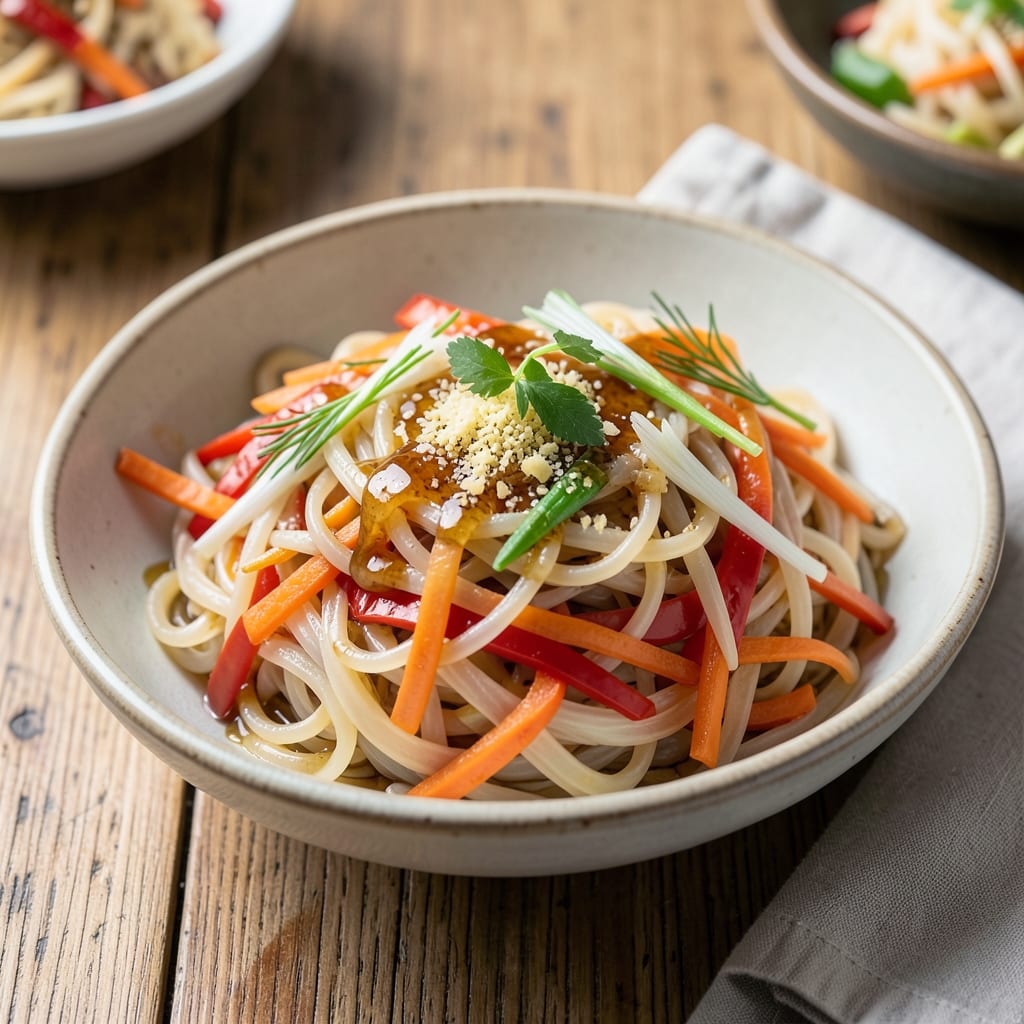
This Asian rice noodle side dish transforms simple ingredients into a vibrant, umami-packed wok-tossed creation that balances crunchy texture with bright ginger-lime zing. The secret lies in perfectly cooked rice noodles that absorb flavor without becoming mushy, paired with a quick stir-fry of crisp vegetables and aromatic seasonings. I developed this recipe after realizing how often restaurant-quality sides disappear from home kitchens—until now.
The process is straightforward yet transformative: cook the noodles just until pliable, then toss them with a savory-sweet sauce featuring soy, sesame oil, and a touch of honey. The vegetables—shredded carrots, bell peppers, and scallions—add color and texture, while fresh ginger and lime juice cut through the richness. This dish delivers restaurant-quality results in under 20 minutes, making it ideal for weeknight meals or Asian-inspired gatherings.
What you'll end up with is a dish that's equally at home as a side for grilled proteins or as a light main course. The noodles remain tender yet hold their shape, the vegetables stay crisp, and the sauce coats every strand with a perfect balance of umami and bright acidity. Serve immediately while warm, or let it sit for 10 minutes to allow flavors to meld even deeper.
For extra depth, consider adding toasted sesame seeds or chopped peanuts at the end. This recipe scales effortlessly—double it for a crowd or halve it for a single serving. The beauty lies in its versatility while maintaining that essential restaurant-quality crunch and zing.
Ingredients for asian rice noodle side dish
Restaurant-quality wok-tossed noodles begin with these precise ingredients balancing texture and umami.
| Ingredient | Amount | Notes |
|---|---|---|
| Rice Noodles 🍜 | 8 oz | Flat or round type, uncooked |
| Sesame Oil 🫒 | 1 tbsp | Toasted for aroma |
| Carrots 🥕 | 2 medium | Shredded, fine julienne |
| Red Bell Pepper 🌶️ | 1 medium | Thinly sliced, seeds removed |
| Scallions 🧅 | 3 whole | Thinly sliced, white/light green parts |
| Fresh Ginger 🌿 | 1 inch | Peeled, finely minced |
| Lime Juice 🍋 | 2 tbsp | Freshly squeezed |
| Low-Sodium Soy Sauce 🍶 | 2 tbsp | Kikkoman preferred |
| Honey 🍯 | 1 tbsp | Wildflower preferred |
| Vegetable Oil 🫒 | 1 tbsp | For wok tossing |
| Toasted Sesame Seeds 🌱 | 1 tbsp | Optional garnish |
| Salt 🧂 | ½ tsp | Diamond Crystal preferred |
| Black Pepper 🌶️ | ¼ tsp | Freshly cracked |
| Chopped Peanuts 🥜 | ¼ cup | Crushed, optional garnish |
The rice noodles are non-negotiable—Vietnamese-style or Thai-style from Asian markets hold up best to stir-frying. Look for packages labeled "vermicelli" or "sen lek" for authentic texture. The shredded carrots should be uniformly thin—a mandoline makes this job effortless, but a sharp knife works too. Fresh ginger is essential here; pre-grated loses potency fast. For the bell pepper, red or yellow varieties add vibrant color, but green works in a pinch. Scallions are the unsung hero—use the white and light green parts only for maximum flavor without bitterness.
No sesame oil? Neutral oil plus 1/2 tsp toasted sesame seeds mimics the aroma. Substitute coconut aminos for soy sauce in a 1:1 ratio if you're avoiding sodium. The honey can be swapped for maple syrup, though it adds a different depth. For extra crunch, crispy shallots from the store work beautifully. If you're prepping ahead, store the sauce components separately—mix just before tossing to maintain that bright, fresh zing. The peanut garnish? Store-bought crushed peanuts are fine, but toast your own for superior flavor.
Noodles cook in under 3 minutes—set a timer and watch closely. They should be pliable but not mushy. Store prepped vegetables in airtight containers with paper towels to absorb moisture, keeping them crisp for up to 3 days. The sauce components last 1 week in the fridge, while toasted sesame seeds stay fresh for 3 months in a cool, dark place. This dish reheats beautifully—just add a splash of water or oil to prevent drying. For meal prep, portion into glass containers to maintain texture and prevent sogginess.
Why You'll Love This Recipe
- One-Pan Magic: I swear by this—just toss everything in one skillet with a splash of water, cover it, and walk away. No boiling pots, no sticky messes, just that perfect al dente texture from the steam.
- Sesame Oil Magic: That first hit of sesame oil when you stir it in? Chef’s kiss. It’s nutty, toasty, and somehow makes even the simplest veggies taste like they’ve been simmered for hours—no fancy marinades needed.
- Lunchbox Hero: Between us, this is my go-to for packed lunches. The noodles stay tender, the veggies hold their crunch, and it reheats like a dream. My kids actually finish what’s in their containers—unheard of.
- Budget Stretch: Carrots, bell peppers, and a bag of rice noodles? We’re talking under $5 for a side that feels fancy. Plus, the leftovers? Still delicious the next day, no sad soggy noodles here.
Step-by-step instructions for wok-tossed umami crunch noodles
Master this vibrant stir-fry technique for restaurant-quality texture and flavor balance every time.
Prep All Ingredients for Even Cooking
Start by soaking the 8 oz rice noodles in warm water for 10-12 minutes until pliable but not mushy. Drain and rinse briefly under cold water to stop cooking - they'll finish in the wok. While they soak, peel and finely mince the 1 inch fresh ginger using a microplane for maximum aromatic release.
Julienne the 2 medium carrots into fine matchsticks (about ¼-inch thick) and slice the 1 medium red bell pepper into thin strips. Thinly slice the 3 whole scallions, separating the white and light green parts. Chop the 0.25 cup peanuts coarsely for texture. Organization here prevents chaos during the quick cooking process - I always prep everything before touching the wok.
Build the Flavor Base in the Wok
Heat a wok or large skillet over high heat until smoking, then add 1 tablespoon vegetable oil. Toss in the ginger and let it sizzle for 10 seconds until fragrant - this prevents burning while extracting flavor. Add the 1 tablespoon sesame oil and swirl to coat the wok completely.
Immediately add the 0.5 tsp salt and 0.25 tsp black pepper, stirring constantly for 20 seconds to toast the spices. This step develops depth before adding any vegetables. Watch carefully - the spices should darken slightly but not burn. If the wok isn't hot enough, the spices will lose their punch.
Stir-Fry Vegetables for Crisp-Tender Texture
Add the carrots and bell pepper to the wok, tossing vigorously for 2-3 minutes until they begin to soften but still maintain their shape. The goal is crisp-tender - they should offer slight resistance when pierced with chopsticks. Add the white parts of scallions now and stir for 30 seconds to wilt them slightly.
Pour in the 2 tablespoons low-sodium soy sauce and 1 tablespoon honey, immediately tossing everything together. The sauce should cling to the vegetables, creating a glossy coating. If the mixture seems dry, add 1 tablespoon water to help distribute the sauce evenly. This is where the umami-sweet balance develops - don't skip the tossing.
Combine Noodles and Finish with Zing
Add the drained rice noodles to the wok, breaking up any clumps as they cook. Toss everything together for 3-4 minutes until the noodles are evenly coated and heated through. The noodles should be tender but still slightly chewy - they'll continue cooking slightly from residual heat.
Remove the wok from heat and stir in the 2 tablespoons lime juice and remaining light green scallion parts. The acidity brightens the dish immediately. For extra crunch, sprinkle with 1 tablespoon toasted sesame seeds and 0.25 cup chopped peanuts, tossing gently to distribute. The texture contrast between the tender noodles and crisp peanuts is what makes this dish special.
Serve Immediately for Peak Freshness
Transfer the noodles to serving plates and garnish with additional toasted sesame seeds if desired. Serve while hot - the flavors meld best when eaten immediately. For best results, serve as a side to grilled proteins or as a light main with a fried egg on top. The dish should have bright, balanced flavors with each component distinct yet harmonious.
If making ahead, assemble the components separately and combine just before serving. The noodles will soften further if reheated, so I recommend making fresh for optimal texture. The ginger-lime zing should linger on your palate, while the peanuts provide satisfying crunch with every bite.
Pro Tips For Making Asian Rice Noodle Side Dish
- PREP NOODLES RIGHT: Soak your rice noodles in warm water (not boiling) for 5-7 minutes—just until pliable, not mushy. Over-soaking turns them to glue, and under-soaking leaves them chewy. Drain and rinse with cold water to stop cooking; they’ll finish in the pan. ---
- JULIENNE UNIFORMLY: Carrots and bell pepper should be cut into matchsticks no thicker than 1/8-inch. Thicker pieces stay crunchy while the noodles soften—uneven texture ruins the harmony. A mandoline speeds this up, but a sharp knife works fine if you take your time. ---
- SAUTE SCALLIONS FAST: Toss scallions into the pan last, after the carrots and peppers. They’ll wilt in 10 seconds—any longer, and they turn bitter. If they’re stubborn, add a splash of water to steam them down instead of burning. ---
- TOSS WITH OIL HOT: Heat your wok or pan until a drop of water sizzles violently. Toss in the noodles with 1 tablespoon sesame oil first—they’ll crisp slightly, adding texture instead of turning soggy. Add veggies next, then the rest of the oil.
Flavor customization for this dish
Spicy Kick Options
For heat lovers, add 1 tsp chili crisp or 1 tbsp sambal oelek (like Maesri brand) when tossing the vegetables. This adds fiery depth without overpowering the dish. I recommend starting with ½ tsp and adjusting to taste—Asian chili oils have intense heat. For a smoky kick, swap ½ tsp smoked paprika into the spice toast step. 🌶️
Sweet Variations
Swap the honey for 1 tbsp hoisin sauce to deepen the umami-sweet balance. I’ve also had great success with 1 tsp mirin (Japanese sweet rice wine) mixed into the soy sauce for a subtler sweetness. For caramelized notes, lightly brown 1 tbsp brown sugar in the wok before adding vegetables. This works especially well with pineapple or mango chunks.
Herb Infusions
Add 1 tbsp chopped cilantro or 1 tsp Thai basil at the end for a fresh herbal note. For a more complex profile, blend ½ tsp lemongrass paste (like Simply Organic) into the sauce. Fresh mint leaves also pair beautifully—toss in 2 tbsp chopped mint after removing from heat for a bright, refreshing twist. 🌿
Protein Additions
Transform this into a complete meal by stir-frying ½ lb shrimp or 4 oz chicken breast with the vegetables. For vegetarian options, add ½ cup edamame or ½ cup baked tofu cubes (pressed to remove excess water). I like to season proteins with ½ tsp five-spice powder before adding them to the wok for extra aroma.
Citrus Brightness
Swap lime juice for 2 tbsp yuzu juice (if available) or 1 tbsp lemon juice for a slightly different citrus profile. For a tropical twist, add 1 tbsp pineapple juice along with the lime. The acidity helps cut through the richness, so don’t skip this step—it’s what makes the dish truly sing. 🍋
Texture Contrasts
For extra crunch, top with 2 tbsp crushed wasabi peas or 1 tbsp fried shallots (like Kikkoman brand). Crispy fried onions also work well—toss them in just before serving. If you love nutty flavors, add 1 tbsp chopped roasted cashews alongside the peanuts. These additions elevate the dish from simple to restaurant-worthy. 🥜
Nutrition facts
Frequently asked questions
Can I use dried rice noodles instead of fresh?
This recipe is designed specifically for dried rice noodles, which are the standard for stir-frying. Soak them in warm water for 10-12 minutes until pliable but still slightly firm - they'll finish cooking in the wok. The key is not to over-soak, or they'll turn mushy during stir-frying. Pro tip: Use a timer and check frequently after 8 minutes.
What if I don't have a wok? Can I use a regular pan?
Yes, any large, heavy-bottomed skillet works perfectly! The key is maintaining high heat and tossing vigorously to get that wok-hei (breath of the wok) flavor. A cast-iron skillet or stainless steel pan conducts heat well. If your pan isn't wide enough, cook in batches - just keep everything moving to prevent sticking.
How do I prevent the noodles from sticking together?
Break up any clumps immediately when adding the noodles to the wok, and toss constantly for the full 3-4 minutes. The slight residual starch on the noodles causes sticking, so keep them moving! Also, make sure your wok or pan is properly heated before adding oil - this creates a non-stick surface. A splash of water can help loosen clumps if needed.
Can I make this dish ahead of time?
For best texture, it's ideal to prepare fresh, but you can assemble components separately. Cook the noodles and vegetables ahead, then store them separately in airtight containers. When ready to serve, quickly reheat the vegetables in the wok with a bit of oil, then toss in the noodles and finish with the sauce. The noodles will soften slightly but won't become mushy if reheated properly.
What's the best way to serve this dish?
This vibrant noodle dish works beautifully as a side for grilled proteins like chicken, pork, or shrimp. For a complete meal, top with a fried egg or add cooked protein directly to the wok. It also makes a light main course when served with fresh herbs and extra lime wedges. The bright ginger-lime zing pairs especially well with spicy dishes to balance flavors.