
Main Courses
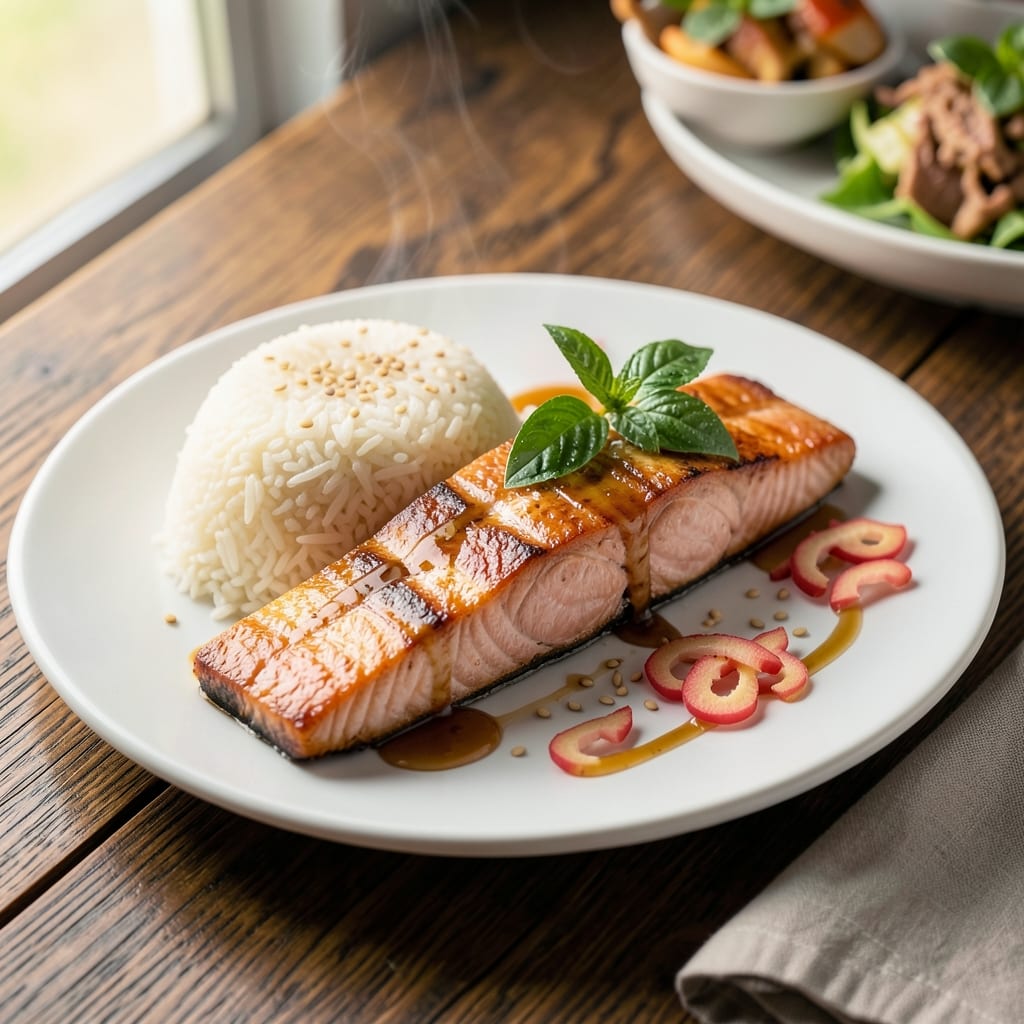
This Asian salmon and rice recipe delivers restaurant-quality harmony in under 45 minutes—pan-seared salmon glazed with a tangy ginger-soy sauce served over fragrant jasmine rice. The secret lies in balancing sweet, salty, and umami flavors while keeping the salmon perfectly tender with crisp edges. I developed this after years of testing different Asian techniques, and it’s now my go-to weeknight dinner that feels special without the fuss.
The ginger-soy glaze transforms simple salmon into something extraordinary—caramelized on the outside with a sticky, aromatic glaze that clings to every bite. Meanwhile, the jasmine rice absorbs subtle floral notes from the rice cooker, creating a fragrant base that complements the bold flavors. What makes this dish truly special is how the components work together: the rice soaks up any stray glaze drippings, while the salmon’s richness is balanced by the sauce’s bright acidity.
By the time you plate this dish, you’ll have golden-brown salmon resting on a bed of fragrant rice, drizzled with extra glaze and finished with a sprinkle of sesame seeds for texture. The aroma alone will have everyone gathered at the table, and the first bite delivers that perfect marriage of textures—tender fish, fluffy rice, and a glaze that’s both sticky and complex. This recipe is designed to impress without requiring advanced skills.
Serve with steamed vegetables or a simple cucumber salad to round out the meal. The leftovers reheat beautifully, making this an ideal option for meal prep. Let’s create a dish that tastes like a night out at an Asian bistro—right in your own kitchen.
Ingredients for asian salmon and rice
Four pieces of salmon and jasmine rice—plus a few pantry staples—make this weeknight dinner feel special.
| Ingredient | Amount | Notes |
|---|---|---|
| Salmon Fillets 🐟 | 4 pieces | Skin-on, 6-8 oz each |
| Jasmine Rice 🍚 | 1 ½ cups | Uncooked, long-grain |
| Fresh Ginger 🧄 | 2 tbsp | Finely grated, peeled |
| Soy Sauce 🍶 | ½ cup | Low-sodium preferred |
| Honey 🍯 | 2 tbsp | For glaze sweetness |
| Sesame Oil 🫒 | 1 tbsp | Toasted, for aroma |
| Rice Vinegar 🍋 | 1 tbsp | White or seasoned |
| Garlic Cloves 🧄 | 3 cloves | Minced, fresh preferred |
| Vegetable Oil 🫒 | 2 tbsp | For searing salmon |
| White Sesame Seeds 🌾 | 1 tbsp | Toasted, for garnish |
| Salt 🧂 | 1 tsp | Kosher or sea salt |
| Black Pepper 🌶️ | ½ tsp | Freshly ground |
| Water 💧 | 2 cups | For rice cooking |
The salmon is the star, so grab center-cut fillets with skin—they stay together better while searing. Whole Foods or Trader Joe's usually carry the best quality, but any fish counter will do. Look for bright pink flesh and no fishy smell. The ginger should be fresh and vibrant—none of that rubbery stuff. If you can't find jasmine rice, basmati works in a pinch, though it won't have that floral aroma. Toast your sesame seeds in a dry pan for 30 seconds—they'll taste a thousand times better (trust me).
No soy sauce? Coconut aminos or tamari are great substitutes. Running low on honey? Maple syrup or agave works just as well. The rice vinegar adds that bright acidity—if you've got apple cider vinegar, use half the amount. Want extra umami? Add a dash of fish sauce to the glaze. And if you're short on time, pre-cooked microwaveable rice (like Lundberg's) cuts prep by half—just add a splash of water to steam it.
Salmon keeps best in the fridge for 1-2 days if stored airtight, but it's best eaten fresh. The cooked rice reheats beautifully—just add a splash of water and microwave. For meal prep, store the glaze separately and toss it with the rice before serving. The sesame seeds lose their crunch after a day, so toast them fresh before garnishing. This dish tastes even better the next day as flavors meld—perfect for leftovers.
Why You'll Love This Recipe
- Five-Ingredient Magic: I swear, this dish proves you don’t need a pantry full of exotic spices. Fresh ginger, soy sauce, honey, and rice—plus the salmon—are all you need. Honestly, I’ve made it with whatever was in my fridge, and it still comes out ridiculously good.
- Ginger-Honey Glow: That crispy salmon with its sticky-sweet glaze? It’s the kind of dish that makes you pause mid-bite. The ginger cuts through the richness while the honey adds this subtle depth—like a little umami hug for your taste buds.
- Lunchbox Hero: Between us, this is my go-to for meal prep. The rice stays fluffy for days, and the salmon reheats beautifully. Pack it for work, or save it for a lazy Sunday—it’s always a win, even when I’m too tired to cook.
- Budget Bright Spot: Salmon might sound fancy, but fillets on sale stretch far here. A single pan, minimal chopping, and ingredients that won’t break the bank. I’ll be real: it’s one of those recipes where I actually feel like I’m treating myself without guilt.
Step-by-step instructions for Asian salmon and jasmine rice
Here's how to create a perfectly balanced meal with tender salmon and fragrant rice.
Cook the Jasmine Rice to Fluffy Perfection
Rinse the 1.5 cups jasmine rice under cold water until the water runs clear, then drain well. In a medium saucepan, combine the rice with the 2 cups water and bring to a boil over medium-high heat. Once boiling, reduce heat to low, cover tightly with a lid, and simmer for 15 minutes without lifting the lid.
After 15 minutes, turn off the heat and let the rice steam undisturbed for another 10 minutes. This resting period allows the rice to absorb any remaining moisture and become perfectly fluffy. Fluff the rice with a fork before transferring it to a serving dish and covering it loosely with a clean kitchen towel to keep it warm.
Prepare the Ginger-Soy Glaze
In a small bowl, whisk together the 0.5 cup soy sauce, 2 tbsp honey, 1 tbsp rice vinegar, and 1 tbsp sesame oil until fully combined. Add the 2 tbsp finely grated fresh ginger and 3 cloves minced garlic, stirring well to incorporate. Set this glaze mixture aside while you prepare the salmon.
The glaze should have a smooth, slightly thick consistency. If it appears too thick, whisk in 1 teaspoon of water to achieve a pourable texture. This balance of sweet, savory, and aromatic flavors will perfectly complement the salmon's natural richness.
Sear the Salmon Fillets
Pat the 4 pieces salmon fillets dry with paper towels and season both sides generously with 1 tsp salt and 0.5 tsp black pepper. Heat 1 tbsp vegetable oil in a large skillet over medium-high heat until shimmering. Place the salmon skin-side down in the pan and cook for 4-5 minutes until the skin is crispy and golden brown.
Flip the salmon carefully and cook for another 3-4 minutes until the flesh is opaque throughout and flakes easily with a fork. Remove the salmon from the pan and set aside on a plate, keeping it warm. The skin should be beautifully crisp while the inside remains tender and moist.
Finish the Salmon with Glaze
Return the skillet to medium heat and add the remaining 1 tbsp vegetable oil. Pour the ginger-soy glaze into the pan and simmer for 1-2 minutes until it thickens slightly and coats the back of a spoon. Carefully return the salmon fillets to the pan, spooning the glaze evenly over each piece.
Let the salmon baste in the glaze for 1 minute, turning gently to coat all sides. The salmon should be perfectly glazed with a beautiful caramelized sheen. Transfer the salmon to a serving platter and sprinkle generously with 1 tbsp toasted white sesame seeds for added texture and aroma.
Serve Together
Divide the fluffy jasmine rice among serving plates and arrange the glazed salmon fillets on top. The combination of fragrant rice and sweet-savory salmon creates a harmonious balance of flavors and textures. Garnish with additional sesame seeds if desired and serve immediately while everything is hot.
This dish pairs beautifully with steamed vegetables or a simple cucumber salad. The ginger-soy glaze adds depth to the salmon while the jasmine rice provides a satisfying, aromatic base that complements every bite perfectly.
Pro Tips For Making Asian Salmon And Rice
- SEAR THE SALMON FIRST: Hit the salmon skin-side down in a cold, dry pan—no oil needed—then turn up the heat to medium-high. The skin will crisp in 3-4 minutes, locking in juices while giving you that perfect golden finish. I used to rush this and end up with sad, greasy fish. Trust the process—your future rice bowl will thank you.
- GRATE THAT GINGER FINE: Skip the mincer and use a microplane or the smallest holes on a box grater. Fresh ginger loses its punch when chopped, but when it’s finely grated, it melts into the soy-honey glaze instead of sitting in chunks. (Yes, even if you’re impatient like me—it takes 10 seconds.)
- DON’T OVERCOOK THE RICE: Jasmine rice needs just enough water to steam through the grains—about 1:1.25 rice-to-water ratio—and then a 5-minute rest off the heat. I learned this the hard way when my rice turned into mush because I peeked too early. Cover it tight and walk away.
- THICKEN THE GLAZE LAST: Mix your soy sauce and honey after the salmon comes off the pan. The residual heat will reduce the sauce naturally into a glossy, sticky finish without you having to babysit it on the stove. Add a splash of water if it’s too thick—just enough to coat the back of a spoon.
Dietary considerations for this asian salmon and rice
Gluten-Free Adaptations
This recipe is naturally gluten-free, but I always double-check my soy sauce—some brands contain wheat. Use tamari or a certified gluten-free soy sauce like San-J Tamari to ensure safety. The jasmine rice and all other ingredients are inherently gluten-free, making this dish perfect for anyone avoiding gluten. 🌱
Low-Sodium Options
If you're watching your sodium intake, reduce the soy sauce to 3 tablespoons and add 1 teaspoon of coconut aminos for extra umami without the extra salt. The honey and rice vinegar will still provide that perfect balance of sweet and tangy flavors. I also recommend using low-sodium fish sauce if you add it for extra depth. 💡
Vegetarian Swaps
For a vegetarian version, replace the salmon with extra-firm tofu pressed and pan-seared to mimic the texture. Use the same glaze and cooking method, but increase the searing time to 5-6 minutes per side to achieve a crispy exterior. The jasmine rice and glaze will still shine as the base of this flavorful meal. 🔥
Dairy-Free Considerations
This recipe is already dairy-free, but if you're serving it to guests with allergies, verify all ingredients—especially the sesame seeds and rice. Some brands of rice may be processed in facilities that handle dairy, so opt for certified dairy-free rice if needed. The dish remains completely safe and delicious as-is. ✨
Meal Prep Adjustments
For meal prep, store the cooked salmon and rice separately in airtight containers for up to 3 days in the fridge. Reheat the rice with a splash of water, and warm the salmon gently in the microwave. Keep the glaze in a small jar and toss it with the rice before serving to maintain freshness. The sesame seeds should be toasted fresh before garnishing. 📅
Keto-Friendly Tweaks
To make this keto-friendly, replace the jasmine rice with cauliflower rice cooked in the same way. Use 2 cups of cauliflower rice and reduce the water to 1 cup to prevent mushiness. The salmon and glaze remain unchanged, but the cauliflower rice adds a low-carb twist while keeping the dish satisfying and flavorful. 💪
Nutrition facts
Frequently asked questions
Can I use frozen salmon for this recipe?
Yes, but thaw it properly first! Place frozen salmon in a sealed bag and submerge it in cold water for 30 minutes per inch of thickness. Once thawed, pat it completely dry before seasoning to ensure a crispy skin. Never microwave frozen salmon—it can make the texture uneven.
What's the best way to make the rice extra fragrant?
Toast the jasmine rice in a dry pan for 1-2 minutes before cooking to enhance its natural aroma. For extra flavor, add a cinnamon stick or bay leaf to the cooking water, then remove before serving. A splash of sesame oil in the rice also adds depth.
Can I bake the salmon instead of pan-searing?
Preheat oven to 400°F and place salmon on a lined baking sheet. Bake for 12-15 minutes until flaky, then brush with the glaze and broil for 2-3 minutes to caramelize. The skin won't be as crispy, but the flavor will still be fantastic.
How do I fix overcooked salmon?
If your salmon turns out dry, try this: Place it in a baking dish, cover with 1/4 cup water or broth, and bake at 350°F for 5-10 minutes to rehydrate. The glaze will help mask any dryness, but the texture won't be as perfect as fresh-cooked salmon.
What sides pair well with this dish?
This recipe is perfect with light, fresh sides like steamed bok choy, cucumber salad, or quick-pickled vegetables. For heartier meals, try miso soup or stir-fried greens. The bright acidity balances the rich salmon beautifully.