
Main Courses
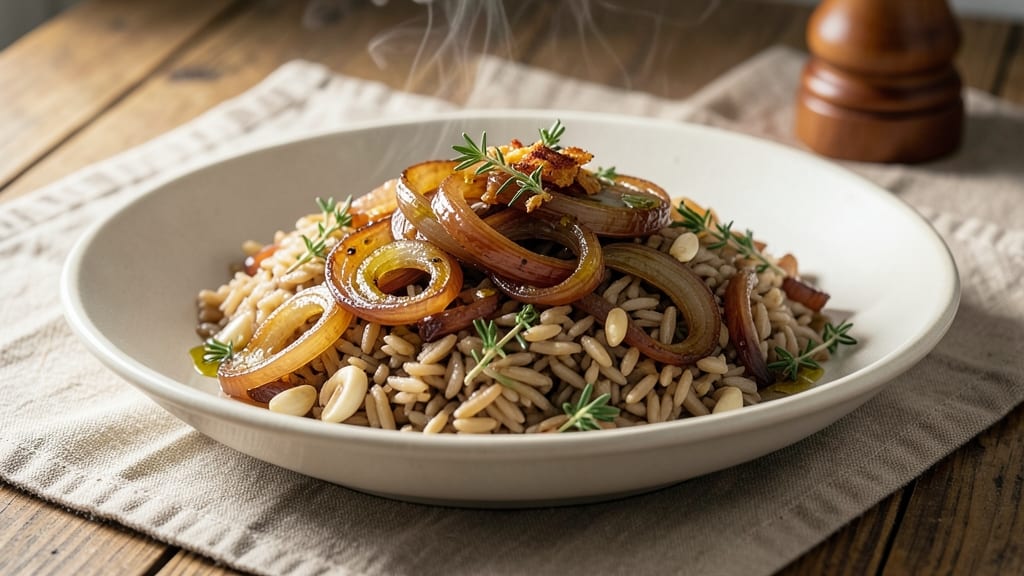
This brown onion rice recipe transforms simple ingredients into a rich, caramelized side dish that steals the spotlight at any meal. The secret lies in slow-cooking onions until they're sweet and golden, then combining them with nutty brown rice for a texture and flavor that's impossible to resist.
It's the kind of dish that elevates ordinary meals into something special—no fancy techniques required.
The process is straightforward: sauté onions until deeply caramelized, toast brown rice for nutty depth, then simmer everything together in flavorful broth.
The result is perfectly tender rice infused with sweet, savory onion essence, ready to pair with grilled meats, roasted vegetables, or even stand alone as a hearty vegetarian main. Each bite delivers that perfect balance of caramelized sweetness and earthy rice—proof that simple ingredients can create extraordinary flavor.
Ingredients for brown onion rice
Sweet caramelized onions meet nutty brown rice in this one-pan masterpiece.
| Ingredient | Amount | Notes |
|---|---|---|
| Brown Onions 🧅 | 2 whole | Yellow or red, sliced into even rounds |
| Long-Grain Brown Rice 🍚 | 1 cup | Uncooked, rinsed thoroughly |
| Vegetable Broth 💧 | 2 cups | Low-sodium preferred, homemade or quality brand |
| Extra-Virgin Olive Oil 🫒 | 2 tbsp | For sautéing onions, fruity variety |
| Garlic Cloves 🧄 | 3 cloves | Minced finely for depth |
| Dried Thyme 🌿 | 1 tsp | Or 1 tbsp fresh, finely chopped |
| Diamond Crystal Kosher Salt 🧂 | 1 ½ tsp | Adjust to taste, sea salt works too |
| Ground Black Pepper 🌶️ | ½ tsp | Freshly cracked for best flavor |
| Unsalted Butter 🧈 | 1 tbsp | Cold, for finishing touch |
| Fresh Parsley 🌿 | ¼ cup | Chopped, for vibrant garnish |
| Balsamic Vinegar 🍷 | 1 tsp | For bright acidity finish |
| Honey 🍯 | 1 tsp | Optional, for subtle sweetness |
The onions are the star—yellow or red varieties work best for their natural sweetness. Whole Foods or Trader Joe's carry excellent quality, but any grocery store will have suitable options. Look for onions that are firm and free of soft spots; larger onions yield more caramelized goodness. For the rice, long-grain brown rice is ideal—it holds its shape while absorbing the onion broth beautifully. If you're short on time, 365 Organic or Lundberg brands are reliable pantry staples. The vegetable broth should be low-sodium to control seasoning; homemade is best, but quality store-bought like Pacific Foods or Imagine works perfectly. Toast your rice lightly before adding liquid—this enhances its nutty flavor and prevents mushiness.
No fresh thyme? Dried works at one-third the amount, but fresh is preferred for its vibrant aroma. Substituting garlic powder for minced garlic is possible, though you'll lose some complexity—use half the amount and add a pinch of onion powder to compensate. For the olive oil, avoid light or refined varieties—they lack the fruity depth needed for caramelization. California Olive Ranch or Colavita are excellent choices. The butter should be unsalted to maintain precise seasoning control. If you're avoiding dairy, vegan butter works just as well. The parsley is purely decorative but adds freshness; if you're out, cilantro or basil can stand in. The honey is optional but recommended for balancing the dish's richness—local raw honey adds subtle floral notes, while store-bought works fine in a pinch.
This dish reheats beautifully—simply add a splash of broth and cover for 10 minutes. Store in an airtight container for up to 5 days in the fridge, though the flavor deepens overnight. For longer storage, freeze portions for 3 months; thaw in the fridge before reheating. The caramelized onions can be prepped ahead and stored separately for 4 days—just reheat them gently before combining with the rice. The finished dish pairs exceptionally with grilled salmon, roasted chicken, or hearty vegetable stews. For a vegetarian meal, serve with sautéed mushrooms or a fresh garden salad to round out the plate.
Why You'll Love This Recipe
- That’s the secret: slow-cooked brown onions until they’re sweet and sticky. Paired with garlic and olive oil, it’s the kind of flavor that lingers—rich, savory, and just a little addictive. My picky eater even asks for seconds now.
- One-Pot Magic: I swear by this recipe when I’m too tired to wash pots—just brown the onions with olive oil, toss in the rice, add broth, and let it simmer. No straining, no fuss, and honestly, the caramelized onions make it taste like you spent hours.
- Caramelized Crunch: That’s the secret: slow-cooked brown onions until they’re sweet and sticky. Paired with garlic and olive oil, it’s the kind of flavor that lingers—rich, savory, and just a little addictive. My picky eater even asks for seconds now.
- Prep-Ahead Powerhouse: Make a big batch on Sunday, and you’ve got lunch or dinner covered all week. It reheats beautifully, keeps well in the fridge, and honestly? I’ve even frozen portions for lazy days. The rice stays fluffy, and the onions keep their depth.
Step-by-step instructions for brown onion rice
Transform simple ingredients into a rich, caramelized rice dish with this straightforward method.
Sauté the Brown Onions Until Deeply Caramelized
Heat the 2 tablespoons extra-virgin olive oil in a medium saucepan over medium-low heat. Add the 2 whole brown onions, sliced into even rounds, and cook undisturbed for 15 minutes. This slow cooking time allows the onions to break down and develop their signature sweetness.
After 15 minutes, stir the onions gently with a wooden spoon. You'll notice they've softened and begun to release their natural sugars. Continue cooking for another 10-15 minutes, stirring occasionally, until the onions are deep golden brown and almost jam-like in texture. This caramelization creates the rich base flavor for your rice. If they start to stick, add a splash of water to deglaze, but avoid over-stirring to prevent burning.
Add Aromatics and Toast the Rice
Once the onions are beautifully caramelized, push them to one side of the pan and add the 2 tablespoons unsalted butter. When the butter has melted and foamed, add the 3 minced garlic cloves and cook for 30 seconds until fragrant—this prevents the garlic from burning, which would make the dish bitter.
Add the 1 cup long-grain brown rice, spreading it evenly over the onions and garlic. Stir to coat the rice in the caramelized onion mixture, then increase the heat to medium-high. Toast the rice for 2-3 minutes, stirring constantly, until you can smell its nutty aroma. This step enhances the rice's flavor and prevents it from becoming mushy. The rice should look slightly translucent at the edges when done.
Deglaze and Simmer with Broth
Pour in the 2 cups vegetable broth, scraping up any browned bits from the bottom of the pan with a wooden spoon. Add the 1 teaspoon dried thyme, 1.5 teaspoons diamond crystal kosher salt, and 0.5 teaspoon ground black pepper. Bring the mixture to a gentle boil, then immediately reduce the heat to low and cover the pan with a tight-fitting lid.
Let the rice simmer undisturbed for 25 minutes. This low-and-slow cooking allows the rice to absorb the liquid evenly and develop its characteristic texture. Avoid peeking or stirring—the steam created by the lid is what cooks the rice perfectly. If the liquid seems insufficient at the 20-minute mark, add 1-2 tablespoons of water to ensure the rice finishes cooking properly.
Finish with Bright Flavors
Once the rice has finished cooking, remove the pan from heat and let it sit covered for 5 minutes. This resting period allows the rice to absorb any remaining liquid and develop its final texture. Then, stir in the 1 teaspoon balsamic vinegar and 1 teaspoon honey, along with the 0.25 cup chopped fresh parsley. The vinegar adds a bright acidity that cuts through the richness, while the honey enhances the natural sweetness of the caramelized onions.
For the final touch, taste and adjust the seasoning if needed. The rice should be tender with a slight bite, and the flavors should be well-balanced—sweet from the onions, savory from the broth, and bright from the finishing touches. Serve immediately, garnished with an extra sprinkle of parsley for a vibrant finish.
Pro Tips For Making Brown Onion Rice
- Sear the Onions First: Don’t just chop and toss—cook those brown onions in olive oil on medium-high heat until they’re deeply caramelized at the edges, about 8-10 minutes. I used to skip this, and the flavor was always flat. The Maillard reaction here is where the magic happens, so resist the urge to rush it.
- Use Twice the Garlic: Add minced garlic to the onions when they’re soft but still bright, not crispy. Two cloves is the baseline, but I now double it—just 1 extra minute of cooking to avoid bitterness. The garlic’s sweetness balances the onions’ sharpness, and it makes the broth sing.
- Toast the Rice Dry: Before adding broth, spread the rice in a single layer in the pot and toast it with the onions for 3-4 minutes until it smells nutty. This isn’t just about flavor—it prevents the rice from turning mushy later. Yes, it’ll look uneven at first, but that’s how you get proper texture.
- Simmer, Don’t Boil: Once the broth is added, reduce heat to the lowest setting that keeps a gentle simmer—barely any bubbles, just a soft shimmer. I learned this after watching my rice turn to glue. A tight lid traps steam, so check it occasionally and adjust the heat to stay just below a boil.
Essential equipment for great brown onion rice
Medium Saucepan
This recipe thrives in a medium (3-4 quart) saucepan with a tight-fitting lid—essential for even steaming during the simmering phase. I prefer All-Clad stainless steel for its even heat distribution and durability.
If you're on a budget, a Calphalon nonstick saucepan works beautifully and prevents sticking during caramelization. Avoid shallow pans—they won't hold enough liquid for proper rice cooking. 🔥
Wooden Spoon
A long-handled wooden spoon (about 12 inches) is your best friend for stirring caramelized onions without scraping the bottom. I recommend Oxo Good Grips—its ergonomic handle reduces strain during long cooking sessions.
Avoid metal spoons when stirring onions to prevent sticking. For deglazing, keep a small silicone spatula nearby to scrape up those flavorful browned bits from the pan.
Instant-Read Thermometer
While not strictly necessary, an instant-read thermometer (like Thermoworks ThermoPop) helps ensure your broth reaches 212°F for perfect rice texture. I use mine to check the internal temp of the onions—when they hit 180°F, they're perfectly caramelized.
This tool is especially useful for beginners who worry about overcooking. For advanced cooks, it's a great way to troubleshoot if your rice turns out gummy.
Fine-Mesh Strainer
Rinse your 1 cup brown rice thoroughly in a fine-mesh strainer (I use OXO Good Grips) to remove excess starch—this prevents clumping and ensures fluffy texture. The strainer also comes in handy for washing fresh parsley before chopping.
A collapsible silicone strainer is my go-to for easy storage and cleanup. Pro tip: Rinse rice under cold water until the water runs clear.
Chef's Knife
A sharp 8-inch chef's knife (like Wüsthof Classic) makes quick work of slicing onions into even rounds and mincing garlic. For precision, I recommend Japanese-style knives (such as Shun Premier) for their razor-sharp edges.
Always keep your knife sharp—dull blades crush onions instead of cleanly slicing them, leading to uneven caramelization. A knife sharpener (like Work Sharp) is a game-changer for maintaining performance. 🌟
Nutrition facts
Frequently asked questions
Can I use white onions instead of brown onions?
Yes, but the flavor will be slightly milder and less sweet. White onions work in a pinch, though they lack the deep caramelization potential of brown onions. For best results, use yellow or red onions—they develop more natural sugars during cooking. If you must use white, add an extra ½ teaspoon honey at the end to boost sweetness.
How do I prevent my brown rice from becoming mushy?
Rinse the rice thoroughly before cooking to remove excess starch, then toast it in the pan for 2-3 minutes before adding liquid. Avoid lifting the lid while simmering—steam is what cooks the rice evenly. If your rice still turns out mushy, reduce the broth by ¼ cup next time and check doneness at 20 minutes instead of 25.
Can I make this recipe in a rice cooker?
Caramelize the onions first in a separate pan, then transfer everything to your rice cooker. Use the same liquid ratio (2 cups broth to 1 cup rice) and add the thyme, salt, and pepper. The rice cooker's steam function will handle the rest—just stir in the balsamic and honey at the end. Most rice cookers take 30-35 minutes total.
What if my onions burn before caramelizing?
Lower the heat to medium-low and add 1 tablespoon water to deglaze the pan. Stir gently to release browned bits (these add flavor), then continue cooking at a slower pace. For next time, use a heavier-bottomed pan (like stainless steel) and avoid overcrowding the onions. If they're already burnt, start fresh with new onions and reduce the heat further.
How can I make this vegetarian or vegan?
Swap the vegetable broth for mushroom broth and use vegan butter instead of unsalted butter. For extra umami, add 1 teaspoon soy sauce or 1 tablespoon nutritional yeast when finishing. The dish remains hearty and satisfying—perfect with roasted vegetables or plant-based proteins like tofu or tempeh.