
Main Courses
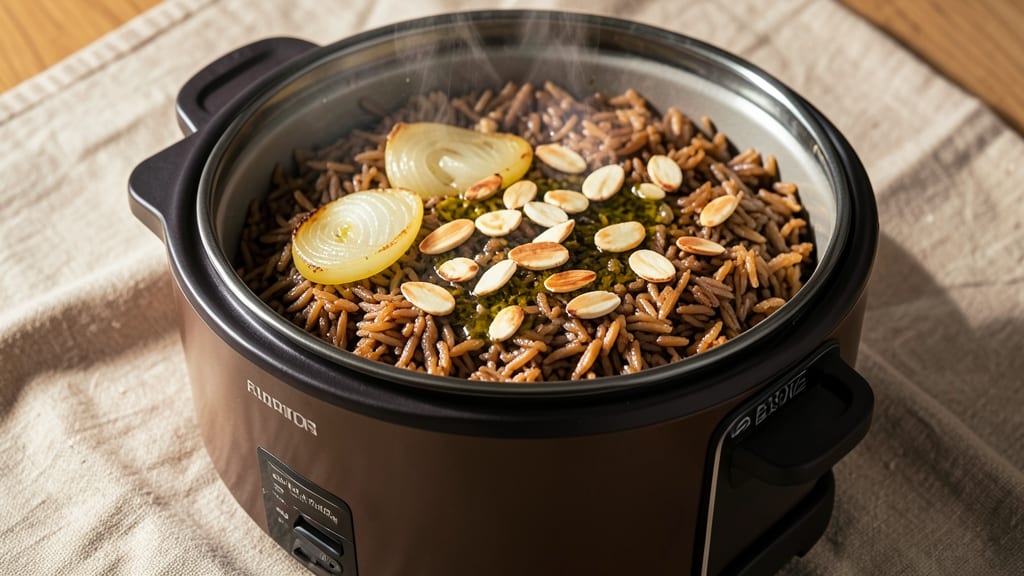
This brown rice cooker recipe transforms simple grains into a fragrant, one-pot savory pilaf with toasted almonds—no stovetop required. The rice cooker's gentle heat ensures perfectly chewy brown rice while the aromatics infuse deeply, creating a dish that's both restaurant-worthy and effortless.
The secret lies in proper water ratios and a sealed lid to trap steam, delivering tender grains every time.
What makes this recipe stand out is its hands-off approach: just combine rice, broth, and spices, then let the cooker do the work. The toasted almonds add crunch and nutty depth, while optional proteins or veggies can be stir-fried separately and mixed in at the end.
This pilaf is versatile enough for weeknight dinners or meal prep, always delivering flavorful, evenly cooked grains with minimal effort.
Ingredients for brown rice cooker
The foundation of this restaurant-worthy pilaf starts with quality grains and aromatic spices.
| Ingredient | Amount | Notes |
|---|---|---|
| Long-Grain Brown Rice 🌾 | 1 ½ cups | Uncooked, rinsed thoroughly |
| Vegetable Broth 💧 | 2 ½ cups | Low-sodium preferred |
| Sliced Almonds 🥜 | ½ cup | Raw, for toasting |
| Yellow Onion 🧅 | 1 whole | Thinly sliced, yellow or red |
| Garlic Cloves 🧄 | 4 cloves | Minced, fresh preferred |
| Extra-Virgin Olive Oil 🫒 | 2 tbsp | For sautéing aromatics |
| Ground Cumin 🌿 | ½ tsp | Toasted for depth |
| Ground Turmeric 🌶️ | ¼ tsp | For vibrant color |
| Ground Coriander 🌿 | ½ tsp | Freshly ground preferred |
| Kosher Salt 🧂 | 1 tsp | Diamond Crystal preferred |
| Black Peppercorns 🌶️ | ½ tsp | Freshly cracked |
| Fresh Parsley 🌿 | ¼ cup | Chopped, for garnish |
| Fresh Lemon 🍋 | 1 whole | Juiced, for brightness |
| Optional Protein 🍗 | 1 lb | Chicken breast or shrimp |
| Optional Vegetable 🥕 | 2 cups | Diced carrots or bell peppers |
The brown rice is the star—opt for long-grain varieties like Basmati or Jasmine for ideal texture. Trader Joe's or Whole Foods carry excellent options in bulk bins, ensuring freshness. Toast the rice in the cooker for 2 minutes before adding liquid to enhance nuttiness. The almonds should be raw, sliced—Costco or Walmart sell them affordably in bulk. For the aromatics, yellow onions and garlic should be freshly minced; pre-minced garlic lacks flavor. The olive oil matters here—California avocado oil or Spanish extra-virgin adds subtle fruitiness that complements the spices.
No vegetable broth? Low-sodium chicken broth works in a pinch, though the flavor will skew slightly savory. Substitute ground coriander with equal parts dried cilantro for a similar earthy note. The spices must be toasted—heat cumin and coriander in a dry pan for 30 seconds until fragrant. For the optional protein, chicken breast or shrimp should be stir-fried separately and added at the end to avoid overcooking. The lemon juice can be substituted with lime juice for a tangier profile, though lemon pairs better with the almonds.
Toasted almonds lose crunch quickly—store them in an airtight container at room temperature for up to 2 weeks. The cooked pilaf reheats beautifully in the rice cooker with a splash of broth. For meal prep, portion into glass containers and refrigerate for 4-5 days or freeze for 3 months. Garnish with fresh parsley just before serving to preserve color and aroma. The dish tastes even better the next day as flavors meld.
Why You'll Love This Recipe
- Set-and-Forget Magic: I swear by this recipe when I’ve got better things to do than stand by the stove. Toss the rice, broth, and aromatics into the cooker, press start, and walk away—no stirring, no stress. The almonds toast themselves to golden perfection while everything else simmers into harmony.
- Nutty Crunch Surprise: That first bite? The toasted almonds crackle against the tender rice, adding texture I didn’t even know I craved. Honestly, I almost skip the almonds at first, but then I remember how they turn this into something ridiculously satisfying.
- Weeknight Workhorse: This is my go-to when I need something hearty but not heavy. Double the batch on Sunday, and you’ve got lunch for days—toss it in wraps, over salads, or straight from the pot. (Yes, even on a Tuesday night when takeout feels like work.)
- Budget-Friendly Staple: Brown rice and veggie broth won’t break the bank, and the almonds stretch further than you’d think. I’ll be real: I often halve the almonds to make it last longer, but no one complains—because the garlic and onion still make it taste like a restaurant dish.
Step-by-step instructions for one-pot savory pilaf with toasted almonds
This method delivers perfectly cooked brown rice with aromatic spices and nutty crunch in your rice cooker.
Sauté Aromatics and Toast Almonds
Heat the 2 tablespoons extra-virgin olive oil in your rice cooker's sauté function over medium heat. Add the 1 whole yellow onion and cook for 5 minutes until softened and translucent. Here's the thing—don't let it brown or it'll overpower the dish.
Add the 4 cloves minced garlic, 0.5 teaspoon ground cumin, 0.25 teaspoon ground turmeric, and 0.5 teaspoon ground coriander, stirring constantly for 1 minute until fragrant. This is where the flavors develop. In a separate small pan, toast the 0.5 cup sliced almonds over medium-low heat for 3-4 minutes until golden and fragrant. Watch them closely—they burn quickly.
Add Protein and Vegetables
If using the 1 pound optional protein (chicken breast or shrimp), add it now and cook for 2-3 minutes until it begins to change color. For shrimp, this means they'll turn opaque. For chicken, it should develop a light golden crust. Remove the protein and set aside temporarily.
Add the 2 cups optional vegetable (diced carrots or bell peppers) to the rice cooker and sauté for 3 minutes until slightly softened. The vegetables should retain some bite—this prevents them from becoming mushy during cooking. If you're using chicken, return it to the cooker now along with any accumulated juices.
Combine Rice and Broth
Rinse the 1.5 cups long-grain brown rice thoroughly under cold water until the water runs clear. This removes excess starch that would make the rice gummy. Add the rice to the rice cooker along with the 2.5 cups vegetable broth, 1 teaspoon kosher salt, and 0.5 teaspoon black peppercorns. Stir gently to combine—you want the rice to be evenly distributed but not mashed.
This is the moment that matters: the rice should be submerged in the broth, but not so much that it becomes waterlogged. The rice cooker's steam will do the rest of the work. If using shrimp, add them now—they'll cook perfectly through during the rice's cooking time.
Cook and Rest
Close the rice cooker lid and select the brown rice setting (or white rice setting for 60 minutes). The rice cooker will automatically adjust the cooking time and temperature. For brown rice, this typically means 45-55 minutes of cooking time, followed by a 10-minute rest period. Don't peek during cooking—each time you open the lid, you release steam and extend the cooking time.
When the rice cooker switches to "keep warm" mode, let the rice rest for 10 minutes before opening. This resting period allows the steam to redistribute and the grains to fully absorb the remaining liquid. The texture should be tender but still have a slight bite—this is perfect brown rice.
Finish and Serve
Gently fluff the rice with a fork, then stir in the toasted almonds and the 0.25 cup chopped fresh parsley. Squeeze in the juice of the 1 whole fresh lemon and toss lightly. The lemon juice brightens all the earthy flavors and cuts through the richness of the almonds. Taste and adjust seasoning if needed—you might need a pinch more salt to balance the lemon.
Serve immediately while the rice is still warm. The dish should have a fragrant aroma with layers of toasted almonds, sautéed aromatics, and the subtle warmth of the spices. Each bite should deliver perfectly cooked rice with a satisfying crunch from the almonds and a touch of acidity from the lemon.
Pro Tips For Making Brown Rice Cooker
- TOAST THE ALMONDS FIRST: The sliced almonds will taste like sawdust if you toss them in raw—toss them in a dry pan over medium heat for 2-3 minutes until golden and fragrant. I learned this the hard way after serving a bowl where the almonds just looked like garnish. Do this while your rice cooks, and they’ll add crunch and depth without stealing heat from your pot.
- SOAK THE RICE 20 MINUTES: Skip the soaking, and your brown rice will turn out gummy or uneven. Rinse it first, then let it sit in the broth (or water) for 20 minutes before cooking—this cuts down on cooking time and prevents the outer layer from staying hard. Pro move: Use the same ratio as white rice (1:2 rice-to-liquid), but add an extra splash of broth if your cooker’s window shows steam but no bubbles.
- SAUTÉ ONIONS LOW AND SLOW: High heat caramelizes onions too fast, and you’ll end up with burnt bits before they soften. Cook them on medium-low with a pinch of salt until they’re translucent and starting to break down—about 8-10 minutes. This builds flavor without turning your broth bitter. (Yes, it takes longer, but your rice will taste like it was made in a restaurant.)
- STIR ONCE AT THE END: Brown rice expands and sticks to the bottom of the cooker if left undisturbed. Set a timer for the last 5 minutes of cooking, then give it one gentle stir with a wooden spoon—just enough to loosen the grains. This keeps them separate and fluffy without turning them mushy. (Your cooker’s “keep warm” function is your friend here; let it sit covered for 10 minutes after cooking for even better texture.)
Storing and reheating this dish
Rice Cooker Storage
Transfer your cooked pilaf to an airtight container while still warm to preserve texture. Let it cool completely before sealing—this prevents condensation that can make the rice soggy.
I use glass containers with snap-on lids for best results. Store in the refrigerator for up to 5 days—the flavors actually deepen as the spices meld. 💫
Freezer-Friendly Method
For longer storage, portion into quart-sized freezer bags with 1 inch headspace to prevent expansion. Press out excess air to avoid freezer burn. This pilaf keeps for 3 months without quality loss.
When reheating, transfer directly from frozen to the rice cooker with ¼ cup water or broth—the built-in steam function revives the texture perfectly. ❄️
Reheating in Rice Cooker
My preferred method is using the rice cooker's steam function or sauté mode. Add the cold pilaf with ¼ cup broth and cook on medium heat for 10-12 minutes, stirring once halfway.
The residual steam redistributes moisture evenly, restoring that perfect chewy texture. Avoid microwaving—it creates uneven heating and rubbery rice. 🔥
Reviving Day-Old Pilaf
If your pilaf seems dry after storage, simply add 2 tablespoons warm broth and stir gently. The rice cooker's gentle heat will rehydrate the grains without overcooking.
For extra flavor, sprinkle with toasted almonds and a squeeze of lemon juice before reheating. This works especially well for meal prep lunches. 💡
Almond Storage Tips
Toasted almonds lose their crunch quickly, so store them separately in a small airtight container at room temperature. Keep them in the fridge for up to 2 weeks if you're prepping ahead.
For maximum freshness, toast a fresh batch and add them just before serving. The aroma difference is noticeable! 🥜
Garnish Before Serving
Fresh parsley and lemon juice should always be added right before serving to preserve their vibrant color and bright flavor. If reheating, store garnishes separately and add them back after warming.
This keeps your pilaf looking restaurant-fresh even when served later. The contrast of warm rice with zesty lemon is what makes this dish special. 🌿
Nutrition facts
Frequently asked questions
Why does brown rice need more water than white rice in a cooker?
Brown rice has an intact bran layer that requires more moisture to soften properly. While white rice typically uses a 1:1.5 rice-to-water ratio, brown rice needs about 1:2.5 to achieve that perfect chewy texture. The rice cooker's sealed lid traps steam, helping the grains absorb moisture evenly without overcooking.
Can I use a rice cooker without a "brown rice" setting?
If your cooker lacks a brown rice setting, use the white rice setting for 60 minutes instead. Brown rice needs extra time to break down its bran layer. Just be sure to let it rest for 10 minutes after cooking—this resting period is crucial for even texture. The steam does most of the work!
What if my rice comes out undercooked or mushy?
Undercooked rice usually means insufficient water or time. For mushy rice, you likely used too much water or didn't rinse the grains first. Rinse brown rice thoroughly before cooking to remove excess starch. If undercooked, add ¼ cup broth and cook for 5 more minutes with the lid sealed. For mushy rice, spread it on a tray to dry slightly before reheating.
How do I adjust this recipe for a larger group?
Scale up using the same ratios: 1.5 cups rice to 2.5 cups liquid per serving. For 8 servings, use 3 cups rice and 5 cups broth. Increase almonds and spices proportionally. Use a larger rice cooker or cook in batches—never overfill beyond the cooker's max capacity. The key is maintaining the right steam-to-grain balance.
Can I substitute vegetable broth with water?
While possible, broth adds critical depth of flavor. If using water, add 1 teaspoon soy sauce or ½ teaspoon bouillon powder to compensate. For maximum flavor, use a mix of ¾ cup water + ¾ cup broth. The broth's umami enhances the spices and almonds, making the dish taste more restaurant-quality.