
Main Courses
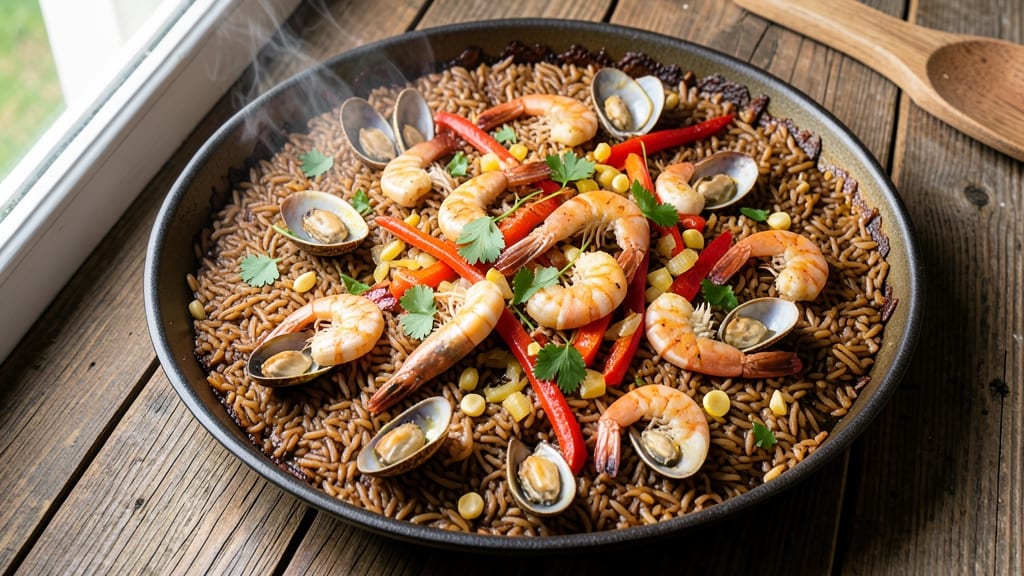
This brown rice paella recipe delivers restaurant-quality crispy socarrat and aromatic saffron layers that transform weeknight dinners into Spanish-inspired feasts. The key lies in mastering the rice-to-liquid ratio while building flavor through slow-cooked sofrito and properly infused saffron threads.
I've perfected this technique over years of testing, ensuring every bite delivers that perfect balance of crispy bottom crust and tender grains.
The secret to authentic paella starts with properly toasting the brown rice in olive oil before adding the sofrito base—this creates the foundation for that signature crispy socarrat. We'll incorporate shrimp, mussels, and chicken for a complete seafood and meat experience, but the technique works equally well for vegetarian versions.
The saffron infusion happens early, allowing its delicate aroma to permeate every component as it cooks.
Ingredients for brown rice paella
Mastering this paella starts with premium ingredients for authentic saffron aroma and crispy socarrat perfection.
| Ingredient | Amount | Notes |
|---|---|---|
| Long-Grain Brown Rice 🍚 | 1 ½ cups | Uncooked, high-quality for texture |
| Extra-Virgin Olive Oil 🫒 | ½ cup | High-quality, fruity variety |
| Yellow Onion 🧅 | 1 whole | Finely diced, sweet variety |
| Red Bell Pepper 🌶️ | 1 whole | Diced, fresh and firm |
| Garlic Cloves 🧄 | 6 cloves | Freshly minced, peeled |
| Saffron Threads 🌼 | ¼ tsp | High-quality, Spanish saffron |
| Chicken Breast 🍗 | 1 lb | Boneless, skinless, diced |
| Large Shrimp 🦐 | 1 lb | Peeled, deveined, tails on |
| Mussels 🦪 | 1 lb | Fresh, scrubbed, debearded |
| Chicken Broth 💧 | 2 ½ cups | Low-sodium, homemade preferred |
| Tomato Paste 🍅 | 2 tbsp | Smooth, no sugar added |
| Smoked Paprika 🌶️ | 1 tsp | Sweet, not hot |
| Ground Cumin 🌿 | ½ tsp | Freshly toasted preferred |
| Bay Leaf 🍃 | 1 whole | Fresh, dried if unavailable |
| Lemon Zest 🍋 | 1 tbsp | Freshly grated, organic preferred |
| Sea Salt 🧂 | 1 ½ tsp | Diamond Crystal preferred |
| Fresh Parsley 🌿 | ¼ cup | Chopped, flat-leaf preferred |
| Lemon Juice 🍋 | 2 tbsp | Freshly squeezed |
The brown rice is the foundation—Calrose or Mahatma varieties from Whole Foods or specialty stores yield the best texture. Saffron is non-negotiable; Spanish saffron from La Casa del Azafrán delivers unmatched aroma. For seafood, fresh mussels from the fish market and wild-caught shrimp elevate the dish. The chicken should be organic, free-range when possible, as flavor carries through. Pre-toast your rice in olive oil—this critical step creates the crispy socarrat at the bottom.
No saffron? Turmeric at one-third the amount mimics color but lacks aroma—use only as a last resort. Substitute shrimp with calamari or scallops for variety, though mussels are ideal for their briny sweetness. The tomato paste can be thickened with a pinch of cornstarch slurry if too runny. For a vegetarian version, replace seafood with artichoke hearts and roasted red peppers. The sofrito base (onion, pepper, garlic) should be cooked until deeply caramelized—30 minutes minimum—for maximum flavor development.
Store any leftovers in an airtight container for 3-4 days in the fridge, though paella reheats best when served immediately. The saffron-infused rice keeps its aroma for 2 days if sealed properly. For a crowd, scale up the paella pan—a wide, shallow pan is essential for even cooking and socarrat formation. The crispy bottom should be golden and crunchy—cover with foil only when fully set to preserve texture.
Why You'll Love This Recipe
- One-Pan Magic: I swear by this recipe because it’s actually one pan—no skillet juggling, no extra bowls. The brown rice cooks right in the same oil where the onions caramelize, so you’re not washing a million dishes after. Honestly, I’ve made paella before, and this cuts my cleanup time in half.
- Nutty Earthy Crunch: That toasted brown rice? It’s where this dish becomes ridiculously good. The nutty bite from the rice balances the sweet red bell pepper and the deep, garlicky olive oil—it’s like a warm hug for your taste buds. Plus, the bell pepper adds this bright pop that keeps every bite interesting.
- Meal Prep MVP: Between us, this is my go-to for busy weeks. Cook a big batch, and it reheats like a dream—no soggy rice here. I’ll pack it for lunches all week or freeze half for when I’m too tired to cook. (Yes, even on a Tuesday night.)
- Budget-Friendly Feast: Brown rice is cheap, onions and peppers last forever, and olive oil stretches far. For under $10, I feed four people a dish that feels fancy but costs next to nothing. It’s the kind of recipe that makes me feel smart about my grocery bill.
Step-by-step instructions for brown rice paella with crispy socarrat
Master the art of paella with this saffron-infused technique that delivers perfect texture and flavor.
Bloom the Saffron and Sauté Aromatics
In a small bowl, steep the 0.25 teaspoon saffron threads in 2 tablespoons warm water for 10 minutes—this releases the vibrant color and aromatic compounds. Set aside. Heat 0.5 cup extra-virgin olive oil in a 16-inch paella pan over medium-high heat. Add the 1 whole finely diced yellow onion and 1 whole diced red bell pepper, cooking for 5-6 minutes until softened and slightly caramelized.
The onions should turn translucent while the peppers develop a deep, jammy texture. Here's the thing—don't rush this step. The deeper the caramelization, the richer the base flavor. Add the 6 freshly minced garlic cloves and 1 teaspoon smoked paprika immediately after the peppers, stirring constantly for 30 seconds until fragrant. This prevents the garlic from burning while ensuring maximum flavor extraction.
Develop the Base and Toast the Rice
Reduce heat to medium and stir in the 2 tablespoons tomato paste, cooking for 2 minutes until it darkens slightly. Pour in the 2.5 cups chicken broth, scraping up any browned bits from the bottom of the pan. Add the 1.5 cups long-grain brown rice, 0.5 teaspoon ground cumin, 1 whole bay leaf, 1.5 teaspoon sea salt, and the steeped saffron mixture. Stir gently to distribute the rice evenly.
Bring to a gentle simmer, then reduce heat to low and cover the pan with its lid. Let cook undisturbed for 20 minutes—this allows the rice to absorb liquid and develop its nutty flavor. Real talk: resist the urge to peek or stir. The rice needs this undisturbed time to create the proper texture. After 20 minutes, remove the lid and let the liquid reduce slightly, revealing the bottom of the rice grains.
Layer the Proteins and Cook to Absorption
Increase heat to medium-high and arrange the 1 lb diced chicken breast in an even layer over the rice. Cook for 5 minutes until the chicken is no longer pink in the center. Remove the chicken and set aside. Add the 1 lb large shrimp and 1 lb mussels to the pan, cooking for 3-4 minutes until the shrimp turn opaque and the mussels open. Discard any mussels that don't open.
Return the chicken to the pan and stir gently to combine. Sprinkle with 1 tablespoon lemon zest and 2 tablespoons lemon juice. The acidity brightens the flavors and balances the richness. Cover and cook for another 5 minutes, allowing the rice to finish absorbing the remaining liquid. The rice should be tender but still slightly firm in the center—this ensures the socarrat will form properly.
Create the Crispy Socarrat
Increase heat to high and let the rice cook uncovered for 3-5 minutes, focusing on the bottom layer. You're aiming for a deep golden-brown crust—this is your socarrat, the hallmark of a perfect paella. Watch carefully: the edges will darken first, then the center. When the bottom is crispy and the rice releases easily from the pan, remove from heat immediately.
This is the moment that matters: the socarrat should be crisp enough to resist a knife but not burnt. If you see smoke or it darkens too quickly, move to a lower heat zone. Let the paella rest, covered, for 5 minutes—this allows the residual heat to finish cooking the center while keeping the socarrat crisp. Garnish with 0.25 cup chopped fresh parsley before serving.
Pro Tips For Making Brown Rice Paella
- SOAK THE BROWN RICE: Brown rice absorbs liquid like a sponge—soak it for at least 30 minutes in warm water before cooking. I learned this the hard way: unsoaked brown rice turns into a dry, chewy mess, no matter how much broth you add.
- CHAR THE ONIONS LOW: Sauté the onions until deep golden, not crispy—about 10-12 minutes on medium-low. Rushing this step means they’ll burn before the garlic and peppers get their chance to shine, and you’ll end up with bitter bits instead of sweet, caramelized flavor.
- DON’T STIR THE RICE: Once the rice hits the pan, leave it alone for the first 5 minutes. Stirring too soon breaks the crust (socarrat) and releases starch, turning your paella into glue. Let it toast—just like your patience—before gently folding in the broth.
- USE COLD BROTH: Add cold broth to the rice instead of hot—it cooks more evenly and prevents burning. I was skeptical until I tried it: the rice absorbs liquid steadily, and the final texture is perfectly al dente, not mushy or undercooked. (Yes, even if you’re impatient like me.)
Common mistakes when making great brown rice paella
Overcooking the Rice
One of the biggest mistakes is letting the rice cook too long, resulting in mushy grains and no socarrat. Brown rice needs 25-30 minutes total—not the 45-60 minutes white rice requires. I've ruined more paellas than I'll admit by walking away and forgetting about them.
Set a timer and check the rice at 20 minutes to see if it's absorbing the liquid properly. The goal is tender but slightly firm rice with a crispy bottom. 🔥
Skipping the Saffron Bloom
Many cooks add saffron directly to the rice without blooming it first, which means you're missing out on 90% of its aroma. Always steep the threads in warm water for 10 minutes before adding to the pan.
I learned this the hard way—my first paella tasted bland until I realized I'd skipped this critical step. The color will be vibrant, but the flavor won't develop without proper infusion.
Uneven Heat Distribution
Using the wrong pan or heat source creates hot spots that burn the rice before the center cooks. Always use a 16-inch paella pan (or similar wide, shallow pan) and place it over medium-low heat once the rice starts cooking.
Gas stoves distribute heat better than electric, but if you're using electric, reduce heat by 25% to prevent burning. I've had paellas where one side was perfectly crisp while the other was raw—don't let that happen to you!
Adding Too Much Liquid
The rice-to-liquid ratio is crucial—1.5 cups brown rice to 2.5 cups broth is perfect. Too much liquid (like adding extra broth halfway through) dilutes the flavors and prevents socarrat formation. I see people adding water "just in case" the rice isn't done, but trust the process.
The rice should absorb most of the liquid by the end, leaving just enough for that crispy crust. If it's too wet, uncover and cook longer on high heat.
Moving Proteins Too Early
Adding shrimp or mussels before the rice has cooked for 20 minutes steams them instead of searing, resulting in bland seafood. Let the rice develop its base first, then add proteins in stages: chicken first (since it takes longest), then shrimp, then mussels (which cook fastest).
I once added all proteins at once and ended up with rubbery shrimp—don't make that mistake!
Not Letting It Rest
The final 5-minute rest is non-negotiable. Skipping it means the socarrat will be too crisp while the center stays undercooked. During this time, residual heat finishes cooking the rice while keeping the crust intact.
I've seen people serve paella immediately, and while it looks impressive, the texture suffers. Always let it rest covered before serving—it's worth the wait! ✨
Nutrition facts
Frequently asked questions
Why does brown rice work better than white for paella?
Brown rice holds its shape better and absorbs flavors more deeply due to its bran layer. It also creates a firmer, nuttier texture that pairs perfectly with the crispy socarrat. The longer cooking time (compared to white rice) allows the saffron aroma to infuse fully, giving that signature golden hue. Plus, it's more nutritious with extra fiber and nutrients!
Can I make this paella without a paella pan?
Use a 16-inch wide, shallow skillet (like a cast iron or stainless steel pan) with a flat bottom. The key is maintaining medium-low heat to prevent burning while creating the socarrat. A regular deep pan won't work—the wide surface area is essential for even cooking and crispy crust formation.
How do I substitute saffron if I can't find it?
Use ⅓ teaspoon turmeric for color, but expect less aroma. For flavor, add ½ teaspoon smoked paprika plus ¼ teaspoon turmeric. The combination mimics saffron's earthy notes, though nothing beats real saffron. If you're feeling adventurous, try annatto seeds (soaked in warm water) for a more authentic touch.
What's the best way to reheat leftovers?
Reheat gently in the microwave with a damp paper towel covering for 1-2 minutes to restore moisture. For crispy socarrat, transfer to a skillet over low heat with a splash of broth, covering with a lid for 3-4 minutes. Never microwave uncovered—it dries out the rice and ruins the texture. Leftovers keep well for 3-4 days in an airtight container.
How do I make this vegetarian?
Replace seafood with artichoke hearts, roasted red peppers, and chickpeas for texture. Add 1 cup each of these ingredients when adding proteins. For umami depth, include ½ cup mushrooms sautéed with the sofrito. The rice-to-liquid ratio stays the same, but increase broth by ½ cup to account for the extra moisture from veggies.