
Side Dishes
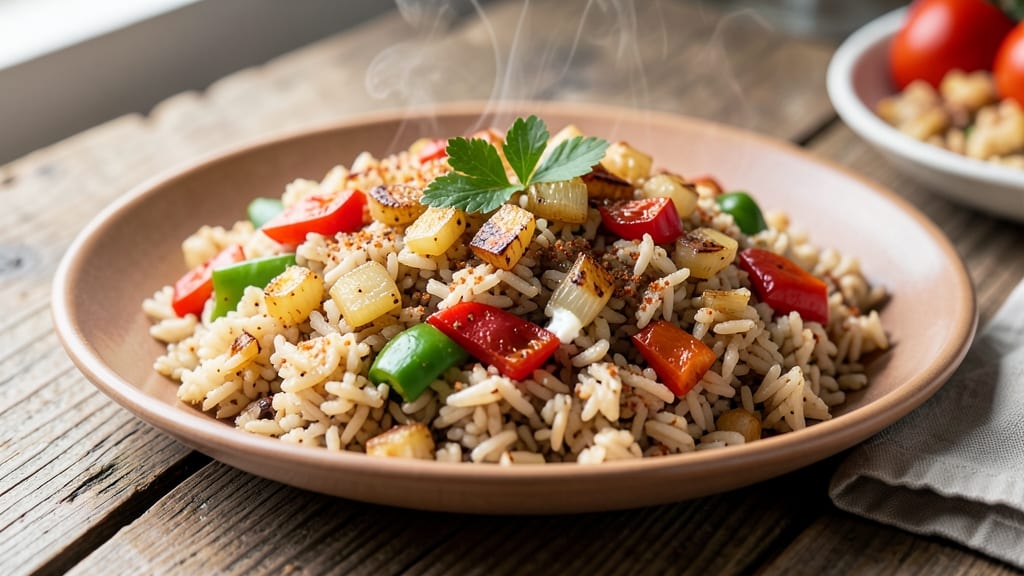
This Cajun rice pilaf recipe transforms simple grains into a bold, aromatic side dish with deep smoky flavors and perfect texture—no fancy technique required.
The key lies in balancing Cajun seasoning with slow simmering, letting the spices infuse the rice until each grain is tender yet slightly crisp at the edges. I developed this version after years of testing, ensuring the rice stays separate and packed with flavor, not mushy or bland.
What sets this pilaf apart is the one-pan method, where onions and bell peppers caramelize before the rice absorbs the rich broth, creating layers of savory depth. The smoky aroma alone will have everyone at the table asking for seconds, while the golden crunch adds a satisfying texture.
Whether serving alongside grilled meats or as a standalone dish, this pilaf delivers restaurant-quality results with minimal effort.
Ingredients for cajun rice pilaf
This Cajun rice pilaf transforms basic pantry staples into a smoky, aromatic side dish with restaurant-quality depth.
| Ingredient | Amount | Notes |
|---|---|---|
| Long-Grain White Rice 🌾 | 1 ½ cups | Uncooked, rinsed thoroughly |
| Yellow Onion 🧅 | 1 whole | Medium size, diced small |
| Bell Pepper 🌶️ | 1 whole | Red or green, diced small |
| Cajun Seasoning 🌶️ | 2 tbsp | Homemade or store-bought blend |
| Chicken Broth 💧 | 2 cups | Low-sodium preferred |
| Unsalted Butter 🧈 | 2 tbsp | For richness and flavor |
| Garlic Cloves 🧄 | 3 cloves | Minced finely |
| Smoked Paprika 🌶️ | 1 tsp | For extra smoky depth |
| Dried Thyme 🌿 | ½ tsp | Or 1 tsp fresh thyme |
| Salt 🧂 | ½ tsp | Kosher or sea salt |
| Black Pepper 🌶️ | ¼ tsp | Freshly ground |
| Fresh Parsley 🌿 | ¼ cup | Chopped, for garnish |
The rice is the foundation, so choose long-grain white rice—it stays firm and separate. Lundberg or Uncle Ben's are reliable brands, but any basic white rice works. For the Cajun seasoning, Tony Chachere's is a crowd-pleaser, but if you're making your own, toast the spices first for deeper flavor. The bell pepper adds sweetness that balances the heat, so grab a fresh one—red or green both work. Onions should be sweet, not bitter, so avoid older ones. For the broth, low-sodium chicken broth is key—it keeps the dish from tasting salty.
No Cajun seasoning? Mix 1 tbsp paprika, 1 tsp garlic powder, 1 tsp onion powder, 1/2 tsp dried oregano, 1/4 tsp cayenne, and 1/4 tsp thyme. Fresh thyme is ideal but dried works at one-third the amount. Out of parsley? Fresh cilantro or basil adds a different but complementary vibe. The butter matters here—unsalted is essential so you control the seasoning. For extra smokiness, swap half the chicken broth for smoked chicken broth or add a pinch of liquid smoke (just a dash!).
Make this ahead—it tastes even better the next day as flavors meld. Store in an airtight container in the fridge for 4-5 days or freeze for 3 months. The rice reheats beautifully with a splash of broth. Garnish with parsley right before serving to keep it vibrant. Leftovers reheat best in a skillet with a pat of butter to revive the crispy edges.
Why You'll Love This Recipe
- One-Pot Magic: I swear by this recipe when I’m too tired to wash a million dishes. Sauté onions and peppers, toss in rice and broth, sprinkle that Cajun seasoning—boom—done. No strainers, no extra bowls, just clean-up simplicity.
- Spice That Sticks: That Cajun blend doesn’t just hint at flavor—it hits you with smoky, zesty warmth. The rice soaks it all up, and every bite has that perfect balance of heat and savory depth. (Yes, even my picky husband asks for seconds.)
- Lunchbox Hero: Between us, this is my go-to for meal prep. Make a big batch on Sunday, and you’ve got lunch sorted for the week—whether it’s cold in salads, reheated with grilled chicken, or straight from the pot. No sad leftovers here.
- Budget Sidekick: Long-grain rice and chicken broth are cheap, but they punch way above their weight. A single batch stretches to feed four for dinner and two more lunches, all while costing less than takeout. My wallet thanks me every time.
Step-by-step instructions for Cajun rice pilaf
Master this one-pan technique for perfectly fluffy, aromatic rice with deep Cajun flavors every time.
Sauté the Aromatics Until Fragrant
Heat the 2 tablespoons unsalted butter in a large skillet over medium heat until melted and foaming. Add the 1 whole yellow onion and 1 whole bell pepper, both diced small, and cook for 5-6 minutes until they soften and begin to release their juices.
Here's where the flavor foundation happens: Add the 3 cloves garlic cloves (minced finely) and cook for another 30 seconds until the garlic turns golden and fragrant. You'll know it's ready when you smell that sweet, savory aroma filling your kitchen—this is non-negotiable for building flavor. If the onions start to brown too quickly, reduce the heat slightly to medium-low to prevent burning.
Toast the Spices for Depth of Flavor
Push the sautéed vegetables to one side of the skillet and add the 2 tablespoons Cajun seasoning, 1 teaspoon smoked paprika, 0.5 teaspoon dried thyme, 0.5 teaspoon salt, and 0.25 teaspoon black pepper to the empty space. Stir constantly for 30-45 seconds until the spices become fragrant and slightly toasted—this releases their essential oils and intensifies their flavors.
Return the vegetables to the center of the skillet and stir everything together for 1 minute to fully coat the onions and peppers with the spice blend. The mixture should look vibrant and smell like a Cajun bayou. This step ensures your rice pilaf develops that signature smoky, spicy character from the very beginning.
Add Rice and Toast Briefly
Pour in the 1.5 cups long-grain white rice and stir vigorously for 1-2 minutes until every grain is coated with the spiced butter and vegetable mixture. You'll notice the rice begins to look slightly translucent at the edges—that's your signal it's ready for the next step.
This brief toasting process, known as "blooming" the rice, enhances the nutty flavors of the grains and prevents them from becoming mushy. Don't skip this step—it's what transforms ordinary rice into restaurant-quality pilaf. The rice should look dry but well-coated with the spice mixture.
Cook with Broth for Perfect Texture
Pour in the 2 cups chicken broth all at once and stir gently to combine. Bring the mixture to a gentle simmer over medium heat, then immediately reduce the heat to low. Cover the skillet tightly with a lid and cook for 18-20 minutes without disturbing it.
The key here is patience. You want the rice to absorb all the liquid and steam evenly. After 15 minutes, check the rice—if you see liquid at the bottom of the skillet, continue cooking for another 2-3 minutes. The rice is perfectly done when all the liquid has been absorbed and the grains are tender but still have a slight bite in the center.
Rest and Garnish for Presentation
Remove the skillet from heat and let the rice pilaf rest, covered, for 5 minutes. This resting period allows the steam to redistribute and the grains to finish cooking evenly. After resting, fluff the rice gently with a fork, being careful not to mash the grains.
Garnish with the 0.25 cup fresh parsley (chopped) just before serving. The parsley adds a fresh contrast to the rich, spicy flavors and makes the dish look vibrant and inviting. Serve immediately while still hot, and enjoy the perfect balance of smoky Cajun spices, tender vegetables, and fluffy rice in every bite.
Pro Tips For Making Cajun Rice Pilaf
- TOAST THE ONIONS FIRST: Sauté the onions in oil until they’re deep golden, not just translucent—this builds flavor before the peppers even hit the pan. I used to skip this, and the whole dish tasted like it needed more seasoning later.
- RINSE THE RICE: Give that long-grain rice a quick cold-water rinse before cooking to wash off excess starch. Trust me, this keeps the grains separate and prevents a gummy, gluey mess later—no one wants rice that sticks together like regret.
- USE HOT BROTH: Bring your chicken broth to a full boil before adding it to the rice, then immediately pour it in. Cold broth slows everything down, and you’ll end up with undercooked rice or a pot that simmers for 20 minutes instead of 15.
- STIR ONCE, THEN LEAVE IT: Mix the rice into the broth just once after adding it, then stop stirring. Constant poking releases starch and turns your pilaf into a sad, mushy pudding. Let the rice steam undisturbed for the last 10 minutes—that’s when the real magic happens.
Essential equipment for great cajun rice pilaf
One-Pan Skillet
This dish comes together beautifully in a 12-inch cast iron skillet—it’s my go-to because it distributes heat evenly and creates those coveted crispy edges. A nonstick skillet like Calphalon works too, but avoid aluminum if you’re cooking on high heat for long periods.
I’ve even made this in a heavy-bottomed stainless steel pan when cast iron wasn’t available, though it takes slightly longer to heat through. 🔥
Wooden Spoon
Use a long-handled wooden spoon (I love OXO Good Grips) to stir the rice and vegetables without scratching your pan. Wood handles heat better than plastic and helps prevent sticking.
Avoid metal spoons during the toasting stage—they can conduct heat unevenly and burn the spices. A silicone spatula also works well for scraping up any stuck bits at the bottom.
Measuring Cups
Precision matters with rice! Use a dry measuring cup for the 1.5 cups rice—level it off with a knife for consistency. For the broth, a liquid measuring cup with clear markings ensures you add exactly 2 cups.
I keep a small set of stainless steel measuring cups (like Farberware) on hand for spices and herbs—they’re durable and easy to read. Never eyeball rice measurements—it ruins the texture!
Lid for Steaming
A tight-fitting lid is non-negotiable for the 18-20 minute simmering phase. I use a glass lid (like those that come with All-Clad pans) because it lets me peek at the rice without losing steam.
If your skillet doesn’t have a lid, a large metal colander or even a plate with foil works in a pinch—just make sure it covers the pan completely to trap moisture.
Timer and Thermometer
Set a kitchen timer for the 5-minute resting period—this is easy to forget, and skipping it makes the rice gummy. For extra precision, I use a meat thermometer (like ThermoWorks Smoke) to check the internal temperature of the rice.
While not strictly necessary, it gives me peace of mind that the rice is perfectly cooked at 212°F—the ideal temp for fluffy grains. 💡
Garnish Tools
Fresh parsley deserves a sharp knife! Use a chef’s knife (I prefer Wüsthof) to finely chop the ¼ cup parsley for garnish. A microplane works too if you’re in a hurry, though it gives a slightly different texture.
For presentation, I sometimes use a small offset spatula to create neat piles of rice on the plate—it’s a pro trick that makes even simple dishes look restaurant-worthy.
Nutrition facts
Frequently asked questions
Can I make this Cajun rice pilaf with brown rice?
Brown rice works but requires adjustments—use 1.75 cups uncooked brown rice and increase the broth to 2.5 cups. It needs 30-35 minutes of simmering (covered) on low heat, with occasional stirring to prevent sticking. The texture will be nuttier and heartier, but the grains may stay slightly firmer than white rice.
How do I make this less spicy for kids?
Reduce the Cajun seasoning to 1 tablespoon and skip the smoked paprika. Add a pinch of sugar (½ tsp) to balance any remaining heat. For extra mildness, serve with a side of plain yogurt or buttered corn to cool the palate. The dish will still taste flavorful without being spicy!
Can I use vegetable broth instead of chicken broth?
Vegetable broth works perfectly and keeps the dish vegetarian. For deeper flavor, add 1 teaspoon soy sauce or ½ teaspoon fish sauce to mimic umami richness. The texture and cooking time remain the same—just ensure your broth is low-sodium to avoid over-salting the pilaf.
Why did my rice turn out mushy?
Mushy rice usually means either too much liquid or insufficient resting time. Always use 1:1.5 rice-to-broth ratio (1.5 cups rice to 2 cups broth) and let it rest 5 minutes covered after cooking. If using a nonstick pan, reduce heat to low during simmering—high heat can break down the rice too quickly.
What’s the best way to reheat leftovers?
Reheat in a skillet over medium-low heat with 1 tablespoon butter or broth per serving. Stir frequently for 3-4 minutes until hot through. Microwaving works too, but add 1 teaspoon water and cover for 1 minute—this prevents drying. Avoid reheating more than once for best texture.