
Main Courses
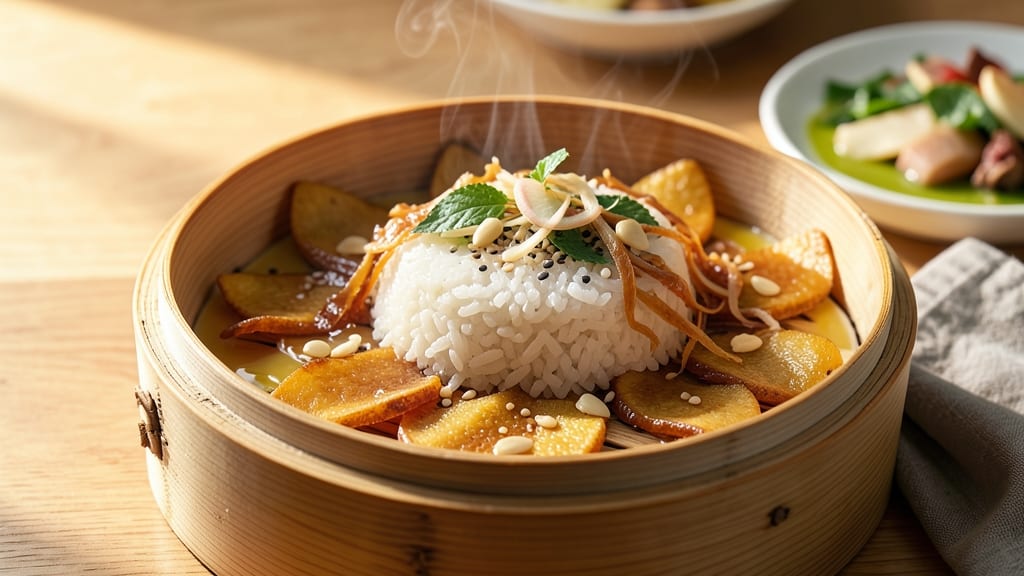
This cassava and glutinous rice recipe delivers a perfect balance of earthy cassava and chewy, sweet rice—ideal for a comforting West African-inspired meal. 🌟 The combination of grated cassava and sticky glutinous rice creates a dish that’s both hearty and satisfying, with a texture that’s tender yet resilient.
This one-pan method simplifies preparation while keeping the flavors rich and authentic.
The secret lies in steaming the mixture just enough to soften the cassava while preserving the rice’s signature stickiness. The result is a dish that’s naturally sweet, slightly nutty, and packed with natural flavors—no added sugars required.
Perfect for a vegetarian meal or a side dish that pairs beautifully with grilled proteins or coconut-based curries.
Ingredients for cassava and glutinous rice
Earthy cassava meets chewy rice in this West African-inspired one-pan vegetarian delight.
| Ingredient | Amount | Notes |
|---|---|---|
| Fresh Cassava (Yuca) 🥔 | 1 ½ lb | Peeled and grated finely |
| Glutinous Rice (Sweet Rice) 🍚 | 1 ½ cups | Uncooked, rinsed well |
| Full-Fat Coconut Milk 🥥 | 13 ½ oz | Canned, unsweetened |
| Vegetable Oil 🫒 | ¼ cup | High smoke point preferred |
| Fresh Ginger 🧄 | 1 tbsp | Grated finely for aroma |
| Garlic Cloves 🧄 | 4 cloves | Minced for depth of flavor |
| Sea Salt 🧂 | 1 tsp | Diamond Crystal preferred |
| Ground Black Pepper 🌶️ | ½ tsp | Freshly ground for heat |
| Fresh Cilantro 🌿 | ¼ cup | Chopped for garnish |
| Lime Juice 🍋 | 2 tbsp | Freshly squeezed for brightness |
| Brown Sugar 🍯 | 1 tbsp | Lightly packed for sweetness |
| Vegetable Broth 💧 | 1 ½ cups | Low-sodium preferred |
The cassava is the foundation—fresh, firm tubers yield the best texture. West African markets often carry pre-peeled cassava, but if shopping at mainstream grocers, look for the largest, smoothest tubers. Glutinous rice should be sticky when cooked, not fluffy like jasmine. Trader Joe's carries excellent quality, or check the Asian foods aisle for authentic brands. Grate the cassava yourself for maximum freshness—pre-shredded loses moisture quickly. For the coconut milk, full-fat canned varieties like Thai Kitchen or Goya provide the richest flavor, though any unsweetened brand works.
No fresh ginger? Powdered works at half the amount, but the fresh version adds complexity. Substituting brown sugar? Coconut sugar or maple syrup work beautifully—adjust to taste. Short on cilantro? Fresh basil or mint offer similar brightness. The vegetable broth can be swapped for water plus 1 tsp soy sauce in a pinch, though the umami depth suffers slightly. For extra richness, add 1 tbsp tahini to the final dish—it blends seamlessly with the coconut notes. The lime juice should be freshly squeezed; bottled lacks the vibrant acidity that cuts through the dish's natural sweetness.
This dish reheats beautifully—steam gently over water to restore moisture. Stores for 4-5 days in the fridge, though texture softens after day 3. For longer storage, freeze portions in airtight containers for up to 3 months. The cassava mixture can be prepped ahead and refrigerated overnight, then steamed directly from cold. Garnish with extra cilantro and lime zest just before serving to maintain freshness. Leftovers pair wonderfully with grilled tofu or coconut curries, making this an ideal make-ahead meal for busy weeknights.
Why You'll Love This Recipe
- One-Pot Magic: I swear by this recipe because it’s basically hands-off after the initial chopping. Peel and cube the cassava, soak the glutinous rice—then let the coconut milk and ginger work their flavor spell while you stir once or twice. Minimal cleanup, maximum satisfaction.
- Creamy-Crisp Contrast: That first bite—soft, sticky rice with the cassava’s crispy edges? It’s the kind of texture combo that makes you pause mid-chew. The ginger adds a bright kick, and the coconut milk ties everything into something dangerously comforting.
- Lunchbox Hero: Pack this for work or school—it reheats like a dream and keeps its shape (unlike some rice dishes that turn to mush). My kids actually ask for leftovers, which, honestly, is the real win here.
- Budget Stretch: Fresh cassava and rice are cheaper than takeout, and a single batch feeds four for two meals. Between us, this is my go-to when I’m broke but refuse to eat sad salads. Plus, coconut milk makes it feel fancy without the price tag.
Step-by-step instructions for cassava and glutinous rice
This sticky-sweet West African one-pan dish delivers rich texture and vibrant flavors with minimal effort.
👨🍳 Step 1: Prepare the Cassava Base
Peel the 1.5 lb fresh cassava (yuca) and grate it finely using a box grater or food processor. You'll need about 1½ cups of grated cassava—pack it tightly into a measuring cup to verify. Place the grated cassava in a clean kitchen towel and squeeze out all excess moisture. This step is crucial; any remaining water will dilute your dish and prevent proper thickening.
Heat the 0.25 cup vegetable oil in a large, heavy-bottomed pot over medium heat. Add the grated cassava and cook for 8-10 minutes, stirring occasionally, until it turns a light golden brown. The cassava should release its starch and begin to crisp slightly at the edges. This caramelization builds deep flavor—don't rush this step. Once golden, remove the pot from heat and set aside.
🍳 Step 2: Sauté Aromatics and Build the Flavor Foundation
In the same pot, add the 1 tbsp finely grated fresh ginger and 4 minced garlic cloves. Cook over medium heat for 2-3 minutes until the ginger becomes fragrant and the garlic turns golden—this should take less than 30 seconds if your heat is properly controlled. Be careful not to let the garlic burn; it should smell sweet and nutty, not bitter.
Stir in the 1.5 cups vegetable broth, 1 tbsp brown sugar, 1 tsp sea salt, and 0.5 tsp ground black pepper. Bring to a gentle simmer, then add the cooked cassava back to the pot. Stir well to combine, then pour in the 13.5 oz full-fat coconut milk. The mixture will look thin, but don't worry—it will thicken as it cooks.
⏰ Step 3: Cook the Glutinous Rice to Perfect Texture
Add the 1.5 cups rinsed glutinous rice (sweet rice) to the pot and stir gently to distribute evenly. The rice should be fully submerged in the liquid. Bring the mixture to a gentle boil over medium-low heat, then immediately reduce to the lowest heat setting that maintains a barely perceptible simmer. Cover the pot with a tight-fitting lid and cook for 40-45 minutes.
Here's the thing—glutinous rice needs patience. Check after 30 minutes to ensure the liquid hasn't evaporated completely. If it has, add 2-3 tablespoons of hot water through the lid to maintain moisture. The rice is done when it's tender and the mixture has thickened to a sticky, pudding-like consistency. You'll know it's ready when a wooden spoon leaves a clean trail through the mixture with no resistance.
🥘 Step 4: Finish with Bright Flavors and Garnish
Once the rice is fully cooked, remove the pot from heat and let it sit covered for 5 minutes. This resting period allows the flavors to meld and the texture to set properly. Stir in the 2 tbsp lime juice and 0.25 cup chopped fresh cilantro, folding gently to incorporate without breaking up the delicate texture.
Taste and adjust seasoning if needed—you might want to add a pinch more salt or a splash of lime juice for brightness. Serve immediately in a deep bowl, garnished with additional cilantro if desired. The dish should be rich and velvety, with the cassava adding a subtle earthiness that balances the sweet coconut and sticky rice. Each bite should be cohesive, with all flavors working together in perfect harmony.
Pro Tips For Making Cassava And Glutinous Rice
- PEEL CASSAVA THINLY: That thick outer layer hides the good stuff, but don’t go overboard—aim for 1/8-inch peels or less. I used to rush this and ended up with tough, fibrous chunks that took forever to cook. A sharp knife and steady hand save time, and trust me, your rice won’t taste like you’re chewing on tree bark.
- SOAK RICE 4 HOURS MINIMUM: Glutinous rice needs serious soaking—at least 4 hours, ideally overnight. I learned this after making a sticky, undercooked mess the first time. Cold water only, no need to rinse afterward. This guarantees that creamy, melt-in-your-mouth texture instead of gummy disappointment.
- STEAM CASSAVA FIRST: Skip the boiling—steam the peeled cassava until fork-tender (about 20-25 minutes). It keeps the texture tender and prevents it from turning gluey when mixed with coconut milk later. Pro move: Poke holes in the cassava before steaming so the heat penetrates evenly.
- SAVE COCONUT MILK FAT: Strain the full-fat coconut milk through a fine-mesh sieve before using—this removes the stringy bits that turn your dish into a soup. Save the leftover coconut pulp for smoothies or curries; it’s too precious to waste. The result? A velvety, clean-tasting sauce that actually tastes like coconut, not gunk.
Common mistakes when making your cassava and glutinous rice
Overcooking Cassava
Fresh cassava is delicate—once it turns golden brown, it’s ready. Pushing it further risks burning and bitterness. I’ve ruined this dish by letting it sit too long in the oil, turning the cassava into a bitter, charred mess.
Remove it from heat immediately after reaching light golden brown—about 8-10 minutes total. 🔥
Skipping Moisture Removal
Grated cassava releases water like crazy, and any leftover moisture will dilute your dish and prevent proper thickening. I learned this the hard way when my first attempt turned out watery.
After grating, always wrap the cassava in a clean kitchen towel and squeeze out all excess liquid. This step is non-negotiable for that perfect sticky texture.
Ignoring the Gentle Simmer
Glutinous rice needs a barely perceptible simmer—not a rolling boil. I’ve seen people crank the heat too high, which causes the rice to dry out or cook unevenly.
Once the mixture reaches a gentle boil, reduce to the lowest heat that maintains a soft simmer. Check every 15 minutes to add water if needed.
Underestimating Resting Time
After cooking, letting the dish rest for 5 minutes covered is crucial. I’ve served it too soon, and the texture was gummy and uneven. This resting period allows the starches to fully set, creating that perfect cohesive consistency. Don’t rush it—patience pays off here.
Using the Wrong Pot
A heavy-bottomed pot is essential for even heat distribution. I once tried this in a thin, lightweight pot, and the rice stuck to the bottom while the edges overcooked.
Invest in a stainless steel or enameled cast iron pot—it’s worth it for this dish. If you don’t have one, a thick-bottomed Dutch oven works perfectly.
Overlooking Lime Juice Timing
Adding lime juice at the end brightens the dish, but adding it too early can make the rice turn sour or watery. I’ve accidentally stirred it in during cooking, and the flavors became unbalanced.
Always add the 2 tbsp lime juice and cilantro right after removing the pot from heat—this preserves the freshness and acidity for the final bite. 🍋
Nutrition facts
Frequently asked questions
Can I substitute regular rice for glutinous rice?
No, you can't swap regular rice for glutinous rice—they're completely different! Glutinous rice has a unique sticky, chewy texture that's essential for this dish. Regular rice will turn out dry and separate. If you absolutely must substitute, try sweet rice from an Asian market or arborio rice as a last resort, but expect a different (and less authentic) result.
How do I know when the cassava is properly grated?
Fresh cassava should be grated into fine, rice-like shreds—not chunky or fibrous. Use a box grater or food processor for consistency. The grated cassava should measure about 1½ cups when packed tightly. If it looks too coarse, pulse it again until smooth. Pro tip: Wrap the grated cassava in a towel and squeeze out excess moisture before cooking—this prevents a watery dish.
Can I make this recipe without coconut milk?
While coconut milk adds rich depth, you can substitute with full-fat Greek yogurt or cashew cream for a dairy-free alternative. Use the same amount (13.5 oz) and adjust seasoning slightly—you may need an extra pinch of salt. For a lighter version, try 1 cup coconut milk + ½ cup vegetable broth, but the texture will be less velvety. The dish will still be delicious, just with a different flavor profile!
Why does my glutinous rice turn out gummy?
Gummy rice usually means either overcooking or too much liquid. Glutinous rice needs a gentle simmer, not a boil—reduce heat to the lowest setting that maintains a soft simmer. Also, check moisture levels: If your cassava wasn't squeezed dry enough, the extra water can make the rice mushy. For best results, stir in lime juice after cooking to brighten flavors and tighten the texture.
How can I serve this dish for a special occasion?
This dish pairs beautifully with grilled shrimp or chicken for a festive meal, or serve it as a vegetarian centerpiece with a side of mango salsa for contrast. For an elegant touch, garnish with toasted coconut flakes and edible flowers. It also makes a stunning dessert-like presentation when chilled and topped with a drizzle of honey or caramelized coconut sugar. Perfect for brunch, potlucks, or holiday feasts!