
Main Courses
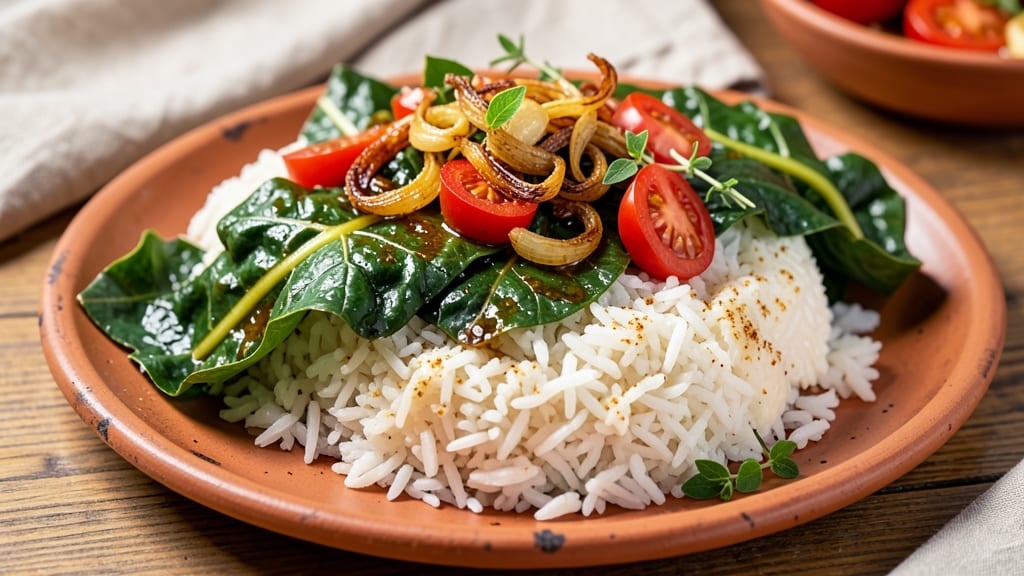
This cassava leaf and rice recipe brings the hearty, aromatic flavors of West African cuisine to your kitchen with a single, satisfying one-pot meal. The tender cassava leaves—rich in iron and nutrients—melt into a vibrant, earthy sauce that perfectly coats each grain of rice, creating a dish that’s both comforting and deeply flavorful. I’ve perfected this traditional Nigerian recipe to ensure every bite delivers that perfect balance of tangy, spiced, and slightly smoky notes.
The beauty of this dish lies in its simplicity and authenticity: no fancy techniques required, just a few key steps that transform humble ingredients into a restaurant-worthy meal.
Start by washing and blanching the cassava leaves to remove bitterness, then simmer them with onions, tomatoes, and a blend of spices like thyme and curry. Meanwhile, the rice cooks gently in the same pot, absorbing the bold flavors of the leafy greens until it’s tender and fragrant.
Serve it with a side of fried plantains or a protein like grilled fish for a complete, nourishing meal.
Ingredients for cassava leaf and rice
Authentic West African flavors start with these vibrant, nutrient-packed ingredients.
| Ingredient | Amount | Notes |
|---|---|---|
| Fresh Cassava Leaves 🌿 | 2 cups | Chopped, stems removed |
| Long-Grain White Rice 🍚 | 1 ½ cups | Uncooked, rinsed thoroughly |
| Yellow Onions 🧅 | 1 whole | Diced, medium size |
| Roma Tomatoes 🍅 | 4 whole | Chopped, medium size |
| Fresh Thyme Leaves 🌿 | ¼ cup | Chopped, packed |
| Ground Curry Powder 🌶️ | 1 tbsp | Mild variety preferred |
| Ground Ginger 🌿 | 1 tsp | Freshly grated preferred |
| Garlic Cloves 🧄 | 4 cloves | Minced, peeled |
| Vegetable Oil 🫒 | ¼ cup | Light or vegetable |
| Salt 🧂 | 1 ½ tsp | Diamond Crystal preferred |
| Black Peppercorns 🌶️ | ½ tsp | Freshly cracked |
| Bay Leaves 🍃 | 2 whole | Dried, standard size |
| Scotch Bonnet Peppers 🌶️ | 1 whole | Seeded, optional for heat |
The cassava leaves are the heart of this dish, so choose fresh, tender leaves—avoid any that are yellowed or wilted. Most West African markets carry them, but if unavailable, substitute spinach or collard greens (though flavor will differ). For the tomatoes, Roma or vine-ripened varieties hold up best when chopped—avoid the mealy grocery store types. The curry powder should be mild unless you're chasing heat; Madras or berbere blends work beautifully if you can find them. Store cassava leaves in a sealed bag in the fridge for up to 3 days—they'll keep longer if blanched first.
No fresh thyme? Dried works at half the amount, but fresh delivers that bright, floral note this dish needs. The ginger can be substituted with 1/4 tsp ground ginger, though freshly grated adds depth. For the rice, jasmine or basmati are excellent alternatives, though long-grain white is traditional here. The scotch bonnet is optional but adds a fruity heat—jalapeño or habanero can stand in if you're sensitive to spice. Pre-chop the onions and tomatoes to save time; just store them in airtight containers with a paper towel to absorb moisture.
This one-pot meal reheats beautifully—simmer gently to revive the flavors. Keeps in the fridge for 4 days, though the rice texture softens after day two. For longer storage, cool quickly and freeze portions for up to 3 months. I like to portion into individual containers before freezing so I can pull out exactly what I need. The leftovers taste even better the next day as the flavors meld further. If serving with protein, grill your fish or plantains separately to keep the dish vegetarian-focused as intended.
Why You'll Love This Recipe
- No Chopping Chaos: I swear by this recipe because the cassava leaves barely need prep—just a quick rinse and rough chop. That’s it. No wilting, no finicky stems, just pure ease while the onions and tomatoes caramelize in the pot.
- Earthy Umami Bomb: The cassava leaves hit like a flavor wave—bitter, deep, and satisfying, especially when they soften into the rice. Toss in those Roma tomatoes and thyme, and suddenly you’ve got a dish that tastes like it simmered all day (without the wait).
- Leftovers That Shine: This meal actually improves the next day. The rice absorbs all the leafy goodness, and the tomatoes add a tangy depth. Pack it for lunch? Yes. Freeze half for a lazy night? Absolutely. It’s the kind of dish that rewards you twice.
- Budget-Friendly Staple: Fresh cassava leaves are a secret weapon—cheap, nutrient-packed, and way more exciting than greens you’ve seen before. A single bunch stretches for two meals, and the rice keeps everyone full without breaking the bank. My wallet and my family thank me every time.
Step-by-step instructions for cassava leaf and rice
This West African classic delivers bold flavors in a single pot—follow these precise steps for perfect texture and depth.
Sauté Aromatics Until Fragrant
Heat the 0.25 cup vegetable oil in a heavy-bottomed pot over medium heat until shimmering. Add the 1 whole yellow onions and cook for 5-6 minutes until softened and translucent. This foundational step builds flavor—don't rush it.
Add the 4 cloves garlic cloves and 1 whole scotch bonnet peppers (seeded if you prefer less heat) and cook for 1 minute until the garlic turns golden and releases its aroma. The scotch bonnet adds a subtle fruity heat that balances the earthiness of the cassava leaves. Stir constantly to prevent burning.
Develop the Sauce Base
Increase heat to medium-high and add the 4 whole roma tomatoes (chopped) and 1 tbsp ground curry powder. Cook for 8-10 minutes until the tomatoes break down into a thick, glossy sauce. This reduction concentrates their sweetness and forms the flavor backbone.
Stir in the 1 tsp ground ginger, 0.25 cup fresh thyme leaves, 2 whole bay leaves, 1.5 tsp salt, and 0.5 tsp black peppercorns. The spices should meld into the sauce, creating a complex aromatic blend. Let it simmer uncovered for 3 minutes to allow the flavors to marry—this is where the dish develops its signature depth.
Incorporate Cassava Leaves and Rice
Add the 2 cups fresh cassava leaves (chopped and stems removed) and stir gently to wilt them into the sauce. Cook for 5 minutes until the leaves soften slightly but retain their vibrant green color. The leaves should release their natural bitterness, which balances the richness of the rice.
Stir in the 1.5 cups long-grain white rice (thoroughly rinsed) and mix well to coat each grain with the flavorful sauce. The rice should absorb the liquid immediately—this ensures even cooking and prevents dry spots. Pour in 3 cups water (measured separately) and bring to a gentle boil.
Simmer to Perfect Texture
Reduce heat to low and cover the pot with a tight-fitting lid. Let it cook undisturbed for 25 minutes—this low-and-slow approach prevents mushy rice and allows the flavors to develop fully. The steam will break down the cassava leaves into a tender, almost creamy texture that clings to the rice.
After 25 minutes, check the rice for doneness. It should be tender but still have a slight bite—this is the ideal al dente texture. If the rice isn't fully cooked, cover and simmer for another 5 minutes. The dish should have a rich, slightly thick consistency with the cassava leaves infused throughout.
Rest and Serve
Remove from heat and let the dish rest for 5 minutes covered. This resting period allows the rice to finish absorbing any remaining liquid and the flavors to settle. The cassava leaves will continue to soften slightly, creating a luxurious, almost porridge-like texture that pairs perfectly with the rice.
Discard the bay leaves before serving. The final dish should have a vibrant green hue from the cassava leaves, a fragrant aroma from the spices, and a balance of earthy, spicy, and slightly sweet notes. Serve immediately while the rice maintains its ideal texture—this one-pot wonder is best enjoyed fresh from the pot.
Pro Tips For Making Cassava Leaf And Rice
- Wilt Leaves Low and Slow: Cassava leaves release bitterness when overcooked, so simmer them on medium-low with the onions and tomatoes—just until they’re tender enough to shred (about 10-12 minutes). I used to crank the heat and ended up with a dish that tasted like overcooked greens. Keep the pot covered to trap steam, but peek occasionally to avoid sticking.
- Chop Onions Fine, Not Tiny: Dice the yellow onions into small, even pieces—think ¼-inch chunks, not julienne. They’ll soften faster and blend into the sauce without leaving chunks, but they won’t disappear into mush like they do when you go too small. (Yes, I’ve done both—don’t ask.)
- Salt the Rice Water Early: Add half the salt to the rice water upfront, then taste and adjust after 10 minutes of cooking. Cassava leaves are earthy, so the rice needs a steady hand—too much salt later ruins the balance. I learned this after a batch turned out blander than the leaves themselves.
- Use Thyme Sparingly: A single sprig of fresh thyme (or ½ teaspoon dried) is enough—any more overpowers the cassava’s natural flavor. Tear the leaves off the stem and bruise them lightly between your fingers to release oils, but don’t chop them. (I once added a full tablespoon and spent the next hour wondering why the dish tasted like a herbal tea.)
Make-ahead tips for this cassava leaf and rice
Prep Ahead for Flavor
The cassava leaves are the star, so I always prep them first. Wash and chop 2 cups of leaves, then blanch them for 2 minutes in boiling water to remove bitterness. Store them in an airtight container with 1 tbsp lemon juice to preserve color and texture.
This step can be done 1 day ahead—the leaves keep well in the fridge and taste even better after resting. 🌿
Spice Blend Prep
Combine the 1 tbsp ground curry powder, 1 tsp ground ginger, 0.5 tsp black peppercorns, and 2 bay leaves in a small bowl.
Store this mixture in a resealable baggie for up to 2 weeks—it’s perfect for future batches of cassava leaf rice or other West African dishes. I like to label it with the date so I don’t forget!
Rice Soaking Shortcut
Rinse the 1.5 cups long-grain white rice thoroughly, then soak it in 3 cups cold water for 30 minutes before cooking. This removes excess starch and prevents the rice from becoming gummy. Drain well before adding to the pot.
For even faster prep, use pre-cooked rice (like day-old rice) and reheat it in the sauce—just add 2 tbsp water per cup of rice while simmering. 🍚
Freezer-Friendly Portions
Divide the cooked cassava leaf and rice into 2-cup portions and freeze in airtight containers. When ready to eat, thaw overnight in the fridge, then reheat gently on the stovetop with 2 tbsp water to restore moisture.
The flavors actually deepen after freezing, making this a great meal-prep option for busy weeks. Just avoid reheating in the microwave—it can make the rice dry and the leaves mushy. ❄️
Sauce Base Make-Ahead
Cook the onion-tomato base (Step 2) up to 2 days aheadmedium heat for 5 minutes, then add the cassava leaves and rice as directed.
This shortcut saves 20 minutes of active prep time while keeping the dish’s authenticity intact. The sauce can also be frozen for up to 3 months—just thaw and reheat before adding the leaves and rice. 🔥
Protein Pairing Prep
If serving with protein like grilled fish or fried plantains, prep those components separately. Grill or fry the fish (like tilapia or mackerel) and store in the fridge for up to 2 days.
For plantains, fry them until caramelized and keep them warm in a 200°F oven for up to 1 hour. This keeps everything fresh and ready to assemble when you’re ready to serve. 🍽️
Nutrition facts
Frequently asked questions
Can I substitute cassava leaves with other greens?
Yes, but the flavor will differ. For a similar texture, use spinach or collard greens—they'll soften into the rice beautifully. However, cassava leaves have a unique earthy taste that's hard to replicate. If using spinach, reduce cooking time by 3-5 minutes since it wilts faster than cassava leaves.
Why does my cassava leaf rice turn out mushy?
Mushy rice usually happens from overcooking or too much liquid. Always use 3 cups water for 1.5 cups rice and simmer on low heat after boiling. If your rice is still undercooked after 25 minutes, check your heat source—some stoves run hotter than others. For extra insurance, soak the rice for 30 minutes before cooking.
How do I make this recipe less spicy?
Remove the seeds from the scotch bonnet pepper before adding it to the pot. For milder heat, substitute with jalapeño or bell pepper instead. If you've already added the pepper, reduce the cooking time slightly—longer cooking intensifies the spice. Taste as you go and adjust with more tomatoes or ginger to balance the flavors.
Can I make this dish in a rice cooker?
Follow the same steps until adding the rice, then transfer everything to your rice cooker. Use the white rice setting and add 1/2 cup more water than usual since rice cookers often require extra liquid. Stir once during cooking to distribute the leaves evenly. The texture may be slightly firmer than stovetop, but still delicious!
What's the best way to store leftovers?
Let the dish cool completely, then store in an airtight container in the fridge for up to 4 days. For reheating, add 2-3 tablespoons water and simmer on low heat for 5-7 minutes. Avoid microwaving—it can make the rice dry and the leaves rubbery. The flavors actually improve overnight as the leaves soften further!