
Main Courses
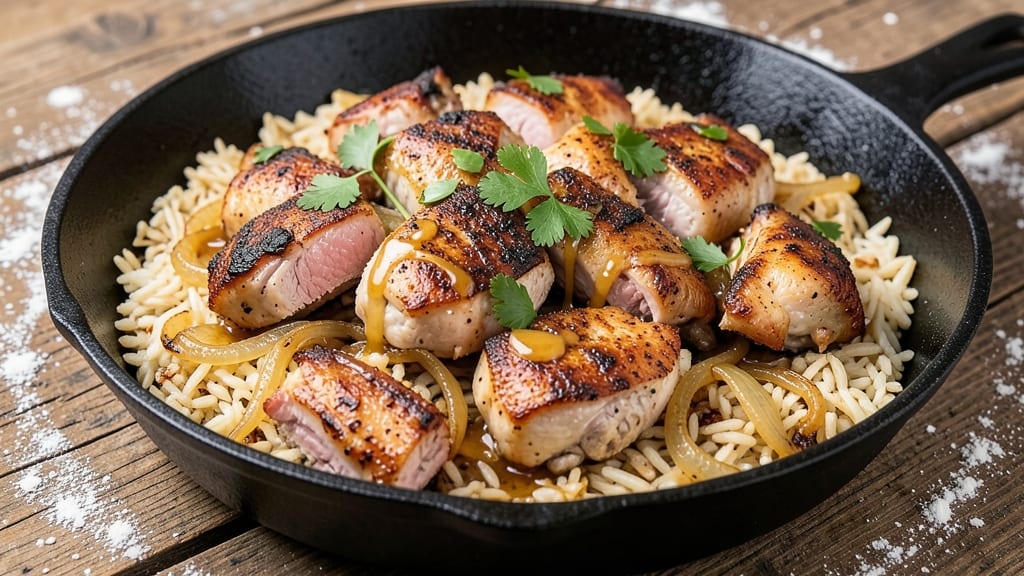
This cast iron chicken and rice recipe delivers juicy protein and a smoky skillet crust that transforms a simple meal into something extraordinary. The secret lies in searing chicken directly in the cast iron before adding rice and aromatics—creating a flavorful crust while keeping the meat tender.
Preheating the pan properly is critical for that signature caramelized bottom layer.
What makes this dish special is the balance of textures: crispy edges on the chicken, perfectly cooked rice that absorbs all the savory juices, and a golden-brown crust that adds depth.
The cast iron retains heat beautifully, ensuring even cooking and maximum flavor infusion. This one-pan approach simplifies cleanup while delivering restaurant-quality results at home.
Ingredients for cast iron chicken and rice
Juicy chicken thighs and aromatic rice create a smoky, flavorful cast iron masterpiece.
| Ingredient | Amount | Notes |
|---|---|---|
| Boneless, Skinless Chicken Thighs 🍗 | 1 ½ lb | Cut into 1-inch pieces for even cooking |
| Long-Grain White Rice 🍚 | 1 ½ cups | Uncooked, rinsed thoroughly |
| Chicken Broth 💧 | 2 ½ cups | Low-sodium preferred for flavor control |
| Yellow Onion 🧅 | 1 whole | Diced into 1/4-inch pieces |
| Garlic Cloves 🧄 | 4 cloves | Minced finely for aromatic depth |
| Smoked Paprika 🌶️ | 1 tbsp | For signature smoky flavor |
| Ground Cumin 🌿 | 1 tsp | Toasted for enhanced aroma |
| Kosher Salt 🧂 | 1 ½ tsp | Diamond Crystal preferred |
| Black Pepper 🌶️ | ½ tsp | Freshly ground for optimal flavor |
| Extra-Virgin Olive Oil 🫒 | 2 tbsp | High-quality for searing |
| Fresh Thyme Leaves 🌿 | ¼ cup | Chopped finely for herbal brightness |
| Bay Leaf 🍃 | 1 whole | For subtle depth of flavor |
| Fresh Parsley 🌿 | ⅛ cup | Chopped for garnish and freshness |
| Lemon Wedges 🍋 | 2 whole | For serving and acid balance |
The chicken thighs are the foundation—skinless but bone-in for moisture retention, cut into even pieces for consistent cooking. Local butchers often have pre-cut thighs, but if buying whole, trim excess fat to avoid flare-ups. A 12-inch cast iron skillet is ideal for this recipe, but any heavy-bottomed pan works. The rice should be long-grain white (like Carolina or Basmati) for its ability to absorb flavors without becoming mushy. For the broth, low-sodium options give you better flavor control, though you can always adjust seasoning later. Smoked paprika is non-negotiable here—it's what delivers that signature skillet crust.
No smoked paprika? Substitute with a mix of regular paprika and a pinch of liquid smoke (start with 1/4 tsp). Fresh thyme is ideal, but dried works at one-third the amount if you're in a pinch. The bay leaf adds subtle depth—don't skip it, but remove it before serving. For the olive oil, avoid light or refined oils—they lack the flavor needed for searing. If you're short on time, pre-minced garlic and onions from a jar work, though fresh is always better. The lemon wedges should be bright and juicy—squeeze them over the finished dish right before serving for that restaurant-quality touch.
This dish reheats beautifully—cast iron retains heat exceptionally well, so it's perfect for meal prep. Store leftovers in the fridge for up to 4 days in an airtight container, or freeze for 3 months by portioning into individual servings. The flavors actually improve overnight as the rice absorbs more of the savory juices. When reheating, add a splash of water or broth to prevent drying out. For best results, let the skillet cool slightly before storing to avoid condensation buildup.
Why You'll Love This Recipe
- Here’s what sold me: that first bite of chicken with crispy edges and the garlic-infused broth clinging to every grain. The onions caramelize just enough to add sweetness without overpowering—it’s the kind of flavor that makes you close your eyes and take a second helping.
- One-Pan Magic: I swear by this recipe when I don’t want to wash a million dishes. The chicken thighs brown perfectly in the cast iron while the rice simmers underneath—no separate pots, no extra pans. Just dump, cover, and let it do its thing.
- Garlic Bomb: Here’s what sold me: that first bite of chicken with crispy edges and the garlic-infused broth clinging to every grain. The onions caramelize just enough to add sweetness without overpowering—it’s the kind of flavor that makes you close your eyes and take a second helping.
- Leftovers That Don’t Suck: Between us, most rice dishes turn into sad, dry mush by day three. Not this one. The cast iron keeps the rice tender, and the broth stays rich, so I actually look forward to reheating it for lunch. (Yes, even on a Tuesday night.)
Step-by-step instructions for cast iron chicken and rice
Master this one-pan technique for tender chicken and perfectly crisped rice edges every time.
Sear the Chicken for Maximum Flavor
Heat a 12-inch cast iron skillet over medium-high heat for 5 minutes until smoking hot. Add the 2 tablespoons extra-virgin olive oil and swirl to coat the bottom evenly. Working in batches if needed, add the 1.5 lb boneless, skinless chicken thighs cut into 1-inch pieces, leaving space between them.
Sear undisturbed for 3-4 minutes until the chicken develops a deep golden brown crust on all sides. I press down gently on the pieces during the first minute—this prevents them from curling and ensures even contact with the pan. Transfer the seared chicken to a plate and set aside, leaving all the rendered juices in the skillet. These juices will form the flavorful base for your rice.
Build the Aromatic Base
In the same skillet, add the 1 whole yellow onion diced into ¼-inch pieces and cook for 4-5 minutes until softened and lightly caramelized at the edges. Add the 4 cloves garlic cloves minced finely and stir for 30 seconds until fragrant—this is where the foundational flavors develop.
Next, add 1 tablespoon smoked paprika, 1 teaspoon ground cumin, 1.5 teaspoons kosher salt, and ½ teaspoon black pepper. Stir vigorously for 1 minute to toast the spices and release their essential oils. This step transforms your basic seasoning into a complex, aromatic blend that will infuse the entire dish.
Toast the Rice for Perfect Texture
Add the 1.5 cups long-grain white rice to the skillet and stir to coat it evenly with the spiced oil. Toast the rice for 2-3 minutes until it becomes translucent at the edges and releases a nutty aroma. This crucial step prevents mushy rice by developing a light crust on each grain.
Pour in the 2.5 cups chicken broth and add the 1 whole bay leaf and ¼ cup fresh thyme leaves. Bring to a gentle simmer, then reduce heat to low. The liquid should just barely cover the rice—this ensures even cooking without making the rice gummy. Stir once to distribute the broth evenly, then avoid stirring again to prevent breaking the rice grains.
Layer and Simmer for Juicy Results
Return the seared chicken to the skillet, spreading it evenly over the rice. The chicken juices will mingle with the broth, creating an incredibly flavorful cooking liquid. Cover the skillet tightly with a lid and simmer for 20 minutes on low heat.
After 20 minutes, check the rice—it should be tender but still have a slight bite. If the liquid has completely absorbed, add 2-3 tablespoons hot water through the lid to steam the rice perfectly. The chicken should be cooked through with an internal temperature of 165°F and should pull away from the bone easily. If not, cover and cook for 5 more minutes.
Develop the Crispy Skillet Crust
Once the rice is tender and the chicken fully cooked, increase heat to medium-high and uncover the skillet. Let it cook undisturbed for 3-5 minutes until the bottom develops a deep golden brown to dark brown crust. This is the signature element of cast iron chicken and rice—it adds incredible texture and flavor.
Remove from heat and let the dish rest for 5 minutes before serving. The resting period allows the rice to finish steaming and the juices to redistribute throughout the chicken. Garnish with ¼ cup fresh parsley and serve with 2 lemon wedges on the side for brightness. Each bite should deliver perfectly balanced flavors with tender chicken, fluffy rice, and that coveted crispy crust.
Pro Tips For Making Cast Iron Chicken And Rice
- Sear the Chicken Hard: Cast iron needs heat to build flavor, so don’t be gentle with those thighs. Get your pan screaming hot—we’re talking 5-6 minutes on medium-high until the oil shimmers—then work in batches if needed. I used to rush this, and the chicken tasted bland. Now? Crispy edges every time.
- Dice That Onion Small: Tiny onion pieces cook faster and dissolve into the broth without turning mushy. Aim for 1/8-inch cubes—yes, it takes a minute, but it makes the rice taste deeper. My grandmother swore by this, and she was right: the flavor gets absorbed better when it’s small.
- Don’t Stir the Rice: Once the rice hits the broth, walk away. Stirring releases starch too soon, and you’ll end up with gluey rice. After 5 minutes, give it a single gentle fold—just enough to distribute the liquid. I learned this the hard way after three batches of sad, clumpy rice.
- Use Cold Broth: Pouring cold broth into the hot pan shocks the rice into fluffing up perfectly later. Start with room-temp broth if you’re in a hurry, but cold works best—it keeps the rice from overcooking while the chicken finishes. Sounds weird, but it works: lighter, separate grains every time.
Troubleshooting great cast iron chicken and rice
Undercooked Chicken
If your chicken isn't reaching 165°F after 20 minutes, resist the urge to crank the heat—this can dry it out. Instead, cover the skillet and cook for 5-10 more minutes on low heat, checking every 2-3 minutes with a meat thermometer.
The cast iron's heat retention helps finish the cooking process gently. I've found that using bone-in chicken thighs (if you can find them) actually cooks more evenly than boneless cuts. 🌡️
Mushy Rice Texture
Overstirring or adding too much broth are the usual culprits for mushy rice. Always use low heat after adding liquid and avoid stirring after the initial distribution. If your rice turns out too soft, try toasting it longer next time—aim for 3-4 minutes until it's translucent at the edges.
I also recommend using jasmine rice instead of long-grain white for a slightly stickier but still fluffy texture. 🍚
Skillet Crust Fails
The crust won't develop if your skillet isn't hot enough or if you're using nonstick cookware. Preheat your cast iron skillet over medium-high heat for 5 minutes until smoking before adding any oil.
For extra insurance, I like to add 1 teaspoon cornstarch mixed with 1 tablespoon water to the bottom of the skillet during the final crusting phase—this creates a glossy, caramelized layer. 🔥
Dry Chicken
Chicken can dry out if cooked too long at high heat or if the skillet isn't properly preheated. Always sear the chicken over medium-high heat for just 3-4 minutes per side, then reduce to low heat for the remainder of cooking.
I've also had success adding 2 tablespoons chicken broth to the skillet during the final simmer to keep everything moist. 💧
Uneven Cooking
If some parts of your dish cook faster than others, it's likely due to uneven heat distribution. Make sure your cast iron skillet is properly preheated and placed on a burner that heats evenly.
For extra insurance, I recommend using a skillet with a flat bottom that sits flush on the burner. Stirring the rice once after adding broth helps distribute heat more evenly throughout the pan. ⚡
Broth Absorption Issues
If your rice absorbs the broth too quickly, it's usually because the heat is too high. Always simmer on low heat and check the rice after 15 minutes—it should still have a slight bite.
If the liquid disappears too fast, reduce the heat to the lowest setting and add 2 tablespoons hot water through the lid to steam the rice gently. I've found that using low-sodium chicken broth works better for controlling the cooking process. 💡
Nutrition facts
Frequently asked questions
Can I use chicken breasts instead of thighs?
Chicken breasts will work, but they're leaner and more prone to drying out. For best results, cut them into ½-inch thick pieces and sear for just 2-3 minutes per side over medium heat. Reduce the cooking time by 5 minutes when simmering with the rice to prevent toughness.
What's the best way to season my cast iron skillet beforehand?
For a perfectly seasoned skillet, clean it thoroughly with hot water and a stiff brush, then dry completely. Rub with ½ cup vegetable oil (or flaxseed oil for extra durability), then heat on medium-high for 1 hour until it's completely dry. Wipe out excess oil with a paper towel. This creates a nonstick surface that prevents sticking and enhances flavor.
Can I make this recipe without smoked paprika?
Yes! Mix 1 tbsp regular paprika with ¼ tsp liquid smoke for a similar smoky flavor. For extra depth, add ½ tsp chipotle powder or 1 tsp garlic powder. Just remember that liquid smoke can be potent, so start with less and adjust to taste.
How do I prevent the rice from sticking to the skillet?
Make sure your skillet is properly preheated and well-seasoned. After adding broth, stir the rice once to distribute it evenly, then avoid stirring again. If needed, add 1 tsp oil to the bottom before adding rice. The key is patience—let the rice cook undisturbed until the crust forms in the final step.
What sides pair well with this dish?
This hearty chicken and rice pairs beautifully with crisp green salads (like arugula with lemon vinaigrette), roasted vegetables (zucchini or bell peppers), or warm cornbread. For a complete meal, serve with steamed broccoli or a simple tomato-cucumber salad. The smoky flavors balance well with bright, fresh elements.