
Main Courses
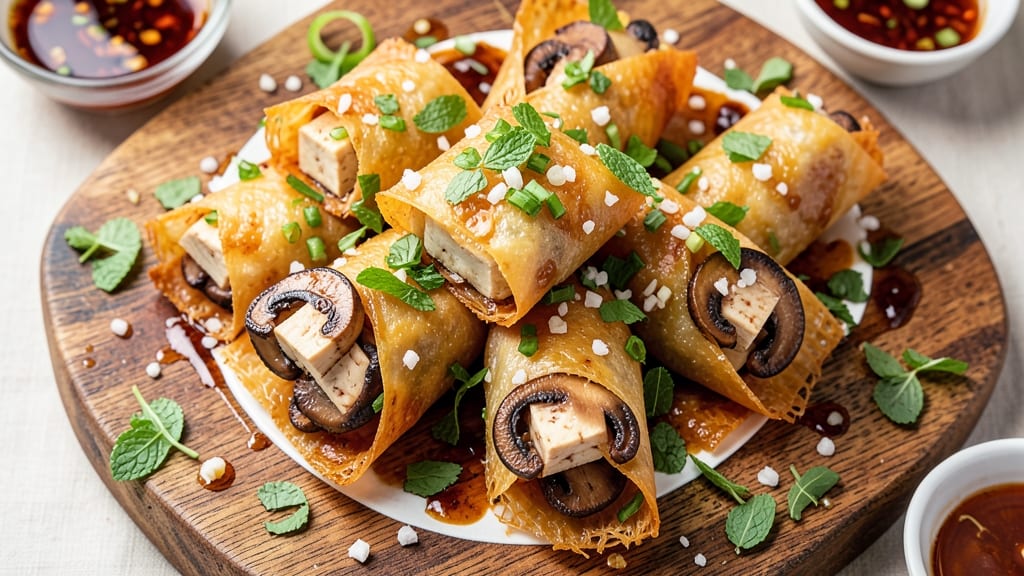
This cha gio recipe with rice paper delivers the perfect balance of crispy, golden rolls stuffed with fragrant pork and fresh herbs—just like your favorite Vietnamese restaurant.
The secret lies in the delicate rice paper wrappers and the aromatic filling, where tender pork, mint, and garlic create a flavor explosion with every bite.
What makes these spring rolls truly special is the crispy exterior achieved through careful frying, paired with a light, airy interior that stays tender. Serve them with a tangy nuoc cham dipping sauce for the ultimate dining experience.
Whether you're preparing them for a family gathering or a special occasion, this recipe brings authentic Vietnamese flavors to your kitchen.
Ingredients for cha gio recipe rice paper
Fresh herbs, tender tofu, and crispy wrappers—everything you need for restaurant-style Vietnamese rolls.
| Ingredient | Amount | Notes |
|---|---|---|
| Rice Paper Wrappers 🍱 | 12 pieces | Medium-sized, 7-inch diameter |
| Firm Tofu 🥬 | 1 lb | Extra-firm, pressed and cubed |
| Shiitake Mushrooms 🍄 | 8 whole | Stems removed, sliced thin |
| Green Onions 🧅 | 4 whole | White and green parts separated |
| Fresh Mint Leaves 🌿 | 1 cup | Finely chopped, stems removed |
| Garlic Cloves 🧄 | 4 cloves | Minced finely for aroma |
| Lime Zest 🍋 | 1 tbsp | Freshly grated from lime |
| Fish Sauce Substitute 🥫 | 2 tbsp | Soy sauce or coconut aminos |
| Vegetable Oil 🫒 | 2 cups | For frying, high smoke point |
| All-Purpose Flour 🌾 | ½ cup | For dredging, light coating |
| Cornstarch 🌽 | ¼ cup | For extra crispiness |
| Salt 🧂 | ½ tsp | Kosher or sea salt |
| Black Pepper 🌶️ | ¼ tsp | Freshly ground preferred |
| Lime Juice 🍋 | 2 tbsp | Freshly squeezed for sauce |
| Sugar 🍬 | 1 tbsp | For nuoc cham balance |
The rice paper wrappers are the star—Thai Kitchen brand is my go-to, but any medium-sized 7-inch ones work. Keep them submerged in warm water until pliable (about 10 seconds each). For the tofu, press it for 20 minutes before cubing to remove excess moisture—this keeps your filling light. Shiitake mushrooms add meaty texture, so don't skip them. I always grab the pre-sliced dried shiitakes at Trader Joe's and rehydrate them—they're perfect for this. Fresh mint is non-negotiable for that authentic flavor, but if you can't find it, cilantro works in a pinch (though it's not traditional).
No fish sauce? Soy sauce or coconut aminos mimic that umami punch perfectly—just use the same amount. The lime zest might seem small, but it brightens everything up. For extra crispiness, mix the flour and cornstarch together (that's your secret weapon). Want to make it gluten-free? Swap the flour for rice flour. The green onions get divided—white parts go in the filling, green tops are for garnish. And trust me, freshly ground black pepper makes all the difference over pre-ground.
Keep your rice paper in a sealed bag with a damp paper towel to prevent drying out. The filling mix stays fresh for 2 days in the fridge, but I recommend making fresh for best texture. Once fried, these reheat beautifully in the oven at 350°F for 5-10 minutes. For the nuoc cham sauce, make it fresh—it's worth the 2 minutes. The sugar balances the tangy lime perfectly (about 1 tbsp per 2 tbsp lime juice). Store leftovers in an airtight container for 3 days, but they're best enjoyed fresh.
Why You'll Love This Recipe
- No-Fuss Assembly: I swear, these take less time than deciding what to eat. Soak the rice paper for 10 seconds—yes, really—then just fold. The tofu and mushrooms do all the heavy lifting while you assemble.
- Umami-Packed Bite: That crispy rice paper hugging the savory tofu and shiitake mushrooms? It’s like a tiny flavor explosion. The mint and green onions add a fresh kick that makes every bite feel special.
- Party in a Basket: Serve them as finger food for game night or pack them in lunchboxes. They’re sturdy enough to travel but light enough to eat with one hand—no plates required.
- Budget-Friendly Staple: Tofu and mushrooms stretch for days, and rice paper costs pennies. Make a batch, store them in the fridge, and reheat for quick lunches or late-night cravings. My wallet thanks me.
Step-by-step instructions for crispy Vietnamese rice paper rolls
Here's how to make golden, fragrant cha gio with perfect texture every time.
Prepare the Filling with Tofu and Aromatics
Start by pressing the 1 lb firm tofu between paper towels for 15 minutes to remove excess moisture. Cut it into ½-inch cubes and set aside. In a large bowl, combine the tofu with the 8 sliced shiitake mushrooms, white parts of 2 green onions (finely chopped), 1 cup chopped mint leaves, 4 minced garlic cloves, 1 tbsp lime zest, 2 tbsp fish sauce substitute, ½ tsp salt, and ¼ tsp black pepper. Mix gently but thoroughly—you want the flavors to meld without breaking down the tofu.
For extra crispiness, I like to pan-fry the tofu mixture for 3-4 minutes over medium heat with 1 tablespoon vegetable oil. This step develops deeper flavor and ensures the filling stays cohesive when wrapped. Let it cool completely before proceeding—warm filling makes the rice paper soggy.
Create the Battering Station
In a shallow bowl, whisk together the ½ cup all-purpose flour and ¼ cup cornstarch. This dry mix creates the perfect crispy exterior. In another bowl, combine the 2 tbsp lime juice and 1 tbsp sugar to make a simple nuoc cham base—this will be your dipping sauce. Set aside.
For the frying oil, pour 2 cups vegetable oil into a deep skillet or Dutch oven and heat to 350°F over medium heat. Use a thermometer to monitor—oil that's too hot burns the rolls, too cool makes them greasy. I test by dropping a tiny piece of rice paper in; it should sizzle immediately and float to the surface.
Assemble and Fry the Rice Paper Rolls
Soften one rice paper wrapper by dipping it in warm water for 10-15 seconds until pliable but still firm. Lay it flat on a clean surface and place 1 tablespoon of filling in the center. Fold the bottom corner up, then fold in the sides, and roll tightly like a burrito. Repeat with remaining wrappers and filling.
Working in batches to avoid crowding, carefully lower each roll into the hot oil using a slotted spoon. Fry for 2-3 minutes until golden brown on all sides. Drain on a wire rack or paper towels—this prevents sogginess. The rolls should be crispy outside with tender filling inside. If they brown too quickly, reduce heat slightly.
Complete the Dipping Sauce and Serve
While the rolls cool slightly, prepare the full nuoc cham by whisking together the lime juice-sugar mixture with ½ cup warm water and 1 tbsp fish sauce substitute. Adjust to taste—it should balance sweet, sour, and salty. Add a pinch of black pepper for depth if desired.
Serve the cha gio warm with the dipping sauce on the side. For presentation, arrange the rolls on a platter with the green onion tops sprinkled over them. The contrast of crispy rolls against the fresh herbs makes them even more appealing. These keep well for 2 hours at room temperature, though they're best enjoyed fresh from the fryer.
Pro Tips For Making Cha Gio Recipe Rice Paper
- SOAK WRAPPERS JUST BEFORE WRAPPING: I learned this the hard way—soaking rice paper wrappers in warm (not hot) water for 30 seconds before using makes them pliable without falling apart. Cold water makes them brittle, hot water turns them to mush. Work in batches, and keep the soaking bowl nearby so they don’t dry out while you fill them.
- DICE TOFU UNIFORMLY: Cut firm tofu into small, even cubes (about ½-inch) so they cook through without turning rubbery. I used to leave some chunks too big, and they’d stay chewy while the edges overcooked. A sharp knife and steady hand make all the difference—no need for fancy tools.
- STEAM MUSHROOMS FIRST: Shiitake mushrooms release their flavor better when steamed for 3-4 minutes before stir-frying. This softens them just enough to absorb the filling while keeping texture. Skipping this step means you’ll end up with tough, underseasoned mushrooms—trust me, it’s worth the extra minute.
- USE LESS MINT, MORE GREEN ONION: Fresh mint is bold—start with 2-3 leaves per wrapper, not a handful. Thinly sliced green onions add brightness without overpowering. I was skeptical until I tried it: the green onions keep the dish fresh while letting the tofu and mushrooms shine. (Yes, even if you’re impatient like me.)
Pro cooking tips for great cha gio recipe rice paper
Mastering Rice Paper
Rice paper is delicate—handle it with care! Soften each wrapper by dipping it in warm water for exactly 10-15 seconds until pliable but still holding its shape. I use a wide, shallow bowl of water to prevent over-soaking.
The key is speed: work quickly once it's wet, or it'll stick together. Keep unused wrappers covered with a damp towel to prevent drying out. 🌿
Filling Consistency Matters
The filling should be moist but not wet—too much liquid makes wrapping impossible. After mixing, squeeze excess moisture from the tofu cubes using a clean kitchen towel. For extra binding, I add 1 tablespoon of cornstarch directly to the filling mix.
This helps hold the rolls together during frying. Let the filling cool completely before wrapping to avoid soggy rice paper. ⚡
Oil Temperature Control
Use a deep-fry thermometer—this is non-negotiable! Maintain oil at 350°F for perfect crispiness. Too hot? The rolls burn outside before cooking through. Too cool? They'll absorb oil and turn greasy.
Test with a small piece of rice paper: it should sizzle immediately and float. I use Avocado oil for its high smoke point and neutral flavor. 🌡️
Frying in Batches
Never overcrowd the pan—fry 2-3 rolls at a time for even cooking. Use a slotted spoon to gently lower and remove them. The rolls should turn golden in 2-3 minutes.
For extra crispiness, I double-dip each roll in the flour-cornstarch mix before frying. Drain on a wire rack (not paper towels) to keep them crispy. 🔥
Dipping Sauce Balance
The nuoc cham should sing with sweet, sour, and salty notes. Start with ½ cup warm water, 2 tbsp lime juice, 1 tbsp sugar, and 1 tbsp fish sauce substitute.
Taste and adjust—sometimes I add an extra ½ tsp sugar or ½ tsp fish sauce for depth. A pinch of black pepper adds complexity. Serve at room temperature for the best flavor. 💡
Make-Ahead Pro Tips
Assemble the filling 1 day ahead and store in an airtight container. For uncooked rolls, wrap them in plastic and refrigerate for up to 24 hours.
To reheat fried rolls, bake at 350°F for 5-10 minutes until crispy again. The dipping sauce can be made 3 days ahead—just stir before serving. 💪
Nutrition facts
Frequently asked questions
Can I make these vegetarian?
This recipe already uses firm tofu as the base, but you can enhance it further by adding 1 cup cooked quinoa or ½ cup chopped cashews for extra texture. For a meatier taste, swap the fish sauce substitute with soy sauce and add 1 tablespoon miso paste to the filling. The nuoc cham sauce works perfectly with vegetarian versions too!
Why do my rice paper rolls keep falling apart? This usually happens when the filling is too wet or the rice paper is over-soaked. First,
What's the best way to reheat fried cha gio?
For maximum crispiness, place fried rolls on a baking sheet and reheat at 350°F for 5-10 minutes. If you're short on time, use the air fryer at 375°F for 3-4 minutes. Avoid microwaving—they'll turn soggy. Pro tip: Reheat in batches to maintain even crispiness throughout.
Can I bake these instead of frying?
Yes! For baked cha gio, brush the assembled rolls with 1 tablespoon oil and bake at 400°F for 12-15 minutes on a wire rack until golden. The texture won't be as crispy as fried, but they'll still be delicious. For extra crunch, sprinkle with ½ cup crushed rice cereal before baking. The nuoc cham sauce pairs perfectly with both fried and baked versions!
How do I store leftover filling?
Store the prepared filling in an airtight container in the refrigerator for up to 2 days. For best results, assemble and fry the rolls fresh, but you can also wrap the uncooked rolls in plastic wrap and refrigerate for 24 hours. Freeze uncooked rolls for up to 1 month—thaw overnight in the fridge before frying.