
Main Courses
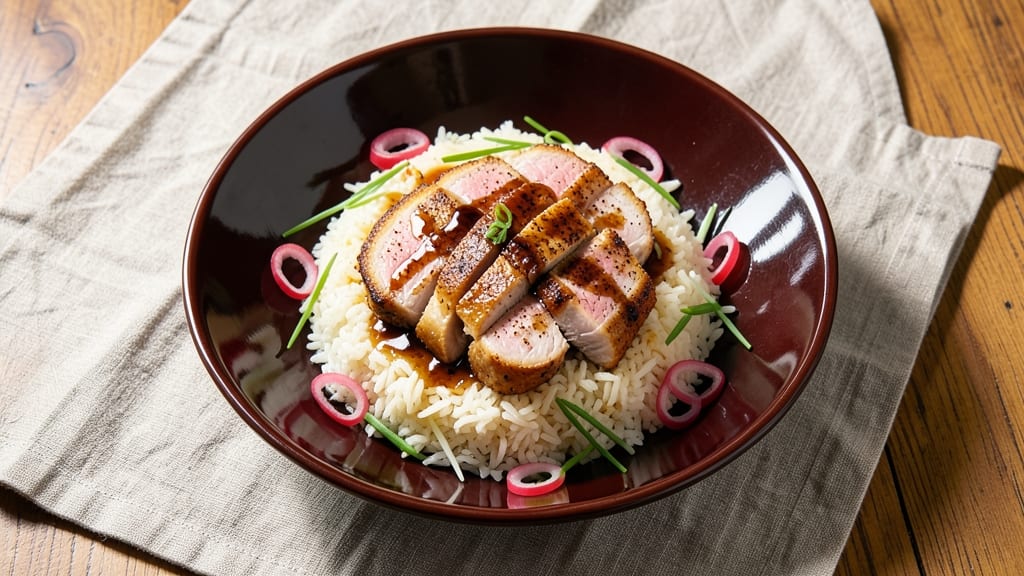
This chashu rice bowl recipe transforms tender, aromatic braised pork belly into a restaurant-worthy meal you can make at home. The secret lies in slow-cooking the pork with a five-spice blend and star anise, creating layers of savory-sweet depth that pair perfectly with fragrant jasmine rice.
What starts as a simple braise becomes a harmonious bowl of textures and flavors—juicy pork, fluffy rice, and crisp pickled vegetables—each bite a balance of tradition and comfort.
The process begins with a foolproof braising method that yields melt-in-your-mouth pork, then builds to a beautifully assembled bowl with optional modern twists like spicy mayo or toasted sesame seeds.
Whether you're recreating a Japanese izakaya classic or putting your own fusion spin on it, this recipe delivers restaurant-quality results with minimal effort. Ready in about 3 hours (mostly hands-off time), it’s the perfect dish for weeknight dinners or impressing guests—no shortcuts, just pure, satisfying flavor.
Ingredients for chashu rice bowl
Pork belly, aromatic spices, and jasmine rice—simple ingredients that pack restaurant-level flavor.
| Ingredient | Amount | Notes |
|---|---|---|
| Pork Belly (Skin-On) 🥓 | 1 ½ lb | Thick-cut for even cooking |
| Jasmine Rice 🍚 | 1 ½ cups | Uncooked, long-grain preferred |
| Soy Sauce 🍶 | ½ cup | Japanese or light variety |
| Mirin 🍶 | ¼ cup | Sweet cooking rice wine |
| Sake 🍶 | ¼ cup | Dry variety preferred |
| Five-Spice Powder 🌶️ | 1 tbsp | Or make your own blend |
| Star Anise Pods 🌿 | 2 whole | For aromatic depth |
| Fresh Ginger 🧅 | 2 tbsp | Grated, aromatic peel |
| Garlic Cloves 🧄 | 6 cloves | Smashed for rich flavor |
| Sugar 🍚 | 2 tbsp | White granulated |
| Sesame Oil 🫒 | 1 tbsp | Toasted for aroma |
| Neutral Oil 🫒 | 1 tbsp | For searing pork belly |
| Pickled Vegetables 🥕 | 1 ½ cups | Quick-pickled carrots/daikon |
| Green Onions 🧅 | 4 whole | Thinly sliced for garnish |
| Toasted Sesame Seeds 🥜 | 1 tbsp | For crunchy texture |
The pork belly is the star—look for thick-cut pieces with good marbling at Whole Foods or your local Asian market. If you can't find it, pork shoulder works too, but it won't be as tender. The five-spice powder? Penzeys or Spicewalla have great blends, but homemade (star anise, cinnamon, cloves, fennel, pepper) is even better. Fresh ginger and garlic should smell vibrant—no musty aromas. For the rice, jasmine from Thailand (like Khao Manee) gives that signature floral aroma, but any long-grain works in a pinch.
No mirin? Substitute 1 tbsp sugar + 1 tbsp water—it won't be identical, but close. Out of star anise? Skip it or use 1 cinnamon stick. The pickled veggies can be store-bought (like Japanese tsukemono from Trader Joe's) or quick-pickled with rice vinegar and sugar. For the oil, neutral like avocado or vegetable oil prevents flavor interference. The sesame oil? Use toasted, not regular—it's worth the extra few bucks for that nutty aroma. And if you're feeling fancy, add a drizzle of spicy mayo (mix mayo with sriracha) for a modern twist.
This braise tastes even better the next day—plan ahead. Store the pork in its juices in the fridge for up to 5 days or freeze for 3 months. The rice reheats best in a rice cooker with a splash of water. For serving, assemble bowls just before eating—crisp pickles and fresh herbs keep everything vibrant. Leftovers? Double the batch—it's perfect for meal prep. Just reheat the pork gently and serve over fresh rice.
Why You'll Love This Recipe
- One-Pot Magic: I swear by this—just toss the pork belly, soy sauce, mirin, and sake into a pot, simmer until the fat renders and the meat falls apart. No chopping, no fuss, and the rice cooks while you’re waiting. That’s 20 minutes of hands-off perfection.
- Umami Bomb: The combo of mirin and sake turns the pork belly into something ridiculously flavorful—sweet, salty, with this deep, caramelized richness. And when you slice through that crispy skin? Pure satisfaction in every bite. (Yes, even on a Tuesday night.)
- Lunchbox Hero: Between us, this is my go-to for meal prep. The chashu stays tender for days, and the rice? Just reheat with a splash of water. Pack it in bento boxes for work or school—no sad desk lunches here. My daughter picks out the crispy bits first, but still asks for seconds.
- Budget Stretch: Skin-on pork belly might sound fancy, but it’s cheaper than you think—and every bite is worth it. A single slab feeds four, and leftovers reheat like a dream. Honestly, I make this when I’m trying to save money, but it tastes like I splurged. (Secret weapon, right?)
Step-by-step instructions for braised pork belly with five-spice jasmine rice
Here's how to transform simple ingredients into restaurant-quality chashu and fragrant rice.
Prepare and Sear the Pork Belly
Start by scoring the pork belly in a crosshatch pattern about ½-inch apart—this helps render the fat and creates crispy edges. Pat the skin completely dry with paper towels, then rub with 1 tbsp neutral oil to help the skin crisp later. Place the pork belly skin-side down in a cold pot and turn the heat to medium-low.
Let the pork belly render its own fat slowly for 15-20 minutes until the internal temperature reaches 160°F and the fat is golden. Flip the pork belly skin-side up and increase heat to medium-high to crisp the skin for 5-7 minutes until it turns a beautiful golden brown. Remove from the pot and set aside.
Build the Braising Liquid and Aromatics
In the same pot, reduce heat to medium and add 1 tbsp neutral oil. Add the 6 smashed garlic cloves and 2 tbsp grated fresh ginger, cooking for 1 minute until fragrant. Add the 2 whole star anise pods, 1 tbsp five-spice powder, and 2 tbsp sugar, stirring for 30 seconds to toast the spices.
Pour in the 0.5 cup soy sauce, 0.25 cup mirin, and 0.25 cup sake, scraping up any browned bits from the bottom of the pot. Bring to a gentle simmer, then return the pork belly to the pot, skin-side up. Cover and transfer to a 275°F oven.
Braise the Pork Belly Low and Slow
Braise the pork belly for 2.5-3 hours until it's fork-tender and the internal temperature reaches 200°F. The pork should pull apart easily with a fork and have a beautiful caramelized glaze. If the liquid reduces too much, add ¼ cup hot water to keep it moist.
Once done, remove the pork belly and let it rest for 10 minutes before slicing. The residual heat will carry the pork to a perfect internal temperature. While it rests, skim any excess fat from the braising liquid, leaving about 1 cup of flavorful liquid behind.
Cook the Jasmine Rice
Rinse the 1.5 cups jasmine rice under cold water until the water runs clear. In a separate pot, combine the rice with 2 cups water and bring to a boil. Add 1 tbsp sesame oil and reduce heat to low, covering with a tight lid. Simmer for 15 minutes, then turn off the heat and let it steam for another 10 minutes.
Fluff the rice gently with a fork and stir in 1 tbsp toasted sesame seeds. If the rice is still too dry, add 1-2 tablespoons hot water and stir gently. The rice should be fragrant and slightly sticky.
Assemble the Chashu Rice Bowls
Slice the rested pork belly against the grain into ¼-inch thick slices. Divide the cooked jasmine rice among four bowls, then top each with ¼ of the sliced pork belly. Ladle 2-3 tablespoons of the braising liquid over each serving, then add ¼ cup pickled vegetables and 1 whole sliced green onion.
Drizzle with any remaining braising liquid and serve immediately. The contrast of tender pork, fragrant rice, and tangy pickles creates a perfect balance of flavors and textures in every bite.
Pro Tips For Making Chashu Rice Bowl
- CRANK UP THE HEAT: Start your pork belly searing at full blast—no simmering yet. I used to play it safe with medium heat, and the fat rendered too slowly, leaving the meat greasy instead of crisp. High heat for 3-4 minutes gets that skin crackling and the edges caramelized before you even think about adding liquid.
- SALT THE BELLY BEFORE SEARING: Generously coat the pork belly with kosher salt (about 1 tablespoon per pound) at least 30 minutes before cooking. This isn’t just for flavor—it breaks down proteins so the skin crisps properly. I skipped this once and ended up with a chewy, uncooperative slab. (Yes, even if you’re impatient like me.)
- DON’T SKIP THE SECOND BOIL: After the initial braise, bring the pork belly back to a rolling boil for 5-7 minutes once it’s tender. This firms up the meat and tightens the skin for that restaurant-quality snap. I used to think simmering was enough, but the texture suffers—like the difference between a sad, limp dumpling and one that holds its shape.
- USE LESS SOY SAUCE: The braising liquid only needs about ¼ cup soy sauce—any more and it’ll taste salty, not savory. Balance it with mirin and sake (equal parts, roughly 1:1:1 ratio) to keep the flavors bright. I learned this the hard way when I doubled the soy sauce and ended up with a bowl that tasted like a miso bomb.
Pro cooking tips for great chashu rice bowl
Low-Temp Braising Secrets
Your chashu's tenderness depends on consistent low heat—aim for 275°F in your oven. I use a Meater Plus probe thermometer to monitor internal temp, but even a basic instant-read thermometer works.
The key is patience: 2.5-3 hours at this temp breaks down collagen without drying the meat. If your pork reaches 200°F before the time's up, it's perfect—just don't rush it! 🌡️
Pro tip: Use a Dutch oven for even heat distribution. If you don't have one, a heavy-bottomed pot with a tight lid works too. The pork should be fork-tender when done—no need for a knife. Skim excess fat from the braising liquid before serving to keep it clean and flavorful.
Crispy Skin Magic
That golden, crackling skin is what makes chashu special! Start by scoring the pork belly in a crosshatch pattern—this helps render fat and creates crispy edges.
Pat it completely dry with paper towels (I double up for extra absorption), then sear skin-side down on medium-low heat for 15-20 minutes until the fat is golden. Flip and crank the heat to medium-high for 5-7 minutes to crisp the skin. 🔥
For extra insurance, I finish the pork under the broiler for 1-2 minutes after braising. Just watch it like a hawk—it burns fast! The skin should be deep golden with a few charred spots. If it's not crispy enough, broil it longer in 30-second bursts until perfect.
Spice Toasting Matters
Never skip toasting your five-spice powder and star anise—this step unlocks their aromatic potential. In the same pot where you seared the pork, add 1 tbsp neutral oil, then toast the spices for 30 seconds until fragrant.
This releases their essential oils, making the braising liquid deeply flavorful. I also add 2 tbsp sugar here to help caramelize the pork's surface. 🌶️
If you're making your own five-spice blend, combine 2 parts star anise, 1 part cinnamon, 1 part cloves, 1 part fennel seeds, and ½ part black pepper.
Toast these separately for 1 minute before adding to the braise. The difference in flavor is night and day!
Rice Perfection
Jasmine rice needs gentle handling—rinse it until the water runs clear to remove excess starch, which can make it gummy. Cook it in a 1:1.3 ratio (rice to water) and never stir while simmering—this breaks the grains.
After cooking, let it steam off the heat for 10 minutes to develop that signature floral aroma. 🍚
For extra fluffiness, I stir in 1 tbsp sesame oil while the rice is still hot. If it's too dry after cooking, add 1-2 tablespoons hot water and stir gently.
The rice should be slightly sticky but not mushy. Pro tip: Use a rice cooker for foolproof results—just add the rice, water, and sesame oil, then press start.
Resting and Slicing
Resting the pork for 10 minutes after braising is non-negotiable. This lets the juices redistribute, ensuring every slice is moist and flavorful. Slice against the grain into ¼-inch thick pieces for the most tender texture.
I use a sharp chef's knife and cut at a 45-degree angle for presentation. 💡
For easy slicing, warm your knife in hot water for 10 seconds before cutting—this helps it glide through the meat. If the pork is still too firm, let it rest 5-10 more minutes.
The slices should fall apart slightly when you cut them. Save any leftover braising liquid for reheating or making a quick sauce!
Nutrition facts
Frequently asked questions
Can I make chashu pork belly without mirin or sake?
For mirin, substitute 1 tbsp sugar + 1 tbsp water—it won't be identical but works in a pinch. Skip sake entirely or replace it with an extra ¼ cup water + 1 tsp soy sauce to maintain balance. The braise will still develop rich flavors, though the depth of umami will be slightly reduced.
How do I store leftovers and reheat chashu?
Store the pork in its braising liquid in an airtight container for up to 5 days in the fridge or 3 months in the freezer. Reheat gently in a pot with a splash of water or microwave until warmed through (165°F internal temp). Re-rice separately to avoid sogginess—just add a splash of water and steam for 2-3 minutes.
What's the best way to slice chashu for perfect texture?
Always slice against the grain into ¼-inch thick pieces using a sharp chef's knife. Warm your knife in hot water for 10 seconds first to help it glide through the meat. For extra presentation, cut slices at a 45-degree angle. The pork should be fork-tender—if it's still firm, let it rest 5-10 more minutes before slicing.
Can I use pork shoulder instead of pork belly?
Yes, but expect slightly different results. Pork shoulder will be leaner and less fatty, so it won't develop the same crispy skin or rich texture. Braise it for 3-4 hours at 275°F until fork-tender, then slice thinner (⅛-inch) for maximum tenderness. The flavor will still be delicious—just more substantial than the traditional chashu.
What are good toppings to customize my chashu bowl?
Classic options include quick-pickled daikon radish, shredded cabbage, or beni shoga (red pickled ginger). For modern twists, try a drizzle of spicy mayo (mix mayo with sriracha), crispy fried shallots, or soft-boiled eggs. Garnish with toasted sesame seeds or thinly sliced scallions for freshness. The key is balancing textures—crunchy, creamy, and fresh elements work best!