
Main Courses
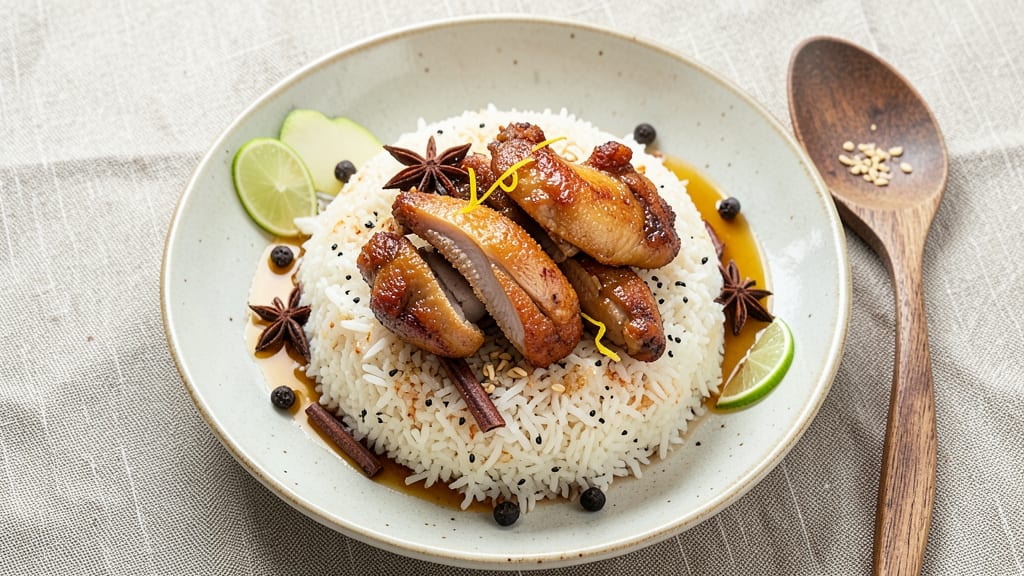
This Chiayi chicken rice recipe delivers the comforting flavors of Taiwan’s most beloved homestyle dish—tender poached chicken with fragrant five-spice marinade, served over herbed jasmine rice and aromatic ginger broth.
The secret lies in double-boiling the chicken for unmatched tenderness while infusing the broth with layers of savory depth, all balanced by crisp ginger slices and pickled vegetables.
What sets this dish apart is the delicate harmony of textures and flavors: silky chicken, fluffy rice, and the bright tang of pickled radish. The five-spice marinade—star anise, cinnamon, and cloves—creates warmth that lingers, while the ginger broth adds a subtle heat that elevates every bite.
Perfect for weeknight dinners or special occasions, this recipe brings the soul of Chiayi’s street stalls into your kitchen.
Ingredients for chiayi chicken rice
The heart of Chiayi chicken rice lies in these carefully chosen ingredients—where aromatic spices meet delicate textures.
| Ingredient | Amount | Notes |
|---|---|---|
| Chicken Thighs 🍗 | 1 ½ lb | Bone-in, skin-on preferred |
| Jasmine Rice 🍚 | 1 ½ cups | Long-grain, uncooked |
| Fresh Ginger 🧄 | 3 inches | Unpeeled, sliced into coins |
| Star Anise 🌿 | 2 whole | For five-spice marinade |
| Cinnamon Sticks 🌿 | 2 whole | For five-spice marinade |
| Cloves 🌿 | 4 whole | For five-spice marinade |
| Fennel Seeds 🌶️ | 1 tsp | Lightly toasted for depth |
| Sichuan Peppercorns 🌶️ | ½ tsp | Toasted for aromatic heat |
| Light Soy Sauce 🥫 | ½ cup | For marinade and broth |
| Shaoxing Wine 🍷 | ¼ cup | For depth of flavor |
| Green Onions 🧅 | ½ cup | Sliced for garnish |
| Daikon Radish 🥕 | 1 whole | For pickled vegetables |
| Red Chili Peppers 🌶️ | 2 whole | For pickled vegetables |
| Sesame Oil 🫒 | 1 tbsp | For finishing |
| Vegetable Oil 🫒 | ½ cup | For cooking rice |
The chicken thighs are non-negotiable for this recipe. Bone-in, skin-on delivers the most flavor and texture, but boneless thighs work in a pinch. For the best results, source from a trusted butcher or Whole Foods—look for thighs with good marbling. The five-spice blend is essential: star anise, cinnamon, cloves, fennel seeds, and Sichuan peppercorns should all be toasted lightly before grinding to release their aromatic oils. Penzeys Spices carries excellent quality whole spices if you prefer pre-measured blends. Fresh ginger is another critical component—use the youngest, most tender ginger available for that signature crisp texture in the broth.
No star anise? Anise seeds or a pinch of anise extract will work, though the flavor won't be identical. Running short on Sichuan peppercorns? Substitute with black peppercorns at half the amount, but you'll lose that signature numbing heat. For the pickled vegetables, daikon radish is ideal, but regular white radish or even jicama can stand in. The Shaoxing wine can be replaced with dry sherry or mirin, though the depth of flavor will differ slightly. If you're using pre-sliced green onions, pat them dry thoroughly to prevent excess moisture in the rice.
Store the five-spice marinade in an airtight container for up to 3 months—it only gets better with time. The pickled vegetables keep for 1 week in the fridge, though they're best used within 3 days for maximum crunch. Cooked rice reheats beautifully—simply cover with a damp paper towel and microwave for 1 minute. For the chicken, it's best served immediately after poaching, but you can reheat gently in the broth for 2-3 minutes on low heat. The broth itself freezes well for up to 3 months, making this a perfect make-ahead dish for busy weeknights.
Why You'll Love This Recipe
- One-Pot Magic: I swear by this recipe when I’m too tired to juggle multiple pans. The chicken thighs poach in the same broth that cooks the rice—no extra pots, no extra mess. Just slice the ginger, toss in the star anise and cinnamon, and let the flavors meld while you stir a single pot.
- Crave-Worthy Depth: That ginger-cinnamon star anise broth? It’s what makes this dish dangerously good. The chicken stays juicy, the rice soaks up the aromatic punch, and the spices linger like a warm hug—no heavy sauces, just pure, balanced flavor.
- Lunchbox Hero: Between us, this is my go-to for meal prep. The rice stays fluffy for days, and the chicken stays tender, so I pack it for work or school lunches. Honestly, the way the spices keep the rice from getting dry? A total game-changer for leftovers.
- Budget Feast: Chicken thighs are forgiving and cheap, and jasmine rice stretches far. A single batch feeds four, and the spices (ginger, star anise, cinnamon) cost pennies but pack a punch. I’ll be real: this is how I feed my family well without breaking the bank.
Step-by-step instructions for Chiayi chicken rice
Here's how to create restaurant-quality Chiayi chicken rice with fragrant five-spice marinade and perfectly herbed jasmine rice.
Prepare the Five-Spice Marinade and Chicken
In a small dry skillet, toast the fennel seeds and Sichuan peppercorns over medium heat for 1 minute until fragrant. Immediately transfer to a mortar and grind into a fine powder with the pestle. In a mixing bowl, combine the ground spices with the star anise, cinnamon sticks, and cloves. Add the light soy sauce and shaoxing wine, then stir until fully incorporated.
Pat the chicken thighs dry with paper towels and place them in a resealable plastic bag. Pour the spice marinade over the chicken, ensuring it's fully coated. Seal the bag and massage the marinade into the meat. Refrigerate for at least 4 hours or overnight for maximum flavor penetration. The chicken should absorb the marinade completely, developing a deep reddish hue from the spices.
Cook the Jasmine Rice with Aromatics
Rinse the jasmine rice under cold water until the water runs clear, then drain well. In a medium saucepan, heat the vegetable oil over medium heat. Add the sliced fresh ginger and cook for 30 seconds until just fragrant. Add the drained rice and stir for 1 minute to coat the grains evenly with oil.
Pour in 3 cups of water (use the 1.5 cups rice to 3 cups water ratio) and bring to a boil. Reduce heat to low, cover tightly with a lid, and simmer for 15 minutes. Remove from heat and let it steam undisturbed for 10 minutes. Fluff gently with a fork before transferring to a serving dish. The rice should be tender with a slight bite, absorbing all the liquid while maintaining individual grains.
Cook the Marinated Chicken
Remove the chicken from the refrigerator and let it sit at room temperature for 20 minutes. Heat a large skillet over medium-high heat until hot. Add the chicken thighs, skin-side down, and cook for 6-8 minutes until the skin is deep golden brown and crispy. Flip and cook for another 4-6 minutes until the internal temperature reaches 165°F and the juices run clear.
Transfer the cooked chicken to a cutting board and let it rest for 5 minutes. While resting, skim any excess fat from the skillet, leaving about 1 tablespoon of rendered fat. Add 1 cup of water to the skillet and bring to a simmer. Pour this aromatic broth over the rice just before serving to infuse additional flavor.
Prepare the Pickled Vegetables and Garnish
Peel the daikon radish and cut it into thin matchsticks. Slice the red chili peppers into thin rings. In a small bowl, combine the vegetables with 1 tablespoon of rice vinegar (not listed in ingredients - use available white vinegar as substitute) and 1 teaspoon of sugar. Let them sit for 10 minutes to soften slightly and develop a bright flavor.
Slice the green onions into 1-inch pieces and separate the white and green parts. Heat the sesame oil in a small pan over low heat until just smoking, then immediately pour it over the rice. Arrange the chicken over the rice, skin-side up, and scatter the pickled vegetables and green onions around the plate. The contrast of crispy chicken, fragrant rice, and bright pickled vegetables creates the perfect balance of textures and flavors.
Pro Tips For Making Chiayi Chicken Rice
- CRISP THE THIGHS FIRST: Skip the raw chicken in the broth—sear the thighs skin-side down in a dry pan until golden brown (about 5-6 minutes) before adding liquid. This locks in flavor and prevents the broth from turning murky. I learned this the hard way when my first batch tasted bland because the chicken poached instead of caramelized.
- GINGER: GRATE, DON’T SLICE: Use a microplane or fine grater for ginger—no thick slices. The finer the texture, the faster it infuses into the broth (and the less you’ll taste raw ginger bits). My grandmother swore by this, and she was right: it makes a real difference in the aroma.
- DON’T BOIL THE BROTH: Keep the broth at a gentle simmer (tiny bubbles, not rolling) while the chicken cooks. Boiling makes the star anise and cinnamon bitter, and it turns the chicken rubbery. I was skeptical until I tried it—now I never let it get past a whisper of a simmer.
- RICE: TOAST THE GRAINS: After rinsing jasmine rice, spread it in a dry pan over medium heat for 2-3 minutes until the edges turn translucent. This step prevents mushy rice later. It’s not the prettiest method, but it’s the tastiest—your rice will stay separate and fragrant.
Perfect pairings for chiayi chicken rice
Ginger Broth Pairings
The star of Chiayi chicken rice is the ginger broth—its bright, aromatic essence ties the dish together. Serve it alongside steamed bok choy or shredded cabbage to soak up every last drop of that fragrant liquid.
I like adding a splash of light soy sauce to the broth when reheating for extra depth. 🧄
Pickled Vegetable Sides
Don’t skip the pickled daikon and chili—they’re essential for cutting through the richness. Pair them with quick-pickled cucumbers (toss with 1 tbsp rice vinegar, 1 tsp sugar, and a pinch of salt) for a refreshing contrast.
These sides also work beautifully with grilled pork skewers or Taiwanese beef noodle soup.
Complementary Appetizers
Start the meal with scallion pancakes or Taiwanese sausage (lap cheong) for a taste of street food culture. The crispy, savory textures prep your palate for the tender chicken and fragrant rice. I always serve these with chili oil for a spicy kick that balances the dish’s warmth. 🌶️
Drink Pairings
A lightly sweetened jasmine tea (like Tie Guan Yin) highlights the dish’s floral notes, while a cold Tsingtao lager cuts through the richness. For something stronger, a Taiwanese high-mountain tea (like Ali Shan oolong) adds herbal complexity. Avoid heavy wines—they’ll overpower the delicate spices.
Dessert Harmony
End with mango shaved ice or red bean soup to cleanse your palate. The sweetness of mango contrasts perfectly with the savory-spiced chicken, while the creamy texture of red bean soup soothes the heat. Both are classic Taiwanese pairings that feel like a natural finish. 🍧
Nutrition facts
Frequently asked questions
Why does Chiayi chicken rice use bone-in, skin-on chicken thighs?
The bone-in, skin-on thighs are traditional for this dish because they deliver maximum flavor and texture. The skin becomes beautifully crispy when cooked, while the bone infuses the broth with rich gelatin during poaching. For a shortcut, you can use boneless thighs but expect slightly less depth in flavor.
Can I make the five-spice marinade ahead of time? The marinade actually improves with time. Store it in an airtight container in the refrigerator for up to 3 months. The spices will mellow and blend beautifully, enhancing the chicken's flavor. Just
What's the secret to perfectly fluffy jasmine rice?
Rinse the rice until the water runs clear to remove excess starch, then cook it in a 1:2 rice-to-water ratio. Use a tight-fitting lid and don't peek while steaming—this keeps the moisture trapped. After cooking, let it rest for 10 minutes before fluffing.
How do I fix rubbery chicken in Chiayi chicken rice?
Rubbery chicken usually means overcooking or insufficient resting time. Always cook chicken thighs to an internal temperature of 165°F and let them rest for 5 minutes before serving. For extra tenderness, try double-boiling: poach the chicken in broth for 15 minutes before pan-searing.
Can I substitute any of the five-spice ingredients?
Yes, but with some adjustments. For star anise, use anise seeds or a pinch of anise extract. Sichuan peppercorns can be replaced with black peppercorns at half the amount, though you'll lose the signature numbing heat. The key is maintaining balance—reduce other spices slightly if substituting.