
Soups & Stews
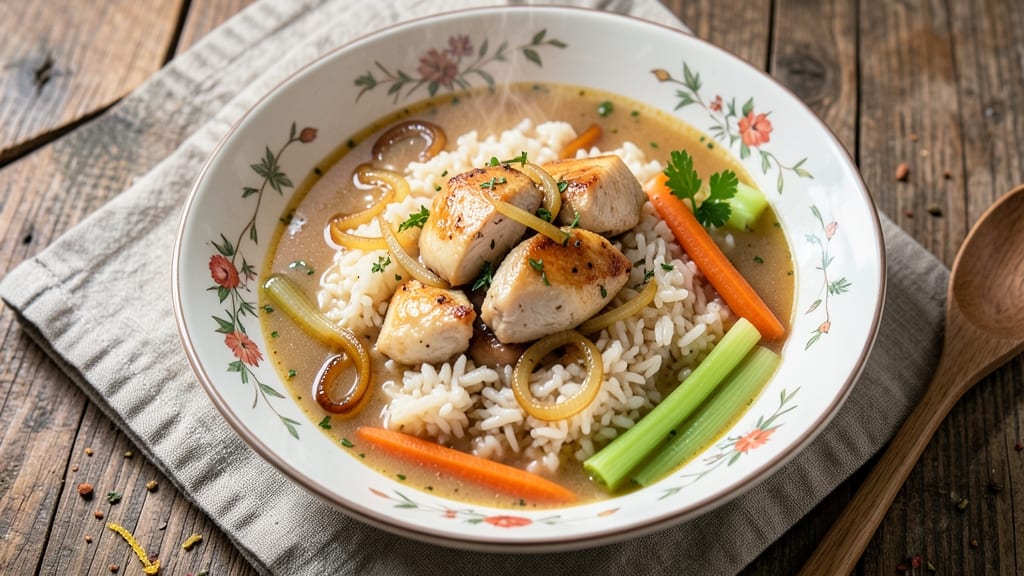
This chicken and white rice soup recipe delivers the perfect balance of hearty comfort and light nutrition in just 30 minutes—ideal for chilly evenings or when you crave a meal that warms both body and soul.
The secret lies in slow-simmered chicken that shreds effortlessly, releasing rich, savory broth that perfectly coats tender rice and vegetables. Every spoonful combines tender protein, fluffy grains, and aromatic herbs for a bowl that feels like a hug.
What sets this recipe apart is its foolproof technique: no fancy ingredients, just quality chicken, long-grain rice, and a simple broth that builds depth through gentle simmering. The result is a restaurant-quality soup that’s creamy without cream, flavorful without fuss, and ready in under half an hour.
Serve it steaming hot with a sprinkle of fresh parsley for a finish that feels both elegant and comforting.
Ingredients for chicken and white rice soup
Quality chicken, fluffy rice, and aromatic herbs create this comforting soup in 30 minutes.
| Ingredient | Amount | Notes |
|---|---|---|
| Boneless, Skinless Chicken Breast 🍗 | 1 ½ lb | Cut into bite-sized pieces |
| Long-Grain White Rice 🍚 | 1 cup | Uncooked, rinsed well |
| Chicken Broth 💧 | 4 cups | Low-sodium preferred |
| Yellow Onion 🧅 | 1 whole | Diced, medium size |
| Carrots 🥕 | 2 medium | Peeled, sliced into rounds |
| Celery Stalks 🌿 | 2 whole | Diced, medium stalks |
| Garlic Cloves 🧄 | 3 cloves | Minced, fresh preferred |
| Fresh Parsley 🌿 | ¼ cup | Chopped, for garnish |
| Olive Oil 🫒 | 1 tbsp | Extra-virgin for richness |
| Dried Thyme 🌿 | ½ tsp | Or 1 tsp fresh thyme |
| Salt 🧂 | 1 tsp | Kosher or sea salt |
| Black Pepper 🌶️ | ½ tsp | Freshly ground preferred |
| Bay Leaf 🍃 | 1 whole | Remove before serving |
The chicken is the heart of this soup—boneless, skinless breasts shred beautifully after simmering. Most grocery stores sell pre-cut pieces, but if you're buying whole breasts, cut them into even-sized chunks for consistent cooking. For the broth, low-sodium options like Swanson or Pacific Foods work best—they let you control the seasoning. Fresh thyme and parsley make all the difference, but dried works in a pinch (use half the amount). The carrots and celery should be fresh and crisp, not rubbery or limp, for the best texture in the broth.
No fresh thyme? Dried thyme at half the amount still delivers great flavor. Swap the parsley for fresh cilantro if you prefer, though it changes the flavor profile slightly. Running low on chicken broth? Water plus 1 bouillon cube gets you close, but you'll need to add extra salt. The rice is key here—long-grain white rice stays separate and soaks up the broth beautifully. Avoid instant rice; it turns mushy. For extra richness, stir in a tablespoon of butter or a splash of cream at the end, though this keeps it naturally light.
This soup tastes even better the next day as flavors meld. Store leftovers in an airtight container in the fridge for up to 4 days. For longer storage, freeze portions for up to 3 months. I like to portion it into individual containers so I can grab a bowl straight from the freezer and heat it up when I need a quick meal. The bay leaf adds subtle depth—just remember to remove it before serving so it doesn't turn your soup into a chewy surprise.
Why You'll Love This Recipe
- One-Pot Magic: I swear by this recipe when I’m too tired to wash dishes—just chop an onion, dice a carrot, toss in the chicken and rice, and let the broth do all the work. No pans left to scrub, no stress.
- Silky Comfort Bowl: That tender chicken falling apart in the broth? The way the rice absorbs just enough flavor to be rich but not heavy? Honestly, it’s the kind of meal that makes you sigh before you even take a bite.
- Meal Prep MVP: Between us, this soup is my lunchbox lifesaver. Cook a big batch on Sunday, and you’ve got flavorful, filling meals for the week—no sad desk lunches here. The rice stays firm, the carrots soften just right, and the broth keeps it all delicious.
- Budget-Friendly Powerhouse: Chicken breast and rice are pantry staples that don’t break the bank, and this recipe stretches them into multiple servings. I’ll be real: it’s the kind of dish that makes me feel like I’m feeding a crowd without actually spending one.
Step-by-step instructions for chicken and white rice soup
This straightforward method delivers a nourishing, comforting soup with tender chicken and perfectly cooked rice.
Sear the Chicken for Depth of Flavor
Heat the 1 tablespoon olive oil in a large pot over medium-high heat. Add the 1.5 lb boneless, skinless chicken breast cut into bite-sized pieces, working in batches if needed to avoid crowding. Cook for 4-5 minutes until the chicken develops a light golden crust and releases easily from the pan.
This searing step creates a rich foundation for your soup. You'll notice the chicken pieces begin to brown and the oil shimmers around them. Once all pieces are cooked to this point, remove them with a slotted spoon and set aside on a plate. Don't drain the oil—those flavorful browned bits will form the base of your soup.
Sauté the Vegetable Base
In the same pot, add the diced 1 whole yellow onion, sliced 2 medium carrots, and diced 2 whole celery stalks. Cook over medium heat for 5-6 minutes, stirring occasionally, until the vegetables soften and begin to release their natural juices. Add the 3 cloves minced garlic and 0.5 teaspoon dried thyme, cooking for an additional 30 seconds until fragrant.
The vegetables should be tender but not mushy at this stage. You'll smell the sweet aroma of caramelizing onions and the earthy notes of thyme developing. This aromatic vegetable base forms the flavor foundation for your entire soup.
Build the Soup Foundation
Pour in the 4 cups chicken broth and bring the mixture to a gentle boil. Add the 1 whole bay leaf, 1 teaspoon salt, and 0.5 teaspoon black pepper. Return the seared chicken pieces to the pot, reduce heat to medium-low, and let the soup simmer uncovered for 10 minutes. This allows the flavors to meld while the chicken finishes cooking.
During this time, you'll notice the broth take on a richer color and deeper aroma. The chicken should be fully cooked and tender when you pierce it with a fork. This simmering step is crucial for developing the soup's complex flavor profile.
Cook the Rice to Perfection
Add the 1 cup rinsed long-grain white rice to the simmering soup. Stir gently to distribute the rice evenly throughout the broth. Increase heat to medium-high and bring the soup back to a boil. Once boiling, reduce heat to low, cover the pot, and let the soup simmer for 15-18 minutes.
You'll know the rice is done when it's tender with a slight bite remaining in the center. The soup should have a creamy consistency with all the rice grains fully cooked. If the soup looks too thick, add ½ cup hot water to reach your desired consistency. Avoid lifting the lid during cooking to maintain even heat distribution.
Finish and Serve with Fresh Herbs
Remove the whole bay leaf from the soup. Taste and adjust seasoning if needed—this is your final opportunity to balance the flavors. Ladle the soup into bowls and garnish each serving with 0.25 cup chopped fresh parsley. Serve immediately while hot, with the tender chicken pieces and perfectly cooked rice distributed throughout.
The finished soup should have a rich, comforting aroma with visible pieces of tender chicken and rice in every bite. The parsley adds a bright contrast to the hearty flavors. This soup delivers on its promise of lightweight comfort, with each spoonful offering a perfect balance of protein, vegetables, and grains.
Pro Tips For Making Chicken And White Rice Soup
- Sear the Chicken First: Cut the chicken breasts into even 1-inch chunks—thicker pieces stay chewier, thinner ones cook faster—and brown them hard in a dry pot for 3-4 minutes before adding broth. I used to skip this, and the soup always tasted bland because the chicken just poached instead of developing flavor. High heat. Seriously, crank it up until you see a good crust.
- Slice Onions Thinly: Use a sharp knife and cut the yellow onion into paper-thin slices instead of chopping it. They’ll soften faster and blend into the broth without leaving chunks, which is especially helpful if you’re serving this to kids or picky eaters. My grandmother swore by this, and she was right: the texture is smoother, and the flavor spreads evenly.
- Don’t Overcrowd the Pot: Add the rice in a single layer first, then stir to spread it out before pouring in the broth. I learned this the hard way—dumping all the rice in at once leads to gummy, unevenly cooked grains. If your pot is small, cook the rice in batches or use a larger one. Crowding turns this simple soup into a mushy mess.
- Toast the Rice Briefly: Before adding broth, spread the raw rice in the pot and toast it over medium heat for 1-2 minutes until it smells nutty. This isn’t the prettiest method, but it works: the rice absorbs flavors better and stays separate instead of turning into a gluey paste. Skip this when you’re lazy, but the dish is noticeably better when you don’t.
Common mistakes when making perfect results
Overcooking the Rice
One of the biggest mistakes is letting the rice simmer too long after it's done. I've seen rice turn mushy and gluey when left in the broth beyond 15-18 minutes. The key is to check for doneness by tasting a grain—it should be tender with a slight bite.
If you're unsure, remember rice continues cooking off the heat, so it's better to pull it slightly early. 🍚
Skipping the Searing
Many home cooks rush this step, but searing the chicken creates critical flavor depth. Those golden brown bits (fond) at the bottom of your pot dissolve into the broth, adding richness.
I recommend taking the extra 4-5 minutes to properly brown the chicken—it makes all the difference in the final taste. 🔥
Using High-Sodium Broth
Store-bought chicken broth can be surprisingly salty, and it's easy to overdo it with added salt. I always use low-sodium broth like Swanson or Pacific Foods, then adjust with kosher salt at the end. Taste as you go—you can always add more salt, but you can't take it out. 🧂
Lifting the Lid Too Often
Every time you lift that lid during cooking, you release steam and drop the pot's temperature. This causes uneven cooking and extends your total time. I promise you, the rice will cook just fine if you resist the urge to peek for 15 minutes. Trust the process! ⏰
Not Rinsing the Rice
Unrinsed rice releases excess starch that can make your soup gluey. Always rinse your long-grain white rice under cold water before adding it to the pot. I give it a good swirl in the bowl, then drain well. This simple step prevents that dreaded mushy texture we all hate. 💧
Ignoring the Bay Leaf
That little bay leaf might seem insignificant, but it adds subtle depth to the broth. The mistake? Forgetting to remove it before serving. I've had guests pull out a whole leaf from their bowl—always check for it before serving.
It's an easy fix that prevents a surprising texture in your perfect soup. 🍃
Nutrition facts
Frequently asked questions
Can I use chicken thighs instead of breasts for this recipe?
Chicken thighs add even more flavor and richness to your soup. Use 1.5 pounds of boneless, skinless thighs, and increase the simmering time to 15 minutes to ensure they're fully cooked. The skin can be left on for extra crispiness, but remove it before serving if preferred.
How can I make this soup gluten-free?
This recipe is naturally gluten-free if you use gluten-free chicken broth and check that your rice and spices are certified gluten-free. Always verify labels, especially for broths, as some brands process in shared facilities. The rest of the ingredients are typically safe for gluten-free diets.
What can I add to make this soup more filling?
For extra heartiness, stir in 1 cup of diced potatoes with the carrots and celery, or add ½ cup of corn kernels at the end for sweetness. You could also double the rice to 1.5 cups or add shredded chicken breast for extra protein. A sprinkle of cheese (like cheddar or parmesan) works too!
Can I prepare this soup ahead of time?
Yes! This soup tastes even better the next day as flavors meld. Store leftovers in an airtight container in the fridge for up to 4 days. For longer storage, freeze portions for up to 3 months. Reheat gently on the stove with a splash of water or broth to restore creaminess.
Why did my rice turn mushy?
Mushy rice usually happens from overcooking or not rinsing it first. Always rinse your rice before adding it to the broth, and remove it from heat as soon as it's tender (after 15-18 minutes). Remember: rice continues cooking off the heat, so it's better to pull it slightly early than risk overcooking.