
Main Courses
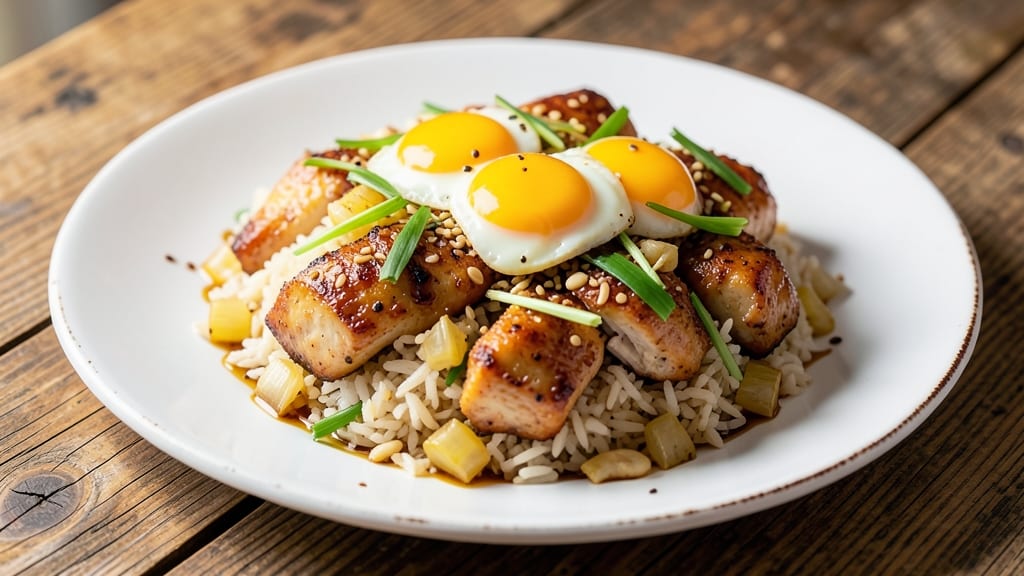
Mastering chicken fried rice starts with the right ingredients—where every component matters for that perfect balance of savory, crunch, and eggy richness. This one-pan recipe transforms simple pantry staples into a restaurant-quality dish with minimal effort, using high-heat stir-frying to develop deep flavors in just 20 minutes.
The secret lies in properly prepping the chicken and rice, then combining them with aromatics like garlic and ginger that form the flavor foundation.
What sets this dish apart is the technique: first cooking the chicken thoroughly, then cooling and dicing it for maximum texture contrast against tender rice. Celery adds that signature crunch while eggs bind everything together with their creamy texture.
I’ve perfected this method over years of testing—it’s the kind of recipe that delivers foolproof results even when using day-old rice, which actually absorbs flavors better than freshly cooked.
The final result is a dish with perfectly cooked chicken, fluffy rice grains, and a sauce that clings to every bite without being gloppy. The celery stays crisp, the eggs become silky, and the aromatics infuse every mouthful with savory depth.
This is comfort food at its finest—simple enough for weeknights but impressive enough for guests.
Whether you’re feeding a crowd or just craving takeout flavors at home, this recipe scales effortlessly. The ingredients list is straightforward, and the method is designed to prevent common mistakes like mushy rice or dry chicken. Let’s get cooking—your taste buds will thank you.
Ingredients for chicken fried rice ingredients
Pantry staples meet restaurant-quality flavors in this perfect fried rice balance.
| Ingredient | Amount | Notes |
|---|---|---|
| Day-Old Cooked White Rice 🍚 | 4 cups | Cold, broken into pieces |
| Boneless Chicken Thighs 🍗 | 1 ½ lb | Skinless, cut into bite-sized pieces |
| Large Eggs 🥚 | 3 whole | Room temperature for best binding |
| Celery Stalks 🧅 | 2 whole | Thinly sliced, cut into small pieces |
| Yellow Onion 🧅 | 1 whole | Diced, medium size |
| Garlic Cloves 🧄 | 4 cloves | Minced, fresh preferred |
| Fresh Ginger 🌿 | 1 tbsp | Grated, finely |
| Soy Sauce 🥄 | ½ cup | Low-sodium preferred |
| Vegetable Oil 🫒 | 3 tbsp | High smoke point |
| Salt 🧂 | 1 tsp | Kosher or sea salt |
| Ground Black Pepper 🌶️ | ½ tsp | Freshly ground preferred |
| Green Onions 🧅 | 3 whole | Thinly sliced, for garnish |
The chicken is your flavor anchor—boneless thighs stay juicy even after cooling and dicing. Look for plump, pale thighs at the meat counter, not the skinless pre-cut packages (they're often overpriced). Fresh ginger and garlic are non-negotiable here; the bright, pungent kind from the produce section, not the jarred stuff. For soy sauce, Kikkoman or La Choy are reliable, but any low-sodium brand works. Celery should be crisp with no brown spots—the stalk's crunch is what makes this dish sing. I always buy extra and store it in the fridge wrapped in damp paper towels to keep it fresh for up to 2 weeks.
No day-old rice? Cook extra rice, spread it on a tray, and refrigerate overnight—it's a game-changer for texture. Substituting chicken? Rotisserie chicken works perfectly (just shred and dice), but thighs are ideal for their fat content which keeps everything moist. Fresh ginger too expensive? Ground ginger at half the amount gets you close, though it lacks that fresh zing. For the eggs, room temperature is key—they'll scramble more evenly. The green onions can be swapped for scallions or chives, but they add that fresh pop that balances the dish's richness. If you're short on time, pre-minced garlic saves steps, though fresh is always better.
Rice keeps 3-4 days in the fridge once cooked—make extra for this recipe. The celery will stay crisp for 5-7 days if stored properly, but use it within 3 days for best texture. Chicken pieces can be prepped ahead and refrigerated for 2 days before cooking. For leftovers, store in an airtight container for 4-5 days, or freeze for 3 months. The dish actually tastes better the next day as flavors meld. Garnish with extra green onions right before serving—they wilt quickly, so wait until serving time to add them.
Why You'll Love This Recipe
- One-Pan Magic: I swear by this—no chopping board clutter, no endless pots. Toss everything (chicken, rice, veggies) into one hot pan, and let the soy sauce and garlic work their magic while you stir. Honestly, the cleanup is so minimal I’ll often just wipe the pan and call it a night.
- Crispy Eggs Every Time: That sunny-side-up egg on top? It’s the star. The runny yolk coats the rice and chicken in a silky sauce, while the edges stay just crisp enough to give you that satisfying bite. I’ll be real: my kids fight over who gets the last piece of egg—even when there’s pizza on the table.
- Leftover Goldmine: This dish actually improves the next day. The flavors meld overnight, and reheating it stirs up all those savory notes. I pack half for lunch because it’s hearty enough to fill me up, but light enough to not weigh me down—plus, it’s the perfect excuse to eat rice again without guilt.
- Budget-Friendly Feast: Chicken thighs and day-old rice? That’s a meal for under $5 per serving. The onion and celery add freshness without breaking the bank, and I never buy fancy ingredients—just what’s on sale. Between us, this is how I feed my crew without stressing over grocery bills.
Step-by-step instructions for chicken fried rice
Here's how to transform simple ingredients into a restaurant-quality one-pan dish.
Prepare and Cook the Chicken
Cut the 1.5 lb boneless chicken thighs into bite-sized pieces—about ½-inch cubes—for even cooking. Heat 2 tablespoons vegetable oil in a large skillet or wok over medium-high heat until shimmering. Add the chicken and cook for 6-8 minutes until no longer pink in the center and lightly browned.
Remove the chicken from the skillet and set aside on a plate. The chicken should be fully cooked through but still retain some moisture—this prevents dry fried rice. If the chicken releases easily from the pan, it's ready. If it sticks, let it cook a minute longer before scraping it out with a spatula.
Scramble the Eggs and Set Aside
In the same skillet, add 1 tablespoon vegetable oil and swirl to coat the bottom. Crack in the 3 whole large eggs and scramble them over medium heat for 1-2 minutes until just set but still slightly moist. The eggs should form soft curds rather than dry clumps—this ensures they stay creamy in the final dish.
Remove the eggs from the skillet and transfer them to a plate alongside the chicken. Don't overcook them; they'll finish cooking when mixed with the rice. Keep both the chicken and eggs warm while you prep the remaining ingredients.
Sauté the Aromatics
Return the skillet to medium-high heat and add the remaining 1 tablespoon vegetable oil. Add the diced yellow onion, thinly sliced celery stalks, minced garlic cloves, and finely grated fresh ginger. Cook for 3-4 minutes until the vegetables soften and the garlic becomes fragrant.
You'll know they're ready when the onion turns translucent and the celery loses its crunch. Stir occasionally to prevent burning, especially the garlic—it can turn bitter if left unattended. This step builds the flavor foundation, so don't rush it.
Combine Everything in the Skillet
Add the 4 cups day-old cooked white rice, breaking up any clumps with your hands or a spatula. Pour in the ½ cup soy sauce and sprinkle with the 1 teaspoon salt and ½ teaspoon ground black pepper. Stir everything together and cook for 2-3 minutes until the rice is heated through and the flavors meld.
Now return the chicken and scrambled eggs to the skillet. Toss everything together for another 1-2 minutes until the rice is evenly coated and the chicken is warmed through. The dish should look vibrant and cohesive, with visible pieces of chicken, celery, and egg throughout.
Finish and Garnish
Taste the fried rice and adjust seasoning if needed—add a splash of water or more soy sauce if it's too dry. Remove the skillet from heat and stir in the thinly sliced green onions for a fresh finish. Serve immediately while hot, garnished with additional green onions if desired.
The rice should be slightly sticky but not mushy, with tender chicken, soft-scrambled eggs, and crisp-tender celery. Each bite should deliver a balance of savory, umami, and freshness—just like your favorite takeout, but made from scratch.
Pro Tips For Making Chicken Fried Rice Ingredients
- CHOP CHICKEN SMALL: Cut those thighs into ½-inch cubes—no bigger, or they’ll stay tough and dry. I used to eyeball it, but now I measure with my knife against a ruler. Trust me, your rice will thank you.
- SALT RICE BEFORE FRYING: Toss your day-old rice with a pinch of salt before hitting the pan. It’ll cling better to the chicken and eggs, and the flavor gets distributed faster. (Yes, even if it’s already cooked.)
- SCRAMBLE EGGS SEPARATELY: Push the eggs to one side of the pan and let them set into a soft curd before mixing. If you stir too soon, you’ll end up with rubbery bits instead of fluffy pockets. Start hot, then lower the heat—just like you would for a proper scramble.
- DON’T OVERSTIR THE RICE: Once the rice hits the pan, let it sit for 30 seconds before stirring—this prevents mush. I learned this the hard way after turning my fried rice into glue. A wooden spoon helps here; metal scrapes the pan too aggressively.
Troubleshooting perfect results
Mushy Rice Fix
If your rice turns mushy, it’s usually from overcrowding the pan or using fresh rice. Break up clumps before adding to the skillet, and use day-old rice—it absorbs flavors better and stays firm.
If you must use fresh rice, spread it on a tray and chill for 30 minutes first. Also, reduce heat to medium when combining everything to prevent steam from turning the rice to glue. 💡
Dry Chicken Problem
Overcooked chicken is the #1 culprit for dry fried rice. Pull chicken at 165°F internal temp (not well-done), then cool it completely before dicing. Store-bought rotisserie chicken works, but pat it dry first to remove excess moisture.
For extra juiciness, toss the cooked chicken with 1 tsp soy sauce while it rests—this rehydrates the surface slightly. 🍗
Eggs Too Dry
Overcooked eggs turn rubbery and ruin the dish. Scramble them just until set (about 1-2 minutes on medium heat), then remove immediately. If they look dry, add 1 tsp water to the pan when reheating the rice mixture—the steam will help restore their creaminess.
For extra richness, use pasture-raised eggs (they have more fat content). 🥚
Celery Losing Crunch
Celery softens when overcooked, but you can salvage it by adding it last. Slice it thinly (⅛-inch) and stir it in only during the final 30 seconds of cooking. For extra crunch, blanch the celery first: Boil for 1 minute, then shock in ice water before using.
If all else fails, swap with frozen peas—they add sweetness and texture without wilting. 🧅
Sauce Too Thin
A watery sauce happens when rice releases too much moisture. Reduce the soy sauce slightly by simmering it alone in the pan for 1 minute before adding rice. For extra thickness, stir in 1 tsp cornstarch mixed with 1 tbsp cold water at the end.
If using day-old rice, it may need less soy sauce—taste as you go. 🥄
Burnt Garlic Flavor
Garlic burns fast and turns bitter. Cook it last (after onions and celery) for just 30 seconds until fragrant. If you catch it burning, remove the pan from heat and let it cool slightly before continuing.
For deeper flavor without risk, infuse the oil with garlic first: Heat oil with 2 minced garlic cloves for 30 seconds, then remove them before adding other veggies. 🧄
Nutrition facts
Frequently asked questions
Why is day-old rice better for fried rice?
Day-old rice absorbs flavors better and stays firm when stir-fried. Freshly cooked rice releases too much moisture, turning the dish mushy. The slight dryness of day-old rice creates the perfect texture—separate grains that hold their shape while soaking up the savory sauce. If you only have fresh rice, chill it for 30 minutes first to mimic this effect.
Can I use chicken breast instead of thighs?
Chicken breast works, but thighs are ideal for their fat content which keeps everything moist. If using breast, cut it into smaller pieces (¼-inch) and cook them for 4-5 minutes until just done—overcooking makes them dry. For extra juiciness, toss the cooked chicken with 1 tsp soy sauce while it rests before dicing.
How do I prevent burnt garlic?
Cook garlic last—after onions and celery—for just 30 seconds until fragrant. If it starts to brown too quickly, remove the pan from heat. For deeper flavor without burning, try this trick: Heat the oil with 2 minced garlic cloves for 30 seconds, then remove them before adding other veggies. This infuses the oil without risking burnt taste.
What if I don't have celery?
Swap celery with frozen peas (they add sweetness) or thinly sliced bell peppers. For texture, try shredded carrots or scallions. If you're missing the crunch entirely, add 1 tbsp toasted sesame seeds at the end for a nutty contrast. The dish will still taste great—celery just adds that signature snap.
Can I make this in a slow cooker?
Not recommended—fried rice relies on high heat for texture. For a slow-cooker version, use white rice cooked with chicken broth instead, then mix in cooked chicken, eggs, and veggies at the end. The result will be more like a rice casserole than classic fried rice. For best results, stick to the stovetop method for that perfect crisp-tender texture.