
Main Courses
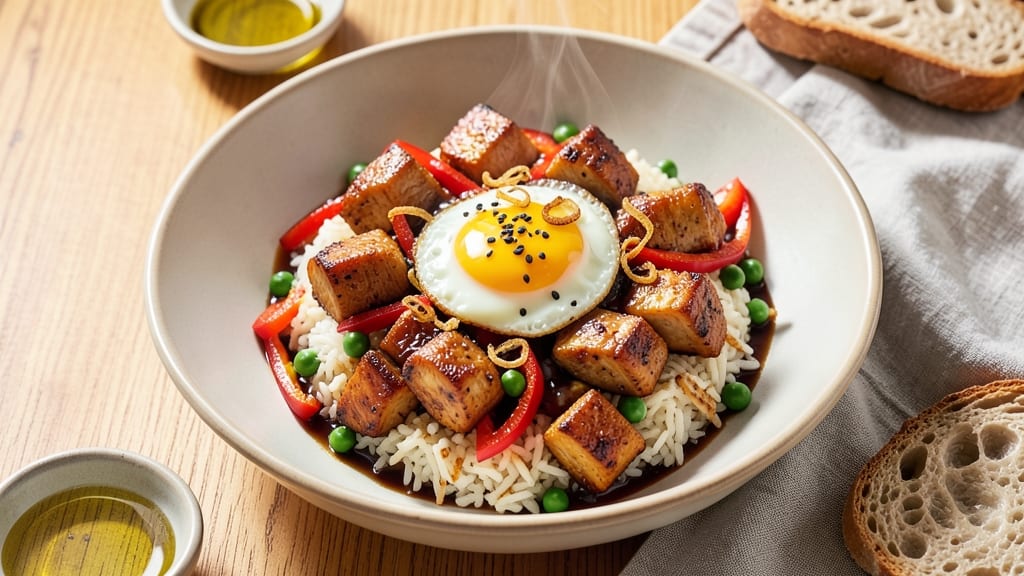
This chicken fried rice recipe with soy sauce delivers the perfect balance of savory, umami-packed flavors and satisfying textures in every bite.
The secret lies in properly prepping the chicken and rice—day-old rice is key for that signature crisp-tossed texture—while the soy sauce provides that essential depth of flavor that makes this dish irresistible. Professional wok technique ensures each ingredient gets its moment to shine without overpowering the others.
What sets this recipe apart is how the soy sauce transforms simple ingredients into something restaurant-worthy. The chicken stays tender and flavorful, the rice develops a subtle crispness from the wok's high heat, and the aromatics—garlic, ginger, and scallions—infuse every bite with bright, fresh notes.
The result is a complete, satisfying meal that comes together in under 30 minutes, making it perfect for weeknight dinners or meal prep.
Ingredients for chicken fried rice recipe with soy sauce
Restaurant-quality fried rice starts with these essential ingredients—each playing a precise role in texture and flavor.
| Ingredient | Amount | Notes |
|---|---|---|
| Day-Old Cooked White Rice 🍚 | 4 cups | Cold or room temperature preferred |
| Boneless Chicken Breast 🍗 | 1 ½ lb | Cut into 1-inch pieces, skinless |
| Eggs 🥚 | 2 large | Beaten for coating |
| All-Purpose Flour 🌾 | ½ cup | For dredging chicken |
| Vegetable Oil 🫒 | ½ cup | High smoke point preferred |
| Light Soy Sauce 🍶 | ½ cup | Kikkoman preferred for balance |
| Dark Soy Sauce 🍶 | 1 tbsp | For color depth |
| Garlic Cloves 🧄 | 4 cloves | Minced for aromatics |
| Fresh Ginger 🌿 | 1 tbsp | Grated, peeled |
| Scallions 🧅 | ½ cup | Thinly sliced, white and green parts |
| Carrots 🥕 | 1 cup | Julienned or thinly sliced |
| Green Onions 🧅 | 2 whole | Thinly sliced, for garnish |
| Sesame Oil 🫒 | 1 tbsp | Toasted for aroma |
| Salt 🧂 | 1 tsp | Diamond Crystal preferred |
| Ground Black Pepper 🌶️ | ½ tsp | Freshly ground |
The chicken's texture is everything here. Day-old rice is non-negotiable—it absorbs flavors better and develops that signature crispness from the wok's high heat. For chicken, skinless boneless breast stays tender when cut into even 1-inch pieces. Kikkoman soy sauce provides the perfect balance of umami without overpowering, while dark soy sauce adds that signature golden color. Fresh ginger and garlic should be minced just before cooking—pre-minced loses potency quickly. The carrots should be julienned thinly for even cooking, and baby carrots work perfectly if you're short on time.
No light soy sauce? Substitute with 3 tbsp of regular soy sauce plus 1 tsp sugar to mimic the balance. Fresh ginger too pungent? Ground ginger at half the amount works in a pinch, though fresh is ideal. The beaten eggs create a light coating for the chicken—room temperature eggs yield smoother results. Vegetable oil is best for high-heat wok cooking, but peanut oil works equally well. For extra crunch, add 1/4 cup of day-old fried shallots at the end. The sesame oil should be toasted in the wok for 10 seconds before adding other ingredients to release its aroma without overpowering.
Prep the chicken and rice first—they need time to marinate in the egg wash. Store cooked rice in an airtight container for up to 3 days, or freeze for 3 months. The soy sauce mixture can be made ahead and refrigerated for 1 week, though fresh is always better. Garnish with extra scallions and sesame seeds right before serving to preserve freshness. This dish reheats beautifully—just add a splash of water to the wok and toss everything together over medium heat.
Why You'll Love This Recipe
- Pantry Magic: I swear by this recipe when I’m staring into an empty fridge at 7 PM. Day-old rice, a couple eggs, and leftover chicken breast—no shopping trip required. The flour coating on the chicken gives it that satisfying crunch without needing special ingredients.
- Umami Bomb: That soy sauce isn’t just a seasoning—it’s the star. The deep, salty-sweet punch cuts through the richness of the fried egg and tender chicken, while the garlic and scallions add a bright finish. Honestly, I’ll take this over takeout any day.
- Lunchbox Hero: Between us, this is my go-to for meal prep. Reheat slices just fine, and the texture holds up—no soggy rice here. Pack it in containers with a side of quick-pickled veggies, and you’ve got a lunch that’ll make coworkers ask for your secret.
- Budget Win: Chicken breast might sound fancy, but it’s cheaper than takeout, and the flour stretch goes a long way. I make this twice a month, and it feeds four for under $10. Not the prettiest, but the taste makes up for it—and my wallet thanks me.
Step-by-step instructions for wok-tossed chicken fried rice
Master this classic technique for perfectly balanced texture and flavor every time.
Prepare and Crisp the Chicken
Cut the 1.5 lb boneless chicken breast into 1-inch pieces and pat dry with paper towels. This ensures maximum crispiness when fried. In a bowl, combine the chicken with 0.5 cup all-purpose flour, 1 tsp salt, and 0.5 tsp ground black pepper, tossing until evenly coated. The flour creates a light crust that seals in juices while developing a golden exterior.
Heat 0.25 cup vegetable oil in a wok or large skillet over medium-high heat until shimmering. Add half the chicken pieces in a single layer, being careful not to overcrowd. Cook undisturbed for 2-3 minutes until the edges turn golden brown and crispy. Flip and cook another 1-2 minutes until fully cooked through. Remove and set aside on a paper towel-lined plate. Repeat with remaining chicken, adding more oil if needed. The chicken should be tender yet firm—overcooking leads to dryness.
Scramble the Eggs and Sauté Aromatics
In the same wok, reduce heat to medium and add 0.25 cup vegetable oil. Crack the 2 large eggs into a bowl, season with a pinch of salt and pepper, then whisk vigorously. Pour the eggs into the hot wok and let them sit undisturbed for 5-10 seconds before gently pushing them around with a spatula. Scramble quickly until just set—soft curds with a slightly runny yolk for best texture. Remove and set aside.
Add 0.25 cup vegetable oil to the wok and increase heat to high. Sauté the 4 cloves minced garlic and 1 tbsp grated fresh ginger for 30 seconds until fragrant. Add the 1 cup julienned carrots and 0.5 cup sliced scallions, stirring constantly for 1-2 minutes until the carrots soften slightly but retain their shape. This quick cooking preserves their crisp texture while building flavor.
Combine and Toss with Rice
Increase heat to high and add the 4 cups day-old cooked white rice, breaking up any clumps with your hands. Stir-fry for 1-2 minutes until the rice is hot and begins to release its starches. Pour in the 0.5 cup light soy sauce and 1 tbsp dark soy sauce, tossing vigorously to coat every grain. The dark soy sauce adds depth and color, while the light soy sauce balances with umami.
Return the crispy chicken and scrambled eggs to the wok, tossing everything together for 1-2 minutes until evenly distributed. The rice should be hot and slightly sticky but not mushy. If it feels dry, add 1-2 tablespoons water and toss again. The goal is a wok-tossed texture—each bite should deliver a mix of crisp chicken, tender rice, and soft eggs.
Finish with Sesame Oil and Garnish
Remove the wok from heat and drizzle in the 1 tbsp toasted sesame oil, tossing immediately to distribute evenly. This final step infuses the dish with nutty aroma and balances the soy sauce's saltiness. Taste and adjust seasoning—you may need a splash more soy sauce or a pinch of salt, depending on your rice's initial saltiness.
Transfer the fried rice to a serving platter and garnish with the 2 whole sliced green onions. Serve immediately while hot, with each bite offering a perfect harmony of textures—crisp chicken, tender rice, and silky eggs—all unified by the deep umami of the soy sauce blend. The dish should be savory, slightly sweet, and aromatic, with a satisfying crunch from the vegetables.
Pro Tips For Making Chicken Fried Rice Recipe With Soy Sauce
- STIR-FRY THE RICE DRY: Cold, dry rice clings to the pan and toasts properly—this is non-negotiable. Spread your day-old rice on a tray and microwave it for 1-2 minutes to evaporate extra moisture before cooking. I learned this the hard way after making a soggy mess that stuck like glue.
- VELVEET THE CHICKEN FIRST: Skip the raw chicken in the pan—it’ll steam the rice and turn it mushy. Instead, coat the chicken in a thin slurry of 1 tablespoon flour + 2 tablespoons water, then pan-fry it separately until golden. Add it back in at the end to reheat, not to cook.
- SCRAMBLE EGGS SMALL: Big, wet egg clumps ruin texture. Whisk eggs with a splash of soy sauce, then pour a thin layer over the rice and stir immediately with a spatula to break them into pea-sized pieces. If you’re impatient, cook them separately and toss in last—just don’t overdo it.
- SALT THE SOY SAUCE: Store-bought soy sauce is bland—fix it by dissolving ½ teaspoon salt in 2 tablespoons soy sauce before adding to the rice. My grandmother swore by this, and she was right: it cuts through the rice’s starchiness and balances the dish without overpowering it.
Regional styles of this dish
Chinese Takeout Style
This is the version most Americans recognize from takeout menus, where the rice is slightly sticky and the soy sauce is the star. I use Kikkoman light soy sauce for its balanced saltiness and add just 1 tbsp dark soy sauce for color.
The chicken is cut into small, even pieces and fried until golden, then tossed with the rice at the very end. Garnish with extra scallions and a drizzle of toasted sesame oil—this is the classic combo that makes it taste like your favorite restaurant. 🍶
Thai-Inspired Version
For a Thai twist, swap the soy sauce for 3 tbsp fish sauce and add 1 tbsp oyster sauce for depth. Include 1 tbsp minced Thai basil and 1 tsp palm sugar to balance the flavors.
The chicken stays the same, but the rice gets a quick toss with 1 tbsp lime juice at the end for brightness. Serve with fresh cilantro and a sprinkle of crushed peanuts for texture. 🌶️
Japanese Kare Raisu Fusion
This fusion takes inspiration from Japanese curry rice but keeps the fried rice format. After cooking the chicken, set aside ½ cup of the soy sauce mixture and replace it with ½ cup Japanese curry roux (like S&B Golden Curry).
Add ½ cup diced potatoes and ½ cup corn kernels to the wok with the rice. The result is a rich, slightly sweet curry-infused fried rice with all the familiar textures. 🍚
Korean Kimchi Fried Rice
For a spicy kick, stir in ½ cup chopped kimchi with the rice and cook for 1 minute before adding the soy sauce. The tangy, fermented flavors cut through the richness of the chicken. Add 1 tsp gochujang (Korean chili paste) to the soy sauce mixture for extra heat.
Top with fried egg and sesame seeds for a Korean-style finish. This version is bold and perfect for spice lovers. 🌶️
Vietnamese-Inspired Caramelized
This version replaces soy sauce with 3 tbsp fish sauce and 1 tbsp coconut aminos for a deeper umami. Add 1 tbsp grated carrot and daikon to the aromatics for extra freshness.
After tossing, drizzle with 1 tsp coconut sugar and let it caramelize slightly for a sweeter, more complex flavor. Garnish with fresh mint and crushed peanuts for a Vietnamese café-style touch. 🥥
Nutrition facts
Frequently asked questions
Why does my fried rice turn out mushy instead of crisp?
Mushy fried rice happens when the rice absorbs too much liquid or isn't cooked at high enough heat. Always use day-old rice—it's drier and holds its shape better. When stir-frying, keep the heat at high and toss constantly for 1-2 minutes maximum. If needed, add just 1-2 tablespoons water at the end, not before. The wok should sizzle when you add the rice—this creates the signature crisp-tossed texture!
Can I use fresh rice instead of day-old rice?
Fresh rice works in a pinch, but it won't give you that classic crisp-tossed texture. If you must use it, spread the freshly cooked rice on a tray and refrigerate for at least 1 hour to dry it out. For best results, cook extra rice the night before and store it in an airtight container—it's the secret to restaurant-quality fried rice every time!
How do I prevent the chicken from getting dry?
Overcooking is the main culprit! Cut the chicken into even 1-inch pieces and cook in batches without overcrowding the pan. Use medium-high heat and cook for just 2-3 minutes per side until golden brown. Let the chicken rest for 2 minutes after cooking before adding it back to the wok—this keeps it juicy. Patting it dry before coating also helps create a better seal.
What's the difference between light and dark soy sauce in this recipe?
Light soy sauce (like Kikkoman) provides the primary salty umami flavor in this dish, while dark soy sauce adds color and a slightly sweeter, deeper taste. Use 0.5 cup light soy sauce for the base flavor and just 1 tbsp dark soy sauce for that signature golden hue. Without dark soy sauce, your fried rice will be lighter in color but still delicious—it's not mandatory!
Can I make this recipe ahead of time?
Yes! This dish actually tastes better the next day. Cook and cool the fried rice completely, then store it in an airtight container in the fridge for up to 3 days or freeze for 3 months. Reheat in a wok or skillet over medium heat with a splash of water to restore moisture. The flavors develop and deepen over time, making it perfect for meal prep!