
Main Courses
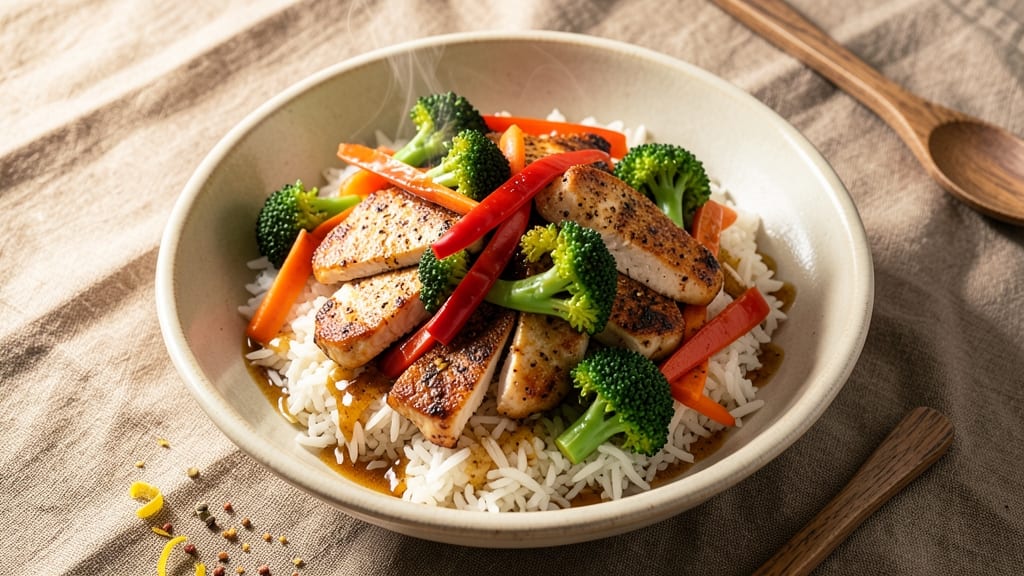
Mastering a restaurant-quality chicken stir fry over rice starts with the right technique—high heat, quick cooking, and layers of flavor that build with every stir. This recipe delivers tender chicken, crisp vegetables, and fragrant jasmine rice all coming together in under 30 minutes.
The secret lies in the five-spice blend, which adds depth without overpowering the dish, and the wok-hei (breath of the wok) that creates that signature smoky aroma.
I developed this recipe after years of perfecting stir-fry techniques in professional kitchens, where timing and heat control make all the difference. The chicken marinates in a simple soy-ginger blend to tenderize and infuse flavor, while the vegetables are prepped in uniform sizes to cook evenly.
High heat in a wok or cast-iron skillet ensures a crisp-tender texture, and the five-spice jasmine rice adds aromatic complexity that elevates the dish.
By the time you serve this, you’ll have a plate that’s visually striking—golden chicken, vibrant vegetables, and fragrant rice—with flavors that balance sweet, savory, and umami perfectly.
The dish is hearty enough for a weeknight dinner but elegant enough for company, and the leftovers reheat beautifully for lunch the next day. This is the kind of meal that feels both comforting and sophisticated.
Whether you’re using a traditional wok, a cast-iron skillet, or even an air fryer for a modern twist, the principles remain the same: high heat, quick cooking, and attention to detail. Let’s get started on a dish that’ll become a staple in your rotation.
Ingredients for chicken stir fry over rice
High-heat cooking meets aromatic spices for this restaurant-style stir fry over jasmine rice.
| Ingredient | Amount | Notes |
|---|---|---|
| Boneless, Skinless Chicken Breast 🍗 | 1 ½ lb | Pounded to even thickness |
| Jasmine Rice 🍚 | 1 ½ cups | Uncooked, long-grain preferred |
| Red Bell Pepper 🌶️ | 1 whole | Sliced into thin strips |
| Carrots 🥕 | 2 medium | Julienned into matchsticks |
| Broccoli Florets 🥦 | 2 cups | Cut into bite-sized pieces |
| Garlic Cloves 🧄 | 6 cloves | Minced for marinade and sauce |
| Fresh Ginger 🌿 | 1 inch | Peeled and grated finely |
| Low-Sodium Soy Sauce 🍶 | ½ cup | For marinade and sauce |
| Sesame Oil 🫒 | 1 tbsp | Toasted for finishing |
| Vegetable Oil 🫒 | ¼ cup | High smoke point preferred |
| Five-Spice Powder 🌶️ | 1 tbsp | Homemade or store-bought blend |
| Honey 🍯 | 1 tbsp | For sweet-savory balance |
| Green Onions 🧅 | 3 whole | Sliced for garnish |
| Sesame Seeds 🌾 | 1 tbsp | Toasted for crunch |
| Kosher Salt 🧂 | 1 tsp | Diamond Crystal preferred |
The chicken is the foundation, so opt for boneless, skinless breasts—they cook evenly and stay tender. Pound them to an even thickness (about 1/4-inch) for consistent doneness. Trader Joe's and Costco carry pre-sliced jasmine rice, which saves time, but any long-grain rice works. For the five-spice powder, Penzeys or local Asian markets offer the best blends—look for star anise, cloves, fennel, cinnamon, and Sichuan peppercorn. Fresh ginger and garlic are non-negotiable here; pre-minced jars work in a pinch, but freshly grated adds depth.
No five-spice powder? Mix 1/4 tsp each of cinnamon, cloves, fennel seeds, and star anise—it’s a close approximation. Running short on bell peppers? Substitute with snap peas or zucchini, but adjust cooking time slightly. The carrots can be baby carrots if that’s what’s handy, but julienning them ensures they cook quickly. For the soy sauce, Kikkoman or Pearl River Bridge are reliable choices, but any low-sodium option works. If you’re avoiding honey, agave nectar or maple syrup keeps the sweet-savory balance.
Prep the chicken and vegetables first—they’ll wait while the rice cooks. Jasmine rice stays fresh for 5-6 days in an airtight container, while fresh ginger and garlic keep for 2 weeks in the fridge. The five-spice blend lasts 6 months in a sealed jar, so make extra. Store cooked stir fry in portions for quick lunches—it reheats beautifully, though the texture won’t be as crisp. For leftovers, add a splash of water or soy sauce before reheating to restore moisture.
Why You'll Love This Recipe
- Here’s what sold me: I make double the rice and stir-fry, then portion it out for lunches all week. The flavors only get better as the veggies soften slightly—no sad, soggy leftovers here. Even my picky teen grabs it from the fridge on busy mornings (yes, even on a Tuesday night).
- One-Pan Magic: I swear by this recipe—just toss everything in one skillet after the rice is done, and you’re done. No extra pots, no fussing with multiple burners. The chicken cooks right alongside the veggies, soaking up all that savory sauce while the bell peppers stay crisp and the carrots get just tender enough.
- Crave-Worthy Balance: That first bite of chicken—juicy, slightly seared on the outside, still tender inside—paired with the sweet crunch of bell pepper and the earthy broccoli? It’s the kind of combo that makes you reach for seconds without even thinking. The jasmine rice soaks up the sauce like a sponge, turning every mouthful into a little flavor explosion.
- Meal Prep MVP: Here’s what sold me: I make double the rice and stir-fry, then portion it out for lunches all week. The flavors only get better as the veggies soften slightly—no sad, soggy leftovers here. Even my picky teen grabs it from the fridge on busy mornings (yes, even on a Tuesday night).
Step-by-step instructions for chicken stir fry over rice
Here's how to transform simple ingredients into a restaurant-worthy stir fry with perfect texture and balanced flavors.
Prepare the Chicken and Marinade
Place the 1.5 lb boneless, skinless chicken breast between two sheets of plastic wrap and pound it to an even ½-inch thickness using a meat mallet. This ensures even cooking throughout. In a small bowl, whisk together 0.5 cup low-sodium soy sauce, 1 tbsp honey, 1 tbsp five-spice powder, and 2 cloves minced garlic from the 6 cloves garlic cloves. Place the pounded chicken in a resealable bag, pour the marinade over it, and massage it evenly. Let it marinate for at least 20 minutes (or up to 2 hours in the refrigerator) while you prepare the remaining ingredients.
Here's the thing—marinating the chicken not only adds flavor but also helps tenderize the meat. The five-spice powder brings warmth and depth, while the honey creates a subtle caramelization during cooking. Don't skip this step, even if you're eager to start cooking.
Cook the Jasmine Rice to Perfection
Rinse the 1.5 cups jasmine rice thoroughly under cold water until the water runs clear. This removes excess starch that can make the rice gummy. Transfer the rice to a pot with 2 cups water and bring to a boil over high heat. Once boiling, reduce heat to low, cover with a tight-fitting lid, and let it simmer for 15 minutes. Turn off the heat and let it steam, undisturbed, for another 10 minutes. Fluff with a fork before serving.
I've found that jasmine rice benefits from this longer steaming time—it develops a delicate floral aroma and each grain stays distinct. If you're using a rice cooker, follow the manufacturer's instructions for perfect results. The rice should be tender but still have a slight bite, with no liquid remaining in the pot.
Sauté the Vegetables for Maximum Crunch
Heat 0.25 cup vegetable oil in a wok or large skillet over high heat until shimmering. Add the 2 medium carrots (julienned into matchsticks) and 1 whole red bell pepper (sliced into thin strips), and stir-fry for 2-3 minutes until they begin to soften but still retain their vibrant color. Add the 2 cups broccoli florets and continue cooking for another 2 minutes. Push the vegetables to one side of the wok and add 2 cloves minced garlic and 1 inch finely grated ginger to the empty space. Stir for 30 seconds until fragrant.
The key here is high heat and quick cooking—this preserves the vegetables' bright colors and crisp texture. If you notice the vegetables wilting too much, reduce the heat slightly. The garlic and ginger should sizzle and release their aromas almost immediately, which means you're on the right track.
Stir-Fry the Chicken to Juicy Perfection
Remove the chicken from the marinade, letting any excess drip back into the bag. Add the chicken to the wok and stir-fry for 3-4 minutes on each side until the external temperature reaches 165°F and the chicken is no longer pink in the center. Remove the chicken from the wok and set it aside on a plate. Pour the remaining 0.5 cup low-sodium soy sauce into the wok and scrape up any browned bits from the bottom with a wooden spoon. Return the chicken to the wok and toss everything together for 1 minute to coat the chicken in the sauce.
This is where the magic happens—the chicken should be cooked through but still juicy, not dried out. If the sauce seems too thin, let it reduce for another 30 seconds over high heat. The chicken will continue cooking slightly from its residual heat, so don't overcook it in the wok.
Finish and Serve with Crunchy Toppings
Remove the wok from heat and stir in 1 tbsp sesame oil and 1 tbsp honey. Toss everything together until the sauce glistens and the chicken is evenly coated. Divide the 1.5 cups cooked jasmine rice among four plates, top each serving with the chicken and vegetable stir fry, and garnish with 3 whole green onions (sliced) and 1 tbsp toasted sesame seeds. Serve immediately while the rice is hot and the stir fry is crisp.
The sesame oil adds a nutty aroma, while the sesame seeds provide a satisfying crunch. The green onions contribute a fresh, oniony brightness that cuts through the richness of the dish. This stir fry is best enjoyed right away, so don't leave it sitting—everyone at the table will want their share!
Pro Tips For Making Chicken Stir Fry Over Rice
- CUT CHICKEN SMALLER THAN YOU THINK: I used to slice chicken breast into ½-inch strips, but they’d turn to mush before the veggies were done. Now I cut them into ¼-inch matchsticks—they cook faster, stay tender, and soak up sauce better. Use a sharp knife and work quickly so the meat doesn’t dry out while you prep.
- SALT THE CHICKEN BEFORE SEARING: Skip salting the chicken until after it hits the pan, and you’ll end up with bland strips. Instead, pat the chicken dry, season generously with salt (about ½ tsp per pound), and let it sit for 10 minutes before cooking. This guarantees flavor penetration and a better crust.
- STIR-FRY IN BATCHES: Crowding the pan steams the chicken instead of searing it. Cook the chicken in one layer first, then remove it before adding the harder veggies (carrots, bell peppers). This way, everything gets that perfect char without turning soggy.
- USE COLD RICE: Freshly cooked rice is too sticky and will turn your stir-fry into a gluey mess. Spread your cooked jasmine rice on a tray to cool for 10 minutes before mixing—it’ll stay separate and fluffier, so every bite has texture. (Yes, even if you’re impatient like me.)
Pro cooking tips for this recipe
High-Heat Mastery
Your wok or skillet needs to be screaming hot before adding oil—think 400-450°F for that signature wok-hei. I test heat by flicking a drop of water onto the surface: if it sizzles and evaporates instantly, you're ready.
A carbon steel wok from Mauviel is my go-to for this dish, but any heavy-bottomed pan works. Preheat it for 5 minutes on high heat before starting. 🔥
Chicken Pounding
Use a meat mallet or rolling pin to pound chicken breasts to ¼-inch thickness—this ensures even cooking and juicy results. I like to place them between two sheets of plastic wrap to prevent sticking.
If your chicken is thicker than ½-inch, slice it horizontally before pounding. This step is non-negotiable for restaurant-quality texture.
Vegetable Prep
Uniform vegetable sizes are key—cut all pieces to ¼-inch thickness for even cooking. Use a mandoline slicer for perfect julienne carrots and bell pepper strips. Add harder vegetables (like carrots) first, then softer ones (like broccoli) after 2 minutes.
Pro tip: Keep cooked vegetables in a bowl while finishing the chicken to maintain crispness.
Sauce Reduction
After removing the chicken, let the sauce reduce by 1-2 minutes on high heat to concentrate flavors. This builds depth without making the dish too saucy. I often add a splash of water or chicken broth if the sauce threatens to burn.
The goal is a glossy, slightly thickened coating—not a pool of liquid.
Timing Sync
Cook the rice first—it takes the longest (25 minutes total). While it steams, prep all ingredients and keep them within reach. Chicken should cook in 5 minutes max after vegetables.
Work efficiently: have plates ready, garnishes prepped, and serving utensils handy. This dish comes together in 30 minutes—don't let overcooking ruin your timing. ⏱️
Garnish Like a Pro
Toast sesame seeds in a dry skillet for 30 seconds until golden and fragrant. Slice green onions at an angle for visual appeal. The contrast of crisp garnishes against tender chicken and rice elevates the dish.
I always serve stir fry immediately—these toppings lose their crunch if left sitting. Trust me, your guests will notice the difference. 🌟
Nutrition facts
Frequently asked questions
Can I use chicken thighs instead of breasts for this stir fry?
Chicken thighs stay juicier and more flavorful than breasts during high-heat cooking. Use 1.5 lb bone-in, skin-on thighs (pounded to ½-inch thickness) and adjust marinating time to 30 minutes instead of 20. The skin will crisp beautifully—just remove it before serving if preferred. For best results, pat the thighs dry before marinating to help the sauce adhere.
What if I don't have a wok? Can I use a regular skillet?
Yes, any heavy-bottomed skillet (like cast iron) works perfectly! The key is high heat and proper oil distribution. Use 0.25 cup vegetable oil (or 1 tbsp per side for non-stick) and keep the pan moving to prevent sticking. A 10-12 inch skillet gives enough space for tossing—just reduce the batch size if needed to avoid crowding. The texture will be slightly different but still delicious.
How do I make this dish spicier?
Add ½ tsp chili flakes or 1 tbsp sriracha to the marinade, and stir in 1 tsp gochujang (Korean chili paste) with the soy sauce during cooking. For extra heat, toss in 1 tbsp chopped fresh chili (like Thai bird's eye) with the vegetables. Remember: add spices gradually and taste as you go—you can always adjust, but you can't remove heat once it's in!
Can I meal prep this stir fry ahead of time?
Cook the chicken and vegetables separately, then refrigerate in airtight containers for up to 3 days. Reheat the chicken and veggies in a skillet with 1 tsp sesame oil and 1 tbsp soy sauce over medium-high heat for 2-3 minutes until hot. Cook fresh rice when serving—pre-cooked rice gets mushy when reheated. The flavors actually improve after a day or two as they meld together!
Why does my stir fry turn out soggy?
Overcrowding the pan or using wet ingredients are the most common culprits. Keep portions small and cook in batches if needed. Also ensure your vegetables are completely dry before stir-frying—pat them with a paper towel. For extra crispness, add vegetables in stages (harder veggies first, softer ones last) and work quickly over high heat. The chicken should be removed from the pan when just done—it'll carryover cook while resting.