
Main Courses
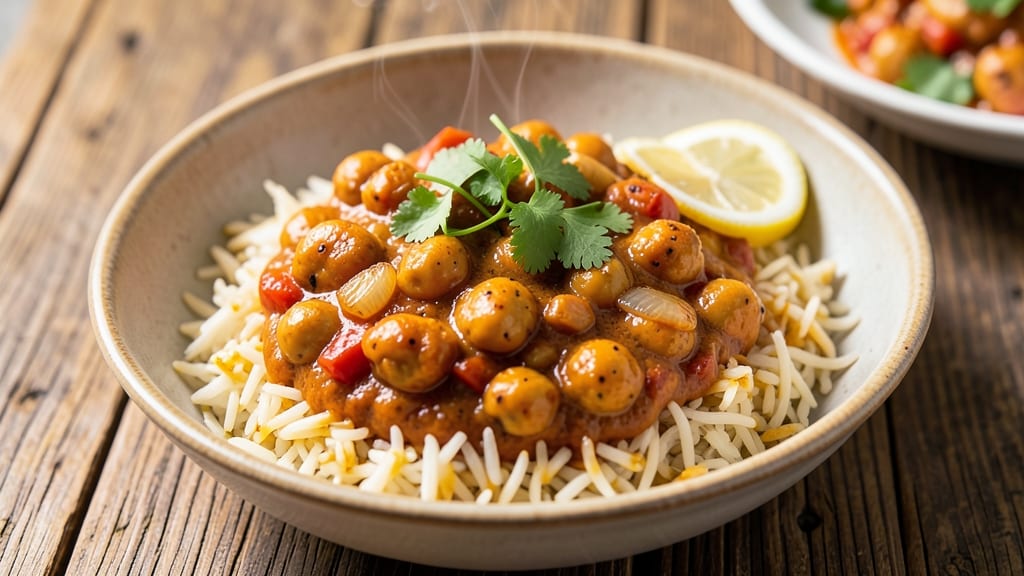
This chickpea curry with rice recipe delivers the rich, aromatic harmony of spiced tomato and coconut—perfect for a satisfying, plant-based meal that feels like a restaurant favorite.
The secret lies in slow-cooked spices that bloom into layers of warmth, while tender chickpeas soak up every flavorful drop of the creamy coconut-tomato sauce.
What makes this dish special is its balance of traditional techniques and modern convenience—whether you simmer it on the stovetop or use a pressure cooker for faster results. The fragrant rice absorbs the curry's essence, creating a complete, comforting plate that's as nourishing as it is delicious.
Ready in under an hour, this curry transforms humble ingredients into a meal worth savoring.
Ingredients for chickpea curry with rice
These aromatic ingredients blend into a creamy, spice-kissed curry that pairs perfectly with fragrant rice.
| Ingredient | Amount | Notes |
|---|---|---|
| Chickpeas 🌱 | 1 ½ cups | Canned, drained and rinsed |
| Coconut Milk 🥥 | 13 ½ oz | Full-fat canned variety |
| Crushed Tomatoes 🍅 | 1 cup | San Marzano preferred |
| Onion 🧅 | 1 whole | Yellow, finely diced |
| Garlic Cloves 🧄 | 4 cloves | Fresh, minced |
| Ginger Root 🌿 | 1 tbsp | Freshly grated |
| Ground Cumin 🌶️ | 1 tsp | Toasted for depth |
| Ground Coriander 🌿 | 1 tsp | Freshly ground preferred |
| Turmeric Powder 🌶️ | ½ tsp | Bright orange color |
| Garam Masala 🌶️ | 1 tsp | Store-bought blend works |
| Jaggery or Brown Sugar 🍯 | 1 tbsp | For subtle sweetness |
| Vegetable Oil 🫒 | 2 tbsp | For sautéing |
| Fresh Cilantro 🌿 | ¼ cup | Chopped, for garnish |
| Long-Grain White Rice 🍚 | 1 ½ cups | Uncooked, basmati preferred |
| Lemon Juice 🍋 | 1 tbsp | Freshly squeezed |
The coconut milk is non-negotiable here—full-fat canned gives that luxurious creaminess. Grab the 13.5 oz can from the international aisle at Whole Foods or Trader Joe's if you want the best flavor. The chickpeas? Canned is fine, but if you're feeling fancy, soak dried overnight for that restaurant-quality texture. Fresh ginger and garlic are worth the extra minute to prep—nothing beats their bright punch in this dish. For the tomatoes, San Marzano is ideal, but any good-quality canned tomatoes work if you're in a pinch.
No garam masala? Mix equal parts cumin, coriander, cinnamon, and cardamom—it's basically the same thing. Running low on jaggery? Brown sugar at half the amount won't ruin it, though traditionalists might notice the difference. The rice? Basmati holds up best, but jasmine works too if that's what you've got. Fresh cilantro is ideal, but dried works at one-third the amount if you're out. Want more heat? Add a pinch of cayenne with the garam masala—trust me, it's worth it.
This curry tastes even better the next day, so make extra and freeze portions for up to 3 months. Store the cooked curry in an airtight container with a thin layer of coconut milk on top to preserve moisture. The rice? Day-old rice actually absorbs the curry flavors better—perfect for leftovers. If prepping ahead, cook the curry first, then reheat the rice separately and mix them together. That way, the rice stays fluffy and not soggy.
Why You'll Love This Recipe
- One-Pot Magic: I swear by this recipe when I’m too tired to wash a million dishes. Sauté onions and garlic, toss in the crushed tomatoes and chickpeas, then let the coconut milk do all the heavy lifting—no straining, no fuss. The rice cooks right in the same pot? Even better.
- Garlic-Tomato Hug: That first bite where the garlic meets the sweet, tangy tomatoes? It’s like a warm embrace for your taste buds. The coconut milk smooths it out, but the crushed tomatoes keep it bright and real—not too heavy, not too bland.
- Meal Prep MVP: Between us, this is my go-to for busy weeks. Make a big batch on Sunday, and you’ve got lunch or dinner covered for days. The flavors actually improve after a night in the fridge—seriously, the chickpeas soak up all the goodness.
- Pocketbook Hero: A can of chickpeas, a can of tomatoes, coconut milk—this feeds four for under $8. Honestly, it’s one of those recipes where you’re left wondering why you ever ordered takeout. And the leftovers? Just as good reheated as they are fresh.
Step-by-step instructions for spiced tomato and coconut chickpea curry
Here's how to build a rich, aromatic curry where every spice sings and the coconut milk creates velvety harmony.
Sauté the Aromatic Base
Heat the 2 tablespoons vegetable oil in a heavy-bottomed pot over medium heat. Add the 1 whole finely diced onion and cook for 5-6 minutes, stirring occasionally, until softened and beginning to turn golden at the edges. This foundational step develops the curry's depth—don't rush it.
Add the 4 minced garlic cloves and 1 tablespoon freshly grated ginger root, then cook for 1-2 minutes until fragrant and the raw garlic aroma disappears. Here's where the magic happens: the spices need time to bloom properly. If you smell something burning, reduce the heat slightly—we're aiming for gentle cooking, not charring.
Toast the Spices and Add Tomatoes
Stir in the 1 teaspoon ground cumin, 1 teaspoon ground coriander, and 0.5 teaspoon turmeric powder, cooking for 30 seconds until the spices release their aromas—you'll smell that warm, earthy cumin perfume. Add the 1 cup crushed tomatoes and cook for 3-4 minutes, stirring occasionally, until the mixture thickens slightly and the tomatoes break down into the base.
This is where the curry starts building its complex flavor profile. The tomatoes provide acidity that balances the richness of the coconut milk later. If the mixture looks too thick, add 2 tablespoons water to maintain proper consistency for the next steps.
Simmer with Coconut Milk and Chickpeas
Pour in the 13.5 ounces coconut milk and bring to a gentle simmer. Add the 1.5 cups drained and rinsed chickpeas, 1 tablespoon jaggery or brown sugar, and 1 teaspoon garam masala, then reduce heat to low. Let it simmer uncovered for 15-20 minutes, stirring occasionally, until the flavors meld together and the curry thickens slightly.
This slow simmering allows all the spices to infuse properly while keeping the chickpeas tender. You'll know it's ready when the curry coats the back of a spoon and the chickpeas are heated through. If the top starts to develop a skin, stir gently to prevent it from burning.
Finish with Fresh Herbs and Acid
Remove the pot from heat and stir in the 1 tablespoon freshly squeezed lemon juice and 0.25 cup chopped fresh cilantro. The lemon juice brightens the curry while the cilantro adds freshness that cuts through the richness. Taste and adjust seasoning—you might need a pinch more salt or a splash more lemon juice to balance the flavors.
Let the curry sit off heat for 5 minutes to allow all the flavors to settle. This resting period is crucial—it lets the spices fully infuse and the curry develop its final depth of flavor. The aroma should be intoxicating: warm spices, citrus brightness, and coconut richness all working in harmony.
Serve Over Steamed Rice
While the curry rests, prepare the 1.5 cups long-grain white rice according to package instructions for perfect al dente texture. Serve the curry hot over the steamed rice, garnished with additional cilantro if desired. The rice should soak up the flavorful sauce while maintaining its distinct texture.
This dish delivers a perfect balance of textures—creamy coconut milk, tender chickpeas, and fluffy rice—with a symphony of warm spices that dance on your palate. The key to success lies in the slow development of flavors through proper simmering and the bright finishing touches of lemon and cilantro.
Pro Tips For Making Chickpea Curry With Rice
- Sauté Onions Slowly: I used to rush this step and end up with bitter onions—don’t. Cook them on medium-low heat for 8-10 minutes until they’re soft, golden, and smell sweet. If they start browning too fast, pull the pan off the heat for 30 seconds and stir. This builds flavor without burning.
- Use Canned Chickpeas (But Drain & Rinse): Skip dried chickpeas unless you’ve got time—canned is fine, but drain, rinse, and pat them dry first. The starch clinging to canned chickpeas can turn your curry gluey. A quick towel press removes excess moisture, and the texture stays firm.
- Simmer, Don’t Boil: After adding coconut milk and tomatoes, keep the heat at a bare simmer—not a rolling boil. Boiling burns the milk and makes the curry split. A gentle simmer (tiny bubbles, occasional stir) keeps the sauce creamy and lets flavors meld.
- Toast Spices Before Adding: If your recipe calls for spices (like cumin or coriander), toast them in the same pan for 30 seconds after cooking the onions. The aroma jumps, and the spices release oils that deepen the curry’s flavor. Skip this, and you’re missing half the taste.
Troubleshooting perfect results
Curry Too Thin?
If your curry ends up too watery, simmer uncovered for an extra 5-10 minutes to let the coconut milk reduce naturally. For quicker thickening, stir in 1 tablespoon cornstarch mixed with 2 tablespoons water and cook for 2 minutes.
I’ve also had success adding ½ cup mashed chickpeas to the pot—they thicken beautifully while adding texture. 🥄
Spices Not Blooming?
If your spices lack depth, they weren’t toasted long enough. Next time, cook them for 30-60 seconds until you smell their distinct aromas—cumin should be nutty, coriander citrusy, and turmeric earthy.
For extra punch, add ½ teaspoon black pepper with the garam masala. Pro tip: Toast whole spices in a dry pan first, then grind them fresh for maximum flavor. 🌶️
Chickpeas Too Hard?
Overcooked chickpeas? They likely simmered too long. Reduce cooking time to 10-12 minutes after adding coconut milk. For extra tenderness, soak canned chickpeas in warm water for 20 minutes before using. If using dried, cook them separately in 1 cup water for 45 minutes before adding to the curry. 🌱
Lemon Too Overpowering?
If the lemon juice dominates, balance it with ½ teaspoon sugar or a pinch of salt. For a smoother finish, reduce the lemon to ½ tablespoon and add 1 teaspoon honey instead. The key is acidity—too much can make the curry taste sharp. Taste as you go! 🍋
Rice Getting Mushy?
Steamed rice absorbing too much curry? Serve the curry in a separate bowl with rice on the side. For extra fluffiness, rinse the rice 2-3 times before cooking. If reheating leftovers, microwave rice separately and mix with curry just before serving. 🍚
Coconut Milk Separating?
This happens when curry cools too quickly. Keep the pot on low heat while serving, and stir gently before eating. For prevention, whisk in 1 tablespoon cornstarch mixed with 2 tablespoons water at the end of cooking.
Store leftovers in an airtight container with a lid slightly ajar to let steam escape. 🥥
Nutrition facts
Frequently asked questions
Can I use dried chickpeas instead of canned?
Soak 1 cup dried chickpeas overnight, then simmer in 3 cups water for 45-60 minutes until tender before adding to the curry. They'll absorb more flavor and give a heartier texture. For faster results, use a pressure cooker (20 minutes on high pressure).
How can I make this curry spicier?
Add ½ teaspoon cayenne pepper with the garam masala, or stir in 1 teaspoon red chili powder when toasting spices. For heat lovers, blend 1 fresh chili (like serrano) with the garlic and ginger. Always taste first—you can adjust later!
What's the best rice to serve with this?
Basmati rice is ideal—its long grains stay separate and soak up the curry beautifully. For extra fluffiness, rinse 2-3 times before cooking. Jasmine rice works too but may absorb more sauce. Pro tip: Cook rice in 1:1.5 rice-to-water ratio for perfect texture.
Can I make this in a slow cooker?
Yes! Sauté the onions, garlic, ginger, and spices as directed, then transfer everything to the slow cooker. Add 1 cup water to the pot, cover, and cook on low for 4-5 hours or high for 2-3 hours. The slow cooking enhances the flavors beautifully.
How long will leftovers keep?
Store curry in an airtight container in the fridge for up to 5 days. For longer storage, freeze portions for 3 months. Reheat gently on low heat, adding 1-2 tablespoons water to prevent drying. The rice? Cook fresh when reheating—it stays fluffier.