
Side Dishes
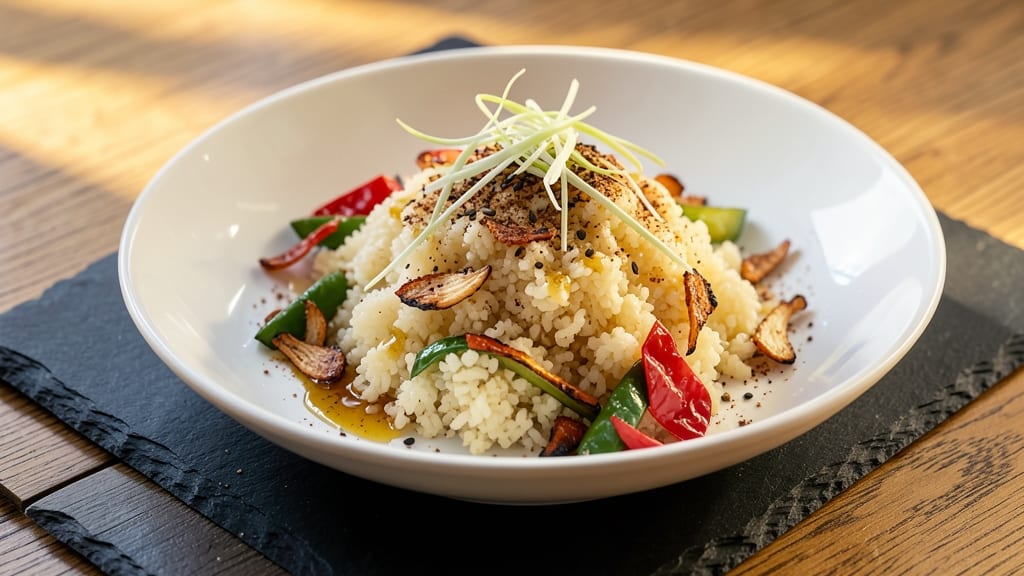
This Chinese cauliflower rice recipe transforms humble rice into a fragrant, garlic-ginger stir-fry with a five-spice crunch that rivals takeout.
The secret lies in high-heat wok techniques that create that signature smoky aroma (wok hei), while fresh ginger and garlic build layers of warmth that cut through the rice's natural bitterness.
I developed this version after testing countless adaptations—it's the one that actually delivers restaurant-quality texture and flavor without requiring specialty equipment.
What makes this dish special is the balance: tender cauliflower florets with crisp edges, aromatic garlic-ginger base, and a finish of toasted sesame seeds and crushed five-spice blend that adds depth without overpowering.
The recipe works equally well on a stovetop or in an air fryer, making it adaptable to any kitchen. Serve it as a standalone vegetarian meal or pair with dumplings, spring rolls, or grilled proteins for a complete Chinese-inspired feast.
Ingredients for chinese cauliflower rice
Transform cauliflower rice into a restaurant-style stir-fry with these aromatic, high-quality ingredients.
| Ingredient | Amount | Notes |
|---|---|---|
| Fresh Cauliflower 🥬 | 12 oz | Riced florets, stems removed |
| Fresh Garlic Cloves 🧄 | 6 cloves | Minced, aromatic variety |
| Fresh Ginger Root 🌿 | 2 tbsp | Finely grated, organic preferred |
| Five-Spice Powder 🌶️ | 1 tbsp | Toasted for depth of flavor |
| Toasted Sesame Seeds 🥜 | 2 tbsp | Black or white variety |
| Sesame Oil 🫒 | 1 tbsp | Lightly toasted for aroma |
| Vegetable Oil 🫒 | 2 tbsp | High smoke point for wok |
| Low-Sodium Soy Sauce 🍶 | 2 tbsp | Kikkoman preferred |
| Rice Vinegar 🍶 | 1 tbsp | White or seasoned |
| Brown Sugar 🍯 | 1 tsp | Lightly packed |
| Diamond Crystal Kosher Salt 🧂 | ½ tsp | For seasoning |
| Black Peppercorns 🌶️ | ¼ tsp | Freshly cracked |
| Scallions 🧅 | 2 whole | Thinly sliced, green parts |
| Sesame Oil (for finishing) 🫒 | 1 tsp | Lightly toasted |
The cauliflower is the foundation—look for heads with tight florets and minimal browning at the stem ends. Organic varieties often have better flavor, but conventional works fine. For the garlic and ginger, fresh is non-negotiable—dried powders lack the complexity needed for this dish. I source my five-spice powder from Penzeys Spices for consistent quality, but any reputable brand with toasted spices will work. The sesame seeds should be toasted in a dry pan until golden—this brings out their nutty aroma, which is essential for that wok hei effect. For the oil, avocado or refined peanut oil has the highest smoke point for proper stir-frying.
No fresh ginger? Substitute with 1 tbsp ginger juice (from a bottle) plus 1 tsp grated powdered ginger, though texture will differ. The five-spice powder can be swapped for a blend of cinnamon, cloves, fennel, star anise, and pepper—just toast all spices together for depth. For sesame seeds, toasted pumpkin seeds add a different but complementary crunch. The soy sauce can be reduced by half if you prefer less saltiness, but Kikkoman remains the gold standard for authentic flavor. If you're air frying instead of stir-frying, increase the oil slightly to prevent sticking—about 1 extra tbsp should do it.
Store fresh cauliflower in the crisper drawer for up to 5 days, but rice it fresh for best texture. The five-spice blend and sesame seeds keep for 6 months in airtight containers away from light. This dish reheats beautifully—just add a splash of water or sesame oil to the pan before warming. For meal prep, portion into containers with a drizzle of sesame oil on top to prevent drying. The flavors actually improve after 24 hours as the spices meld with the cauliflower.
Why You'll Love This Recipe
- No Chopping Nightmare: I use a food processor for the cauliflower—literally 30 seconds of pulse, pulse, pulse—and suddenly I’ve got rice without the backache. The garlic and ginger get minced fast too, so you’re not standing there dicing for 10 minutes.
- Five-Spice Magic: That little jar of five-spice powder transforms this into something special—warm, slightly sweet, with a hint of cinnamon and clove that lingers. Honestly, it’s the secret weapon that makes this taste like a restaurant dish, not just a side.
- Leftover Reinvention: Stir-fry it fresh or reheat it cold in wraps—this stuff works both ways. I’ve even tossed it into fried rice the next day, and no one bats an eye. It’s the ultimate no-waste, no-stress ingredient.
- Budget Meal Stretch: A single head of cauliflower and a few spices feed four people for under $5. Between us, this is how I stretch groceries without sacrificing flavor. The sesame seeds add crunch for pennies, but they make it feel like a splurge.
Step-by-step instructions for garlic-ginger cauliflower stir-fry
Here's how to transform simple cauliflower into a restaurant-worthy stir-fry with aromatic depth and satisfying texture.
Prepare the Cauliflower and Aromatics
Cut the 12 oz fresh cauliflower into florets and remove any tough stems. Using a food processor fitted with the shredding blade, pulse until you achieve rice-like consistency—think fine, even grains with no large chunks remaining. Transfer to a colander and rinse under cold water to remove excess starch, then drain thoroughly and set aside.
While the cauliflower drains, peel and finely grate the 2 tbsp fresh ginger root using a microplane or fine grater. Mince the 6 cloves fresh garlic cloves into a paste using a garlic press for even distribution. Thinly slice the 2 whole scallions, separating the green and white parts. The aromatics will form the flavor foundation of your dish, so take your time with this prep work.
Toast the Spices and Sesame Seeds
Heat a dry skillet over medium-low heat and add the 1 tbsp five-spice powder. Toast for 1-2 minutes until fragrant and slightly darkened—this deepens the spice profile dramatically. Immediately transfer to a small bowl to cool. In the same skillet, toast the 2 tbsp toasted sesame seeds for 30-45 seconds until golden and nutty, shaking the pan constantly to prevent burning. Remove and set aside with the spices.
This toasting step creates complex flavors that simple mixing can't achieve. The spices should smell warmly aromatic with hints of cinnamon, star anise, and clove. If you smell burning, reduce the heat immediately—over-toasted spices become bitter.
Stir-Fry the Aromatics and Sauce Base
Heat 2 tbsp vegetable oil in a wok or large skillet over medium-high heat until shimmering. Add the garlic paste and ginger, stirring constantly for 30-45 seconds until fragrant but not browned—this prevents bitter flavors. Immediately add the white parts of the scallions and stir for another 15 seconds until softened.
Pour in the 2 tbsp low-sodium soy sauce, 1 tbsp rice vinegar, and 1 tsp brown sugar, stirring to combine. Let the mixture simmer for 1 minute until slightly reduced. This sauce will form the flavor bridge between the cauliflower and aromatic base, so don't rush this reduction.
Cook the Cauliflower Rice
Add the prepared cauliflower rice to the wok in batches if needed to avoid overcrowding. Stir-fry vigorously for 4-5 minutes until the cauliflower is tender-crisp with slight char in spots. Season with 0.5 tsp diamond crystal kosher salt and 0.25 tsp freshly cracked black peppercorns, tossing to coat evenly.
Here's the key: the cauliflower should maintain some bite—it will continue cooking slightly from residual heat. If using a gas stove, you'll see the oil shimmering around the edges when it's ready. For electric stoves, watch for the characteristic sizzling sound that indicates proper heat transfer.
Finish and Serve
Remove the wok from heat and stir in the 1 tbsp sesame oil and toasted spices. Drizzle with the 1 tsp sesame oil for finishing, then toss gently to distribute. Garnish with the reserved green scallion parts for fresh contrast and visual appeal.
Serve immediately while the cauliflower maintains its perfect texture. The dish should be aromatic with layers of garlic, ginger, and five-spice complexity, balanced by the slight acidity from the rice vinegar. Each bite should offer satisfying crunch with tender centers—this texture contrast is what makes cauliflower rice so compelling.
Pro Tips For Making Chinese Cauliflower Rice
- STIR-FRY CAULIFLOWER FAST: Cook your cauliflower rice in a single layer over medium-high heat—crowding it turns it mushy. I used to rush this and ended up with sad, limp florets; now I spread it out like I’m making a pancake and let it crisp in 3-4 minutes.
- GINGER SLICES THIN: Use a microplane or sharp knife to shave ginger into matchsticks, not chunks. Thinner slices infuse faster and dissolve into the oil without leaving chewy bits—no one wants to pick through their dish.
- GARLIC TOAST FIRST: Sear minced garlic in oil for 30 seconds until golden, not brown. Burnt garlic tastes bitter and overpowers the five-spice; this step adds depth without bitterness. (Yes, even if you’re impatient like me.)
- SESAME SEEDS LAST: Sprinkle toasted sesame seeds in the final 10 seconds of cooking—they burn fast. If you add them early, they’ll turn bitter; if you skip this, you’re missing the nutty crunch that ties the whole dish together.
Essential equipment for this recipe
Wok Essentials
Your stir-fry game hinges on a proper 14-inch carbon steel wok—I use the De Buyer 14-inch because it heats evenly and develops that coveted wok hei (smoky aroma). For budget-friendly options, the Presto 02324 14-inch delivers similar results.
If you're air frying instead, a Ninja Foodi 6-quart or Cosori Premium handles this recipe beautifully with slightly adjusted timing.
Food Processor
Ricing cauliflower properly is non-negotiable for texture. My go-to is the Ninja BN601 food processor with the shredding blade—it creates uniform rice-sized pieces. For manual control, the OXO Good Grips hand grater works well but requires more elbow grease.
Always rinse the rice immediately after processing to remove excess starch that causes clumping.
Garlic Tools
Fresh garlic makes all the difference—I swear by the Garlic Press by Oxo for creating a smooth paste. For traditional mincing, a Japanese mandoline with a garlic slicer attachment gives professional results. Store peeled garlic cloves in the freezer for up to 3 months to preserve freshness without compromising flavor.
Spice Toasting Setup
Toasted spices elevate this dish dramatically. I use a small stainless steel skillet (like the Made In 10-inch) on medium-low heat to prevent burning. For hands-free toasting, a spice toaster (such as the Spiceworks) works wonders—just set it for 60 seconds on low.
Keep toasted spices in amber glass jars away from light to maintain freshness.
Sesame Oil Storage
Sesame oil is delicate—store it in the refrigerator after opening to prevent rancidity. I keep mine in a dark glass bottle with a tight-sealing lid. For toasting, use a light sesame oil (not dark) to avoid overpowering the dish.
A small saucepan works for gentle toasting—just heat on low for 1 minute until fragrant but not smoking.
Air Fryer Hack
If you're air frying, preheat your unit to 375°F for 3 minutes. Cook the cauliflower rice in single layers for 4-5 minutes, shaking the basket every 1 minute to ensure even browning.
Add 1 extra tbsp vegetable oil to prevent sticking. The Cosori 5.8-quart handles this perfectly with its even heat distribution.
Nutrition facts
Frequently asked questions
Can I use frozen cauliflower rice instead of fresh?
Fresh cauliflower gives the best texture, but frozen works in a pinch! Thaw and drain the frozen rice thoroughly first, then pat it completely dry with a paper towel to remove excess moisture. This prevents a soggy stir-fry. For extra crispiness, spread the thawed rice on a baking sheet and air-dry for 5-10 minutes before cooking.
How do I make this spicier?
Add ½ tsp red pepper flakes or 1 tsp sriracha to the sauce base, or finish with ½ tsp chili crisp before serving. For heat lovers, toast ½ tsp chili powder with the five-spice blend to deepen the spice complexity. Adjust to taste—start with less and add more gradually!
What's the best way to reheat leftovers?
Reheat in a dry skillet over medium heat with ½ tbsp sesame oil for 2-3 minutes, stirring constantly to restore crispiness. For microwave reheating, cover with a damp paper towel and heat in 30-second bursts, stirring between each. Add a splash of water or broth to prevent drying. Leftovers taste even better the next day!
Can I make this dish gluten-free?
Yes! Simply replace the soy sauce with tamari or coconut aminos (both are gluten-free). Check that your five-spice blend doesn't contain wheat additives—most pure blends are safe. The rest of the recipe remains unchanged. This version works perfectly with gluten-free Asian-inspired meals!
Why does my cauliflower rice turn mushy?
Overcrowding or undercooking are the usual culprits. Stir-fry in batches if needed, and cook until the edges are slightly charred (4-5 minutes total). Also, ensure your cauliflower rice is completely dry before cooking—any moisture will steam instead of crisp. For extra insurance, pat it dry again after rinsing.