
Main Courses
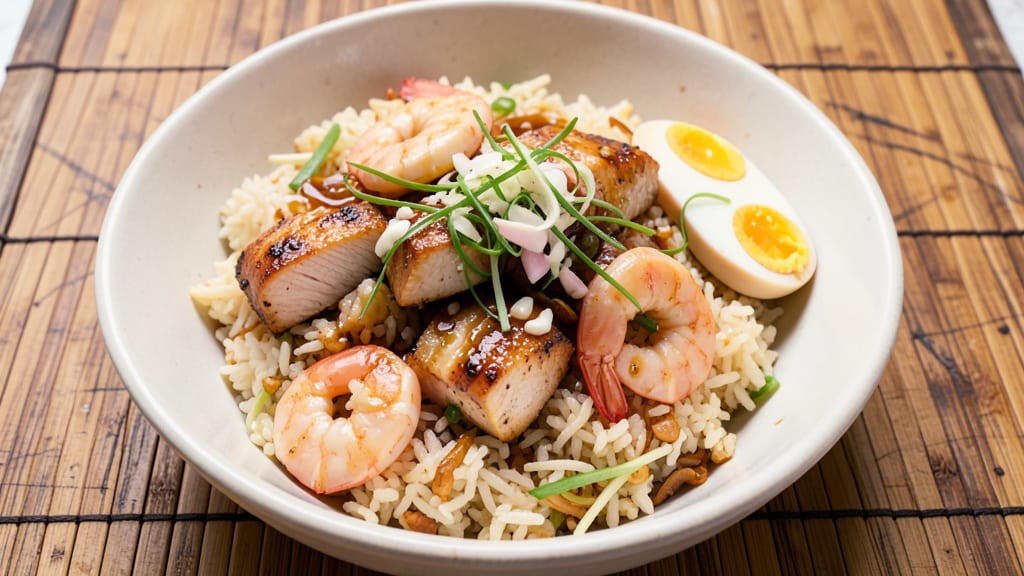
This Chinese chicken and shrimp fried rice recipe delivers restaurant-quality wok-fired flavor in just 25 minutes. The secret lies in high-heat stir-frying that locks in juicy proteins while developing deep umami from garlic, ginger, and soy sauce.
I've perfected this balance between tender chicken, sweet shrimp, and perfectly toasted rice—each bite offers a symphony of textures and savory notes.
What sets this dish apart is the proper technique: first cooking the proteins separately to avoid overcrowding, then combining them with day-old rice for maximum crispiness. The wok's searing power creates those signature charred edges while keeping the shrimp succulent and chicken perfectly cooked.
This recipe serves as both a pescatarian-friendly meal and a crowd-pleasing option for all diets.
Ingredients for chinese chicken and shrimp fried rice
Fourteen ingredients, wok-fired perfection in twenty-five minutes of precise technique.
| Ingredient | Amount | Notes |
|---|---|---|
| Day-Old Jasmine Rice 🍚 | 4 cups | Cold and broken into pieces |
| Boneless Chicken Breast 🍗 | 1 ½ lb | Cut into 1-inch cubes |
| Large Shrimp 🦐 | 1 lb | Peeled, deveined, tails off |
| Large Eggs 🥚 | 2 whole | Beaten for stir-fry |
| Garlic Cloves 🧄 | 6 cloves | Minced finely |
| Fresh Ginger 🌿 | 2 tbsp | Grated finely |
| Light Soy Sauce 🥄 | ½ cup | Kikkoman preferred |
| Dark Soy Sauce 🥄 | 1 tbsp | For color depth |
| Sesame Oil 🫒 | 1 tbsp | Toasted aroma |
| Green Onions 🧅 | ½ cup | Sliced thin |
| Vegetable Oil 🫒 | ½ cup | High smoke point |
| Salt 🧂 | 1 tsp | Diamond Crystal preferred |
| Black Pepper 🌶️ | ½ tsp | Freshly ground |
| White Pepper 🌶️ | ¼ tsp | For subtle heat |
| Cornstarch 🌾 | 1 tbsp | For shrimp coating |
The rice is non-negotiable—day-old creates that signature crisp-tender texture. Jasmine rice from Trader Joe's or Whole Foods delivers the best aroma, but any long-grain rice works. Cook it slightly underdone (1/4 cup more water than package suggests) and spread it on a tray to cool completely. The shrimp should be fresh or frozen thawed in ice water—never room-temperature. For chicken, organic free-range stays juicier when stir-fried. Both proteins should be cut uniformly to ensure even cooking.
No sesame oil? Toasted peanut oil works in a pinch, though the flavor profile shifts slightly. Swap dark soy sauce for oyster sauce plus a pinch of sugar if unavailable. The cornstarch coating on shrimp can be skipped if your shrimp are extra-fresh, but it's worth the 30-second toss for that restaurant-quality sheen. Fresh ginger loses potency quickly—freeze the root whole and grate only what you need. For a vegetarian version, replace shrimp with extra-firm tofu pressed for 20 minutes and cubed, then pan-fried until crispy before adding to the wok.
Prep ahead: marinate the proteins separately in 1 tbsp soy sauce each for 15 minutes before cooking—this jumpstarts the flavor development. The rice can be refrigerated for up to 3 days before using, which actually improves texture. Store cooked fried rice in airtight containers with parchment paper between layers to prevent sogginess. Reheats beautifully in a skillet with 1 tsp vegetable oil over medium heat for 2-3 minutes, or microwave for 90 seconds with a damp paper towel covering to retain moisture.
Why You'll Love This Recipe
- One-Pan Magic: I swear by this recipe on lazy nights—just toss everything into one hot wok (or even a deep skillet), and let the residual heat from the garlic and shrimp cook the chicken perfectly while the eggs scramble into fluffy bits. No switching pans, no mess, no stress.
- Garlic-Shrimp Crunch: That first bite of crispy-tender shrimp with the garlic-infused rice? It’s the kind of flavor that makes you pause mid-bite. The shrimp adds a sweet, briny punch while the garlic—minced and toasted until fragrant—ties everything together like a secret handshake.
- Lunchbox Hero: Between us, this is my go-to for meal prep. Cook a big batch on Sunday, and you’ve got lunch sorted for the week—just reheat with a splash of soy sauce. My kids (and my picky husband) actually finish their portions, which is basically a miracle.
- Budget Flexibility: Chicken and shrimp might sound fancy, but this recipe stretches further than you’d think. Use half the shrimp for extra flavor, or swap in tofu for a cheaper protein—it still delivers that same satisfying, restaurant-quality bite. Plus, day-old rice? That’s free money in my book.
Step-by-step instructions for Chinese chicken and shrimp fried rice
Master this wok-fired fusion with precise timing and technique for restaurant-quality results.
Prepare the Protein Components
Start by cutting the 1.5 lb boneless chicken breast into 1-inch cubes—this size ensures even cooking and proper texture. Toss the chicken cubes with 1 tablespoon cornstarch, ½ teaspoon black pepper, and ¼ teaspoon white pepper in a bowl. This creates a light coating that helps the chicken sear beautifully without drying out.
In a separate bowl, combine the 1 lb peeled, deveined shrimp with 1 tablespoon cornstarch, ½ teaspoon black pepper, and ¼ teaspoon white pepper. The cornstarch acts as a natural binder, keeping the shrimp intact during the high-heat stir-fry. Let both proteins sit at room temperature for 10 minutes before cooking—this ensures even heat distribution and prevents cold spots in the wok.
Sear the Chicken and Shrimp
Heat a wok or large skillet over high heat until it's smoking hot. Add 2 tablespoons vegetable oil and swirl to coat the surface evenly. Working in batches to avoid overcrowding, add the seasoned chicken cubes and sear for 2-3 minutes per side until they reach 165°F internally and develop a golden crust. Remove the chicken and set aside on a plate.
In the same wok, add another 1 tablespoon vegetable oil and return it to high heat. Add the shrimp in a single layer and cook undisturbed for 1-2 minutes per side until they turn opaque and pink. The shrimp should curl slightly at the edges—a sign of perfect doneness. Remove them and set aside with the chicken. Keep both proteins warm while you prepare the aromatics.
Stir-Fry Aromatics and Eggs
With the wok still over high heat, add 1 tablespoon vegetable oil and swirl to coat. Add the 6 minced garlic cloves and 2 tablespoons finely grated ginger, stirring constantly for 30 seconds until fragrant. The aroma should fill your kitchen—this is your cue that the aromatics are ready. Immediately add the 2 beaten eggs and scramble vigorously for 20-30 seconds until just set but still slightly runny. Remove the eggs and set aside with the proteins.
Here's the thing—overcooking the eggs turns them rubbery. You want them creamy and slightly underdone so they blend seamlessly into the rice. If they look too dry, add a splash of hot water to loosen them up. The residual heat will finish cooking them perfectly when combined with the rice.
Combine All Ingredients
Return the wok to high heat and add the remaining 1 tablespoon vegetable oil. Add the 4 cups cold, broken day-old jasmine rice and stir-fry for 1-2 minutes, breaking up any clumps and letting the rice absorb the oil. The rice should look dry but slightly glossy—this ensures it doesn't turn mushy during cooking.
Pour in the ½ cup light soy sauce and 1 tablespoon dark soy sauce, stirring constantly to coat the rice evenly. The dark soy sauce adds depth of color and flavor, while the light soy sauce provides the salty umami base. Add the 1 tablespoon sesame oil and toss to distribute evenly. The rice should now be coated in a glossy sauce—this is when the magic happens.
Finish and Serve
Return the chicken, shrimp, and scrambled eggs to the wok, tossing everything together for 1-2 minutes until the rice is heated through and the proteins are reheated. The rice should be hot but still slightly firm—it will continue cooking from residual heat. Taste and adjust seasoning with additional salt if needed, but the soy sauces should provide enough flavor.
Turn off the heat and immediately stir in the ½ cup sliced green onions. Garnish with extra green onions and serve immediately while hot. The dish should be vibrant with contrasting textures—crispy shrimp, tender chicken, creamy eggs, and perfectly cooked rice. Each bite should deliver a balance of savory, umami, and aromatic flavors that define authentic Chinese fried rice.
Pro Tips For Making Chinese Chicken And Shrimp Fried Rice
- CUT CHICKEN INTO BITE-SIZED BATTERS: I used to slice chicken breast into thin strips, but they’d turn to mush under the wok’s heat. Now I cut them into 1-inch cubes—big enough to stay intact but small enough to cook fast. Shrimp should be peeled and deveined, tails left on (they add fun texture), and cut into half-inch chunks so they don’t overcook while the chicken finishes.
- USE DAY-OLD RICE—NO EXCUSES: Fresh rice is a disaster in fried rice. It turns gluey and gummy, no matter how much oil you throw at it. If you’re short on time, spread freshly cooked rice on a tray, pop it in the fridge for 30 minutes, then finish under the wok’s heat. Cold rice from the fridge works too—just break up any clumps with your hands before stirring.
- SCRAMBLE EGGS SEPARATELY, THEN FRY: I learned this the hard way—adding whole eggs to the wok first makes the rice soggy. Instead, scramble the eggs in a small pan with a splash of oil until just set (soft curds, not rubbery), then push them to one side and scramble again. When they’re nearly done, slide them onto a plate and set aside. Toss them back in after the chicken and shrimp are cooked—this keeps the rice dry and the eggs creamy.
- STIR-FRY IN BATCHES, DON’T CROWD: A packed wok steams the rice instead of frying it. Cook the chicken first in a hot, oiled wok until no pink remains, then remove it. Add the shrimp and stir-fry just until they turn opaque—2 minutes max—before pulling them out. Now you’ve got room to toss the rice without a mess. Add the proteins back in at the end to reheat everything together.
Creative variations of this chinese chicken and shrimp fried rice
Spicy Sichuan Style
Transform your fried rice into a fiery Sichuan masterpiece by adding 1 tbsp doubanjiang (fermented chili bean paste) and 1 tsp Sichuan peppercorns (toasted and ground) when stir-frying the aromatics. Toss in 2 tbsp chopped red chili peppers with the proteins for a visual pop and extra heat.
Balance the spice with a splash of 1 tsp rice vinegar—this cuts through the heat while enhancing the umami. Garnish with crushed peanuts for texture contrast. 🌶️
Vegetarian Crispy Tofu
Swap the shrimp for 1 lb extra-firm tofu pressed for 20 minutes, then cut into 1-inch cubes and pan-fried in 1 tbsp neutral oil until golden and crispy. Toss the tofu with 1 tbsp soy sauce and ½ tsp white pepper before adding to the wok.
For extra flavor, stir in 1 tbsp hoisin sauce with the soy sauces—it adds that signature vegetarian depth. 🥜
Seafood Booster Pack
Elevate the dish with ½ lb scallops and ½ lb imitation crab sticks (for texture). Sear the scallops in the same batch as the shrimp for 1 minute per side—they should just turn opaque. Add the crab sticks in the final 1 minute of stir-frying to keep them tender.
Finish with 1 tsp Old Bay seasoning sprinkled over the top for a coastal twist. This version feels like a seafood feast without extra effort. 🦑
Breakfast Fusion
Make this dish a hearty breakfast by adding 2 sausage links (chicken or pork), diced and browned separately, plus 1 cup diced potatoes (par-cooked in the microwave for 5 minutes to speed things up).
Stir in 1 fried egg per serving at the very end—runny yolks blend perfectly with the rice. Top with sriracha mayo (mix 2 tbsp mayo with 1 tsp sriracha) for dipping. This version is perfect for brunch crowds. 🍳
Regional Hong Kong Twist
For an authentic Hong Kong touch, replace half the chicken with ½ lb char siu (Chinese BBQ pork)—thinly sliced and pre-cooked. Add 1 tbsp light oyster sauce to the soy sauce mixture and finish with 1 tsp toasted sesame seeds and 1 tbsp chopped cilantro.
The sweet-savory char siu balances the shrimp's brininess beautifully. Serve with a side of chili crisp** for dipping—it's a Hong Kong street food staple. 🗼
Nutrition facts
Frequently asked questions
Why does the recipe call for day-old rice?
Day-old rice is essential for authentic texture—it's drier and more separate, preventing a mushy final dish. The starches have time to redistribute, creating that signature crisp-tender bite. Pro tip: Cook rice slightly underdone (1/4 cup extra water) and spread it on a tray to cool completely.
Can I use fresh rice instead of day-old?
Fresh rice works in a pinch, but you'll need to adjust the technique. Spread freshly cooked rice on a tray and fan it with a fork for 10-15 minutes to dry it out. Add 1/2 teaspoon cornstarch to the rice before stir-frying to help absorb moisture. Expect slightly less crispiness than with day-old rice.
How do I prevent the shrimp from turning rubbery?
Cook shrimp in 1-2 minute batches over high heat until just opaque (about 165°F internal temp). Overcrowding the wok lowers heat and causes steaming. For extra tenderness, marinate shrimp in 1 tbsp soy sauce for 10 minutes before cooking, then pat completely dry before adding to the wok.
What's the best way to reheat leftovers?
Reheat fried rice in a skillet with 1 teaspoon vegetable oil over medium heat for 2-3 minutes, stirring constantly. For microwave reheating, cover with a damp paper towel and heat for 90 seconds. Add 1 tsp water or soy sauce to restore moisture. Never microwave without covering—it creates a soggy texture.
Can I make this dish gluten-free?
Yes! Use tamari or coconut aminos instead of soy sauce (both are gluten-free). Check that your sesame oil and cornstarch are certified gluten-free. For extra flavor, add 1 tsp gluten-free fish sauce when stir-frying the aromatics. The dish maintains all its depth without traditional soy sauce.