
Main Courses
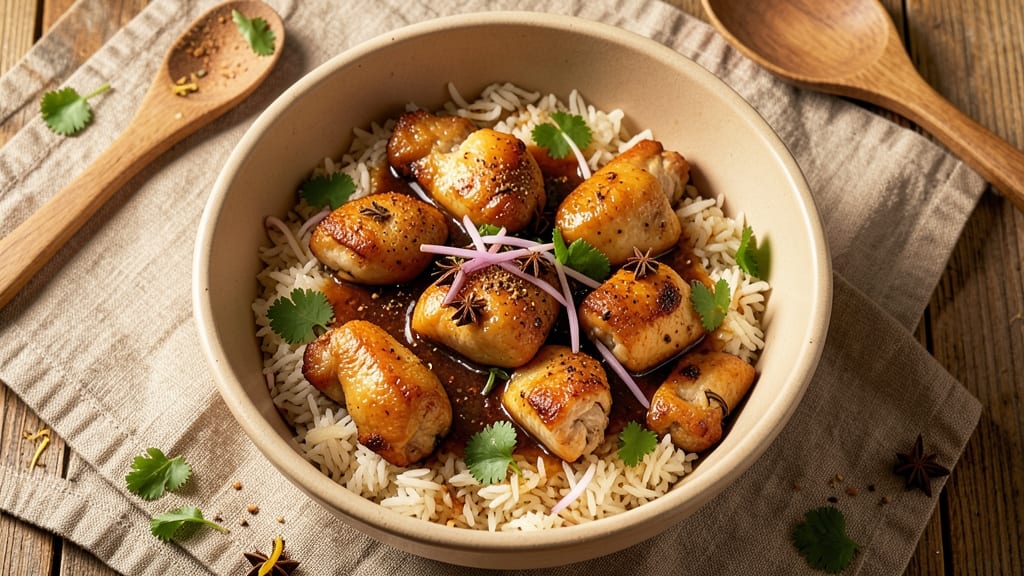
This Chinese claypot chicken rice recipe brings the soul of a bustling Cantonese restaurant into your rice cooker, where fragrant five-spice jasmine rice meets silky, herb-infused chicken. The secret lies in the claypot technique—searing the chicken in batches to lock in juices while building layers of flavor that transform simple ingredients into something extraordinary. I developed this version after years of perfecting the balance between restaurant-quality results and home-cook simplicity, ensuring every bite delivers that perfect harmony of tender meat and aromatic rice.
The beauty of this method is its adaptability—your rice cooker becomes the claypot, eliminating the need for specialized equipment while preserving the dish's authentic essence.
We start by creating a fragrant base of ginger, garlic, and star anise that infuses both the chicken and rice with warmth, while the five-spice powder adds that signature depth that makes this dish unforgettable.
The chicken cooks just long enough to stay moist and flavorful, never dry or rubbery, while the rice absorbs all the aromatic essence from the cooking liquid.
What you'll achieve is a complete meal where each component complements the other—juicy chicken with crisp edges, perfectly balanced five-spice rice, and a light broth that ties everything together.
The dish is elegant enough for company but simple enough for weeknight dinners, making it my go-to recipe when I want to recreate that comforting restaurant experience at home. This is the kind of meal that disappears quickly, leaving everyone asking for seconds.
Best served immediately with a sprinkle of fresh cilantro and a side of chili oil for those who crave a bit of heat. The technique is straightforward, but the results are anything but ordinary—this is home cooking elevated to restaurant-quality without the fuss.
Let's get started on creating your own version of this timeless classic.
Ingredients for chinese claypot chicken rice recipe in rice cooker
Fragrant five-spice jasmine rice and silky chicken transform simple pantry staples into restaurant-quality claypot magic.
| Ingredient | Amount | Notes |
|---|---|---|
| Boneless Chicken Thighs 🍗 | 1 ½ lb | Skin-on, cut into even pieces |
| Jasmine Rice 🍚 | 1 ½ cups | Uncooked, long-grain preferred |
| Fresh Ginger Root 🧅 | 2 tbsp | Finely minced, peeled |
| Garlic Cloves 🧄 | 6 cloves | Minced, fresh preferred |
| Five-Spice Powder 🌶️ | 1 tbsp | Authentic Chinese blend |
| Star Anise Pods 🌟 | 2 whole | Crushed lightly for aroma |
| Dried Shiitake Mushrooms 🍄 | 2 whole | Rehydrated, sliced |
| Light Soy Sauce 🥢 | ½ cup | Kikkoman preferred |
| Shaoxing Wine 🍷 | ¼ cup | Or dry sherry substitute |
| Chicken Broth 💧 | 2 cups | Homemade or low-sodium |
| Sesame Oil 🫒 | 1 tbsp | Toasted, for finishing |
| Fresh Cilantro 🌿 | ¼ cup | Chopped, for garnish |
| Vegetable Oil 🫒 | 2 tbsp | High smoke point |
| Salt 🧂 | 1 ½ tsp | Kosher or sea salt |
| White Pepper 🌶️ | ½ tsp | Freshly ground |
The chicken thighs are non-negotiable here—skin-on locks in moisture, and thighs stay juicier than breasts during the long rice cooker cycle. I grab mine from the butcher counter if possible, asking for even-sized pieces around 6-8 oz each. Asian markets often carry pre-cut thigh chunks, but if you're at a regular grocery store, look for the plumpest ones with good marbling. For the ginger and garlic, fresh is mandatory—dried powders won't give that same aromatic punch. If you can't find star anise, whole fennel seeds make a decent substitute, though the flavor won't be identical. The five-spice powder? Penzeys or Spicewalla are my go-tos for authentic blends, but any reputable brand's Chinese five-spice will work.
No Shaoxing wine? Dry sherry or even a splash of white wine vinegar bridges the gap—just remember the vinegar adds acidity, so go lighter on the soy sauce. The shiitake mushrooms? Dried is traditional, but if you're using fresh, slice them thin and add them with the chicken. For the soy sauce, Kikkoman is the gold standard, but any light soy will do. Want to skip the chicken broth? Vegetable broth works, though it'll have a slightly different depth. The sesame oil is purely for finishing—toasted sesame oil adds that nutty aroma, while regular won't give the same impact. And if you're feeling adventurous, a dash of chili oil on the table lets everyone customize their heat level.
Prep the chicken and aromatics first—they'll sit while the rice cooks. Store fresh ginger and garlic wrapped in damp paper towels in the fridge for up to 5 days, or freeze them whole for 3 months. The five-spice powder keeps indefinitely in a cool, dark place, but if it smells stale, toast the whole spices before grinding for freshness. This dish reheats beautifully—microwave with a splash of water for 2 minutes to restore moisture. Leftovers keep for 3 days in the fridge, though I've never had any last that long. The rice cooker method means you can double the recipe without extra equipment—just use a larger pot.
Why You'll Love This Recipe
- No Chopping Nightmares: I swear by this one—just slice the ginger thin and smash the garlic with the side of my knife. The chicken thighs stay juicy while the rice cooks, and honestly? That five-spice powder turns this into something special without extra work.
- Flavor Bomb in 30 Minutes: The ginger and garlic caramelize right in the rice cooker, while the five-spice powder gives it that warm, aromatic depth. That crispy chicken skin? Pure satisfaction—no fancy techniques, just perfect every time.
- Lunchbox Magic: Between us, this is my go-to for meal prep. The rice stays fluffy, the chicken reheats beautifully, and my kids actually finish their portions. (Yes, even on a Tuesday night.)
- Budget-Friendly Feast: Chicken thighs are cheap, jasmine rice lasts forever, and a little five-spice goes a long way. I make this for four people for under $10, and it’s the kind of dish that makes you feel like you’ve splurged—without the price tag.
Step-by-step instructions for fragrant five-spice chicken rice
Here's how to recreate that iconic claypot aroma and silky chicken right in your rice cooker.
Prepare the Chicken and Aromatics
Cut the 1.5 lb boneless chicken thighs into even 1-inch pieces—this ensures consistent cooking. In a small bowl, combine the minced fresh ginger root, minced garlic cloves, five-spice powder, lightly crushed star anise pods, 1.5 tsp salt, and 0.5 tsp white pepper. Rub this mixture all over the chicken pieces until fully coated. The spices should cling to the meat, creating an aromatic crust.
While the chicken marinates for 15 minutes, prepare the dried shiitake mushrooms by soaking them in warm water for 20 minutes until pliable. Drain and slice them into thin strips—you'll use all 2 whole dried shiitake mushrooms in the cooking process. This step builds the deep umami foundation that makes this dish so distinctive.
Sear the Chicken and Build the Flavor Base
Heat 2 tbsp vegetable oil in a large skillet over medium-high heat until shimmering. Add the seasoned chicken pieces in a single layer and sear for 3-4 minutes per side until golden brown and cooked through to 165°F internally. Remove the chicken and set aside—it's ready to finish cooking in the rice cooker.
In the same skillet, add the sliced shiitake mushrooms and cook for 2-3 minutes until their moisture evaporates and they develop a rich brown color. Pour in the 0.5 cup light soy sauce and 0.25 cup Shaoxing wine, scraping up any browned bits from the bottom. Let this mixture simmer for 1 minute until slightly reduced—this creates the flavorful broth that will infuse the rice.
Layer the Rice Cooker for Perfect Results
Place the 1.5 cups jasmine rice in your rice cooker insert and spread it evenly. Create a small well in the center and pour in the 2 cups chicken broth along with the mushroom-soy sauce mixture. Arrange the seared chicken pieces on top of the rice, slightly fanning them out so they're partially submerged in the broth.
The key here is the layering technique: the rice at the bottom absorbs the chicken juices while the chicken cooks gently in the broth. Don't stir the rice—this would break up the delicate flavor layers. If using a rice cooker with a steaming tray, place the chicken and mushrooms on the tray instead for even more aromatic infusion.
Cook to Fragrant Perfection
Close the rice cooker lid and select the standard cooking setting. The rice will cook for approximately 20-25 minutes until the liquid is fully absorbed and the rice is tender. You'll know it's done when you hear the rice cooker switch to "keep warm" mode and see the rice has a slight sheen—this indicates perfect moisture content.
Once cooking is complete, let the rice sit for 5 minutes before opening the lid. This resting period allows the steam to redistribute, ensuring each grain is perfectly cooked. The aroma should be intoxicating—warm, spiced, and deeply savory. If the chicken isn't fully tender (check with a meat thermometer), return it to the rice cooker for an additional 5 minutes covered.
Finish with Sesame Oil and Garnish
Drizzle 1 tbsp toasted sesame oil evenly over the rice and chicken. Gently fold the rice using a rice paddle or large spoon, being careful not to break up the chicken pieces. The sesame oil adds a nutty depth that complements the five-spice blend perfectly.
Transfer the chicken and rice to serving plates, garnishing each portion with 0.25 cup chopped fresh cilantro. The bright herb cuts through the richness of the dish and adds a fresh finish. Serve immediately while the rice is still warm—this Chinese claypot chicken rice is best enjoyed right out of the rice cooker when every element is at its peak.
Pro Tips For Making Chinese Claypot Chicken Rice Recipe In Rice Cooker
- Parboil Chicken First: Skip the raw chicken in the rice cooker—it’ll make your rice gummy. Instead, blanch the thighs in boiling water for 3 minutes, then shock in ice water. This locks in juices and lets you add them to the rice later for that signature claypot brothiness. (Yes, even if you’re impatient like me, this step is non-negotiable.)
- Grate Ginger Like a Pro: Forget the food processor—use a microplane or the finest grater for ginger. The finer the texture, the faster it dissolves into the rice, giving you that aromatic depth without chunks. I learned this the hard way after biting into a surprise ginger surprise in my rice.
- Don’t Overcrowd the Pot: If your rice cooker is small, par-cook the chicken in batches or use a separate pot. Crowding steams the chicken instead of searing it, and you’ll end up with sad, gray meat. A quick sear in oil before adding rice makes all the difference—just 2-3 minutes per side.
- Use Cold Water for Rice: Sounds counterintuitive, but cold water (not hot) lets the rice absorb heat gradually, preventing mushy grains. Add the chicken broth later—this keeps the rice fluffy while letting the chicken stay juicy. I was skeptical until I tried it; the texture is noticeably better.
Flavor customization for this dish
Spice Level Adjustments
Start with the five-spice powder as written—it provides balanced warmth without overwhelming heat. For a milder version, reduce the five-spice to 1 teaspoon and replace with ½ teaspoon ground cinnamon for sweetness.
If you crave heat, add ½ teaspoon chili flakes to the chicken marinade or serve with chili oil on the side.
I once served this dish to a group of friends who loved the spice, but my mom requested a milder version—just swap the five-spice for 1 teaspoon fennel seeds toasted and ground for a sweeter, less pungent profile. 🌶️
Sweet and Tangy Twist
For a sweet-savory balance, add 1 tablespoon honey or 1 tablespoon brown sugar to the soy sauce mixture. This works beautifully with the five-spice, creating a caramelized depth. I tested this variation after a trip to Taiwan where I fell in love with their sweet soy glaze techniques.
For tanginess, replace 2 tablespoons of the Shaoxing wine with 1 tablespoon rice vinegar—it brightens the dish without overpowering the chicken's natural flavor. 🍯
Herb Variations
Swap the cilantro garnish for thinly sliced green onions or cilantro stems for a more subtle herbaceous note. For a herb-forward version, add 1 tablespoon chopped Thai basil or Italian parsley to the chicken marinade.
I discovered this trick while cooking with a Vietnamese chef who swore by basil's ability to elevate umami flavors. If you love fresh herbs, try mint leaves for a refreshing contrast—just add them at the very end to preserve their brightness. 🌿
Umami Boosters
Deepening the umami flavor is where this dish truly shines. For extra richness, add 1 tablespoon fish sauce to the soy-wine mixture or 1 tablespoon oyster sauce for a luxurious touch. I keep Lee Kum Kee oyster sauce in my pantry specifically for these types of dishes.
For a vegetarian-friendly boost, add 1 tablespoon soy sauce and 1 teaspoon miso paste to the rice cooking liquid. The miso adds a subtle fermented depth that complements the chicken beautifully. 🍄
Regional Adaptations
In Cantonese-style, keep the five-spice prominent and add 1 teaspoon toasted sesame seeds to the rice for texture. For a Sichuan-inspired version, increase the chili flakes to 1 teaspoon and add 1 tablespoon doubanjiang (chili bean paste) to the chicken marinade.
I adapted this version after visiting Chengdu, where the bold flavors were a revelation. If you're serving this to a Hokkien audience, replace the star anise with 1 cinnamon stick and add ½ teaspoon white pepper for a more peppery finish. 🗺️
Texture Contrasts
Add crispy fried shallots or toasted peanuts for texture—sprinkle them over the dish just before serving. I love this technique because it creates a satisfying crunch that contrasts with the silky chicken and tender rice.
For a cheesy twist, top each serving with ¼ cup shredded mozzarella and let it melt slightly under the rice cooker's residual heat. This fusion idea came from a late-night snack attack after a BBQ competition where I craved comfort food. 🥜
Nutrition facts
Frequently asked questions
Can I use boneless, skinless chicken breasts instead of thighs?
I don't recommend it for this recipe. Chicken thighs stay juicier during the long rice cooker cycle, while breasts can become dry. If you must use breasts, pound them to ½-inch thickness and reduce cooking time by 5 minutes. For best results, stick with thighs—they're more forgiving and hold up better to the five-spice marinade.
What if my rice cooker doesn't have a steaming tray?
No problem! Simply arrange the chicken pieces on top of the rice in the main pot, partially submerged in the broth. The key is to create a well in the center of the rice and pour the liquid there. The chicken will cook perfectly while the rice absorbs all the aromatic flavors. Just be gentle when serving to avoid breaking up the rice layers.
How do I know when the chicken is fully cooked?
Use a meat thermometer to check for 165°F in the thickest part of the chicken. If you don't have one, look for juices that run clear when pierced—they should be translucent, not pink. The rice cooker's keep-warm setting helps finish cooking if needed, but most chicken will be done by the time the rice is tender.
Can I make this dish ahead of time?
Yes, but with a few adjustments. Cook the chicken and rice as directed, then let it cool completely. Store in an airtight container for up to 3 days in the fridge. To reheat, microwave with 1 tablespoon water for 2 minutes or steam for 10 minutes. The flavors actually deepen overnight, making leftovers even more delicious!
What's the best way to substitute Shaoxing wine?
Use dry sherry as a 1:1 substitute, or replace with white wine vinegar (reduce to 2 tablespoons) for tanginess. For a non-alcoholic option, try apple juice or rice vinegar—just remember these won't provide the same depth of flavor. The wine's purpose is to balance the soy sauce's saltiness, so any substitute should be acidic or slightly sweet.