
Main Courses
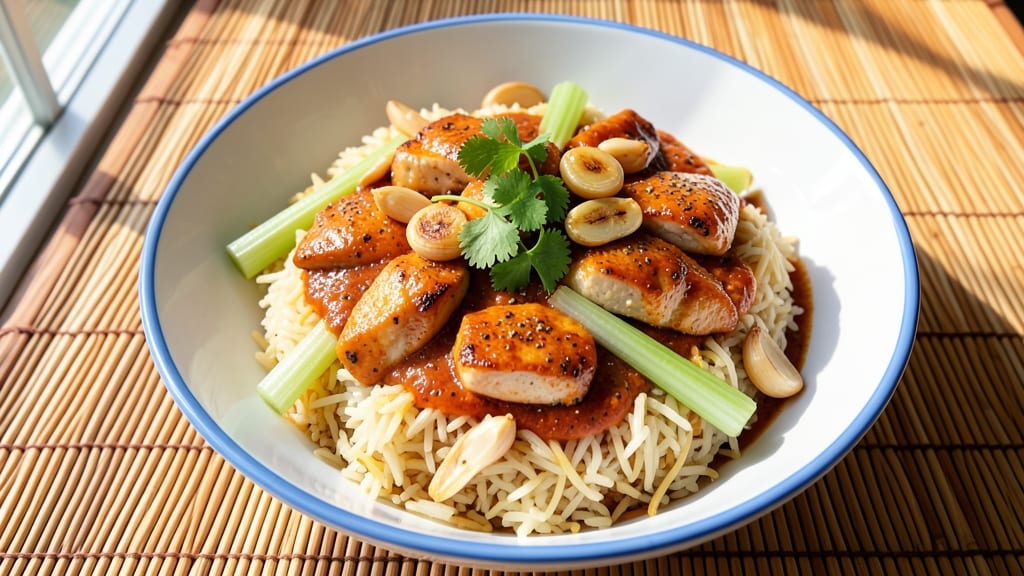
This Chinese curry rice recipe transforms simple ingredients into a restaurant-quality one-pan meal with bold spices and satisfying texture. The secret lies in balancing sweet, tangy, and savory flavors while achieving that signature celery crunch—no shortcuts, just layered technique.
Perfect for weeknight dinners or meal prep, this dish delivers aromatic depth with minimal effort.
Start with fragrant basmati rice cooked in a rich curry broth, then finish with crispy fried shallots and fresh cilantro for contrast. The protein—whether chicken, beef, or tofu—absorbs the spiced tomato sauce perfectly, creating a dish that’s both comforting and complex.
Every bite delivers tender rice, velvety sauce, and the satisfying crunch of celery and shallots.
Ingredients for chinese curry rice
Fragrant basmati rice, tender protein, and bold spices come together for this restaurant-quality curry.
| Ingredient | Amount | Notes |
|---|---|---|
| Basmati Rice 🍚 | 1 cup | Uncooked, long-grain preferred |
| Chicken Breast 🍗 | 1 ½ lb | Boneless, skinless, cut into bite-sized pieces |
| Celery Stalks 🧅 | 3 whole | Thinly sliced, for crunch |
| Shallots 🧅 | 4 whole | Minced for depth of flavor |
| Garlic Cloves 🧄 | 6 cloves | Minced for aromatic base |
| Canned Tomato Sauce 🍅 | 1 cup | San Marzano preferred for sweetness |
| Curry Powder 🌶️ | 2 tbsp | Mild or medium heat variety |
| Ground Cumin 🌿 | 1 tbsp | Toasted for enhanced aroma |
| Ginger Root 🌿 | 1 tbsp | Freshly grated for zing |
| Chicken Broth 💧 | 1 ½ cups | Low-sodium preferred |
| Coconut Milk 🥥 | ½ cup | Full-fat for creaminess |
| Fresh Cilantro 🌿 | ¼ cup | Chopped for garnish |
| Vegetable Oil 🫒 | 2 tbsp | For crisping shallots |
| Soy Sauce 🍶 | 1 tbsp | For umami depth |
| Brown Sugar 🍯 | 1 tbsp | Balances flavors |
| Salt 🧂 | 1 ½ tsp | Diamond Crystal preferred |
| Black Pepper 🌶️ | ½ tsp | Freshly ground for heat |
The basmati rice is non-negotiable here—its long grains stay distinct and fragrant. Lundberg or Calrose brands are ideal for their aromatic quality. For the curry powder, Penzeys or Badia offer the most complex blends, but any mild to medium heat variety works. Fresh ginger and garlic are essential for that bright, layered flavor profile—look for plump, firm ginger root and cloves without sprouts. Celery should be crisp, with no browning or soft spots. The shallots add depth when caramelized, so choose small, firm ones for even cooking. Chicken breast provides lean protein, but you can substitute beef or tofu for variety.
No curry powder? Combine 1 tbsp each coriander, turmeric, and cumin for a DIY version. Fresh ginger unavailable? Ground ginger at half the amount works in a pinch. The coconut milk can be swapped for Greek yogurt or cashew cream if you prefer a lighter texture. For extra umami, add 1 tsp fish sauce or soy sauce to the broth. The tomato sauce can be homemade by simmering canned tomatoes with garlic, ginger, and a pinch of sugar, or use high-quality jarred sauce like Rao's. If your celery is overly fibrous, blanch it first to soften slightly before slicing.
Store cooked rice in an airtight container for 4-5 days in the fridge, or freeze for 3 months for meal prep. The curry sauce reheats beautifully—simmer gently to avoid breaking the celery's crunch. For extra crispiness, fry shallots separately and add them just before serving. This dish tastes even better the next day as flavors meld. Portion into containers with a layer of cilantro on top to keep it vibrant. The protein can be cooked ahead and reheated separately to maintain texture.
Why You'll Love This Recipe
- One-Pot Magic: I swear by this for lazy nights—just toss everything into one pot (rice, chicken, veggies, curry paste), stir, and let it simmer. No fancy techniques, no extra bowls to wash.
- Garlic-Shallot Bomb: Between us, those minced shallots and garlic cloves caramelizing in the pan? Total flavor gold. The rice soaks up that sweet, nutty depth like a sponge—every bite tastes like you spent hours cooking.
- Lunchbox Hero: This keeps perfectly for days, and honestly? My kids grab it straight from the fridge for school lunches. The rice stays fluffy, the chicken stays tender, and the curry flavor only gets better as it sits.
- Budget Crowd-Pleaser: A single chicken breast and a handful of celery stretch to feed four (or two very hungry people). Between us, this is my go-to when I need to stretch groceries without sacrificing taste—no one ever guesses it’s a budget meal.
Step-by-step instructions for Chinese curry rice
Aromatic, spiced, and perfectly balanced—this one-pan method delivers restaurant-quality curry rice with tender chicken and crisp celery crunch.
Sear the Chicken and Build the Flavor Base
Heat the 2 tablespoons vegetable oil in a large, heavy-bottomed pot or deep skillet over medium-high heat. Add the 1.5 lb chicken breast cut into bite-sized pieces and cook for 5-6 minutes until the chicken is lightly browned on all sides and just beginning to firm up. Remove the chicken and set aside on a plate.
In the same pot, add the 4 whole shallots that have been minced and cook for 3-4 minutes until they begin to soften and turn golden. Add the 6 cloves garlic cloves (minced) and the 1 tablespoon ginger root (freshly grated) and cook for 1 minute until fragrant. This step is where the foundation of your curry's depth begins—don't rush it.
Toast the Spices and Add the Tomato Sauce
Reduce the heat to medium and add the 2 tablespoons curry powder and 1 tablespoon ground cumin. Stir continuously for 1-2 minutes until the spices are fragrant and the curry powder deepens in color. This toasting step releases the spices' essential oils, which is crucial for that authentic curry flavor.
Pour in the 1 cup canned tomato sauce and stir to combine with the spices. Let it simmer for 3-4 minutes until the mixture thickens slightly and the raw taste of the spices mellows. The sauce should coat the back of a spoon and develop a rich, reddish hue. This is the moment that matters—properly developing the sauce ensures balanced flavors later.
Layer the Rice and Liquid for Perfect Texture
Add the 1 cup basmati rice, stirring to coat each grain with the spiced tomato mixture. Pour in the 1.5 cups chicken broth and bring the mixture to a gentle boil. Once boiling, reduce the heat to low, cover the pot with a tight-fitting lid, and simmer for 15 minutes. This step is critical—keeping the heat low prevents the rice from becoming mushy while allowing it to absorb the liquid evenly.
After 15 minutes, remove the lid and stir gently to check for doneness. The rice should be tender but still have a slight bite. If it's not quite done, cover again and cook for another 2-3 minutes. The rice should be fluffy and separate, with no liquid remaining at the bottom of the pot.
Finish with Coconut Milk and Umami Depth
Return the chicken to the pot and stir to coat it in the rice mixture. Add the 0.5 cup coconut milk, 1 tablespoon soy sauce, and 1 tablespoon brown sugar. Stir well and simmer uncovered for 5-7 minutes until the sauce thickens slightly and the coconut milk blends seamlessly into the curry. Taste and adjust seasoning with the 1.5 teaspoons salt and 0.5 teaspoon black pepper as needed.
This is where the dish comes together—coconut milk adds creaminess, soy sauce provides umami, and brown sugar balances the heat. The chicken should be fully cooked and tender, absorbing all the flavors of the curry. The rice should be perfectly cooked with a slight chew, and the sauce should be rich and cohesive.
Garnish and Serve with Fresh Crunch
Remove the pot from heat and let it sit covered for 5 minutes to allow the flavors to meld. Stir in the 3 whole celery stalks (thinly sliced) and 0.25 cup fresh cilantro (chopped) just before serving. The celery adds a refreshing crunch that cuts through the richness of the curry, while the cilantro brightens the dish with its fresh, herbal notes.
Serve immediately in deep bowls, ensuring each portion has an even distribution of chicken, rice, and celery. The curry should be aromatic, with layers of spice, sweetness, and umami. The rice should be perfectly cooked, the chicken tender, and the sauce cohesive—this is the hallmark of a well-executed curry rice dish.
Pro Tips For Making Chinese Curry Rice
- CHAR THE CHICKEN FIRST: I learned this the hard way—don’t toss raw chicken into the curry pot and hope for the best. Sear it first in a hot pan with a splash of oil until golden on all sides. The crust locks in flavor and keeps the chicken from turning rubbery later, especially since chicken breast dries out faster than you’d think.
- MINCE THAT CELERY: Skip the thick chunks—finely dice the celery (1/4-inch pieces or smaller) so it melts into the sauce instead of sitting like a crunchy afterthought. Sounds tedious, but it blends better with the shallots and garlic, giving that signature "Chinese curry" texture without chewing on stalks.
- RICE WATER MATTERS: Use twice the water for basmati as you’d normally use for white rice—this recipe needs that extra liquid to steam properly under the curry. My first few attempts ended up gummy because I eyeballed it. Measure: 2 cups water per 1 cup rice, then simmer uncovered until the water’s gone.
- SALT THE RICE WATER: A pinch of salt (½ tsp) in the rice water prevents bland rice hiding under the curry. I was skeptical until I tried it—now it’s non-negotiable. The flavor balance is off without it, especially when the curry’s spice competes with the rice’s subtlety.
Creative variations of this recipe
Spicy Thai-Inspired Twist
For a Thai-inspired variation, swap the curry powder for 1 tbsp red curry paste (like Maesri or Thai Kitchen brand) and add 1 tbsp fish sauce to deepen the umami. Stir in ½ cup coconut milk at the end and top with thinly sliced Thai basil instead of cilantro.
The heat from the curry paste balances beautifully with the sweetness of the tomato sauce. 🌶️
Vegetarian Tofu Version
Replace the chicken with 1 block (14 oz) extra-firm tofu, pressed and cubed. Pan-fry the tofu in 1 tbsp vegetable oil until golden before adding it to the curry.
Boost the flavors with 1 tbsp soy sauce and 1 tsp smoked paprika for a smoky depth. The tofu absorbs the sauce beautifully while adding a satisfying texture. 🥬
Coconut Curry Rice Bowl
Turn this into a coconut curry rice bowl by doubling the coconut milk to 1 cup and adding ½ cup chopped bell peppers and ½ cup snap peas during the final simmer.
Garnish with crushed peanuts and lime wedges for a Southeast Asian-inspired dish that’s creamy, crunchy, and full of freshness. 🥥
Slow-Cooker Adaptation
For a hands-off version, combine all ingredients in a 6-quart slow cooker on low for 4-5 hours. Stir in the celery and cilantro in the last 15 minutes to preserve its crunch.
The slow cooking enhances the rice’s texture and lets the spices meld deeply. Perfect for busy weeknights! ⏰
Protein Swap: Beef or Shrimp
Substitute the chicken with 1.5 lb flank steak, sliced thinly against the grain, or 1 lb large shrimp, peeled and deveined. For beef, marinate in 1 tbsp soy sauce and 1 tsp ginger for 30 minutes before cooking.
Shrimp cooks in just 3-4 minutes, so add it to the pot during the final simmer. Both proteins add a rich, savory depth to the dish. 🍤
Extra Crunchy Celery Topping
For maximum crunch, blanch the celery in boiling water for 2 minutes, then shock in ice water before slicing thinly. Fry the sliced celery in 1 tbsp oil until golden and crispy (about 3-4 minutes). Sprinkle over the curry right before serving for a restaurant-style finish. 💫
Nutrition facts
Frequently asked questions
Can I use jasmine rice instead of basmati?
Jasmine rice works but won't give you the same distinct grains or aroma as basmati. For authentic texture, stick with basmati—it stays separate and fragrant when cooked. If you must use jasmine, rinse it thoroughly and reduce the broth by ¼ cup to prevent mushiness.
How do I make this dish spicier?
Add ½ to 1 teaspoon of cayenne pepper or 1-2 sliced fresh chili peppers when toasting the spices. For heat control, start with ½ teaspoon and adjust to taste. The coconut milk helps balance the spice, so don't overdo it.
Can I prepare this curry rice ahead of time?
Yes! Cook the rice and sauce fully, then refrigerate for up to 4 days in an airtight container. Reheat gently on the stove with 1-2 tablespoons of water to restore moisture. Add fresh celery and cilantro just before serving to keep the crunch intact.
What if my celery turns mushy?
Add the celery only in the last 5 minutes of cooking to preserve its crunch. For extra texture, blanch it first (boil 2 minutes, then ice bath) before slicing. If it softens anyway, serve it on the side or use it as a garnish rather than mixing it in.
Is there a way to make this dish gluten-free?
Yes! Use a gluten-free tamari or coconut aminos instead of soy sauce, and check your curry powder for gluten (many blends are GF, but verify labels). The rest of the recipe is naturally gluten-free. For extra safety, toast your spices in a clean pan to avoid cross-contamination.