
Main Courses
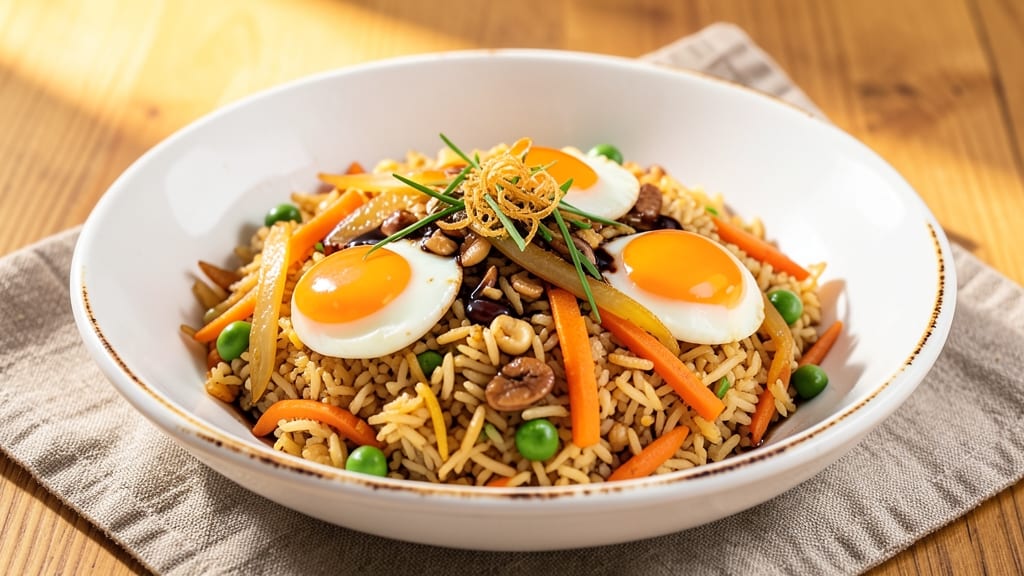
This Chinese fried rice recipe in Urdu brings the smoky, savory essence of wok-tossed perfection to your kitchen—where every grain stays distinct yet harmoniously coated in eggy richness. 🌟 The secret lies in high-heat stir-frying, where day-old rice transforms into crispy, aromatic bites infused with soy, garlic, and scallions, all while maintaining that signature wok-hei flavor.
The dish begins with perfectly scrambled eggs that form a protein-rich base, then layers in vegetables like peas, carrots, and onions for texture and color.
A splash of Shaoxing wine and a sprinkle of sesame oil elevate the flavors, while a final toss with soy sauce and white pepper ensures depth without overpowering the natural taste of the rice. Ready in under 20 minutes, this recipe delivers restaurant-quality results with minimal effort.
Ingredients for chinese fried rice recipe in urdu
These 13 ingredients unlock the smoky, aromatic essence of wok-tossed perfection in under 20 minutes.
| Ingredient | Amount | Notes |
|---|---|---|
| Day-Old Cooked White Rice 🍚 | 4 cups | Cold, unseasoned rice preferred |
| Large Eggs 🥚 | 4 whole | Room temperature for even cooking |
| Yellow Onions 🧅 | 1 medium | Thinly sliced, white and light green parts |
| Carrots 🥕 | 1 medium | Julienned into thin matchsticks |
| Peas 🌱 | ½ cup | Frozen or fresh, thawed if frozen |
| Garlic Cloves 🧄 | 4 cloves | Minced finely for aromatic base |
| Scallions 🌿 | 4 whole | Thinly sliced, white and green parts |
| Light Soy Sauce 🍶 | 3 tbsp | High-quality, low-sodium preferred |
| Dark Soy Sauce 🍶 | 1 tbsp | For deeper umami flavor |
| Shaoxing Wine 🍷 | 1 ½ tbsp | Substitute dry sherry if unavailable |
| Sesame Oil 🫒 | 1 tbsp | Toasted sesame oil for aroma |
| White Pepper 🌶️ | ½ tsp | Freshly ground for subtle heat |
| Vegetable Oil 🫒 | ½ cup | High smoke point for wok cooking |
The foundation starts with day-old rice—fresh rice turns mushy. Look for jasmine or basmati at Whole Foods or your local Asian market for that signature texture. Eggs should be large, fresh eggs—room temperature ensures even cooking. For the aromatics, garlic and scallions are non-negotiable; Penzeys Spices sells pre-minced garlic if you're short on time. The soy sauces? Kikkoman for light, Lee Kum Kee for dark—both elevate the dish instantly. If Shaoxing wine isn't available, dry sherry works perfectly.
No sesame oil? Toasted sesame seeds at half the amount (1/2 tbsp) add a similar nutty depth. Swap frozen peas for snap peas or green beans if you prefer. The onions and carrots can be prepped ahead—julienne them thin for even cooking. For extra protein, add chicken or shrimp (cooked separately) at the end. The key is high heat—wok or cast-iron skillet is ideal, but a nonstick pan works too. If your rice is too moist, spread it on a tray to dry for 10 minutes before cooking.
Store cooked fried rice in an airtight container for up to 3 days in the fridge. Reheat in a dry skillet over medium heat, adding a splash of water to restore crispiness. For longer storage, freeze portions for up to 3 months. The eggs and aromatics should be used within 5 days of opening. Pro tip: double the batch—this reheats beautifully and makes great lunches. Keep the sesame oil in a dark glass bottle to preserve its flavor for up to 1 year.
Why You'll Love This Recipe
- I’ll be real: this feeds four for under $5. The eggs bulk it up, veggies stretch the rice, and you’re left with leftovers that reheat like a dream. My wallet and my taste buds thank me.
- Uses Day-Old Rice: I swear by this trick—leftover rice transforms into golden, separate grains instead of gloppy. No need to stress over fresh rice; just grab what’s in your fridge and get cooking.
- One-Pan Magic: Honestly, this recipe is my lazy-day hero: high heat, quick stir-fry, and boom—dinner’s done. The onions caramelize while the eggs scramble right into the mix, no extra bowls needed.
- Crowd-Pleaser Combo: Between us, this hits every flavor button—sweet peas, crunchy carrots, and that perfect eggy richness. It’s the dish that makes my kids pause mid-play and my in-laws ask for seconds.
Step-by-step instructions for wok-tossed crunch with eggy protein fusion
Master this classic Chinese fried rice technique with precise timing and wok hei.
🔥 Step 1: Prep Ingredients for Maximum Flavor Development
Start by separating the 4 whole large eggs into a bowl and whisking them until frothy. I like to add a pinch of white pepper to the eggs right away—this subtle heat will carry through the dish. Meanwhile, prepare all your vegetables: thinly slice the 1 medium yellow onion and 4 whole scallions, julienne the 1 medium carrot into matchsticks, and finely mince the 4 cloves garlic cloves. The 0.5 cup peas should be thawed if frozen, and the 4 cups day-old cooked white rice should be broken into even-sized clusters with your hands—no large clumps here.
This prep work ensures everything cooks uniformly. I find that prepping all ingredients before heating the wok prevents that frustrating wait-time where your wok gets cold. Keep the light soy sauce, dark soy sauce, and 1.5 tbsp shaoxing wine measured out in small bowls—they'll be added at precise moments during cooking.
🍳 Step 2: Scramble the Eggs Over High Heat
Heat a wok or large skillet over high heat until it's screaming hot—you should see a faint smoke haze when you wave your hand above it. Add 0.5 cup vegetable oil and swirl to coat the surface. Pour in the whisked eggs and let them sit undisturbed for 5-7 seconds before gently pushing them around with a spatula. You want soft, custardy curds, not scrambled eggs—keep the heat high and work quickly.
Once the eggs are just set but still slightly runny in the center (about 30 seconds), remove them from the wok and set aside. Don't clean the wok yet—the egg residue will add depth to your fried rice. This initial step is critical: overcooked eggs make for dry fried rice, while perfectly set eggs create that signature eggy richness we all love.
🍳 Step 3: Stir-Fry Aromatics and Vegetables
Return the wok to high heat and add a splash of vegetable oil if needed. Toss in the minced garlic cloves and cook for 10 seconds until fragrant—don't let them brown. Add the thinly sliced yellow onion and julienned carrots, stirring constantly for 2 minutes until they begin to soften but still retain a slight crunch. This is where the wok hei (breath of the wok) comes into play: high heat and constant motion prevent steaming.
Add the 0.5 cup peas and thinly sliced scallions, stirring for another 1 minute until everything is heated through. The vegetables should be vibrant and barely tender—we'll finish cooking them with the rice. Here's a pro tip: if your wok isn't hot enough, the vegetables will steam instead of developing that coveted char. Watch for that telltale wok hei—it's your cue that everything's ready.
🥘 Step 4: Combine Rice and Sauces
Push all the vegetables to one side of the wok, add another splash of vegetable oil if needed, then add the 4 cups day-old cooked white rice in a single layer. Stir-fry for 1-2 minutes until the rice is heated through and begins to take on color from the vegetables. This is where the magic happens—don't rush it.
Pour in the 3 tbsp light soy sauce, 1 tbsp dark soy sauce, and 1.5 tbsp shaoxing wine, stirring vigorously to coat every grain of rice. The dark soy sauce will give your fried rice that beautiful mahogany color while adding depth of flavor. Toss in the scrambled eggs and 0.5 tsp white pepper, mixing well to distribute everything evenly. The rice should be hot, the vegetables crisp-tender, and the sauce clinging to each grain.
⏰ Step 5: Finish with Sesame Oil and Serve Immediately
Remove the wok from heat and immediately drizzle with 1 tbsp sesame oil. Toss one final time to distribute the oil evenly—this adds that signature nutty aroma and rich finish. The sesame oil should infuse quickly, so don't linger on the heat. Taste and adjust seasoning if needed, though with all those umami-packed ingredients, you likely won't need to.
Serve immediately while the rice is still sizzling hot. The texture contrast between the crisp-tender vegetables, fluffy rice, and custardy eggs makes this dish truly special. I like to garnish with extra scallions for freshness and a final sprinkle of white pepper for that subtle kick. This fried rice should be vibrant, flavorful, and packed with wok hei—every bite should transport you to a bustling Chinese kitchen.
Pro Tips For Making Chinese Fried Rice Recipe In Urdu
- USE COLD RICE: Break up the day-old rice with your hands first—it’s already dry and won’t stick. If it’s too moist, spread it on a tray and let it sit for 10 minutes while you prep the rest. I learned this the hard way after ending up with gluey rice that wouldn’t crisp.
- SCRAMBLE EGGS FAST: Crack the eggs into a separate bowl, season them before cooking, and scramble them in a small, hot pan until just set—about 30 seconds. Then push them to one side and add oil to the empty space to finish cooking the rice. This keeps them creamy and prevents them from turning rubbery.
- CHOP ONIONS UNIFORM: Cut the yellow onions into thin, even slivers—about 1/8-inch thick. Smaller pieces cook faster and won’t overpower the dish. If you’re in a rush, pulse them in a food processor for 2 seconds, then chop the larger chunks by hand. Uneven onions just sit there while everything else burns.
- ADD PEAS LAST: Toss in the peas after the rice and onions are mostly cooked—just 1-2 minutes before serving. They’re delicate and turn mushy if you let them sit too long. If using frozen peas, thaw them first and pat them dry with a paper towel to avoid excess moisture in your fried rice.
Storing and reheating this recipe
Refrigerator Storage
Store your fried rice in an airtight container for up to 4 days in the fridge. Let it cool completely before sealing to prevent condensation. I like using glass containers from Pyrex because they keep flavors fresh longer.
The dish actually tastes better the next day as the flavors meld together—just reheat properly to restore that crispy texture. 🌟
Freezer Storage
For longer storage, freeze portions in single-serving airtight containers or quart-sized freezer bags for up to 3 months. Press out excess air to prevent freezer burn. When ready to eat, thaw overnight in the fridge before reheating.
The rice may lose some crispiness after freezing, but a quick stir-fry in a dry skillet with a splash of water brings it back to life. 🥶
Stovetop Reheating
My preferred method is reheating in a wok or cast-iron skillet over medium-high heat. Add the fried rice and stir constantly, splashing in 1-2 tablespoons of water to restore moisture. Cover with a lid for 2-3 minutes until heated through.
The high heat helps recreate that wok-hei flavor you love. For extra crispiness, press the rice into the pan to create a thin layer. ✨
Microwave Reheating
For quick reheating, cover the fried rice with a damp paper towel and microwave on high for 1-2 minutes. Stir halfway through, then continue in 30-second intervals until hot. Add a splash of water or soy sauce if it looks dry.
While not as crispy as stovetop, this method works in a pinch—just don't expect that signature wok texture. 💫
Reviving Texture
If your reheated fried rice turns out too moist, spread it on a baking sheet and broil for 1-2 minutes to crisp up the edges. For extra flavor, add a drizzle of sesame oil or a sprinkle of toasted sesame seeds after reheating.
The key is to work quickly—fried rice loses its magic when left sitting too long after reheating. 🔥
Meal Prep Tips
Double the recipe and store half for later—this fried rice reheats beautifully for 3-4 days. Keep the soy sauces, sesame oil, and white pepper in small containers for easy seasoning adjustments when reheating.
I also like to pre-cook any protein (like shrimp or chicken) separately and add it fresh when reheating for maximum flavor. This makes fried rice the ultimate make-ahead lunch! 💡
Nutrition facts
Frequently asked questions
Why does the recipe specify day-old rice?
Day-old rice works best because fresh rice is too moist and turns mushy when stir-fried. The dried grains absorb flavors better and develop that signature crispy texture. If you only have fresh rice, spread it on a tray and let it dry for 10 minutes before cooking.
Can I make this fried rice vegetarian?
Swap the eggs for tofu or mushrooms (like shiitake or oyster) for protein. Add extra vegetables like bell peppers, corn, or broccoli for more texture. Just keep the cooking time short to maintain crispness.
What's the secret to getting that wok-hei flavor at home?
Wok-hei (breath of the wok) comes from high heat and constant motion. Use a wok or cast-iron skillet on maximum heat, and keep stirring vigorously. A splash of Shaoxing wine or sesame oil at the end also enhances that smoky aroma. If your pan isn't hot enough, the food will steam instead of developing that signature char.
How do I adjust the spice level?
The recipe uses white pepper for subtle heat. For extra spice, add ½ tsp chili flakes or a dash of Sichuan peppercorns (toasted and crushed). For a milder version, skip the white pepper entirely. Always taste as you go—fried rice reheats well, so you can adjust flavors when serving.
What if I don't have Shaoxing wine?
No problem! Substitute with dry sherry or even white wine vinegar (use half the amount). The key is the acidity and depth—avoid sweet wines like Riesling. A splash of rice vinegar also works in a pinch, though the flavor will be slightly different.