
Desserts
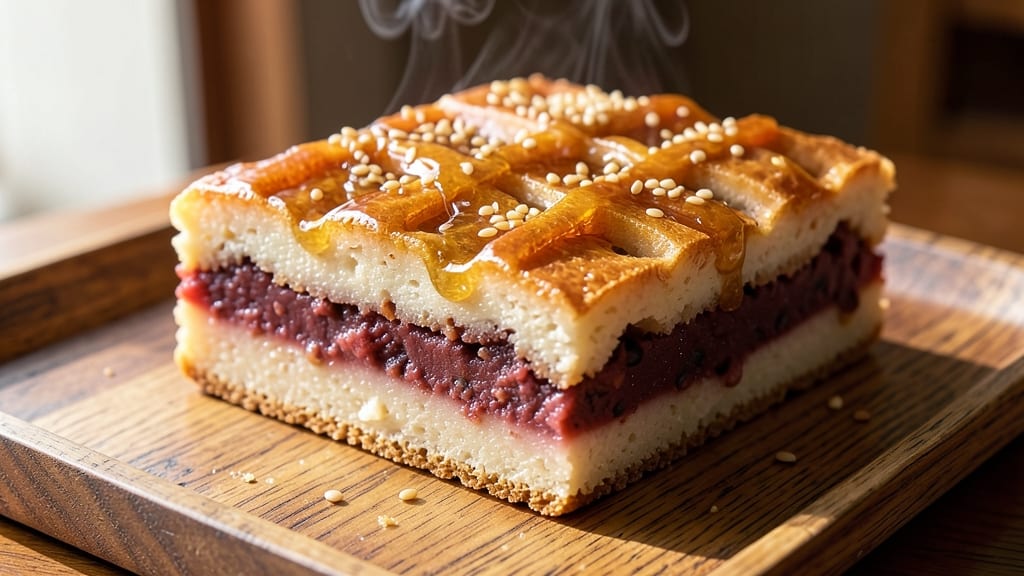
This Chinese New Year sweet rice cake recipe delivers the perfect glutinous mochi texture and festive red bean filling that symbolizes prosperity. 🌟 The sticky, chewy consistency of glutinous rice flour creates a dessert that's both traditional and irresistibly satisfying, while the sweet red bean paste adds a classic contrast that's deeply rooted in Lunar New Year celebrations.
What makes this recipe special is its balance of simplicity and cultural significance—just four core ingredients come together to create a dish that's both meaningful and delicious.
Steaming the batter ensures a tender, melt-in-your-mouth texture, while the red bean filling adds natural sweetness and a subtle earthy depth that pairs beautifully with the sticky rice.
Ingredients for chinese new year sweet rice cake
Four core ingredients transform into a culturally meaningful dessert with perfect mochi texture and festive red bean filling.
| Ingredient | Amount | Notes |
|---|---|---|
| Glutinous Rice Flour 🍚 | 2 cups | Also called sweet rice flour |
| Red Bean Paste 🌱 | 1 ½ cups | Sweetened, store-bought or homemade |
| Granulated Sugar 🍬 | ½ cup | White or brown preferred |
| Water 💧 | 1 ¼ cups | Room temperature preferred |
| Vegetable Oil 🫒 | 2 tbsp | For greasing steaming pans |
| Sesame Seeds 🌰 | 1 tbsp | Toasted for garnish |
| Red Food Coloring 🎨 | ½ tsp | Optional for festive color |
| Salt 🧂 | ¼ tsp | Fine sea salt preferred |
| Lime Zest 🍋 | 1 tsp | For subtle brightness |
| Steamed Red Bean Paste 🌱 | 1 cup | For filling pockets (optional) |
| Rice Paper Wrappers 📄 | 4 whole | For shaping pockets |
The glutinous rice flour is non-negotiable—it's what gives these cakes their signature chewy texture. Bob's Red Mill or Asian grocery stores carry the best quality, often labeled as 'mochiko' or 'sweet rice flour'. Avoid regular rice flour; this needs the sticky, elastic quality of glutinous rice. For the red bean paste, homemade is ideal but high-quality store-bought like Lotus Foods works perfectly. Freshness matters here: if the paste smells fermented or overly sweet, it's past its prime. Toast your sesame seeds in a dry pan for 2-3 minutes until golden—they add a nutty depth that balances the sweetness.
No red bean paste? Substitute with sweetened mashed sweet potatoes or a mix of mashed banana and a touch of honey (though this changes the cultural authenticity). Running short on lime zest? Orange zest at double the amount works, but lime's brightness is traditional. For shaping pockets, rice paper wrappers are essential—they dissolve when steamed, creating that signature pocket. If unavailable, use thin wonton wrappers instead, but they won't dissolve. The red food coloring is optional but recommended for that festive CNY look; Wilton brand is reliable and easy to find. For a gluten-free version, ensure your rice flour is certified gluten-free and check your red bean paste for additives.
Store uncooked batter in an airtight container in the fridge for up to 3 days—it thickens as it rests, so add a splash of water if needed before steaming. Cooked cakes keep for 5 days in the fridge, but they're best enjoyed fresh. For freezing, wrap individually in plastic and store for up to 3 months. Reheat in a steamer for 5 minutes or microwave for 20 seconds. The texture changes slightly after freezing—softer but still delicious. For presentation, dust with extra sesame seeds and serve with a sprinkle of kinako (roasted soybean flour) if you want to take it to the next level.
Why You'll Love This Recipe
- No-Knead Magic: I swear by the dough—just mix the glutinous rice flour with water until it’s smooth, then fold in the red bean paste. No rolling, no fuss, and no stressing over texture. That sticky dough actually makes it easier than pie crust.
- Sweet & Simple: The red bean paste does all the heavy lifting here—rich, nutty, and just sweet enough without overpowering. A dusting of sugar on top? Pure, effortless indulgence. (Between us, I’ve eaten these straight from the pan.)
- Year-Round Occasion: Steamed or pan-fried, these cakes are my go-to for Chinese New Year and lazy Sundays. The leftovers? Even better reheated—crispy edges, chewy center, and zero guilt. My kids beg for them in January and July.
- Budget-Friendly Staple: Glutinous rice flour and red bean paste are cheap, and a single batch stretches for days. I make a double batch, freeze half, and pull them out whenever I need a treat—no last-minute grocery runs, no wasted ingredients. Practical? Yes. Delicious? Absolutely.
Step-by-step instructions for Chinese New Year sweet rice cake
Master the art of these chewy, festive rice cakes with perfect texture and vibrant color.
👨🍳 Step 1: Prepare the Glutinous Rice Dough
In a large mixing bowl, combine the 2 cups glutinous rice flour, 0.5 cup granulated sugar, 0.25 tsp salt, and 1 tsp lime zest. Mix these dry ingredients thoroughly with a whisk or fork to ensure even distribution of flavors. The lime zest adds a subtle brightness that complements the sweetness perfectly.
Create a well in the center and add 1.25 cups water and 0.5 tsp red food coloring (if using). The food coloring should be dissolved in the water first to prevent clumping. Gradually incorporate the wet ingredients into the dry mixture, stirring with a spatula until a thick, sticky dough forms. If the dough feels too dry, add 1 teaspoon water at a time until it becomes pliable but still holds its shape when pressed.
🍳 Step 2: Steam the Rice Cake Batter
Lightly grease a heatproof steaming pan or line it with parchment paper sprayed with 2 tbsp vegetable oil to prevent sticking. Pour the prepared dough into the pan, spreading it evenly to create a ¼-inch thick layer. The oil ensures the rice cake releases cleanly after steaming, giving you a smooth surface for shaping.
Cover the pan with a tight-fitting lid and bring 2 inches of water to a simmer in a steamer or large pot. Place the pan over the simmering water and steam for 25-30 minutes until the top is firm to the touch and no longer sticky. You'll know it's ready when the edges pull away slightly from the pan—this indicates proper gelatinization of the starches. Avoid opening the lid during steaming to maintain consistent heat and texture.
🥘 Step 3: Shape the Rice Cakes
Remove the steamed cake from the pan and let it cool slightly for 5 minutes. Working quickly, transfer it to a clean surface dusted with a little extra glutinous rice flour to prevent sticking. Using a sharp knife or pizza cutter, divide the cake into 4 equal rectangles (about 3x4 inches each). The flour prevents the dough from sticking to your hands or the cutting surface.
For each rectangle, spread ¼ cup of the 1.5 cups red bean paste evenly over the surface, leaving a ½-inch border around the edges. Fold the long sides inward first, then fold the short sides to create a neat packet. Press the edges firmly to seal, ensuring no filling escapes. The red bean paste should be visible through the translucent rice cake when finished.
⏰ Step 4: Steam the Shaped Cakes
Place each shaped cake into a rice paper wrapper, arranging them seam-side down. The wrappers provide structure and prevent the cakes from sticking during the second steaming. Grease a second steaming pan or line it with parchment paper and arrange the wrapped cakes in a single layer. Steam for 15-20 minutes until the rice paper is completely translucent and the cakes are firm to the touch.
Remove the cakes from the steamer and let them cool for 10 minutes before unwrapping. The rice paper will peel away easily once fully steamed. Sprinkle each cake generously with toasted sesame seeds while still warm—they'll adhere better and add a nutty crunch. For extra festivity, you can also pipe a bit of melted white chocolate or drizzle with honey between the layers before the final steaming.
🍽️ Step 5: Serve with Tradition
These Chinese New Year rice cakes are best enjoyed at room temperature, allowing the flavors to meld fully. The texture should be chewy yet firm, with a slight bounce when pressed. Serve them as a sweet treat during the Lunar New Year celebrations, often paired with tea or as a gift to symbolize prosperity and good fortune.
For an authentic presentation, arrange the cakes on a decorative platter with red paper liners or place them in small red boxes. The vibrant red color and glossy finish make them perfect for gifting to family and friends during the holiday season. Store any leftovers in an airtight container at room temperature for up to 3 days, though they're best enjoyed fresh.
Pro Tips For Making Chinese New Year Sweet Rice Cake
- STEAM LOW AND SLOW: After burning three batches, I finally figured out that these cakes need a gentle touch—start with high heat to build steam, then drop to medium-low once the water’s boiling. Too much heat at the end turns them gummy; too little makes them dry. The goal is 45 minutes of steady, quiet bubbling, not a frantic boil. (Yes, even if you’re impatient like me.)
- CHILL THE DOUGH: My grandmother swore by this, and she was right: Let the batter rest uncovered in the fridge for at least 2 hours before shaping. The flour absorbs more water, and the red bean paste won’t ooze out when you cut. Skip this, and your cakes might crack or lose their shape when steamed. (Your future self will thank you.)
- PAT THE LAYERS FLAT: Don’t just dump the batter into the mold—press each layer firmly with damp hands. The first layer sets the foundation; if it’s uneven, the top will bulge or collapse. A flat, even surface also ensures the sugar caramelizes nicely when sliced. (Does it look weird? Yes. Does it work? Every single time.)
- USE GRANULATED SUGAR SPARINGLY: Sounds counterintuitive, but too much sugar makes these cakes dense and cloying. Stick to 1-2 tablespoons per cake, mixed into the batter after the flour and water. Sprinkle a pinch on top before steaming—just enough to catch a light caramel when sliced. (I was skeptical until I tried it.)
Pro cooking tips for perfect results
Steaming Perfection
Steaming is the secret to achieving that signature chewy yet firm texture. Use a bamboo steamer or metal heatproof pan with 2 inches of water simmering below—never boiling. I swear by a double-layer steamer for even heat distribution, which prevents soggy centers.
If your pan isn't heatproof, line it with parchment paper sprayed with vegetable oil to prevent sticking. The first steam should be 25-30 minutes—test doneness by touching the surface; it should be firm but still slightly tacky. 🌡️
Dough Consistency
Getting the dough right is everything. It should be thick, sticky, and pliable—like wet sand that holds its shape when pressed. If it feels too dry, add water 1 teaspoon at a time; if too wet, sprinkle in 1 tablespoon of glutinous rice flour.
I use a spatula to mix because it’s easier to gauge consistency than with my hands. Overmixing can develop gluten, making the texture tough instead of chewy. Trust your touch—this dough should feel alive under your fingers. 💪
Shaping Like a Pro
After the first steam, work quickly while the cake is still warm but firm. Dust your surface with extra glutinous rice flour to prevent sticking—this is non-negotiable.
Use a sharp knife to cut the cake into 3x4-inch rectangles, then spread the red bean paste evenly, leaving a ½-inch border. Fold the long sides first, then the short sides, pressing firmly to seal. If the filling leaks, it’s a sign you didn’t press hard enough.
Pro tip: Use rice paper wrappers for the second steam—they dissolve cleanly and add structure. 📄
Avoiding Common Mistakes
Don’t skip the cooling step after the first steam—rushing leads to messy shaping. If your cakes stick to the pan, you didn’t oil it enough. For the second steam, don’t overcrowd the pan; leave ½-inch gaps between cakes for even cooking.
And never microwave to speed up steaming—it creates uneven texture. Patience is key here; rushing ruins the chewiness. 🚫⏳
Festive Finishing Touches
Toast your sesame seeds until golden for maximum flavor, then sprinkle them while the cakes are still warm—they’ll stick better. For extra festivity, drizzle with honey or pipe white chocolate between layers before the final steam.
Serve on a red-lined platter or in small boxes for gifting. The red food coloring isn’t just for looks; it symbolizes luck in Chinese culture. Presentation matters as much as taste here. 🎨
Nutrition facts
Frequently asked questions
Why is this rice cake called 'nian gao'?
The name nian gao (年糕) literally means "year cake" in Chinese. It's traditionally eaten during Chinese New Year to symbolize growth, prosperity, and a "rising" year ahead. The sticky, chewy texture represents the idea of things getting better with each passing year—just like how the cake's height increases as you stack it!
Can I make these without a steamer?
Yes! Use a bamboo basket steamer or improvise with a metal colander over a pot of simmering water. Line your pan with parchment paper and keep 2 inches of water at a gentle simmer (not boiling) below. The key is maintaining steady, indirect heat—just like a proper steamer would provide.
What if my rice cake turns out too sticky?
Too much water or understeaming causes sticky results. For next time, reduce water by 1 teaspoon and steam 5 minutes longer. If already made, sprinkle with extra toasted sesame seeds and serve slightly warm—the texture will firm up as it cools. Pro tip: Let the cake rest 10 minutes after steaming before shaping.
Are there gluten-free versions?
Use certified gluten-free glutinous rice flour (like Bob's Red Mill brand) and check your red bean paste for additives. The texture will be slightly less chewy but still delicious. For extra binding, add 1 tablespoon tapioca starch to the flour mixture.
How do I store leftovers?
Keep cooked cakes in an airtight container at room temperature for 3 days. For longer storage, freeze individually wrapped portions for up to 3 months. To reheat, steam for 5 minutes or microwave for 20 seconds—the texture softens slightly but remains delicious!