
Main Courses
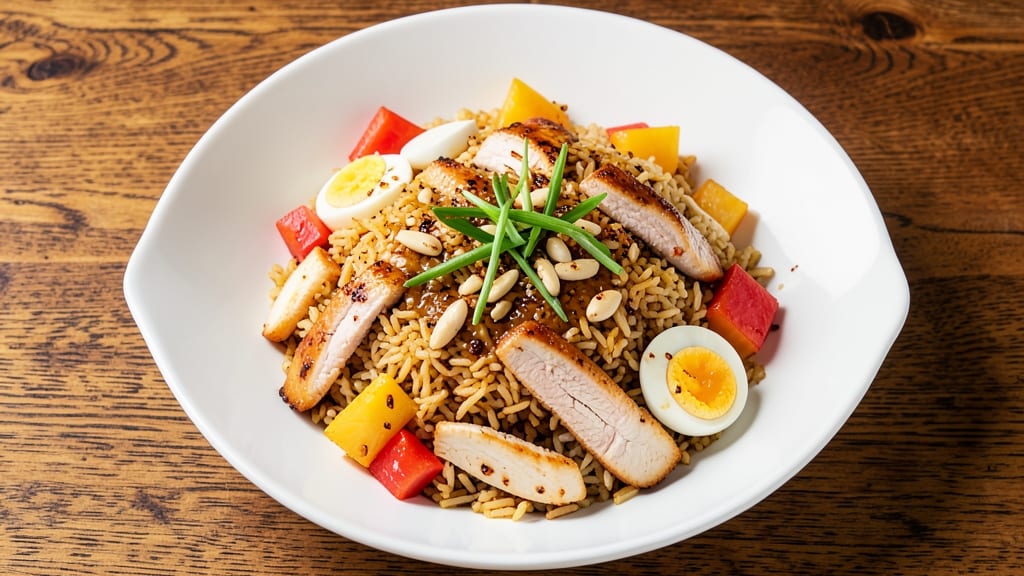
This Chinese pineapple fried rice recipe transforms ordinary fried rice into a vibrant fusion dish where tropical sweetness meets bold wok flavors.
The key lies in perfectly balanced seasoning—ginger, garlic, and soy sauce create that signature umami depth while fresh pineapple adds a bright, juicy contrast that keeps every bite exciting. I developed this version after years of experimenting with stir-fry techniques, and it consistently delivers restaurant-quality results at home.
The beauty of this recipe is its versatility—you can use chicken, shrimp, or tofu as your protein base, making it adaptable for any dietary preference. Day-old rice works best as it absorbs flavors more effectively, and the stir-frying process happens in just 10 minutes once everything is prepped.
The secret to achieving that authentic wok hei (breath of the wok) flavor is high heat and constant motion, which prevents burning while building depth of flavor.
What you'll end up with is a fragrant, colorful fried rice where each bite delivers a perfect harmony of textures—crispy edges on the rice, tender protein, and juicy pineapple chunks that add both sweetness and moisture.
The aroma alone will have everyone gathering around the table, and the flavors are so well balanced that even picky eaters will ask for seconds. This dish is equally impressive as a weeknight dinner or a showstopper for guests.
For an extra touch of authenticity, garnish with sliced green onions and a sprinkle of sesame seeds before serving. The contrast of colors makes the dish visually appealing, while the fresh herbs add a final layer of brightness that complements the rich, savory base.
Let's get started on creating this fusion masterpiece!
Ingredients for chinese pineapple fried rice
Here's what you'll need to create this vibrant fusion dish with tropical sweetness and savory wok crunch.
| Ingredient | Amount | Notes |
|---|---|---|
| Day-Old Cooked White Rice 🍚 | 4 cups | Cold or room temperature preferred |
| Fresh Pineapple Chunks 🍍 | 1 ½ cups | Small dice for even cooking |
| Boneless Chicken Breast 🍗 | 1 lb | Thinly sliced, cut against grain |
| Eggs 🥚 | 2 whole | Beaten for quick stir-fry |
| Green Onions 🧅 | ½ cup | Sliced, white and green parts |
| Fresh Garlic Cloves 🧄 | 4 cloves | Minced, aromatic base |
| Fresh Ginger 🌿 | 1 tbsp | Grated, finely for heat |
| Light Soy Sauce 🥢 | ½ cup | Kikkoman preferred |
| Dark Soy Sauce 🥢 | 1 tbsp | For deeper color |
| Sesame Oil 🫒 | 1 tbsp | Toasted aroma |
| Vegetable Oil 🫒 | ½ cup | High smoke point |
| Toasted Sesame Seeds 🌾 | 1 tbsp | For garnish |
| White Pepper 🌶️ | ½ tsp | Freshly ground |
| Salt 🧂 | 1 tsp | Kosher or sea salt |
| Sugar 🍚 | 1 tbsp | Balances pineapple sweetness |
The rice is non-negotiable—day-old works best since it absorbs flavors better. Jasmine or long-grain white rice both work, but avoid sticky types like sushi rice. For the pineapple, fresh is a must—canned won't give that juicy crunch. Chicken breast should be thinly sliced against the grain for even cooking. I always grab Kikkoman soy sauce from the Asian market—it's the gold standard for this dish. The ginger and garlic? Freshly grated and minced—no shortcuts here, or you lose that authentic wok hei flavor.
No fresh ginger? Ground ginger at half the amount works in a pinch, but it's not the same. Running short on chicken? Shrimp or tofu both work beautifully—just adjust cooking time. The beaten eggs add richness, but if you're avoiding them, silken tofu blended smooth is a great vegan swap. For the soy sauces, light soy for saltiness, dark soy for color. Mixing them gives that perfect balance. And if you can't find toasted sesame oil, regular sesame oil plus a pinch of brown sugar mimics the flavor pretty well.
Keep your rice covered in the fridge for up to 3 days—it actually tastes better as it gets older. Pineapple chunks stay fresh for 5 days in the fridge, but use them within 2 days for best texture. The stir-fry comes together in minutes, but the prep takes a little longer. I always make extra—this reheats beautifully and tastes even better the next day. Store leftovers in an airtight container for 4 days, or freeze for 3 months.
Why You'll Love This Recipe
- Zero-Waste Pantry Magic: I swear by this recipe when I’ve got leftover rice and a chicken breast staring at me from the fridge. No food goes unused—just toss in the pineapple, scramble the eggs, and boom, dinner’s saved.
- Sweet-Savory Balance: That pineapple isn’t just decoration—it cuts through the richness of the chicken and eggs with bright, tangy sweetness. Honestly, the first bite hits like a flavor upgrade I didn’t know I needed.
- Lunchbox Hero: Pack it cold or reheat it hot—this fried rice holds up perfectly for lunches. My kids actually eat their veggies (well, the green onions) because it’s fun to pick them out of the mix.
- Budget Breakthrough: Chicken, rice, and pineapple stretch to feed four for under $15. Between us, it’s my go-to when grocery money’s tight but I refuse to serve sad takeout.
Step-by-step instructions for Chinese pineapple fried rice
Let's bring this tropical twist on a classic together—crispy, sweet, and savory in every bite.
Prep and Slice the Chicken
Cut the 1 pound boneless chicken breast against the grain into thin strips about ¼-inch thick. This ensures tender bites that cook quickly in the wok. Place the sliced chicken in a bowl and season with 1 teaspoon salt and ½ teaspoon white pepper. Let it marinate for 10 minutes while you prep the rest—this keeps the chicken juicy and flavorful.
While the chicken marinates, dice the 1.5 cups fresh pineapple chunks into ¼-inch pieces for even cooking. Small, uniform pieces will absorb the flavors better and cook through without turning mushy. Set both aside—you'll add them at different stages for maximum texture contrast.
Beat the Eggs and Prep Aromatics
Crack the 2 whole eggs into a bowl and beat them lightly with a fork—just until the yolks and whites are combined. You want a smooth, uniform mixture that will quickly scramble into soft, silky curds. Keep this separate until the very end when the wok is screaming hot.
While the eggs beat, slice the ½ cup green onions into 1-inch pieces, keeping the white and green parts separate. You'll add the whites first for flavor, then the greens at the end for freshness. Mince the 4 cloves fresh garlic and grate the 1 tablespoon fresh ginger—these will form the aromatic base of your dish. Keep them in separate small bowls for easy access during cooking.
Stir-Fry the Chicken and Aromatics
Heat a wok or large skillet over high heat until it's smoking hot. Add ½ cup vegetable oil and swirl to coat the bottom evenly. Once the oil shimmers (about 3 minutes), add the seasoned chicken in a single layer. Let it sear undisturbed for 1-2 minutes until the edges turn opaque and the chicken releases easily from the pan.
Push the chicken to one side of the wok, add the minced garlic and ginger to the empty space, and stir for 30 seconds until fragrant. Then, add the white parts of the green onions and stir for another 30 seconds—this builds the flavor foundation. Add 1 tablespoon dark soy sauce and toss everything together for 1 minute until the chicken is fully cooked through. Remove the chicken mixture to a plate and set aside.
Scramble the Eggs and Cook the Rice
With the wok still over high heat, add a little more vegetable oil if needed to prevent sticking. Pour in the beaten eggs and let them sit undisturbed for 5 seconds—this creates a firm base that won't break apart. Then, use a spatula to gently scramble the eggs into soft curds. Once they're about 80% cooked, remove them from the wok and set aside with the chicken.
Add the 4 cups day-old cooked white rice to the wok, breaking up any clumps with your spatula. Stir-fry for 2 minutes until the rice is heated through and slightly crispy in spots. This is where the magic happens—the rice should look dry and separate, not sticky. Add ½ cup light soy sauce, 1 tablespoon sugar, and 1 tablespoon sesame oil, then toss everything together for 1 minute to coat the rice evenly.
Combine and Finish
Return the chicken and eggs to the wok and stir everything together for 1 minute to combine. Add the diced pineapple and toss for another 1-2 minutes until the pineapple is heated through and slightly caramelized at the edges. The rice should be hot, the chicken fully cooked, and the pineapple just tender enough to hold its shape.
Taste and adjust seasoning if needed—you might want a little more soy sauce for saltiness or sugar for sweetness. Once satisfied, turn off the heat and stir in the green parts of the green onions. Garnish with 1 tablespoon toasted sesame seeds and serve immediately while everything is hot and the textures are perfect—crispy rice, tender chicken, and juicy pineapple in every bite.
Pro Tips For Making Chinese Pineapple Fried Rice
- STIR-FRY CHICKEN FIRST: I learned this the hard way—cooking chicken last means it sits in the pan while everything else gets done, and by the time you flip it, it’s dry. Cut the chicken into 1-inch chunks, season with a pinch of salt and pepper, then sear them in a hot wok with 1 tablespoon of oil until they’re just cooked through (about 3-4 minutes). Pull them out and set aside—you’ll add them back at the end when the rice is nearly done.
- USE FROZEN PINEAPPLE: Fresh pineapple is great, but frozen chunks save time and actually caramelize better in the pan. Skip the thawing—toss them straight from the freezer into the wok with the rice. They’ll soften and release sweetness without turning to mush. (Yes, even if you’re impatient like me.)
- SCRAMBLE EGGS SEPARATELY: The eggs in fried rice are always a gamble—either they’re rubbery or they turn into a gooey mess. Beat them in a bowl first, then scramble them in a clean part of the wok with a splash of oil until just set (about 20 seconds). Slide them onto a plate and chop roughly before folding into the rice. This keeps them tender and prevents the whole dish from getting soggy.
- SALT THE RICE BEFORE FRYING: Day-old rice needs a salt boost to cut through the pineapple’s sweetness. Toss the cold rice with ½ teaspoon of salt and a drizzle of soy sauce before it hits the pan. This also helps the grains separate and crisp up faster—no more clumpy, bland rice that tastes like yesterday’s leftovers. (Your future self will thank you.)
Make-ahead tips for this recipe
Prep Ahead Strategy
Start by cooking and cooling your rice the day before—this is the secret to perfect texture. Spread 4 cups cooked white rice on a tray and refrigerate uncovered for 30 minutes to dry it out slightly. Store in an airtight container for up to 3 days.
Prep your protein next: slice the 1 lb chicken breast and marinate with 1 tsp salt and ½ tsp white pepper for 12 hours in the fridge. This jumpstart gives you a head start on flavor development. 🌟
Pineapple Prep
Fresh pineapple is non-negotiable for texture, so dice 1.5 cups pineapple chunks into ¼-inch pieces and store in a sealed container. The acidity in pineapple tenderizes the rice, so add it just before serving if you want to preserve its juiciness.
For extra prep efficiency, chop all aromatics—4 garlic cloves and 1 tbsp ginger—and store in a small container with a damp paper towel to keep them fresh. 🍍
Protein Pre-Cook
Save time by pre-cooking your protein completely. For chicken, poach 1 lb sliced chicken breast in 2 cups chicken broth until fully cooked (165°F internal temp), then drain and refrigerate.
For shrimp, cook until just opaque (120°F internal temp) and store in a sealed container. This method ensures your protein is ready to stir-fry in seconds, eliminating last-minute stress. 🥩
Flavor Base Prep
Combine your sauces in advance to streamline cooking. Mix ½ cup light soy sauce, 1 tbsp dark soy sauce, 1 tbsp sugar, and 1 tbsp sesame oil in a small bowl. Store in the fridge for up to 5 days.
Pre-measure ½ cup vegetable oil and keep it ready for high-heat stir-frying. This prepped flavor base ensures you can toss everything together in minutes without missing a beat. 🥢
Reheating Leftovers
Reheat your fried rice in a wok or large skillet over medium-high heat with 1 tbsp vegetable oil for 3-4 minutes, stirring constantly. Add 1 tbsp water or broth if it looks dry.
For pineapple texture, add fresh diced pineapple and toss for 1-2 minutes until heated through. Garnish with toasted sesame seeds and green onions to revive the dish's vibrant flavors. 🔥
Freezer-Friendly Tips
Portion fried rice into quart-sized freezer bags, leaving 1-inch headspace for expansion. Store for up to 3 months. To reheat, thaw overnight in the fridge, then stir-fry in a wok with 1 tbsp oil for 4-5 minutes until crispy.
Avoid microwaving—it kills the wok hei flavor and makes rice mushy. This method preserves all the textures you worked so hard to create! ❄️
Nutrition facts
Frequently asked questions
Why does the recipe call for day-old rice instead of fresh?
Day-old rice works best because it's drier and absorbs flavors more effectively during stir-frying. Freshly cooked rice contains too much moisture and becomes mushy when heated again. Spread your cooked rice on a tray and refrigerate uncovered for 30 minutes to dry it out slightly before storing in an airtight container. This simple step makes all the difference in texture!
Can I substitute chicken with another protein?
Shrimp or tofu both work beautifully. For shrimp, cook until just opaque (120°F internal temp) and add them at the same stage as chicken. For tofu, press and cube it first, then pan-fry until golden before adding to the wok. Both options maintain the dish's balance of textures and flavors.
How do I prevent the pineapple from turning mushy?
Add the pineapple chunks last when the rice is almost done cooking—this ensures they heat through without overcooking. Dice them into ¼-inch pieces for even cooking, and stir-fry for just 1-2 minutes until heated through. The acidity in pineapple tenderizes quickly, so keep cooking times short.
What's the best way to make this dish vegetarian?
Replace the chicken with 14 oz firm tofu pressed and cubed, or swap in 1 lb mushrooms for umami depth. Use the same stir-fry technique, adding the tofu or mushrooms first to develop flavor. For extra protein, add 2 scrambled eggs or ½ cup edamame at the end. The dish stays just as satisfying!
Can I make this recipe in a regular skillet?
Yes, but use a 12-inch non-stick skillet for best results. While a wok gives that signature "wok hei" flavor, a skillet works well if you keep the heat high and stir constantly. Avoid overcrowding the pan to maintain even cooking. The texture will be slightly different but still delicious!