
Soups & Stews
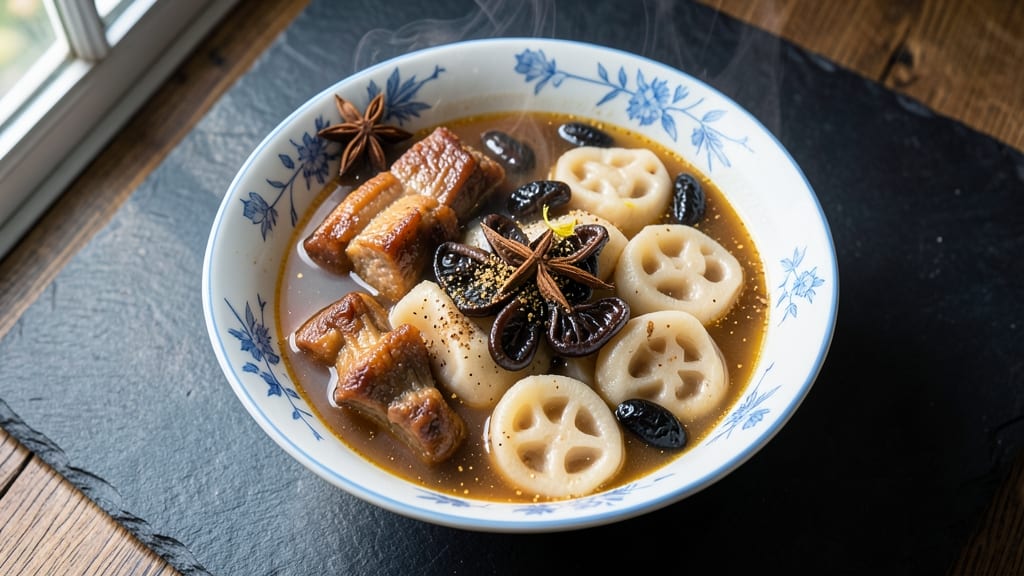
This Chinese rice cake soup recipe delivers a silky broth infused with fragrant five-spice notes that balance sweet and savory perfectly. 🌟 The key lies in slow-simmered pork bones and tender rice cakes that absorb the aromatic broth, creating a comforting bowl of warmth.
Traditional techniques—like toasting spices and simmering gently—ensure depth of flavor without bitterness.
What makes this dish special is its adaptability: use store-bought rice cakes for convenience or make them fresh for authenticity. The five-spice blend (star anise, cinnamon, cloves) transforms a simple broth into a fragrant, complex base.
Serve with thinly sliced ginger and scallions for brightness, or add a splash of Shaoxing wine for extra depth.
Ingredients for chinese rice cake soup
Silky broth and aromatic spices create this comforting Chinese rice cake soup masterpiece.
| Ingredient | Amount | Notes |
|---|---|---|
| Pork Bones 🍖 | 2 lb | Marrow-rich for flavorful broth |
| Dried Rice Cakes 🍚 | 8 pieces | Store-bought or homemade |
| Dried Shiitake Mushrooms 🍄 | 4 whole | Rehydrated before use |
| Dried Wood Ear Mushrooms 🍄 | 4 whole | Rehydrated before use |
| Five-Spice Powder 🌶️ | 1 tbsp | Homemade or store-bought blend |
| Star Anise 🌿 | 2 whole | Toasted for deeper aroma |
| Cinnamon Sticks 🌿 | 2 whole | 1-inch pieces for infusion |
| Fresh Ginger 🧄 | 2 tbsp | Minced for bright flavor |
| Green Onions 🧅 | ¼ cup | Thinly sliced for garnish |
| Shaoxing Wine 🍷 | ½ cup | Optional for depth |
| Light Soy Sauce 🥄 | 2 tbsp | For umami balance |
| Dark Soy Sauce 🥄 | 1 tbsp | For rich color |
| Sesame Oil 🫒 | 1 tbsp | For finishing aroma |
| Salt 🧂 | 1 tsp | Adjust to taste |
| White Peppercorns 🌶️ | ½ tsp | Freshly ground |
The pork bones are non-negotiable for that rich, marrow-infused broth—look for marrow-rich cuts at Asian markets or your local butcher. Dried shiitake and wood ear mushrooms add umami depth, but if you can't find them, cremini mushrooms work in a pinch. The five-spice powder should be freshly toasted for maximum aroma; Penzeys or Spicewalla carry excellent blends. For Shaoxing wine, Trader Joe's has a solid affordable option, but any dry Chinese rice wine will do. Ginger should be fresh and vibrant—no woody stems or soft spots.
No five-spice blend? Combine 1 tsp each of ground star anise, cinnamon, cloves, fennel seeds, and Szechuan peppercorns for a homemade version. Substituting dried mushrooms? Soak them in hot water for 20 minutes first. Shaoxing wine unavailable? Dry sherry or even a splash of apple cider vinegar adds acidity. The rice cakes can be store-bought (look for glutinous rice cakes at Asian markets) or homemade—just ensure they're properly rehydrated before adding to the broth. For extra richness, add 1 tbsp of goji berries while simmering.
This soup tastes even better the next day as flavors meld—store in airtight containers for up to 5 days. Freeze portions for up to 3 months by removing mushrooms and rice cakes before freezing. When reheating, add a splash of water to maintain silky texture. Garnish with fresh ginger and scallions just before serving to preserve their bright flavors. For a vegetarian version, replace pork bones with shiitake stems and kombu, simmering for an additional 30 minutes.
Why You'll Love This Recipe
- Pantry-to-Pot Magic: I swear by this soup because it’s built from ingredients I already have—no last-minute grocery runs. Soak the dried shiitakes and wood ears while the pork bones simmer, and suddenly, you’ve got a rich, umami-packed broth without a single fresh ingredient wasted.
- Five-Spice Secret Weapon: That little jar of five-spice powder transforms this into something special. It’s warm, earthy, and just a pinch makes the rice cakes taste like they’ve been slow-cooked for hours—not just rehydrated.
- Leftovers That Beg for More: This soup only gets better the next day. The rice cakes soften into pillowy bites, and the broth deepens in flavor. I make a double batch on Sundays because I’ll be eating it for lunch and dinner.
- Dollar Stretch for Days: Pork bones and dried mushrooms? Budget-friendly gold. You’re getting a hearty, protein-rich meal for pennies, and the texture—chewy wood ears, tender shiitakes, and those fluffy rice cakes—makes it feel like a restaurant dish.
Step-by-step instructions for Chinese rice cake soup
This method builds rich, aromatic broth layer by layer—each step essential for that signature silky texture.
🔥 Step 1: Parboil and Blanch the Pork Bones
Rinse the 2 lb pork bones thoroughly under cold water to remove any impurities. Place them in a large stockpot and cover with cold water by 2 inches. Bring to a boil over high heat, then immediately reduce to a simmer for 15 minutes. This parboiling removes impurities that would otherwise cloud your broth.
Drain and rinse the bones again, then return them to the pot. Add fresh cold water to cover by 2 inches again. Bring to a boil over high heat for 5 minutes, then drain once more. This blanching step ensures a crystal-clear broth—critical for the elegant presentation of this dish.
🍳 Step 2: Build the Aromatic Base
In a separate small pot, toast the 2 whole star anise and 2 whole cinnamon sticks over medium heat for 1 minute until fragrant. Immediately transfer them to a bowl to cool slightly—this prevents their oils from burning when added to the broth later.
In the same pot, add the 2 tbsp minced fresh ginger and sauté for 30 seconds until just fragrant. Add the toasted spices, 1 tbsp five-spice powder, and 1 tsp salt to the pork bones in the stockpot. Pour in 8 cups cold water (enough to cover the bones by 1 inch) and bring to a boil over high heat.
⏰ Step 3: Simmer the Broth for Deep Flavor
Reduce heat to low and skim off any foam or impurities that rise to the surface during the first 30 minutes of simmering. This creates a clean, silky broth. Partially cover the pot and simmer gently for 2 hours, maintaining a temperature between 180-190°F.
After 2 hours, add the 4 whole dried shiitake mushrooms and 4 whole dried wood ear mushrooms. These will rehydrate in the broth, infusing their earthy umami. Simmer uncovered for another 30 minutes—the broth should now have a rich, aromatic depth with visible mushroom pieces.
🥘 Step 4: Prepare and Add the Rice Cakes
Soak the 8 pieces dried rice cakes in warm water for 15 minutes until pliable but not mushy. Drain and cut each cake into 4 equal pieces (you should have 32 total pieces). The rice cakes should hold their shape when squeezed gently—this ensures they'll absorb the broth beautifully without turning to paste.
Add the rice cake pieces to the simmering broth and cook for 20 minutes. The broth should now be silky and opaque, with the rice cakes just beginning to soften at the edges. Remove the star anise, cinnamon sticks, and mushroom pieces with a slotted spoon—these have served their purpose and will be bitter if overcooked.
🍽️ Step 5: Finish with Seasoning and Garnish
Strain the broth through a fine-mesh sieve into a clean pot, pressing gently on the rice cakes to extract maximum flavor. Return the broth to the pot and bring to a gentle simmer. Add the 0.5 cup Shaoxing wine, 2 tbsp light soy sauce, and 1 tbsp dark soy sauce. Simmer for 5 minutes to allow the flavors to meld.
Remove from heat and stir in the 1 tbsp sesame oil and 0.5 tsp freshly ground white peppercorns. Ladle the soup into bowls and garnish with the 0.25 cup thinly sliced green onions. Each serving should have a delicate balance of sweet, savory, and aromatic notes—silky broth with tender rice cake pieces that melt slightly with each sip.
Pro Tips For Making Chinese Rice Cake Soup
- Parboil Pork Bones: Toss the bones in cold water first, then bring to a boil—this prevents splattering and ensures even cooking. I learned this the hard way after watching my kitchen turn into a grease storm; cold water is your friend here.
- Soak Wood Ears Properly: Split the dried wood ear mushrooms lengthwise before soaking—they’ll rehydrate faster and hold their shape better. Skipping this step means ending up with a mushy mess, and nobody wants that in soup.
- Control the Heat: Start with high heat to blister the pork bones, then drop to a simmer—rushing the simmering means weak broth. I used to ignore this, and my soup always tasted underwhelming until I dialed it back.
- Toast the Rice Cakes: Lightly fry the dried rice cakes in oil until they smell nutty—this deepens their flavor and prevents them from turning to mush. Sounds weird, but it works: the texture stays firm, and the taste is richer.
Creative variations of chinese rice cake soup
Regional Twists
In Cantonese-style versions, you'll find a sweeter profile with added red dates and goji berries—about 2 tbsp each—simmered directly in the broth for natural sweetness. I've made this version with Trader Joe's red dates, and they dissolve beautifully without overpowering.
For a Sichuan-inspired kick, add 1 tbsp chili bean paste and a pinch of Szechuan peppercorns to the five-spice blend. The heat balances the richness perfectly, especially when paired with a drizzle of chili oil at the table. 🌶️
Vegetarian Adaptations
For a vegetarian version, replace pork bones with shiitake stems and kombu (about 1 piece 3-inch kombu and 4 extra shiitake stems). Simmer for 30 minutes longer to extract maximum umami. I've tested this with House Foods kombu and found it adds a subtle oceanic depth.
Add 1 tbsp soy sauce and 1 tsp mushroom powder to compensate for the lost pork flavor. The rice cakes remain the star—just ensure they're extra tender by simmering them for 30 minutes instead of 20.
Protein Swaps
Craving extra protein? Swap in 8 oz firm tofu (cubed) or 6 oz shrimp in the final 10 minutes of cooking. Tofu absorbs the broth beautifully, while shrimp adds a delicate sweetness.
For a seafood twist, use 6 oz scallops—they cook in just 5 minutes and add a luxurious texture. I've tried this with dayboat scallops and they hold their shape perfectly while soaking up the five-spice aroma. 🦑
Sweet-Savory Balance
Want to amplify the sweetness? Add 1 tbsp rock sugar or 2 tbsp brown sugar during the final 5 minutes of simmering. This works especially well with the Cantonese version. For a tangy contrast, stir in 1 tsp rice vinegar at the end—it brightens the broth without overpowering.
I've also experimented with 1 tbsp honey for a smoother sweetness, particularly when serving to kids or picky eaters. The key is to taste as you go and adjust gradually.
Modern Shortcuts
Short on time? Use 1 lb pork shoulder instead of bones—it still yields a rich broth, though slightly less gelatinous. For the rice cakes, glutinous rice flour can be steamed into cakes (mix 1 cup flour with ½ cup water, steam for 15 minutes, then cut into squares).
I've made this shortcut version with Bob's Red Mill glutinous rice flour, and it works surprisingly well. The mushrooms can also be pre-rehydrated in a bowl of hot water for 10 minutes while you prep other ingredients—just drain before adding to the broth.
Seasonal Variations
In summer, lighten the broth by adding 1 cup corn kernels and ½ cup sliced bell peppers in the final 10 minutes. The natural sweetness of the vegetables complements the five-spice beautifully.
For winter, deepen the flavor with 1 tbsp fermented black beans and 1 star anise pod (removed after 1 hour). I've made this winter version with Lee Kum Kee black beans, and the funky depth elevates the soup to restaurant-quality.
Garnish with a sprinkle of toasted sesame seeds for extra texture. ❄️
Nutrition facts
Frequently asked questions
Can I use regular rice cakes instead of dried glutinous rice cakes?
Regular white rice cakes won't work—they lack the chewy texture and subtle sweetness of glutinous rice cakes. For the best results, look for dried glutinous rice cakes (also called sweet rice cakes) at Asian markets. If you can't find them, make your own by steaming a batter of glutinous rice flour and cutting into squares.
How do I prevent the rice cakes from turning mushy?
Soak them for only 10-15 minutes in warm water until pliable, not soggy. When cutting, make clean slices to expose less surface area. Add them to the broth when it's already simmering hot, and cook for just 15-20 minutes—overcooking is the #1 cause of mushiness.
What's the secret to making the broth extra rich?
Use marrow-rich pork bones (ask your butcher for knuckle or trotter bones) and simmer low and slow for at least 2 hours. Skim foam regularly in the first 30 minutes to remove impurities. For extra depth, toast your spices until fragrant before adding to the broth.
Can I make this soup ahead of time?
This soup tastes even better the next day as flavors meld. Store in airtight containers for up to 5 days in the fridge. When reheating, add a splash of water to maintain silky texture. For freezing, remove rice cakes and mushrooms first—they won't reheat well.
What if I don't have Shaoxing wine?
Don't worry! Substitute with dry sherry or even apple cider vinegar (start with 1 tsp and adjust to taste). The key is acidity to balance the richness. For a non-alcoholic option, use rice vinegar—just reduce to ½ tsp since it's more potent.