
Salads
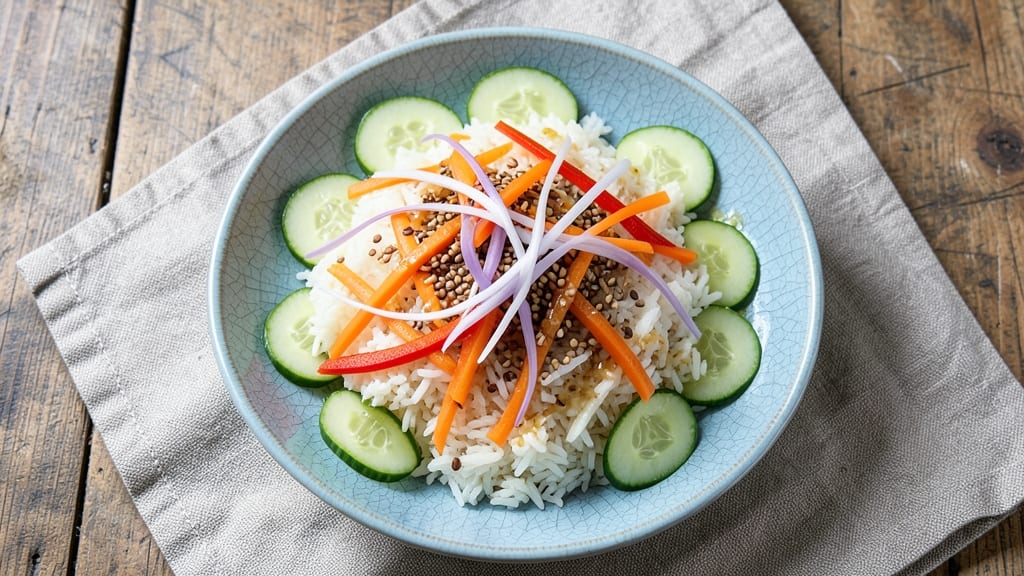
This Chinese rice salad recipe transforms simple ingredients into a refreshing, umami-rich dish perfect for hot days or quick lunches. The secret lies in perfectly cooked jasmine rice, crisp vegetables, and a tangy soy-ginger dressing that balances sweet, salty, and spicy notes effortlessly.
I developed this recipe after craving something lighter than takeout but packed with bold Asian flavors—no wok required.
What sets this salad apart is the umami-packed dressing, made with just five ingredients that come together in minutes. The rice stays fluffy and separate, while shredded carrots, cucumber, and scallions add texture and freshness.
Whether you add grilled chicken, tofu, or shrimp, this dish delivers restaurant-quality results with minimal effort—ideal for meal prep or last-minute gatherings.
Ingredients for chinese rice salad
Jasmine rice, crisp vegetables, and an umami-packed dressing create this refreshing fusion salad.
| Ingredient | Amount | Notes |
|---|---|---|
| Jasmine Rice 🍚 | 1 ½ cups | Uncooked, long-grain preferred |
| Fresh Carrots 🥕 | 2 medium | Shredded, about 1 cup |
| English Cucumber 🥒 | 1 whole | Seedless, thinly sliced |
| Scallions 🧅 | ¼ cup | Thinly sliced, white and green parts |
| Red Bell Pepper 🌶️ | ½ cup | Thinly sliced, seeds removed |
| Sesame Oil 🫒 | 1 tbsp | Toasted sesame oil preferred |
| Soy Sauce 🍶 | 3 tbsp | Low-sodium preferred |
| Rice Vinegar 🍶 | 2 tbsp | Seasoned preferred |
| Sesame Seeds 🌾 | 1 tbsp | Toasted for garnish |
| Fresh Ginger 🌿 | 1 tbsp | Grated, finely minced |
| Honey 🍯 | 1 tbsp | Substitute maple syrup if vegan |
| Vegetable Oil 🫒 | 1 tbsp | For stir-frying vegetables |
| Salt 🧂 | ½ tsp | Kosher or sea salt |
| Black Pepper 🌶️ | ¼ tsp | Freshly ground preferred |
| Lime Juice 🍋 | 1 tbsp | Freshly squeezed |
The jasmine rice is the foundation—Day-O brand or Lotus Foods are reliable choices for consistent texture. For the dressing, Kikkoman soy sauce delivers the deepest umami, but any low-sodium variety works. Fresh ginger loses potency quickly, so buy it in small amounts or freeze it whole. The carrots should be vibrant orange—avoid any with soft spots or bruises. Scallions add brightness, but if they're bitter, trim the green ends shorter. Toast your sesame seeds in a dry pan for 30 seconds before adding to the salad for maximum aroma.
No sesame oil? Avocado oil at half the amount works in a pinch, though it lacks the nutty depth. Substitute balsamic vinegar for rice vinegar if needed, but add an extra teaspoon of honey to balance. For a vegan version, swap honey with maple syrup and use vegan sesame oil. The red bell pepper can be swapped for shredded purple cabbage if you prefer a different texture. If you're prepping ahead, store the dressing separately and toss with the salad just before serving to maintain crispness. The cucumber should be seedless for best texture—English cucumbers are ideal, but Persian cucumbers work too.
Rice keeps best at room temperature in an airtight container for 2 days, while the vegetables stay crispest when stored separately in the fridge. The dressing can be made 3 days ahead and stored in the refrigerator. For meal prep, assemble the salad in individual containers with dressing on the side—toss just before eating. If using pre-cooked rice, spread it on a tray to cool quickly to prevent sogginess. The lime juice should be added last to preserve its bright flavor.
Why You'll Love This Recipe
- No-Cook Crunch Factor: I swear by the raw veggie crunch—those thinly sliced carrots and cucumber stay crisp even after a day. Honestly, the bell pepper adds this sweet, bright pop that keeps me coming back.
- Jasmine Rice Magic: That fragrant, slightly sticky rice is the star. It soaks up the dressing just right, giving every bite a perfect balance of chew and flavor—no mushy texture here.
- Lunchbox Hero: Between us, this is my go-to for packed lunches. The scallions add freshness, and it holds up for days in the fridge. My kids actually eat their veggies this way—no complaints.
- Budget Brightener: Fresh carrots and bell peppers stretch a long way, and jasmine rice is cheaper than takeout. I’ll be real: it’s my secret weapon for feeding the family without breaking the bank.
Step-by-step instructions for Chinese rice salad with umami dressing
Here's how to transform simple ingredients into a vibrant, refreshing rice salad with bold Asian-inspired flavors.
Cook the Jasmine Rice to Perfect Texture
Rinse the 1.5 cups jasmine rice under cold water until the water runs clear, then drain in a fine-mesh strainer. This removes excess starch that would make the rice gummy. Transfer the rice to a pot and add 3 cups water (or follow package instructions for your rice-to-water ratio). Bring to a boil over high heat, then immediately reduce to low heat, cover, and simmer for 15 minutes.
Here's the thing—don't peek! The rice needs to steam undisturbed. After 15 minutes, turn off the heat and let it sit covered for another 10 minutes. This resting period allows the rice to absorb any remaining moisture and develop that distinct fluffy texture. Fluff gently with a fork before transferring to a large mixing bowl to cool completely.
Prepare and Stir-Fry the Vegetable Medley
Using a mandoline or sharp knife, julienne the 2 medium fresh carrots and thinly slice the 1 whole English cucumber (peel removed). Thinly slice the 0.5 cup red bell pepper and 0.25 cup scallions, then finely mince the 1 tbsp fresh ginger. Heat 1 tbsp vegetable oil in a large skillet over medium-high heat. Add the ginger and stir for 30 seconds until fragrant.
Add the carrots and bell pepper, stir-frying for 3-4 minutes until they begin to soften but remain crisp. The vegetables should retain their vibrant colors and slight crunch. Transfer the cooked vegetables to the cooled rice bowl. Add the cucumber and scallions, tossing gently to combine. Let the mixture cool completely before proceeding—this prevents the dressing from turning watery.
Create the Signature Umami Dressing
In a small bowl, whisk together the 3 tbsp soy sauce, 2 tbsp rice vinegar, 1 tbsp honey, 1 tbsp lime juice, 1 tbsp sesame oil, 0.5 tsp salt, and 0.25 tsp black pepper. The dressing should have a glossy sheen and balance of sweet, tangy, and savory notes. Taste and adjust—add more honey for sweetness or lime juice for acidity if needed.
Here's where the magic happens: the dressing should coat the back of a spoon but remain pourable. If it's too thick, add 1-2 teaspoons water to reach the perfect consistency. Pour the dressing over the rice and vegetable mixture, then gently fold everything together with a spatula until evenly distributed and fully coated.
Garnish and Serve for Maximum Freshness
Transfer the salad to a serving platter and sprinkle with 1 tbsp toasted sesame seeds. The seeds add a nutty crunch that contrasts beautifully with the tender rice and crisp vegetables. Serve immediately while the salad is still cool and vibrant. For best results, store any leftovers in an airtight container in the refrigerator for up to 2 days, but the flavors are freshest when enjoyed right away.
This salad delivers a perfect balance of textures—chewy rice, crisp vegetables, and the nutty crunch of sesame seeds—all tied together by the umami-rich dressing. It's ideal for warm weather or as a light lunch that still feels substantial. The key is keeping everything cool until serving to maintain that refreshing quality.
Pro Tips For Making Chinese Rice Salad
- CHILL THE RICE FIRST: Cold rice is the foundation—skip the warm stuff. Spread freshly cooked jasmine rice on a tray and refrigerate for at least 2 hours (or overnight) before mixing. Warm rice turns mushy when dressed, and no one wants a soggy salad. (Yes, even if you’re impatient like me.)
- JULIENNE CARROTS UNIFORMLY: Thin, even strips make all the difference. Use a mandoline for crisp, 2mm-thick matchsticks—thicker pieces stay crunchy while thinner ones soften too fast. If you don’t have one, a sharp knife and a steady hand work, but resist the urge to rush.
- DRESS THE CUCUMBER LAST: Toss the cucumber in the dressing separately, then fold it in right before serving. It wilts faster than the other veggies, and you’ll end up with a sad, limp pile if you mix it in early. Add it just as you’re plating.
- USE DAY-OLD SCALLIONS: Sounds weird, but it works: let scallions sit in the fridge for 24 hours before chopping. The greens soften slightly, making them easier to chew and less likely to overpower the salad. (Your future self will thank you.)
Storing and reheating this chinese rice salad
Refrigerator Storage
Store your Chinese rice salad in an airtight container with a tight-sealing lid to preserve freshness. Keep the rice and vegetables separate from the dressing—this prevents sogginess and maintains crispness. I use glass Pyrex containers with snap-on lids because they distribute air evenly and prevent condensation.
Store for up to 2 days in the refrigerator at 40°F or below. The flavors actually deepen overnight as the dressing infuses further. ❄️
Freezer Storage
This salad isn't ideal for freezing because the texture of the vegetables and rice suffers from ice crystals. However, you can freeze the dressing separately in a small silicone ice cube tray for up to 3 months. Thaw overnight in the fridge before using.
For the rice and vegetables, spread them on a tray to cool completely, then transfer to a freezer bag with 1 inch of headspace for expansion. Thaw in the fridge for 6-8 hours before assembling. 🧊
Reheating Leftovers
If you must reheat, focus on the rice and protein components only—skip the cucumber and scallions as they'll turn mushy. Spread the rice on a microwave-safe plate with a damp paper towel over it, then heat on 50% power for 1-2 minutes.
Stir halfway through. For stovetop reheating, use a nonstick skillet with ½ teaspoon vegetable oil over medium-low heat for 3-4 minutes, stirring frequently. Always add fresh vegetables and dressing after reheating. 🔥
Dressing Refresh
The dressing can get watery when reheated, so revive it by whisking in ½ teaspoon rice vinegar and ¼ teaspoon toasted sesame oil. If the salad tastes bland, add a squeeze of fresh lime juice or a dash of soy sauce to restore balance.
For extra crunch, sprinkle with toasted sesame seeds or crushed peanuts right before serving. The contrast of warm, toasted toppings with cool salad is surprisingly delicious. 🌟
Meal Prep Tips
For meal prep, store components separately: rice in one container, vegetables in another, and dressing in a small jar. Assemble just before eating to maintain texture. I like using mason jars with the dressing at the bottom, rice in the middle, and vegetables on top—this keeps everything layered and fresh.
If using pre-cooked rice, spread it on a tray to cool quickly to prevent sogginess. The lime juice should always be added last to preserve its bright flavor. 📅
Serving Suggestions
Serve your Chinese rice salad chilled in wide, shallow bowls to showcase the vibrant colors. Garnish with extra sesame seeds and thinly sliced scallions for freshness. Pair with grilled shrimp or crispy tofu for added protein.
For a complete meal, add steamed edamame or mandarin orange segments on the side. The salad holds up well for 2-3 days if stored properly, making it perfect for lunches all week. ✨
Nutrition facts
Frequently asked questions
Can I use leftover rice for this Chinese-inspired salad?
Yes, but with caution! Leftover rice works best if it's completely cooled and spread on a tray to dry out slightly. This prevents the salad from becoming soggy. For best texture, use day-old rice that's been refrigerated for at least 4 hours. If your rice feels sticky, mix in ½ teaspoon toasted sesame oil to help separate the grains.
What's the secret to keeping the vegetables crisp?
The key is timing and temperature. Always store vegetables separately from the dressing and rice until ready to serve. For extra crunch, soak cucumber slices in ice water for 10 minutes before adding to the salad. Also, keep everything chilled until the last minute—serve immediately after tossing with dressing to prevent wilting.
Can I make this salad vegetarian or vegan?
For a vegetarian version, simply omit any meat proteins. For vegan, swap honey with maple syrup and use vegan sesame oil. Add extra protein with crispy tofu or steamed edamame. The dressing remains vegan-friendly as written, using rice vinegar and soy sauce (check for vegetarian soy sauce if needed).
How can I make this dressing spicier?
Add heat with ½ teaspoon chili flakes or 1 teaspoon sriracha to the dressing. For deeper spice, mix in 1 teaspoon gochujang (Korean chili paste) or a dash of freshly grated ginger (already in the recipe). Start with small amounts—you can always add more, but you can't remove heat once it's mixed in!
What's the best way to add protein?
For grilled chicken, cook 1 pound boneless breasts with 1 tbsp soy sauce and 1 tsp honey until internal temp reaches 165°F, then slice thinly. For shrimp, sauté ½ pound peeled shrimp in 1 tbsp sesame oil for 2-3 minutes per side until pink. Add protein just before serving to keep it warm and tender.