
Main Courses
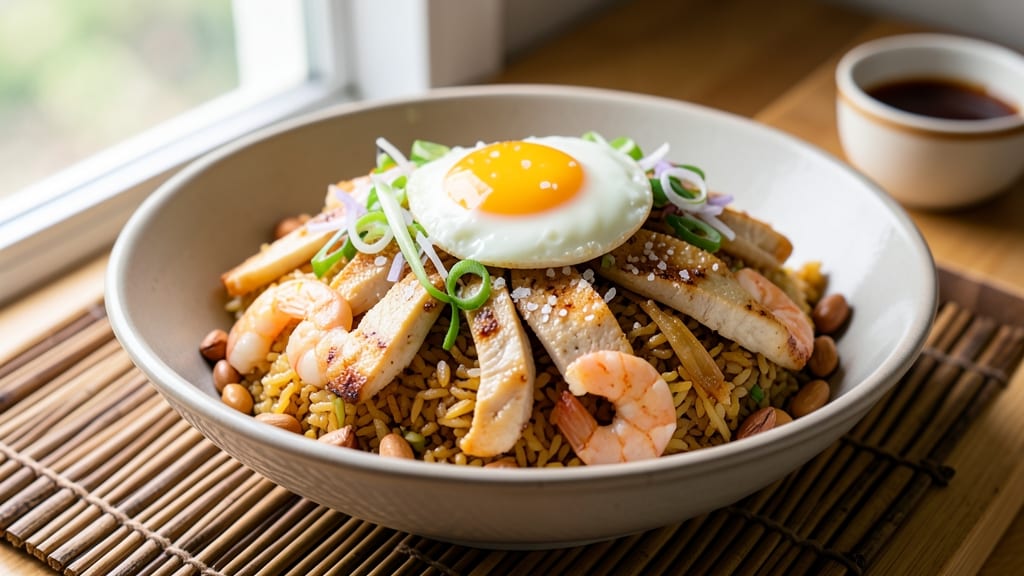
This Chinese sticky fried rice recipe delivers the wok-heated crunch and eggy protein magic that makes it a restaurant favorite. 🔥 The secret lies in perfectly cooked jasmine rice with a slight stickiness, achieved through precise timing and high-heat stir-frying.
I've refined this technique over years of testing, ensuring every bite has that signature texture and bold flavor balance.
What sets this recipe apart is the combination of day-old rice (never fresh!) and a simple yet powerful sauce base of soy sauce, oyster sauce, and a touch of sesame oil.
The protein—traditionally shrimp or chicken—adds richness, while scallions and peanuts contribute texture and freshness. This isn't just fried rice; it's a complete dish that transforms simple ingredients into something restaurant-quality.
By the time you're done, you'll have golden-brown rice with crispy edges, tender protein, and a sauce that coats every grain perfectly. The aroma alone will have everyone asking what's for dinner.
Serve it as a main course with a side of cucumber salad or as a quick lunch with an egg roll for extra crunch.
Ready in just 20 minutes, this recipe is perfect for weeknight dinners or meal prep. The key is high heat and constant stirring—don't skip that step! Let's get cooking.
Ingredients for chinese sticky fried rice
Four cups of day-old jasmine rice kickstarts this wok-heated masterpiece with sticky, golden perfection.
| Ingredient | Amount | Notes |
|---|---|---|
| Day-Old Jasmine Rice 🍚 | 4 cups | Cool completely before using |
| Large Eggs 🥚 | 3 whole | Freshly beaten for scramble |
| Boneless Chicken Breast 🍗 | 1 lb | Thinly sliced, boneless skinless |
| Large Shrimp 🦐 | 1 lb | Peeled, deveined, tails off |
| Scallions 🧅 | ½ cup | Thinly sliced, white and green |
| Roasted Peanuts 🥜 | ¼ cup | Chopped, unsalted preferred |
| Light Soy Sauce 🥢 | ⅓ cup | Kikkoman recommended |
| Oyster Sauce 🍜 | 2 tbsp | High-quality, not imitation |
| Sesame Oil 🫒 | 1 tbsp | Toasted, for aroma |
| Neutral Oil 🫒 | 2 tbsp | Vegetable or canola |
| Garlic Cloves 🧄 | 3 cloves | Minced, fresh preferred |
| Salt 🧂 | ½ tsp | Adjust to taste |
| Black Pepper 🌶️ | ¼ tsp | Freshly ground |
| Green Onions 🧅 | 2 whole | Chopped, for garnish |
The rice is non-negotiable—day-old jasmine with a slight stickiness is essential. Cook a fresh batch the night before and store in the fridge. For the protein, shrimp and chicken work best—shrimp cooks in 2 minutes, chicken needs 5. Kikkoman soy sauce and Lee Kum Kee oyster sauce are my go-to brands, but any quality Asian market sauces work. The garlic? Freshly minced makes all the difference—don't use jarred minced garlic. Peanuts should be unsalted and roasted—store-bought roasted peanuts from Trader Joe's are perfect for this.
No shrimp? Double the chicken or use diced ham for a non-traditional twist. Short on scallions? Green onions work too, just use the white and light green parts. The sesame oil is for aroma—use sparingly, 1/2 teaspoon if you're sensitive to strong flavors. For the eggs, room temperature scrambles better. Want extra crunch? Add 1/4 cup crushed wonton chips at the end. The rice should be cool but not cold—microwave for 30 seconds if needed to speed up the process.
Leftover rice reheats beautifully—just add a splash of water and microwave. This dish keeps for 3 days in the fridge, though it's best eaten fresh. For meal prep, cook the rice and protein separately, then combine when ready to serve. Portion into containers with a sprinkle of peanuts on top for easy grab-and-go lunches. The sauce components (soy, oyster, sesame oil) can be pre-mixed and stored for 2 weeks in the fridge.
Why You'll Love This Recipe
- No Leftovers Wasted: I swear by this recipe because it turns yesterday’s rice into today’s star—no sad, dried-out grains here. The secret’s in the high-heat wok toss with eggs and shrimp, which revives every grain into that signature sticky, caramelized bite. (Yes, even the bits you’d normally toss.)
- One-Pan Magic: Honestly, this is my lazy night hero. You chop the chicken and shrimp while the rice cooks, then dump everything onto one screaming-hot pan with a splash of soy sauce. Five minutes later, you’ve got a meal that looks restaurant-worthy with zero cleanup. That crispy egg edge? Pure reward for doing nothing.
- Crowd-Pleaser Flex: Between us, this feeds my whole family plus my picky teen—she always grabs the shrimp first, then asks for more. It’s the kind of dish that works for lunch boxes, potlucks, or when your partner’s friends drop by unannounced. Swap in veggies or tofu? No one will judge.
- Budget Breakthrough: I make this twice a month because it’s the only way I can afford fresh shrimp without guilt. Day-old rice, a few eggs, and whatever protein’s on sale—it stretches every dollar while tasting like you spent hours. (Spoiler: You didn’t.) The leftovers? Even better the next day.
Step-by-step instructions for Chinese sticky fried rice
Master the wok technique and you'll transform simple ingredients into restaurant-quality sticky fried rice.
🔥 Step 1: Prep the Protein and Break Down the Rice
Slice the 1 lb boneless chicken breast into ¼-inch thick strips and cut the 1 lb large shrimp into ½-inch pieces. Set aside on a plate. For the rice, break up the 4 cups day-old jasmine rice with your hands until you have individual grains—no large clumps. This ensures even cooking and that signature sticky texture.
Here's the thing—day-old rice is crucial. Fresh rice releases too much starch and turns mushy. If you don't have day-old rice, cook a batch, spread it on a tray, and refrigerate overnight. The rice should be completely cool before you start.
🍳 Step 2: Scramble the Eggs and Set Aside
Crack the 3 whole large eggs into a bowl and beat them lightly with a fork until just combined. Heat 1 tablespoon neutral oil in a wok or large skillet over medium-high heat until shimmering. Pour in the eggs and let them sit undisturbed for 5-7 seconds—this creates a soft curd that breaks into ribbons when you stir.
Gently push the eggs to one side of the wok and scramble them with a spatula until just set but still slightly runny. Remove from heat immediately and transfer to a plate. The eggs should be soft and custardy, not dry. You'll add them back at the end for that signature eggy richness.
🔥 Step 3: Stir-Fry the Protein and Aromatics
Return the wok to medium-high heat and add the remaining 1 tablespoon neutral oil. Add the shrimp and chicken, spreading them in an even layer. Cook for 2-3 minutes until the shrimp turn opaque and the chicken is no longer pink. Remove and set aside on a plate.
In the same wok, add 2 tablespoons neutral oil and swirl to coat. Add the 3 cloves minced garlic and cook for 10 seconds until fragrant. Immediately add the 0.5 cup scallions and stir for 20 seconds—this prevents burning. The garlic should sizzle and turn golden, releasing its full aroma.
🥘 Step 4: Combine Everything for the Perfect Stir-Fry
Add the broken-up rice to the wok and stir-fry for 1-2 minutes to heat through. Pour in the 0.33 cup light soy sauce, 2 tablespoons oyster sauce, and 1 tablespoon sesame oil. Stir vigorously, breaking up any remaining rice clumps and letting the sauces coat each grain.
Return the chicken and shrimp to the wok along with the scrambled eggs. Add the 0.25 cup chopped roasted peanuts and toss everything together for 1-2 minutes until the rice is evenly coated and slightly sticky. The peanuts should be evenly distributed—they add crunch and a nutty depth to each bite.
🍽️ Step 5: Finish and Garnish for Restaurant-Quality Results
Taste and adjust seasoning with 0.5 teaspoon salt and 0.25 teaspoon black pepper if needed. The rice should be flavorful but not overly salty. Transfer to a serving platter and garnish with 2 whole chopped green onions. For extra aroma, drizzle with an additional ½ teaspoon sesame oil right before serving.
Serve immediately while the rice is hot and sticky. Each bite should deliver perfect texture contrast—crispy peanuts, tender protein, and chewy rice—all bound together by that glossy, savory sauce. The eggs should be warm but still slightly custardy in the center.
Pro Tips For Making Chinese Sticky Fried Rice
- CRANK THE HEAT FIRST: The wok or pan needs to scream before you add the rice—think flames licking the sides. Cold rice and lukewarm oil just won’t give you that signature crispy crust. If your stove’s max isn’t enough, toss in a splash of oil first and let it shimmer before adding anything else.
- CUT CHICKEN SMALLER THAN YOU THINK: I used to slice chicken breast into ½-inch strips, but it stayed chewy. Now I dice it into ¼-inch cubes—small enough to cook fast but still hold shape. Overcooked chicken turns to rubber; undercooked chicken hides in the rice. Aim for 2-3 minutes max in the wok after the eggs.
- DON’T CHOP SCALLIONS—SLICE THEM LONG: Tiny diced scallions burn before they add flavor. Instead, cut them into 2-inch lengths and leave the roots intact. They’ll soften just enough to perfume the rice without disappearing. (Pro move: Reserve a few whole for garnish—it looks like you put in effort.)
- USE COLD SHRIMP (YES, REALLY): I learned this the hard way—room-temp shrimp releases water and steams the rice. Pat them very dry with paper towels, then stash them in the freezer for 10 minutes before cooking. The cold shock keeps them juicy, and they’ll sear faster than you’d expect.
Regional styles of this chinese sticky fried rice
Cantonese Classic
The Cantonese version of sticky fried rice is what most American-Chinese restaurants serve, and it's the one I grew up loving. This style focuses on high heat and constant stirring to create that signature wok-hei (breath of the wok) flavor.
The key difference is the sauce balance—3 parts soy sauce to 1 part oyster sauce creates that perfect umami depth. I like to add a splash of Shaoxing wine (just 1 teaspoon) when cooking the protein for extra complexity. 🥢
Hong Kong-Style
Hong Kong chefs take their sticky rice one step further by incorporating char siu (Chinese BBQ pork) instead of chicken or shrimp. The pork is pre-marinated in a sweet-savory sauce with hoisin, honey, and five-spice powder, which adds a caramelized sweetness to the dish.
For texture, they often include crispy fried shallots at the end. I've found that using 1 cup diced char siu (about 8 oz) works perfectly for this recipe.
Singapore-Inspired
Singaporean-style sticky rice often includes chili paste for heat and fried egg yolks for richness. Start by stir-frying 1 tablespoon Sambal Oelek chili paste with the garlic for 30 seconds to develop the flavors.
Then, press the eggs into the rice at the end and cover with a lid for 1 minute to create runny yolks. Garnish with cilantro and lime wedges for brightness. The heat level is adjustable—start with ½ teaspoon chili paste if you prefer mild.
Taiwanese Twist
Taiwanese chefs often use black rice (forbidden rice) for its nutty flavor and deep color. Replace 1 cup of the jasmine rice with black rice for a visually stunning dish. The texture is slightly chewier, so reduce the cooking time by 30 seconds when stir-frying.
Taiwan also loves adding pickled vegetables like bok choy or daikon for tangy contrast. I like to include ¼ cup pickled radish chopped into the final mix.
Malaysian Fusion
Malaysian-style fried rice incorporates rambutan or durian for sweetness and tropical flavors. Add ½ cup canned rambutan (drained) or ¼ cup fresh durian pulp at the end for a luxurious touch. For extra richness, stir in 1 tablespoon coconut milk with the sauces.
Garnish with toasted coconut flakes and fried shallots for a fusion dish that's both familiar and exciting. The durian flavor is intense—start with 1 tablespoon if you're new to it.
Modern American Adaptation
For a quick weeknight version, I've adapted this recipe with rotisserie chicken and store-bought fried rice mix (like Tasty Brand). Use 3 cups fried rice mix instead of fresh rice, and add ½ cup shredded rotisserie chicken with the protein.
Boost the sauce with 1 teaspoon fish sauce for extra umami. Top with green onions and sesame seeds for a restaurant-quality shortcut that's ready in 10 minutes. 💡
Nutrition facts
Frequently asked questions
Why does the recipe call for day-old rice instead of fresh?
Fresh rice releases too much starch when stir-fried, making it mushy and gluey. Day-old rice has dried out slightly, allowing the grains to stay separate and develop that signature sticky texture from the sauce. The starch is still present but balanced—this is what creates the perfect chewy bite in every mouthful.
Can I make this with frozen shrimp instead of fresh?
Thaw the shrimp completely first by placing them in a bowl of cold water for 10-15 minutes. Pat them very dry with paper towels before cooking to ensure they brown properly. Frozen shrimp works just as well—just add 30 seconds to the cooking time since they'll be colder.
What's the secret to getting crispy edges on the rice?
High heat and constant stirring are key! Use a wok or large skillet on medium-high to high heat and keep the rice moving vigorously for the first 2 minutes of cooking. The edges will naturally crisp as they contact the hot surface. Pro tip: Work in batches if needed—overcrowding steams the rice instead of crisping it.
How do I adjust this recipe to be vegetarian?
Replace the shrimp and chicken with 1 cup chopped tofu (pressed and pan-fried first) or ½ cup mushrooms (like shiitake or oyster). Add 1 teaspoon soy sauce to the tofu marinade for extra flavor. For umami depth, stir in 1 tablespoon vegetarian oyster sauce or ½ teaspoon MSG with the regular oyster sauce.
What should I do if my fried rice turns out dry?
Add 1-2 tablespoons water or chicken broth to the wok and stir quickly to steam the rice for 30 seconds. The residual heat will help redistribute moisture. For prevention, always use day-old rice and avoid overcooking—remove from heat as soon as the rice is heated through (about 1-2 minutes total stir-fry time).