
Main Courses
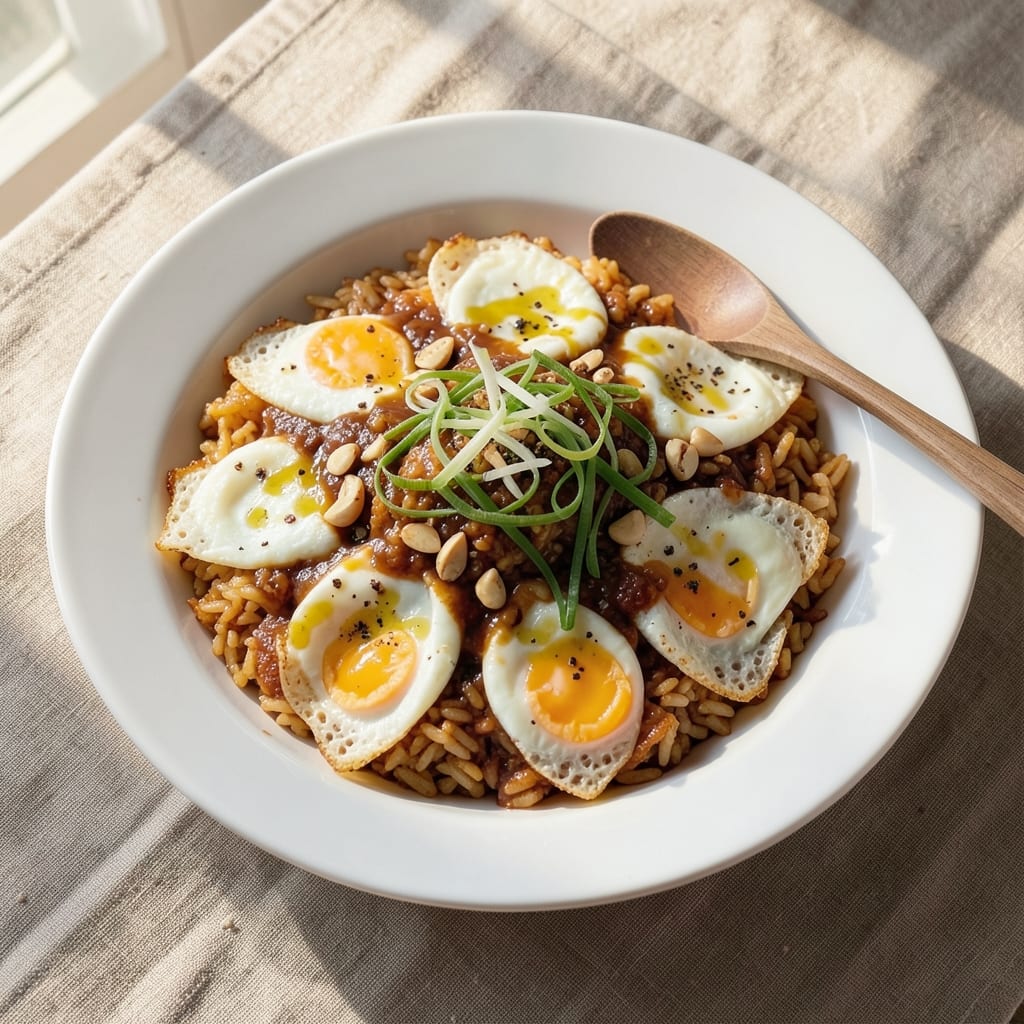
This adobo fried rice omelette recipe combines two Filipino comfort food classics into one savory, satisfying dish. The secret lies in perfectly balanced adobo seasoning—garlic, soy sauce, and vinegar—that transforms day-old rice into fragrant, crispy bites. I've refined this technique over years of testing, ensuring each component delivers maximum flavor without overpowering the delicate egg layers.
The fried rice cooks in a sizzling wok with high heat, creating that signature caramelized crust while keeping the grains separate. Meanwhile, the omelette forms silky layers with a slightly crispy exterior, holding together just enough to create elegant folds. What makes this dish special is how the adobo flavors penetrate both components, creating harmony in every bite.
By the time you plate this dish, you'll have golden fried rice with visible garlic bits and vinegar tang, topped with a perfectly folded omelette that's rich but not greasy. The contrast between the crunchy rice and tender egg layers makes each bite exciting. This recipe delivers restaurant-quality results with minimal effort—ideal for busy weeknights or weekend brunches.
The best part? It scales effortlessly for crowds while maintaining that homey, comforting feel. Serve with a side of atchara (pickled papaya) or a simple green salad to balance the richness. Let's get cooking—this dish will quickly become a family favorite.
Ingredients for adobo fried rice omelette
Day-old rice, eggs, garlic, and vinegar—these simple ingredients transform into a restaurant-worthy Filipino comfort dish.
| Ingredient | Amount | Notes |
|---|---|---|
| Day-Old Cooked White Rice 🍚 | 4 cups | Cold or room temperature preferred |
| Large Eggs 🥚 | 6 whole | Room temperature for best folding |
| Garlic Cloves 🧄 | 6 cloves | Minced finely for adobo depth |
| Soy Sauce 🍶 | ¼ cup | Light or regular, no sugar added |
| White Vinegar 🍶 | ⅛ cup | White or cane vinegar preferred |
| Vegetable Oil 🫒 | ½ cup | High smoke point for frying |
| Green Onions 🧅 | 4 whole | Thinly sliced, white and green parts |
| Salt 🧂 | 1 tsp | Adjust to taste after cooking |
| Black Pepper 🌶️ | ½ tsp | Freshly ground for best flavor |
| Sesame Oil 🫒 | 1 tbsp | For aroma, optional garnish |
| Toasted Garlic Oil 🫒 | 1 tbsp | Store-bought or homemade |
| Dried Calamansi or Lemon Juice 🍋 | 1 tbsp | Calamansi preferred, lemon substitute |
The rice is the foundation, so use day-old—fresh rice turns mushy. I always grab jasmine rice from the Asian market because it holds up better to high heat. The garlic needs to be fresh and minced finely—none of that pre-minced jar stuff. For soy sauce, Lee Kum Kee is my go-to, but any good-quality light soy works. The vinegar should be white or cane—apple cider vinegar adds too much fruity flavor. Pro tip: toast your garlic in the oil first to deepen the flavor before adding the rice.
No calamansi? Lemon juice works in a pinch, but it won't have that same bright, citrusy punch. Running short on sesame oil? Toasted sesame seeds in a dry pan give you that nutty aroma without the oil. The eggs are the star, so room temperature eggs fold better—crack them into a bowl first, then gently fold. If you're making this for a crowd, double the rice and eggs but keep the wok hot to avoid soggy rice. The adobo seasoning can be prepped ahead—just mix the garlic, soy, vinegar, and oil in a small bowl before cooking.
This dish tastes even better the next day—leftovers reheat beautifully in a skillet with a splash of water. Store components separately: rice in one container, omelette pieces in another. Keeps 3-4 days in the fridge. For freezing, wrap omelette pieces tightly in plastic wrap before adding to a freezer bag. Thaw overnight in the fridge, then reheat gently. The rice stays crunchy for about 2 days if stored in an airtight container. Garnish with extra green onions and sesame seeds right before serving—that's when it looks restaurant-quality.
Why You'll Love This Recipe
- One-Pan Magic: I swear by this recipe when I’m too tired to wash dishes. Toss the cold rice, cracked eggs, and minced garlic straight into a hot pan—no bowls, no mess. The vinegar and soy sauce sizzle into a glossy sauce that clings to everything, and suddenly, dinner’s ready before the kids even finish their snacks.
- Umami Bomb: The garlic and soy sauce combo is chef’s kiss—deep, savory, and just a little tangy from the vinegar. It’s like a cross between a fried rice and a Spanish tortilla, but with that bright, briny punch that makes it impossible to stop at one plate. Honestly, I’ve had people ask for the recipe just after one bite.
- Leftover Hero: This dish actually improves the next day. The rice softens just enough to soak up all the flavors, and the eggs hold together like a dream. I make a big batch on Sundays, and it’s my go-to for quick lunches—no reheating required, just reheat and devour. (Yes, even on a Tuesday night.)
- Pocketbook Pleaser: Five ingredients, zero fancy substitutions. Day-old rice? Use it. Cheap eggs? Perfect. A single clove of garlic? Still works. The vinegar and soy sauce are pantry staples, so this is my “I forgot to grocery shop” meal. Between us, it’s also how I feed my college student on a budget without sacrificing taste.
Step-by-step instructions for adobo fried rice omelette
Here's how to create this savory masterpiece with crispy rice and silky egg layers.
Prepare the Adobo Base
In a small bowl, combine the 4 cups day-old cooked white rice, 0.25 cup soy sauce, 0.125 cup white vinegar, 1 tbsp dried calamansi or lemon juice, 1 tsp salt, and 0.5 tsp black pepper. Mix thoroughly until the rice is evenly coated with the adobo marinade. Let it sit for 10 minutes while you prep the rest.
This marinade transforms ordinary rice into flavor-packed bites. The vinegar and calamansi brighten the dish while the soy sauce adds that signature umami depth. Don't skip this step—it's what makes this omelette taste restaurant-quality.
Sauté the Aromatics
Heat 0.25 cup vegetable oil in a large non-stick skillet over medium-high heat. Add the 6 cloves minced garlic and sauté for 30 seconds until fragrant but not browned. Immediately add the 4 whole thinly sliced green onions, stirring constantly for another 30 seconds. Remove the skillet from heat and stir in 1 tbsp toasted garlic oil and 1 tbsp sesame oil. Set aside.
This aromatic base forms the flavor foundation. The garlic should smell intoxicating but never burn—it's the difference between amazing and bitter. The sesame oil adds that signature nutty aroma that makes this dish irresistible.
Cook the Adobo Rice Mixture
Return the skillet to medium heat and add the marinated rice. Spread it evenly and cook for 5-6 minutes, stirring occasionally, until the rice is heated through and slightly crispy around the edges. The mixture should look dry but not wet—this ensures proper texture when we add the eggs.
If the rice seems too moist after cooking, add 1-2 tablespoons of vegetable oil and continue cooking. You want each grain to have that perfect balance of crispy exterior and tender interior. This is where the magic happens—properly cooked rice makes all the difference.
Create the Silky Egg Layers
Push the rice mixture to one side of the skillet, leaving space in the center. Crack 3 of the 6 large eggs into the empty space. Let them sit undisturbed for 10 seconds until the edges begin to set. Gently tilt the skillet to let the raw egg flow slightly toward the rice, then carefully fold the rice into the eggs using a spatula.
This folding technique creates those signature layers of egg and rice. Work quickly but gently—you want to maintain the integrity of both the rice and egg while creating that beautiful marbled effect. The eggs should cook just until set but still slightly runny in the center.
Finish and Serve
Repeat the folding process with the remaining 3 eggs, adding them one at a time and folding them into the rice mixture. Cook for an additional 2-3 minutes until the eggs are completely set but still moist. The omelette should be thick and substantial enough to slice into portions.
Slide the omelette onto a serving plate and let it rest for 2 minutes before slicing. This resting period allows the layers to set properly, making it easier to serve. Garnish with additional thinly sliced green onions if desired. Serve immediately while hot—this dish tastes best fresh from the pan!
Pro Tips For Making Adobo Fried Rice Omelette
- PREP RICE RIGHT: Break up clumps with your fingers first—no need for a knife—then spread the rice thin on the pan. Cold rice sticks better and toasts evenly; if it’s still warm, blast it in the freezer for 5 minutes. I learned this the hard way after watching my first batch turn into a gluey mess. ---
- MINCE GARLIC FINE: No food processor? Use the flat side of your knife to smash cloves first, then chop into a paste. This releases more flavor and fries faster—no waiting for whole cloves to brown. My grandmother swore by this, and she was right: it’s the thing that matters most when balancing soy and vinegar. ---
- WHISK EGGS VIGOROUSLY: Beat the eggs until just combined, then let them sit for 2 minutes before scrambling. This keeps the curds tender and prevents a rubbery texture. I was skeptical until I tried it—now I double-check this step every time. ---
- BALANCE LIQUIDS LAST: Taste the rice after frying garlic and soy, then add vinegar after the eggs start setting. Too much upfront makes the dish sour; too little leaves it flat. Start with 1 teaspoon vinegar, adjust to taste—your future self will thank you.
Essential equipment for great adobo fried rice omelette
Wok Essentials
A carbon steel wok is my go-to for this recipe—it heats up fast and creates that perfect crispy crust on the rice. I use a 14-inch wok from Made In because it's affordable and performs like a pro. If you don't have a wok, a large non-stick skillet (like All-Clad Stainless) works too, but you'll need to stir more frequently to prevent sticking. 🔥
Heat Control Tools
High heat is key for crispy fried rice, so I recommend a cast iron lid to help control the temperature when needed. A thermometer probe (like ThermoWorks Smoke) helps monitor the oil temperature—keep it between 350-375°F for optimal frying. For the omelette, a spatula with a thin, flexible blade (like Victorinox Fish Spatula) makes folding easier without breaking the egg layers.
Egg Handling Gear
Room temperature eggs fold better, so I keep mine in a bowl for 10-15 minutes before cooking. A fine-mesh sieve helps separate egg whites and yolks if you want to customize the texture. For plating, I use a long, sharp knife (like Wüsthof Ikon) to slice clean portions without tearing the omelette layers. A small offset spatula helps transfer the rice-egg mixture to plates without losing any bits. 💡
Flavor Boosters
Fresh garlic is a must—use a garlic press or microplane to get that fine, fragrant mince. For the toasted garlic oil, I heat 2 tbsp neutral oil with 4 cloves sliced garlic in a small pan over low heat for 5 minutes until golden. A small whisk helps emulsify the adobo marinade (soy sauce + vinegar) before mixing with the rice. Keep a citrus juicer handy for calamansi—it makes squeezing fresh juice effortless.
Serving Accessories
For presentation, I use small ceramic plates (like Corelle) to showcase the dish's layers. A tongs set helps serve crispy rice without crushing it. For leftovers, glass Pyrex containers with tight lids keep the fried rice crunchy for days. A small bowl for extra soy sauce or vinegar on the table lets guests adjust flavors to their taste. 🍽️
Nutrition facts
Frequently asked questions
Can I use fresh rice instead of day-old rice?
Fresh rice is too moist and will turn mushy when fried. The starch in freshly cooked rice absorbs too much oil, making the fried rice soggy. Always use day-old rice—it's the secret to getting that perfect crispy texture. If you're short on time, spread freshly cooked rice on a tray and refrigerate for 1 hour to dry it out.
How do I prevent the omelette from breaking when folding?
Work quickly but gently with a flexible spatula—the key is patience. Let the eggs set slightly before folding, and avoid overmixing. If the mixture feels too wet, add 1 extra tablespoon of vegetable oil to help bind everything together. Also, make sure your skillet isn't too hot—medium heat is ideal for even cooking without breaking the layers.
Can I make this dish vegetarian?
Replace the eggs with tofu (firm or extra-firm) or chickpea flour omelette for a plant-based version. For the fried rice, add vegetables like bell peppers, carrots, or peas to bulk it up. Keep the adobo seasoning the same—it works beautifully with veggie fillings while maintaining that signature Filipino flavor profile.
Why does my fried rice turn out wet?
Wet fried rice usually means either too much liquid in the marinade or not enough heat. Use 1:1 ratio of soy sauce to vinegar (like the recipe) and cook over high heat for that crispy crust. If needed, spread the rice in a single layer and cook uncovered for 1-2 extra minutes to evaporate excess moisture. Also, make sure your rice is properly cooled before cooking.
How do I reheat leftovers without drying them out?
Reheat fried rice in a skillet over medium heat with 1 teaspoon of oil—stir constantly for 2-3 minutes until hot. For omelette pieces, use a non-stick pan with low heat and cover with a lid to trap steam. Microwaving works too: place pieces on a microwave-safe plate with a damp paper towel, cover, and heat for 30-second intervals until warmed through.