
Main Courses
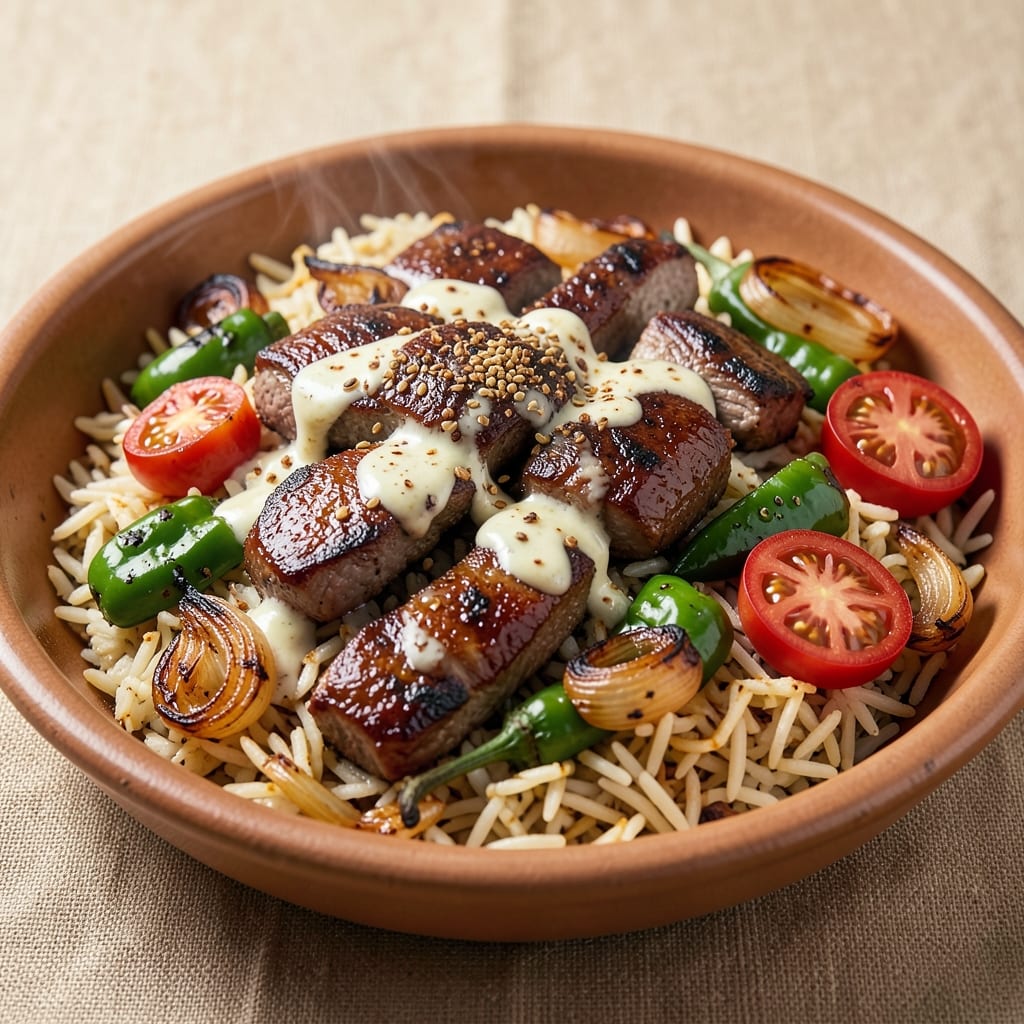
This Arabic kabsa rice recipe transforms simple ingredients into a fragrant, spice-infused masterpiece that defines Saudi Arabian comfort food. 🌟 The secret lies in the baharat spice blend—equal parts cinnamon, cardamom, and cloves—that infuses tender lamb with warm, aromatic depth while the rice absorbs rich, golden broth. Unlike other spiced rice dishes, kabsa gets its signature crunch from toasted barberries, adding a tart, nutty contrast that keeps every bite exciting.
The process begins with marinating lamb in yogurt and baharat for hours, ensuring maximum flavor penetration, then slow-cooking until the meat melts effortlessly from the bone. Meanwhile, basmati rice simmers in the same fragrant broth, developing a delicate texture that clings to each grain. What sets this apart is the final touch: crispy barberries that add both texture and a bright, citrusy note to balance the richness.
What you'll end up with is a dish that's restaurant-quality at home—golden rice studded with tender lamb, fragrant spices, and bursts of toasted barberry crunch. The aroma alone will fill your kitchen with warmth, while the flavors deliver layers of complexity that make it worth the effort. This is the kind of meal that feels like a celebration, even on a weeknight.
Perfect for gatherings or family dinners, kabsa pairs beautifully with sambousek (Arabic fried pastries) or a fresh salata khadra (parsley salad) to round out the meal. The recipe scales effortlessly, making it ideal for feeding a crowd while maintaining that homestyle authenticity. Let's get started on creating this aromatic centerpiece.
Ingredients for arabic kabsa rice
Sixteen aromatic ingredients blend to create this iconic Saudi Arabian centerpiece.
| Ingredient | Amount | Notes |
|---|---|---|
| Lamb Shoulder 🐑 | 3 lb | Bone-in for maximum flavor |
| Plain Yogurt 🥛 | 1 cup | Full-fat for richness |
| Basmati Rice 🌾 | 2 cups | Uncooked, long-grain preferred |
| Ground Cinnamon 🌿 | 1 tsp | Freshly ground for warmth |
| Green Cardamom Pods 🌿 | 8 whole | Lightly crushed before adding |
| Whole Cloves 🌶️ | 4 whole | Lightly toasted for depth |
| Barberries 🍇 | ½ cup | Dried, toasted until crisp |
| Onion 🧅 | 1 whole | Yellow, finely chopped |
| Garlic Cloves 🧄 | 6 cloves | Peeled and minced |
| Fresh Ginger 🌿 | 1 tbsp | Grated, fresh preferred |
| Chicken or Lamb Broth 💧 | 4 cups | Homemade or quality store-bought |
| Salt 🧂 | 1 ½ tsp | Diamond Crystal preferred |
| Ground Black Pepper 🌶️ | ½ tsp | Freshly ground for heat |
| Extra-Virgin Olive Oil 🫒 | ¼ cup | For toasting spices |
| Fresh Parsley 🌿 | ¼ cup | Chopped, for garnish |
The lamb shoulder is the heart of kabsa—bone-in cuts deliver the deepest flavor, while Costco or specialty Middle Eastern markets often carry the best quality. Look for well-marbled meat with a vibrant red hue; avoid any with a strong metallic or off odor. The barberries are non-negotiable—they provide that signature crunch and tartness. Middle Eastern grocery stores like Almar or Marzeena stock them year-round, though they can be found in specialty spice shops if needed. For the baharat blend (cinnamon, cardamom, cloves), toast the whole spices in olive oil first to deepen their aroma before grinding—this step transforms ordinary spices into something extraordinary.
No lamb shoulder? Beef chuck roast works in a pinch, though the flavor profile will differ slightly. Substituting barberries? Dried cranberries or chopped dried apricots add sweetness but lack the tart contrast—use sparingly. Fresh ginger is ideal, but ground ginger at half the amount suffices if you're short on time. The yogurt must be plain and full-fat; Greek yogurt works beautifully here. For the broth, homemade is best, but Swanson or Pacific Foods brands provide reliable store-bought options. The rice? Basmati is non-negotiable—its long grains hold up perfectly to the rich broth and spices.
Lamb and rice reheat beautifully—4-5 days in the fridge, 3 months frozen. Portion the lamb separately from the rice to maintain texture. Store barberries in an airtight container to preserve their crispness. For a quick weeknight shortcut, pre-cook the lamb and freeze it with the marinade, then reheat and finish with fresh rice. The dish tastes even better the next day as flavors meld, so double the batch if entertaining—leftovers are a delight.
Why You'll Love This Recipe
- One-Pot Magic: I swear by this recipe when I’m too tired to deal with multiple pans. The lamb and rice cook together in the same pot—no chopping vegetables into tiny pieces, no fussing with separate sauces. Just brown the meat, add the spices, toss in the rice, and let it simmer. That’s it.
- Spice Symphony: Between the warm cinnamon, the floral punch of cardamom, and the tangy yogurt marinade, every bite is a little flavor explosion. The lamb stays tender while soaking up all those earthy, aromatic notes—like a hug in a bowl, but with way more protein.
- Weeknight Crowd-Pleaser: This feeds a family or impresses guests without stress. I’ve served it at potlucks, holiday dinners, and even lazy Sunday brunches. The rice is fluffy, the lamb melts in your mouth, and honestly? No one ever asks what’s in it—they just keep coming back for seconds.
- Budget-Friendly Feast: Lamb shoulder is affordable, and a single roast stretches across meals. I’ll make a big batch on Sunday, reheat portions all week, and still have leftovers for lunches. Plus, the yogurt and spices cost pennies compared to fancy sauces—big flavor, tiny price tag.
Step-by-step instructions for spiced lamb kabsa
This aromatic Arabian dish delivers tender lamb and nutty basmati rice infused with warm spices and tart berries.
🔥 Step 1: Toast Spices and Prepare the Lamb
Heat a heavy skillet over medium heat and add the 0.25 cup extra-virgin olive oil. Once shimmering, add the 8 whole green cardamom pods and 4 whole cloves, stirring constantly for 1-2 minutes until fragrant and lightly golden. Immediately remove from heat and let cool for 30 seconds—this prevents burning while developing deep aromatic notes.
Transfer the toasted spices to a small bowl. In the same skillet, add the 3 lb lamb shoulder and sear on all sides until deeply browned (4-5 minutes per side). The goal is to create a rich fond that will form the base of your sauce. Season generously with 1.5 tsp salt and 0.5 tsp ground black pepper while still hot.
👨🍳 Step 2: Build the Spiced Rice Base
In a large heavy pot with a tight-fitting lid, combine the 2 cups basmati rice with 4 cups chicken or lamb broth. Bring to a boil over high heat, then immediately reduce to a simmer, cover, and cook for 10 minutes without stirring. This initial step creates a flavorful broth that will infuse the rice.
After 10 minutes, stir in the toasted spices, 1 tsp ground cinnamon, 1 whole finely chopped onion, 6 minced garlic cloves, and 1 tbsp freshly grated ginger. Add the seared lamb shoulder and gently nestle it into the rice. Pour in the 1 cup plain yogurt and stir gently to distribute. The yogurt will create a creamy texture while balancing the rich lamb flavors.
🥘 Step 3: Layer and Simmer the Kabsa
Return the pot to a gentle simmer over low heat and cook uncovered for 45 minutes. After 30 minutes, sprinkle the 0.5 cup barberries evenly over the surface. These dried berries will toast and release their tart, slightly sweet flavor, creating the signature crunch of authentic kabsa.
Here's the critical moment: when the rice is tender but still has a slight bite (about 45 minutes total), remove the lamb and let it rest for 10 minutes. This resting period allows the juices to redistribute. Meanwhile, keep the rice at a gentle simmer, stirring occasionally to prevent sticking. The rice should be tender with a slight resistance in the center.
🔪 Step 4: Finish and Garnish
Using two forks, shred the rested lamb shoulder directly into the rice pot, breaking it into bite-sized pieces. Stir gently to combine, allowing the lamb juices to meld with the rice. Return to low heat for just 2-3 minutes to reheat through—this ensures every bite delivers both lamb and rice together.
Remove from heat and let sit covered for 5 minutes. Before serving, garnish generously with 0.25 cup chopped fresh parsley. The parsley adds a bright contrast to the rich, spiced lamb and rice. Serve immediately with warm flatbread or crusty naan to soak up every last bit of the aromatic sauce.
Pro Tips For Making Arabic Kabsa Rice
- BROWN THE LAMB FIRST: Get that pan deep golden before adding anything else—sizzling lamb shoulder for 8-10 minutes in batches releases meaty depth that plain yogurt alone can’t fix. I used to skip this, and the dish always tasted flat until I saw how much richer the sauce became afterward. ---
- SOAK RICE IN YOGURT: Toss washed basmati with full-fat plain yogurt (about ¼ cup per pound of rice) for 30 minutes before cooking—this keeps grains separate and adds creamy body without mush. Sounds weird, but it works: my rice now stays fluffy even when simmered in lamb broth. ---
- CRUSH WHOLE SPICES: Lightly crush green cardamom pods (not powder!) and toast them in the same pot as cinnamon for 30 seconds—this releases their aroma into the oil before the lamb goes in. I learned this the hard way: whole pods left intact just float like decorative garnish. ---
- SIMMER RICE COVERED LOW: Once broth hits the rice, drop heat to lowest possible and resist peeking—steam does the work, not boiling. I used to check every 5 minutes, and the rice would either dry out or turn gluey. Now I walk away for 20 minutes, then just fluff with a fork.
Flavor customization for this arabic kabsa rice
Spice Blend Variations
While traditional kabsa relies on baharat (cinnamon, cardamom, cloves), you can experiment with regional twists. For a Yemeni-inspired version, swap in 2 tsp ground fenugreek and 1 tsp ground coriander—these add earthy depth that complements the lamb beautifully. I’ve found that 1 tsp ground allspice works wonders too, giving a warm, slightly sweet note that pairs perfectly with the tart barberries. 🌶️
Sweet-Tart Balance
The barberries provide the signature tartness, but you can adjust this balance to taste. For a sweeter kabsa, add 1 tbsp honey to the broth while simmering—this caramelizes slightly and enhances the lamb’s richness. If you prefer extra tang, increase the barberries to ⅔ cup and add 1 tsp lemon zest to the final garnish. The key is to let the flavors meld during the 45-minute simmer so they integrate seamlessly.
Protein Swaps
While lamb is traditional, chicken thighs work beautifully for a lighter version—just marinate them in yogurt and baharat for at least 4 hours to ensure deep flavor. For a beef kabsa, use a 3-lb chuck roast and increase the cooking time to 1.5 hours after adding the rice. I’ve also made a vegetarian kabsa with mushrooms and chickpeas, boosting the umami with 1 tbsp soy sauce in the broth. The texture contrast remains the star!
Rice Texture Tweaks
For extra-firm rice, rinse the basmati 3 times before cooking to remove excess starch, then simmer in 3 cups broth instead of 4. For softer rice, use 4.5 cups broth and reduce the simmer time to 35 minutes. If you love crispy edges, spread the rice in a thin layer on a baking sheet after cooking, then broil for 2-3 minutes—this adds a delightful texture contrast. ✨
Garnish Upgrades
Fresh parsley is classic, but cilantro adds a brighter, almost citrusy note that cuts through the richness. For a smoky touch, sprinkle ½ tsp smoked paprika over the top before serving. I also love finishing with toasted slivered almonds (¼ cup) for extra crunch—this adds a nutty dimension that balances the lamb’s richness. The key is to garnish just before serving so the flavors stay vibrant.
Nutrition facts
Frequently asked questions
Can I use chicken instead of lamb in this kabsa recipe?
Chicken thighs work beautifully for a lighter version, but marinate them in yogurt and baharat for at least 4 hours to ensure deep flavor penetration. For best results, use bone-in thighs—they stay juicier during the long simmer. The cooking time remains the same (45 minutes), but check for doneness at 35 minutes since chicken cooks faster than lamb.
What's the secret to getting that perfect crispy barberry texture?
Toast the barberries in a dry skillet over medium heat for 2-3 minutes until they're fragrant and slightly puffed, then sprinkle them over the kabsa during the last 30 minutes of cooking. This ensures they crisp up beautifully while absorbing the lamb's rich flavors. Pro tip: Keep them whole for maximum crunch—chopping them too small makes them soften into the rice.
How do I make kabsa ahead of time without drying out the rice?
Kabsa reheats beautifully! Cook the lamb and rice separately, then store them in airtight containers in the fridge for 4-5 days or freeze for 3 months. To reheat, warm the lamb with a splash of broth or water until steaming hot, then mix with the rice. For extra moisture, sprinkle 1 tsp yogurt over the rice before reheating—this helps restore that creamy texture.
Can I substitute barberries if I can't find them?
In a pinch, use dried cranberries (¼ cup) for sweetness or chopped dried apricots (⅓ cup) for a fruity note, but they won't replicate the tart, nutty crunch. For a savory alternative, try toasted pine nuts (¼ cup) or crushed fried onions