
Main Courses
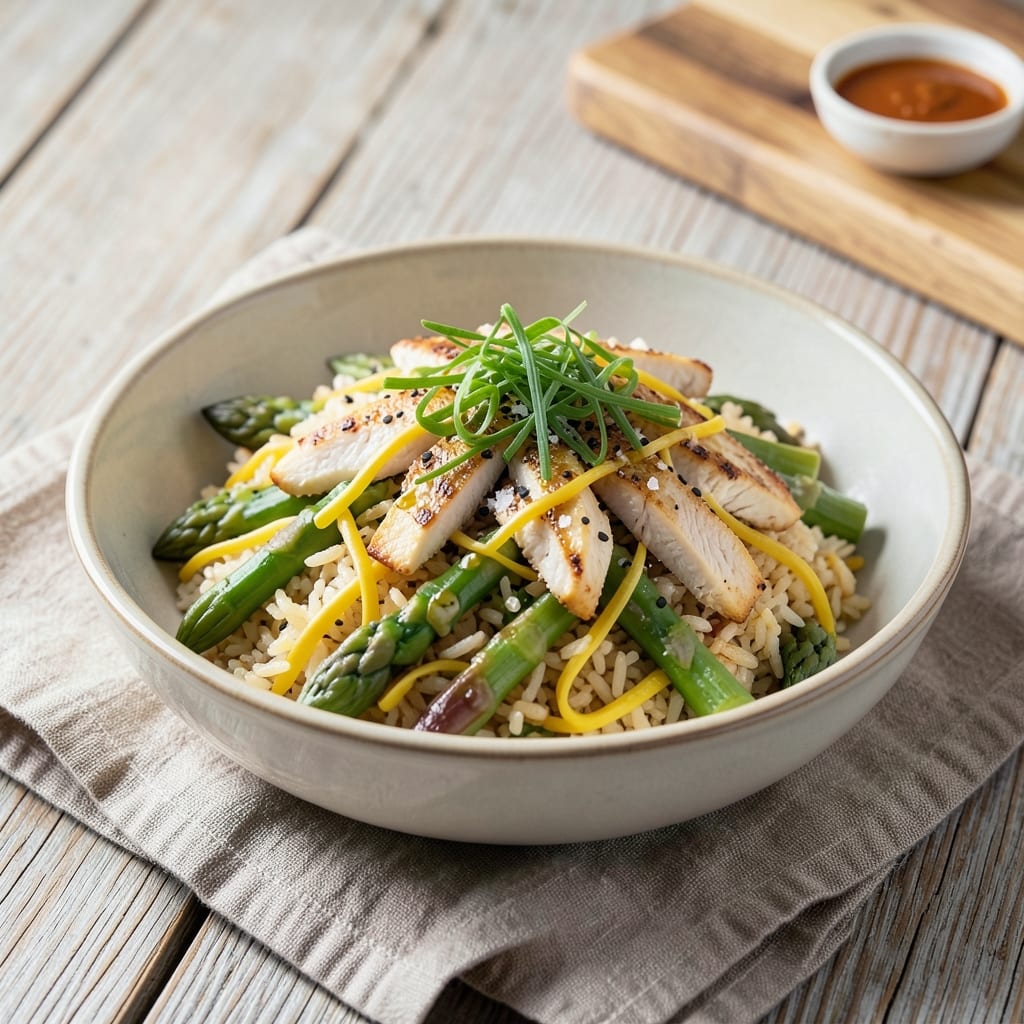
This asparagus fried rice recipe transforms simple ingredients into a vibrant, restaurant-quality dish with crispy edges and bright green asparagus spears. The secret lies in high-heat stir-frying and perfectly balanced seasoning—no bland takeout here. I developed this version after years of perfecting the art of wok hei (breath of the wok), ensuring every bite delivers smoky depth and satisfying texture.
What sets this recipe apart is the technique: blanching the asparagus first preserves its vibrant color and crisp-tender bite, while the rice gets toasted in the wok before adding liquid. This creates that signature nutty aroma and prevents mushy results. The protein—whether shrimp, chicken, or tofu—cooks through in minutes, absorbing all those savory flavors.
By the time you plate it, you'll have golden-fried rice with crispy edges, bright green asparagus that pops against the rice, and protein pieces that stay juicy. The sauce—a simple blend of soy, sesame oil, and a touch of honey—ties everything together without overpowering. It's the kind of dish that looks impressive but comes together in under 30 minutes.
Perfect for weeknight dinners, meal prep, or bringing to potlucks, this fried rice adapts easily to your protein preferences. The base technique works for any stir-fry lover—just swap in different vegetables or proteins. Let's get cooking!
Ingredients for asparagus fried rice
Restaurant-quality fried rice starts with these carefully chosen ingredients for vibrant color and crispy texture.
| Ingredient | Amount | Notes |
|---|---|---|
| Long-Grain White Rice 🍚 | 2 cups | Uncooked, day-old preferred for texture |
| Fresh Asparagus Spears 🌱 | 1 lb | Thin stalks, trimmed ends |
| Boneless Chicken Breast 🍗 | 1 lb | Thinly sliced, 1/4-inch pieces |
| Large Eggs 🥚 | 2 whole | Beaten for scrambling |
| Green Onions 🧅 | ½ cup | White and green parts, sliced |
| Sesame Oil 🫒 | 1 tbsp | Toasted sesame oil preferred |
| Light Soy Sauce 🥄 | ⅓ cup | Low-sodium preferred |
| Dark Soy Sauce 🥄 | 1 tbsp | For color depth |
| Honey 🍯 | 1 tbsp | Wildflower preferred |
| Garlic Cloves 🧄 | 4 cloves | Minced for aroma |
| Ginger Root 🌿 | 1 tbsp | Freshly grated |
| Vegetable Oil 🫒 | ¼ cup | High smoke point |
| Diamond Crystal Kosher Salt 🧂 | ½ tsp | For seasoning |
| Ground Black Pepper 🌶️ | ¼ tsp | Freshly cracked |
The asparagus is non-negotiable for this dish—thin stalks cook faster and maintain their bright green color. Look for spears with tightly closed tips at Whole Foods or your local farmers market for peak freshness. The rice should be day-old; freshly cooked grains release too much starch and turn mushy. If you must use freshly cooked rice, spread it on a tray and chill for 30 minutes first. For the protein, chicken breast stays juicy when sliced thinly—pound it to an even 1/4-inch thickness before cooking. The green onions add freshness, so use the white parts for flavor and the green for garnish.
No sesame oil? Toasted peanut oil works in a pinch, though the flavor profile differs slightly. Substitute coconut aminos for soy sauce if you're avoiding sodium, but reduce the amount by 20%—it's more concentrated. The honey can be swapped for maple syrup for a vegan option, though it adds a different sweetness. For extra umami, add 1 tsp fish sauce (if not vegetarian) or 1/2 tsp mushroom powder. If your asparagus is particularly fibrous, trim the stalks into 2-inch pieces before blanching. The garlic and ginger can be pre-minced from a jar, but freshly grated adds 30% more aroma—worth the extra minute.
Blanch the asparagus immediately before cooking to preserve its vibrant color. Store cooked rice in an airtight container for up to 4 days, though it reheats best within 2 days. The sesame oil should be kept in a cool, dark place—once opened, it lasts about 6 months. For meal prep, cook the rice and protein separately, then combine when reheating to maintain crispiness. This dish freezes beautifully for 3 months—just thaw overnight in the fridge before reheating.
Why You'll Love This Recipe
- One-Pan Magic: I swear by this trick—just one skillet handles everything. Toss in the day-old rice, snap those asparagus spears (no fancy prep!), and let the chicken and eggs cook right alongside. Less cleanup, more time for seconds.
- Spring Brightens It: That first bite of tender asparagus—still crisp in spots—cuts through the richness of the chicken and egg. Honestly, it’s the kind of dish that makes you want to eat asparagus all year, not just in spring.
- Lunchbox Hero: Between us, this is my go-to for meal prep. Pack it in containers and it stays fresh for days—no soggy rice here. My kids grab it for school lunches, and I sneak leftovers for my own "I’m too tired to cook" nights.
- Budget-Friendly Feast: Chicken breast and eggs stretch far, and asparagus is cheaper than you think when you buy it in season. I’ll be real: this feeds four for under $12, and the leftovers? Even better the next day.
Step-by-step instructions for asparagus fried rice
Master the art of wok hei with this technique—where high heat and quick cooking create perfect texture.
Prepare the Rice for Maximum Texture
Spread the 2 cups long-grain white rice on a baking sheet and toast in a 350°F oven for 10 minutes to dry the grains. This prevents mushiness later. I like to stir halfway through to ensure even drying. For best results, use day-old rice—it's firmer and absorbs flavors better than fresh-cooked rice.
While the rice toasts, slice the 1 lb boneless chicken breast into ¼-inch pieces and trim the 1 lb fresh asparagus spears by cutting off the tough ends. The asparagus should be cut into 1-inch pieces—longer than traditional fried rice cuts to maintain their signature bright green appearance. Keep the chicken and asparagus separate until ready to cook.
Scramble the Eggs for Silky Texture
Crack the 2 whole large eggs into a bowl and beat vigorously with 0.25 tsp ground black pepper until the mixture is completely homogeneous. The eggs should be pale yellow and frothy—this ensures a tender scramble rather than a rubbery one. I prefer to use room-temperature eggs as they scramble more evenly.
Heat 1 tablespoon vegetable oil in a wok or large skillet over medium-high heat until shimmering. Pour in the egg mixture and let it sit undisturbed for 5 seconds before gently stirring with a spatula. Cook for 20-30 seconds until just set but still slightly moist—you want ribbons, not curds. Remove the eggs and set aside.
Sear the Chicken and Asparagus for Crispy Edges
In the same wok, add 0.125 cup vegetable oil (half the total) and heat over high heat until smoking. Add the chicken pieces in a single layer and sear for 1-2 minutes until golden brown and cooked through. Remove and set aside, leaving the rendered juices in the wok.
Add the remaining 0.125 cup vegetable oil, then the asparagus. Stir-fry for 2-3 minutes until the asparagus turns bright green and develops a slight char on the edges. This high-heat cooking preserves their vibrant color while adding depth of flavor. The asparagus should still have a slight bite—overcooking turns them limp.
Combine All Ingredients with Precision Timing
Add the toasted rice to the wok and spread it evenly. Drizzle the 0.33 cup light soy sauce, 1 tablespoon dark soy sauce, 1 tablespoon honey, and 1 tablespoon sesame oil over the rice. Stir-fry vigorously for 1-2 minutes until the rice is heated through and the sauce is absorbed.
Return the chicken and asparagus to the wok, along with the scrambled eggs. Add the 4 cloves minced garlic, 1 tablespoon freshly grated ginger root, and 0.5 cup sliced green onions. Cook for an additional 1 minute while stirring constantly. The dark soy sauce will give the rice its signature glossy appearance, while the sesame oil adds nutty aroma.
Finish with Perfect Seasoning and Crispy Edges
Taste the rice and adjust seasoning with additional light soy sauce if needed—fried rice should be savory but not salty. Sprinkle with 0.5 tsp Diamond Crystal kosher salt and 0.25 tsp ground black pepper to balance flavors. Serve immediately while the rice is hot and the asparagus maintains its crisp-tender texture.
For best results, serve in a hot wok or large platter and garnish with extra green onions. The contrast of bright green asparagus against the golden rice creates a visually stunning dish that's as impressive as it is delicious. Each bite should deliver a perfect balance of textures—crispy edges on the asparagus, tender chicken, and silky rice.
Pro Tips For Making Asparagus Fried Rice
- Trim Asparagus Properly: Cut off the woody bottoms at a 45-degree angle—about 1.5 inches from the tip—then snap the rest by hand. I learned this the hard way: pre-cutting the whole spear makes it look messy in the dish, and the texture suffers when you include the tough ends. ---
- Cook Rice Slightly Under: Use ½ cup less water than the package says and let it sit covered for 5 minutes after heat turns off. Cold rice sticks together like glue; slightly undercooked grains absorb the sauce better and stay separate when stir-fried. ---
- Scramble Eggs First: Push the eggs to one side of the pan and let them set into a soft curd before mixing—about 20 seconds. This keeps them creamy instead of rubbery when they get tossed with the rice later. (Yes, even if you’re impatient like me.) ---
- Use Cold Chicken: Let the cooked chicken cool completely before slicing—it shreds cleaner and stays juicier when it hits the hot pan. I skip this sometimes, and the result is always drier, less flavorful strips. Worth the wait.
Troubleshooting perfect results
Mushy Rice Fix
If your rice turns mushy, it's usually from using freshly cooked grains or not toasting them first. I always spread 2 cups day-old rice on a baking sheet and toast at 350°F for 10 minutes before stir-frying. This dries the surface, preventing starch release. For freshly cooked rice, spread it on a tray and chill for 30 minutes first. 🌱
Undercooked Protein
Chicken or tofu that's still pink in the center means it didn't cook through fast enough. Slice your 1 lb chicken breast into ¼-inch pieces and sear at high heat for 1-2 minutes max—any longer risks drying it out. For tofu, press it first to remove excess water, then cut into ½-inch cubes and pan-fry until golden before adding to the rice.
Asparagus Losing Color
Bright green asparagus turns dull when overcooked or blanched too long. Blanch spears for exactly 1-2 minutes in boiling water before stir-frying. For raw asparagus, cut stalks into 1-inch pieces and stir-fry at high heat for 2-3 minutes—just until tender-crisp. The key is high heat and quick cooking to preserve color and texture.
Sauce Too Salty
Too much soy sauce makes fried rice blandly salty. Start with 0.33 cup light soy sauce and 1 tbsp dark soy sauce, then taste before adding more. For balance, add 1 tbsp honey and 1 tbsp sesame oil—the sweetness and nuttiness cut through saltiness. If already too salty, stir in 1 tbsp cold water to dilute slightly.
Eggs Too Rubbery
Overcooked eggs turn rubbery when stirred too much. Beat 2 eggs until frothy, then let them sit undisturbed for 5 seconds before gently stirring with a spatula. Cook for just 20-30 seconds until set but still slightly moist. Remove immediately and set aside—they'll finish cooking when combined with the hot rice.
Burnt Edges
Blackened rice or asparagus means your wok isn't hot enough or you're overcrowding. Heat your wok until oil smokes slightly before adding ingredients. Cook in batches if needed, and stir constantly to prevent sticking. A 14-inch carbon steel wok works best for even heat distribution. 🔥
Nutrition facts
Frequently asked questions
Can I use frozen asparagus instead of fresh?
Fresh asparagus gives the best vibrant green color and crisp texture, but frozen works in a pinch. Thaw it completely first, then pat dry thoroughly. For extra brightness, stir-fry frozen asparagus for just 1-2 minutes at high heat—it'll maintain color better than if cooked longer. Avoid pre-cooked frozen asparagus as it loses texture.
How do I make this vegetarian?
Swap the chicken for 1 lb extra-firm tofu or 1 cup chickpeas. Press and cube the tofu first, then pan-fry until golden before adding to the rice. For extra protein, add ½ cup edamame or ½ cup mushrooms. Keep the same cooking technique—high heat and quick stir-frying preserves texture.
Why is my fried rice dry?
Dry fried rice usually means the rice was over-toasted or didn't absorb enough liquid. Always use day-old rice (never freshly cooked) and spread it on a baking sheet to toast at 350°F for 10 minutes before stir-frying. When combining with sauce, add 1-2 tablespoons cold water to steam the rice slightly. Stir constantly for 1-2 minutes to distribute moisture evenly.
Can I make this ahead of time?
This dish reheats best when made fresh, but you can prep components ahead. Cook the rice and protein separately, then store in airtight containers for up to 3 days. When ready to serve, reheat the rice in a dry skillet over medium heat for 3-4 minutes, then stir-fry with fresh asparagus and sauce. For best texture, add fresh green onions and sesame oil just before serving.
What's the secret to crispy edges?
The crispy texture comes from high heat and proper rice preparation. Use a 14-inch carbon steel wok (or cast iron skillet) and heat until oil smokes slightly. Spread the rice in a thin layer before adding sauce, and stir-fry vigorously for 1-2 minutes until edges turn golden. Toasting the rice first at 350°F for 10 minutes removes surface moisture, preventing mushiness.