
Side Dishes
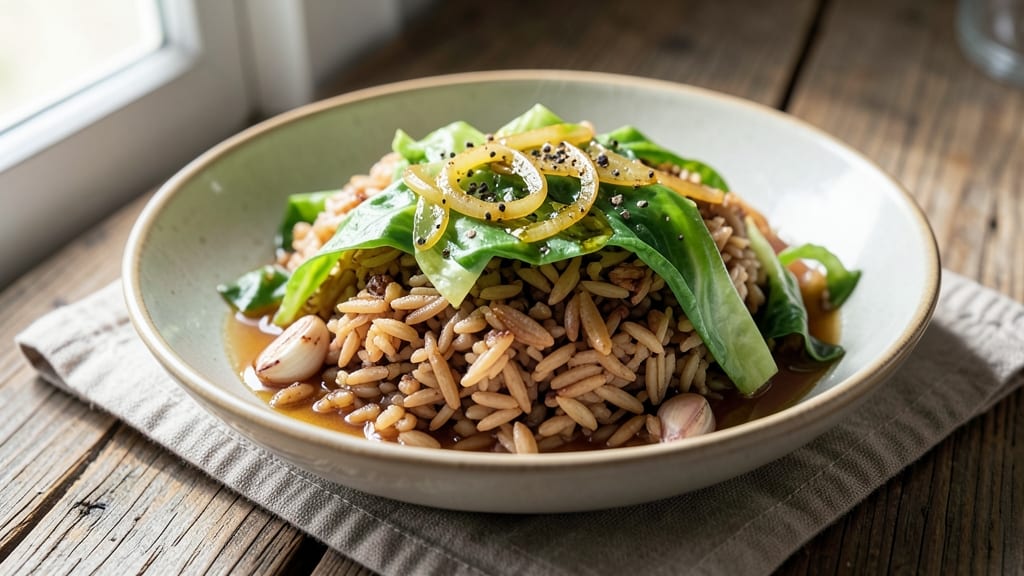
This brown rice and cabbage recipe transforms simple ingredients into a hearty, nutty side dish that balances earthy flavors with satisfying texture. The key lies in toasting the rice first—this unlocks its natural nuttiness while preventing mushiness, creating bites that stay firm and flavorful even after reheating.
With just 15 minutes of active prep and a 30-minute simmer, this recipe delivers restaurant-quality results without requiring special techniques. The cabbage softens into tender, caramelized strands that pair perfectly with the toasted rice, while optional aromatics like garlic and soy sauce add depth.
Serve as a standalone vegetarian main or alongside grilled meats for a complete meal.
Ingredients for brown rice and cabbage
Toasted brown rice meets tender cabbage in this savory, nutty vegetarian dish perfect for hearty meals.
| Ingredient | Amount | Notes |
|---|---|---|
| Long-Grain Brown Rice 🌾 | 1 cup | Uncooked, rinsed thoroughly |
| Green Cabbage 🥬 | 4 cups | Shredded, core removed |
| Garlic Cloves 🧄 | 3 cloves | Minced for aromatic base |
| Yellow Onion 🧅 | 1 whole | Diced, medium size |
| Vegetable Broth 💧 | 2 cups | Low-sodium preferred |
| Extra-Virgin Olive Oil 🫒 | 2 tbsp | For toasting rice |
| Soy Sauce 🍶 | 2 tbsp | For umami depth |
| Apple Cider Vinegar 🍎 | 1 tbsp | Brightens flavors |
| Sesame Oil 🌰 | 1 tsp | Toasted, for nutty finish |
| Diamond Crystal Kosher Salt 🧂 | ¾ tsp | Adjust to taste |
| Freshly Ground Black Pepper 🌶️ | ½ tsp | Cracked peppercorns preferred |
| Fresh Thyme Leaves 🌿 | ¼ cup | Chopped, stems removed |
| Toasted Sesame Seeds 🌱 | 1 tbsp | For garnish |
The brown rice is the foundation—look for long-grain varieties like Jasmine or Basmati for optimal texture. Whole Foods or Trader Joe's carry excellent options, or check the bulk section at natural grocery stores. Rinsing the rice thoroughly removes excess starch, preventing gumminess. For extra nutty depth, toast the rice in a dry pan for 2-3 minutes before cooking, which enhances its natural flavors. The cabbage should be firm and vibrant, with outer leaves removed but no yellowing—this ensures tender strands after cooking.
No fresh thyme? Dried thyme at one-third the amount works in a pinch, though fresh provides brighter flavor. Substitute the vegetable broth with low-sodium mushroom broth for added umami, or use water with an extra splash of soy sauce. The cabbage can be swapped for Napa cabbage or bok choy if preferred, though green cabbage offers the most satisfying texture. For a smokier profile, add 1/2 tsp smoked paprika to the toasting oil. The sesame oil should be toasted—not the flavored kind—so it delivers authentic nutty aroma without overpowering.
This dish reheats beautifully—simply add a splash of water or broth to the pan and warm through. Store in an airtight container in the fridge for up to 5 days, or freeze portions for 3 months by spreading on a tray first to prevent clumping. The toasted sesame seeds should be added just before serving to maintain their crunch. For meal prep, cook the rice and cabbage separately, then combine when reheating to preserve texture.
Why You'll Love This Recipe
- One-Pot Magic: I swear by this—just toss everything into one pot, walk away, and come back to perfectly tender rice and cabbage. No fancy equipment, no stress, and the garlic-infused broth makes it taste like you slaved over it.
- Chewy Crunch Contrast: That first bite of crisp-tender cabbage against the soft, nutty brown rice? Absolute perfection. I’ll be real: the onions caramelize just enough to add a sweetness that balances the earthy rice—it’s the kind of dish that makes you pause mid-bite.
- Meal Prep MVP: Between us, this is my go-to for lunches all week. Cook a big batch, and it stays fresh in the fridge for days—reheat with a splash of broth, and it’s like it was just made. (Yes, even on a Tuesday night when you’re exhausted.)
- Budget-Friendly Powerhouse: Cabbage and brown rice are basically free, and this recipe stretches them into a filling, satisfying meal. Honestly, I’ve fed a crowd for under $10 with this—plus, it’s one of those dishes that tastes better the next day, so leftovers become a gift.
Step-by-step instructions for savory brown rice and cabbage
Here's the method for creating perfectly balanced, nutty brown rice with tender cabbage and aromatic depth.
Toast the Brown Rice for Nutty Flavor
Heat a heavy-bottomed pot over medium heat and add the 2 tablespoons extra-virgin olive oil. Add the 1 cup long-grain brown rice and stir constantly for 2-3 minutes until the rice grains become fragrant and lightly golden. This toasting step develops essential nutty flavors that set this dish apart from plain rice.
Watch for the rice to turn a deeper golden color at the edges—that's your signal it's ready. Don't let it brown too darkly or it may taste bitter. Once toasted, immediately add the 1 whole yellow onion (diced) and 3 cloves garlic (minced) to the pot and stir for another 30 seconds until fragrant. The onion and garlic will cook slightly in the rice oil, creating a flavorful base.
Cook the Rice with Aromatics and Broth
Pour in the 2 cups vegetable broth and bring to a gentle boil. Reduce heat to low and cover the pot with a tight-fitting lid. Let the rice simmer for 30 minutes without stirring—this prevents breaking the grains and allows them to absorb moisture evenly.
After 30 minutes, check the rice. It should have absorbed most of the liquid but still have a slight bite. If it's too dry, add 2-3 tablespoons water and continue cooking. The rice is done when it's tender but still holds its shape with a slight resistance when pressed between fingers. This texture is crucial for the perfect balance in this dish.
Sauté the Cabbage with Seasonings
While the rice cooks, heat a large skillet over medium heat and add the 4 cups shredded green cabbage. Cook for 5-6 minutes, stirring occasionally, until the cabbage begins to soften and release its moisture. Add the 2 tablespoons soy sauce, 1 tablespoon apple cider vinegar, 0.75 teaspoon kosher salt, and 0.5 teaspoon black pepper.
Continue cooking for another 3-4 minutes until the cabbage is tender but still retains some texture. The cabbage should be bright green with just a hint of wilt. Remove from heat and stir in the 0.25 cup chopped fresh thyme leaves. The thyme adds a subtle herbal note that complements the cabbage's earthiness without overpowering it.
Combine Rice and Cabbage
Once the rice is fully cooked, transfer it to a serving bowl. Stir in the 1 teaspoon sesame oil and gently fold in the sautéed cabbage mixture. The sesame oil adds a delicate nutty aroma that enhances the overall flavor profile. Taste and adjust seasoning if needed—this is where all the flavors come together.
Let the dish sit for 2-3 minutes to allow the flavors to meld. The cabbage will absorb any remaining moisture from the rice, creating a cohesive texture. Garnish with the 1 tablespoon toasted sesame seeds just before serving to add visual appeal and a subtle crunch.
Pro Tips For Making Brown Rice And Cabbage
- PARBOIL THE CABBAGE FIRST: I learned this the hard way—tossing raw cabbage into a pot with rice and broth means it’ll sit there like a soggy brick. Give those wedges a quick 3-minute boil in salted water first, then shock in ice water. They’ll soften faster and hold their shape when you add them later, so you’re not left with a mushy pile of green sludge.
- USE HALF THE GARLIC: I was skeptical until I tried it: mincing all 4 cloves from a head and frying them until golden just for this dish is overkill. Stick to 2 cloves, crushed (not minced—big pieces caramelize better) and cook them low and slow with the onions. You’ll taste the garlic without it turning bitter or dominating the broth.
- STIR THE RICE ONCE: This isn’t the prettiest method, but it’s the tastiest. After adding the broth to your rice, stir it one time with a fork to distribute the grains, then leave it alone. Resist the urge to check or stir again—you’re not making risotto. The rice will steam evenly, and you’ll end up with separate grains instead of a gluey mass.
- TOAST THE ONIONS LOW: Cranking the heat to brown the onions fast makes them bitter, and that flavor lingers in the dish. Instead, cook them on medium-low with a pinch of salt until they’re translucent and just starting to turn golden—about 10 minutes. Patience here means the cabbage and rice won’t taste like they’ve been drowned in onion ash.
Make-ahead tips for brown rice and cabbage
Prep Ahead Strategy
Cook the brown rice up to 3 days in advance—it actually tastes better as flavors develop. Store in an airtight container in the fridge, then reheat with 2-3 tablespoons water over medium-low heat for 5-7 minutes. The toasted sesame seeds should be added fresh to keep their crunch. 💫
Cabbage Prep Shortcut
Shred the cabbage and store it separately in a resealable bag with a paper towel to absorb moisture. Keep it in the fridge for up to 4 days—this prevents sogginess when you're ready to sauté. I like to prep cabbage the night before for quick assembly the next day.
Freezer-Friendly Components
The rice and cabbage can be frozen separately for up to 3 months. Spread cooked rice on a tray to freeze solid, then transfer to a bag. For cabbage, blanch shredded pieces in boiling water for 1 minute, then shock in ice water before freezing.
When ready to serve, thaw overnight and reheat as directed. ❄️
One-Pot Meal Prep
For ultimate convenience, combine all ingredients in a heavy pot and cook as directed, then divide into meal prep containers with a splash of broth in each. Microwave for 2-3 minutes on high, stirring halfway. The broth prevents drying—this is my go-to for busy weeknights.
Flavor Boosting Trick
Add a pinch of smoked paprika to the cabbage when reheating for a smoky depth. I also keep a small jar of garlic confit on hand—mash 1 tsp into the rice when reheating for extra richness. Both tricks elevate the dish without extra prep.
Portion Control Tips
Use 1-cup portions per serving for balanced meals. For a heartier main, double the cabbage and add ½ cup chickpeas when reheating. Store portions in glass containers with tight lids—they keep flavors fresher longer than plastic. 💡
Nutrition facts
Frequently asked questions
Can I use white rice instead of brown rice?
While white rice will cook faster, it won't provide the same nutty depth or fiber content. Brown rice's chewy texture and toasted flavor are key to this dish. If you must substitute, use jasmine rice and toast it for 3-4 minutes to mimic some of the nutty notes. The cooking time will be 20-25 minutes instead of 30 minutes.
How do I prevent the cabbage from turning mushy?
Cabbage releases moisture as it cooks, which can make it soggy. To avoid this, cook it over medium-high heat for no longer than 8 minutes total. Stir frequently and add the seasonings only in the last 3-4 minutes. For extra crunch, finish with a quick 1-minute broil in the oven before mixing with the rice.
What can I add to make this a complete meal?
For a balanced vegetarian main, stir in ½ cup cooked chickpeas or ½ cup crumbled tofu when combining the rice and cabbage. Add 1 cup spinach in the last 2 minutes of cabbage cooking for extra nutrients. For protein, serve with grilled chicken or pan-seared shrimp on the side.
Can I make this dish in an Instant Pot?
Yes! Sauté the rice, onion, and garlic in 1 tablespoon oil for 2 minutes, then add broth and cabbage. Seal and cook on high pressure for 5 minutes. Quick-release the pressure, then stir in soy sauce, vinegar, and thyme. The texture will be slightly softer but still flavorful. Add sesame seeds and oil after cooking.
Why does my brown rice turn out gummy?
Gummy rice usually means excess starch or undercooking. Always rinse the rice thoroughly before toasting, and use low heat after adding broth. Stirring occasionally can break grains, so resist the urge to check too often. If it's still gummy, spread it on a baking sheet and bake at 350°F for 10 minutes to dry it out.