
Sauces & Condiments
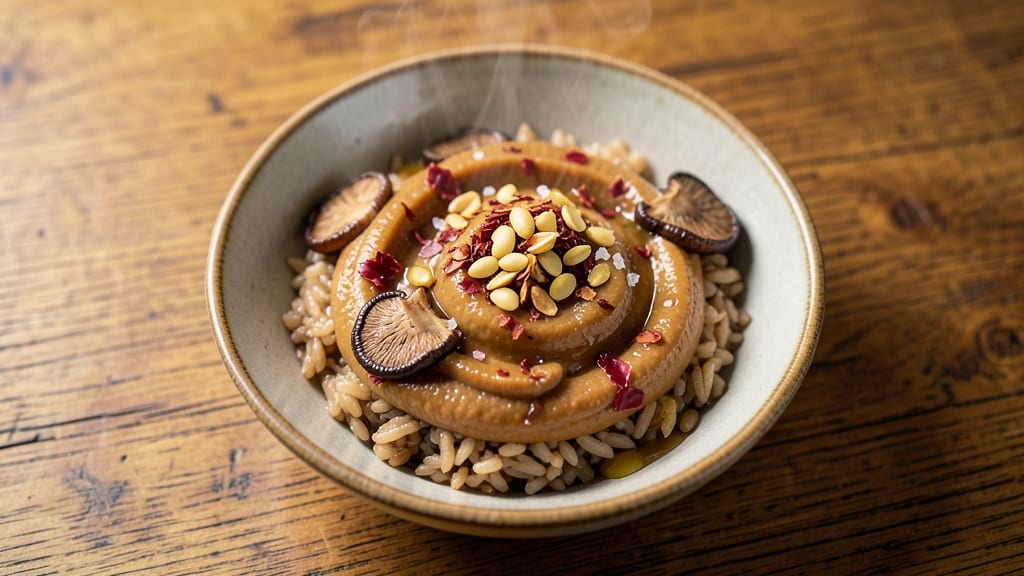
This brown rice miso paste recipe delivers deep umami flavor with a vegan, gluten-free foundation perfect for soups, dressings, and marinades. The fermentation process transforms simple brown rice, soybeans, salt, and koji into a rich, complex paste that elevates any dish—no prior experience needed.
What makes this version special is its approachable method, designed for home cooks to achieve restaurant-quality depth without shortcuts.
The result is a versatile paste with a balanced saltiness and sweetness, ideal for adding umami to stir-fries, miso soups, or even glazes. With proper storage, it keeps for months, making it a pantry staple worth the effort. Let’s create a foundation that transforms ordinary meals into extraordinary ones.
Ingredients for brown rice miso paste
Eight essential ingredients transform into a restaurant-quality umami foundation.
| Ingredient | Amount | Notes |
|---|---|---|
| Short-Grain Brown Rice 🌾 | 1 cup | Rinsed thoroughly before use |
| Yellow Soybeans 🌱 | ½ cup | Dried, whole soybeans preferred |
| Koji Culture 🍄 | 2 tbsp | High-quality koji powder or starter |
| Sea Salt 🧂 | 1 tbsp | Non-iodized preferred for fermentation |
| Non-Chlorinated Water 💧 | 1 cup | Filtered or spring water preferred |
| Rice Vinegar 🍶 | 1 tbsp | For pH balance during fermentation |
| Sesame Oil 🥜 | 1 tsp | Light toasted flavor addition |
| Dried Shiitake Mushrooms 🍄 | 2 whole | For umami depth (optional but recommended) |
The quality of your koji culture determines the depth of flavor—Miso Master or Koji Master brands are industry standards for consistency. Short-grain brown rice should be organic and unpolished to maintain nutritional integrity; Lundberg or Trader Joe's organic varieties work exceptionally well. Yellow soybeans can be sourced from bulk bins or specialty Asian markets, where they're often sold as whole beans. For the best results, use non-GMO soybeans if available, as they ferment more predictably. The shiitake mushrooms, though optional, add a complex umami layer—dried mushrooms from a vacuum-sealed package preserve their flavor best and are easy to find in the international aisle of most grocery stores.
No koji culture? Aspergillus oryzae starter can be purchased online, or you can use 1/4 cup miso paste as a substitute at half the amount, though the flavor profile will differ slightly. Short on soybeans? Lentils or chickpeas at double the quantity provide a similar texture but may alter fermentation dynamics. The rice vinegar is non-negotiable for pH balance—substituting lemon juice can introduce unwanted acidity. For the sesame oil, toasted sesame oil adds more depth than the lighter varieties, but any will work in a pinch. If you're using shiitake mushrooms, rehydrate them in the water you'll use for soaking the rice—this infuses the entire paste with their earthy essence.
This paste develops best when stored in an airtight container submerged in brine or water to prevent mold. Ferment for 2-4 weeks at room temperature, then transfer to the fridge where it'll keep for up to 12 months. The paste will continue to mature over time, deepening in flavor. For best results, portion into small jars—this makes it easy to use as needed without exposing the entire batch to air. If you notice any off odors or mold, discard immediately; proper fermentation should yield a rich, slightly sweet aroma reminiscent of fermented soy and rice.
Why You'll Love This Recipe
- No Fermentation Fuss: I’ll be real—this miso paste looks intimidating, but the koji culture does all the heavy lifting. Just mix the soaked brown rice, ground soybeans, and salt, then let it sit. No stirring, no stress—just patience.
- Umami Magic: That deep, savory punch? The koji culture and yellow soybeans create a rich, almost buttery flavor that’s way more complex than store-bought. Drizzle it on rice bowls, toss it into soups, or slather it on grilled fish—it’s the kind of taste that makes you go back for seconds.
- Pantry Powerhouse: Honestly, this stuff lasts forever in the fridge, and a little goes a long way. I keep a jar on hand for quick weeknight meals, last-minute marinades, or even as a glaze for roasted veggies. No waste, just flavor.
- Budget Booster: Short-grain brown rice and soybeans are cheap staples, and this recipe turns them into something luxurious. I’ve made jars for under $5, and once it’s done, I use it in everything—saving money while eating like I’m at a high-end Japanese izakaya.
Step-by-step instructions for brown rice miso paste
Master this traditional fermentation process for a rich, complex miso paste perfect for soups and stir-fries.
Prepare the Base Ingredients
Begin by rinsing the 1 cup short-grain brown rice thoroughly under cold water until the water runs clear. This removes excess starch that could interfere with fermentation. Drain completely and transfer to a clean bowl. Add the 0.5 cup yellow soybeans and the 2 whole dried shiitake mushrooms, breaking the mushrooms into coarse pieces with your hands to release their umami depth.
In a separate bowl, combine the 2 tablespoons koji culture with 1 tablespoon sea salt. The koji contains beneficial enzymes that will break down the grains and soybeans during fermentation. Mix gently with a spoon until the salt is evenly distributed throughout the koji powder. This mixture will serve as the fermentation starter.
Combine and Ferment the Mixture
Transfer the rinsed rice, soybeans, and shiitake pieces to a large fermentation jar or airtight container. Sprinkle the salted koji mixture evenly over the top, pressing it down gently to ensure contact with all ingredients. The goal is to create a uniform mixture that will ferment evenly throughout.
Add the 1 cup non-chlorinated water and 1 tablespoon rice vinegar to the jar. The vinegar helps balance the pH, creating optimal conditions for fermentation. Stir thoroughly with a clean spoon until all ingredients are completely saturated. The mixture should be moist but not soupy—if it's too wet, add a few tablespoons of additional rice to absorb excess moisture.
Initiate Fermentation at Room Temperature
Cover the jar loosely with a clean cloth or breathable lid (not airtight) and place it in a warm, dark location. I recommend a spot around 75-80°F—this temperature range promotes active fermentation without risking mold growth. Let the mixture sit undisturbed for 24 hours. You'll notice the surface begin to develop a thin white film, which is a sign of beneficial microbial activity.
After 24 hours, stir the mixture gently once daily to redistribute any settled ingredients and prevent mold formation. The texture will begin to soften as the koji enzymes break down the rice and soybeans. This is when the fermentation process truly begins—patience is key. The mixture should remain at room temperature for a total of 3-5 days, depending on ambient conditions.
Refine and Age the Miso Paste
Once the mixture has fermented for 3-5 days, transfer it to a food processor or blender. Add the 1 teaspoon sesame oil and pulse until the texture becomes smooth and paste-like. The result should be thick, cohesive, and deeply aromatic with notes of fermented rice, soy, and umami-rich shiitake. If the paste is too thick, add 1-2 teaspoons of non-chlorinated water at a time until it reaches a spreadable consistency.
Transfer the miso paste to a clean, sterilized jar and store it in the refrigerator. For best flavor development, allow it to age for at least 2 weeks before using. The longer it ages, the more complex and rich the flavors will become. When ready to use, simply scoop out what you need and incorporate into soups, marinades, or dressings—this versatile paste will elevate any dish with its deep umami character.
Pro Tips For Making Brown Rice Miso Paste
- Soak the Rice Properly: I learned this the hard way—skipping a long soak means uneven fermentation. Cover your short-grain brown rice in non-chlorinated water for at least 12 hours (overnight works best), then drain thoroughly. The extra effort guarantees a smoother, more consistent paste.
- Steam the Soybeans Twice: Overcooked soybeans turn mushy, but undercooked ones won’t break down properly. First steam them until just tender (about 15 minutes), then mash them with a fork. Steam them again for 5 more minutes after mixing with koji—this ensures they’re fully integrated into the paste without turning to mush.
- Control the Koji Temperature: Koji culture thrives between 77–86°F (25–30°C)—any hotter, and it dies; too cold, and fermentation stalls. If your kitchen runs warm, place the mixture in a shallow tray (not a sealed jar) to allow airflow. I used to rush this and ended up with weak, bland miso.
- Salt Gradually, Not All At Once: Dumping all the sea salt at the start can halt fermentation. Instead, add half the salt with the koji, then sprinkle the rest in two more batches over the first 3 days. This keeps the culture active longer and balances the flavors more evenly—trust me, your taste buds will notice.
Essential equipment for this recipe
Fermentation Jar Essentials
Your fermentation jar is the heart of this process—I recommend a wide-mouth, glass quart jar with a breathable lid (like the Le Parfait Fermentation Jar). The wide mouth makes stirring easy, and the airlock lid prevents mold while allowing gases to escape.
For smaller batches, a mason jar with a loose cloth cover works too—just ensure it’s sterilized first. Avoid metal containers, as they can react with the acidic environment. 🍄
Koji Culture Tools
High-quality koji culture is non-negotiable for flavor depth. I use Miso Master koji powder (available online) because it’s consistent and potent. Store it in a cool, dark place in an airtight container to preserve its enzymes.
For measuring, a small silicone spatula ensures precision—2 tablespoons is exact, but don’t eyeball it. A digital kitchen scale (like the OXO Good Grips) helps if you’re scaling the recipe up or down. 🥄
Blender for Smooth Texture
A high-speed blender (like the Ninja BN601) is ideal for blending the fermented mixture into a silky paste. Avoid low-wattage blenders—they struggle with the fibrous texture of fermented rice and soybeans.
If you don’t have one, a food processor (like the Cuisinart DLC-6) works, but pulse in short bursts to avoid overheating. For small batches, a mortar and pestle can work in a pinch, though it’s labor-intensive. 💫
Storage Containers
Once your miso paste is ready, transfer it to sterilized glass jars with airtight lids (like Ball Mason jars). Submerge the paste in brine or water to prevent mold—this is key for long-term storage.
Label each jar with the date and store in the fridge (or a cool pantry if your kitchen stays below 70°F). For portioning, small silicone ice cube trays work perfectly—freeze extras for easy use in recipes. ❄️
Temperature Control
Fermentation thrives at 75-80°F, but most homes fluctuate. Use a fermentation thermometer (like the Aquarium Thermometer) to monitor your jar’s environment. If your kitchen runs cold, place the jar near a warm oven (with the light on) or use a seedling heat mat set to low.
Avoid direct sunlight—it can overheat the mixture and risk mold. A breathable cloth cover (like a clean kitchen towel) keeps dust out while allowing airflow. 🌡️
Optional: Shiitake Prep Tools
For the shiitake mushrooms, a small knife and cutting board are all you need—just break them into coarse pieces by hand. If you’re using dried mushrooms, rehydrate them in warm water first to soften them before adding to the fermentation mix.
A fine-mesh strainer helps drain excess water if needed. For extra umami, consider a mortar and pestle to crush the rehydrated mushrooms into a paste before mixing. 🍄
Nutrition facts
Frequently asked questions
Can I substitute white rice for brown rice in this miso paste?
While you can use white rice, brown rice is preferred for its nutty flavor and higher fiber content. The fermentation process will still work, but the texture may be slightly lighter and less complex. If substituting, use the same 1 cup measurement and expect a slightly faster fermentation time due to white rice's lower fiber content.
How do I know when the fermentation is complete?
The fermentation is ready when the mixture smells rich and slightly sweet, with no sour or putrid odors. After 3-5 days at room temperature, the rice and soybeans should be completely softened and the mixture should have a thick, paste-like consistency when blended. The color will deepen to a rich brown, and you'll notice bubbles forming on the surface.
What can I do if mold appears during fermentation?
If you see any mold (usually fuzzy spots), discard the batch immediately—mold can make the paste unsafe to eat. To prevent mold, ensure your jar is clean, use a breathable cover, and maintain a consistent temperature between 75-80°F. Stirring daily also helps prevent mold growth by redistributing ingredients and preventing dry spots.
How long will homemade brown rice miso paste last?
Properly stored in an airtight container submerged in brine or water, your miso paste will keep in the refrigerator for up to 12 months. The flavor continues to develop over time, becoming more complex with age. For best results, portion into small jars and use within 6 months for peak freshness. Freezing is also an option for longer storage.
What are the best ways to use this miso paste?
This versatile paste enhances soups, dressings, marinades, and glazes. Try it in miso soup (dissolve 1-2 tablespoons in hot water), as a glaze for grilled vegetables, or in a marinade for tofu or meat. It also works beautifully in salad dressings—just mix with olive oil and rice vinegar. Start with small amounts and adjust to taste, as miso is intensely flavorful!