
Main Courses
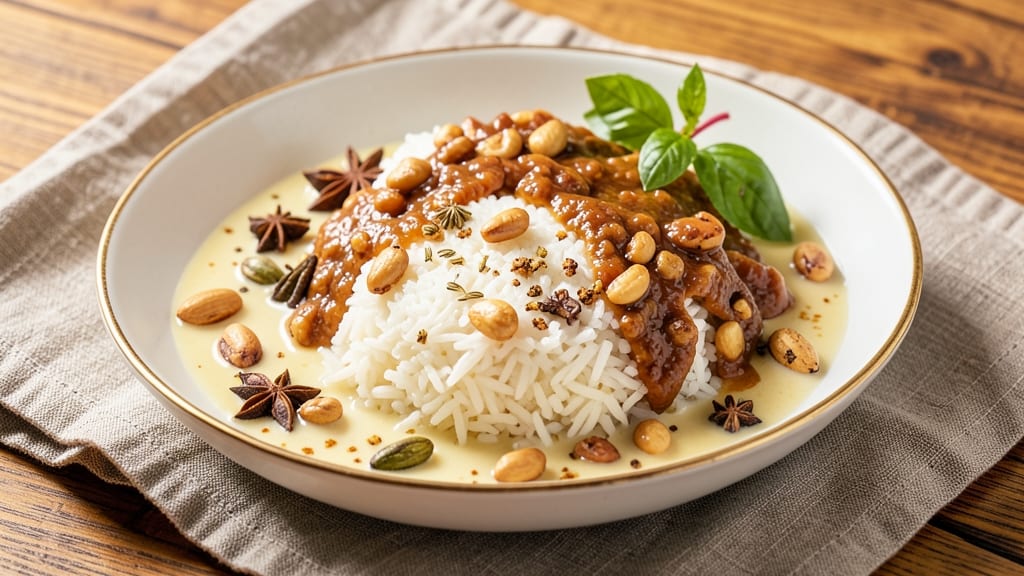
This Burmese rice recipe transforms fragrant jasmine rice into a vibrant five-spice pilaf with crunchy toasted peanuts—a dish that balances earthy warmth and nutty texture. The secret lies in slow-toasting whole spices until aromatic, then simmering them in coconut milk for depth that lingers long after the first bite.
Every grain absorbs the golden, spiced broth while peanuts add a satisfying crunch that elevates this everyday staple into something extraordinary.
Perfect for serving alongside grilled fish, spicy salads, or as a standalone centerpiece, this dish captures the essence of Burmese home cooking—where rice isn’t just a side but the heart of the meal.
The five-spice blend (star anise, cinnamon, cardamom, fennel, and cloves) creates a fragrant backbone, while toasted peanuts provide the perfect contrast to the soft, fluffy rice. It’s a dish that feels both comforting and sophisticated, proving that rice can be the star of any table.
Ingredients for burmese rice
Transform simple jasmine rice into aromatic five-spice pilaf with toasted peanuts and coconut milk.
| Ingredient | Amount | Notes |
|---|---|---|
| Jasmine Rice 🍚 | 1 ½ cups | Uncooked, long-grain preferred |
| Coconut Milk 🥥 | 1 ½ cups | Full-fat canned, shaken well |
| Peanuts 🥜 | ½ cup | Raw, unsalted, dry-roasted |
| Star Anise 🌿 | 1 whole | Whole pods, lightly crushed |
| Cinnamon Sticks 🍃 | 1 whole | 2-inch pieces, lightly crushed |
| Cardamom Pods 🌿 | 6 whole | Lightly crushed, seeds exposed |
| Fennel Seeds 🌶️ | 1 tbsp | Whole, lightly toasted |
| Cloves 🌿 | 4 whole | Whole, lightly crushed |
| Ginger Root 🧄 | 1 tbsp | Fresh, finely grated |
| Garlic Cloves 🧄 | 3 cloves | Peeled, finely minced |
| Vegetable Oil 🫒 | 2 tbsp | High smoke point preferred |
| Salt 🧂 | 1 tsp | Diamond Crystal kosher salt |
| White Peppercorns 🌶️ | ½ tsp | Freshly cracked |
| Lime Zest 🍋 | 1 tbsp | Fresh, finely grated |
The spices are the heart of this dish, so quality matters. Whole spices from Penzeys or your local Asian market deliver the deepest flavor—look for vibrant color and no signs of moisture. Toast them in a dry pan until fragrant (about 2 minutes), then crush lightly with a mortar and pestle or rolling pin. Star anise and cardamom should be the most aromatic; discard any pods that smell dull. For the peanuts, Trader Joe's or Costco offer the best value in unsalted varieties. Fresh ginger and garlic are non-negotiable here—they're the bright, zesty notes that cut through the richness of the coconut milk.
No star anise? Anise seeds work in a pinch, but the flavor will be subtler. Substituting dried ginger for fresh? Use half the amount. The coconut milk can be light if that's all you have, but full-fat delivers the creamiest texture. For extra crunch, toast the peanuts in a dry skillet until golden and fragrant—don't skip this step. The lime zest adds brightness, but if you're out, a splash of fresh lime juice at the end works too. Vegetable oil is ideal for toasting, but avocado oil has a higher smoke point if you're nervous about burning the spices.
Store the cooked rice in an airtight container for up to 4 days in the fridge, though it reheats best when fresh. The toasted peanuts keep for 6 months in a sealed jar at room temperature. For a restaurant-quality touch, serve with a sprinkle of extra lime zest and a side of chili crisp or sriracha for heat. This dish freezes beautifully—portion into containers with a layer of parchment between servings to prevent sticking.
Why You'll Love This Recipe
- I’ll be real: this tastes like a restaurant dish but costs next to nothing. A can of coconut milk, a handful of peanuts, and spices you already have—it’s the kind of recipe that makes you feel fancy without breaking the bank. Plus, leftovers reheat beautifully.
- One-Pot Wonder: I swear by this method—just rice, coconut milk, and spices simmering together until the grains are tender and the aroma fills the kitchen. No fancy techniques, no extra pots, and honestly? The cleanup is just rinsing one pan.
- Creamy-Spiced Magic: That first bite of fragrant jasmine rice kissed with star anise and cinnamon, then crunchy peanuts on top—it’s like a warm hug in a bowl. The coconut milk makes it rich without being heavy, and the spices linger just enough to feel special.
- Lunchbox Hero: Between us, this is my go-to for meal prep. The peanuts stay crispy even after days in the fridge, and the rice keeps its texture perfectly. Pack it in jars for work or school—it’s hearty enough to satisfy but light enough to not weigh you down.
Step-by-step instructions for five-spice jasmine pilaf
This aromatic Burmese-inspired rice delivers fragrant spice layers and nutty crunch in every bite.
Toast the Spices and Prepare the Aromatics
Heat a dry skillet over medium heat and add the 1 tbsp fennel seeds, 4 whole cloves, 1 whole star anise, 1 whole cinnamon stick, and 6 whole cardamom pods. Toast for 1-2 minutes until fragrant and lightly golden, shaking the pan frequently to prevent burning. The spices should smell warmly sweet with a hint of earthiness—this releases their essential oils and builds the pilaf's complex flavor foundation.
While the spices toast, finely grate the 1 tbsp ginger root and mince the 3 cloves garlic. Set these aside—they'll carry the pilaf's fresh, bright contrast to the warm spices. The ginger should be finely textured so it dissolves completely during cooking, while the garlic should be minced to disappear rather than provide texture.
Bloom the Spices in Oil and Sauté Aromatics
Transfer the toasted spices to a large saucepan and add 2 tbsp vegetable oil over medium heat. Let the spices bloom for 30 seconds until their aroma intensifies noticeably. This step is crucial—it develops the spice depth before adding the rice.
Add the grated ginger and minced garlic, cooking for 30 seconds until the garlic becomes translucent. You'll see the mixture turn a rich amber color and smell like a spice market—this is your cue to add the 1.5 cups jasmine rice. Stir to coat the grains completely in the fragrant oil, ensuring even flavor distribution throughout the pilaf.
Toast the Rice and Add Coconut Milk
Increase heat to medium-high and toast the rice for 2-3 minutes, stirring constantly, until it becomes translucent at the edges and releases a nutty aroma. This dry toasting prevents the rice from becoming mushy and builds the pilaf's signature toasted flavor.
Pour in the 1.5 cups coconut milk, stirring immediately to distribute it evenly. The milk should coat the rice grains completely—this creates the creamy texture that distinguishes this pilaf from plain rice. Add the 1 tsp salt and 0.5 tsp white peppercorns now, as the salt will dissolve completely during cooking.
Simmer to Perfect Texture
Bring the mixture to a gentle simmer, then reduce heat to low and cover with a tight-fitting lid. Let it cook undisturbed for 15 minutes. The rice will absorb the coconut milk gradually, developing a tender yet firm texture with a slight resistance when pressed with a spoon.
After 15 minutes, remove the lid and stir gently. The rice should be mostly tender but still have a slight bite. If the mixture appears dry, add 2-3 tablespoons hot water to maintain the creamy consistency. Replace the lid and cook for another 5 minutes, then remove from heat and let it rest, covered, for 10 minutes.
Finish with Lime Zest and Toasted Peanuts
After resting, fluff the rice gently with a fork and stir in the 1 tbsp lime zest. The citrus brightens the warm spice profile, cutting through the richness of the coconut milk. The zest should distribute evenly—you'll see it create tiny golden flecks throughout the pilaf.
In a dry skillet over medium heat, toast the 0.5 cup peanuts for 3-4 minutes until golden brown and fragrant. Immediately sprinkle them over the finished pilaf. The peanuts add a satisfying crunch that contrasts beautifully with the creamy rice. Serve immediately while the peanuts are still crisp.
Pro Tips For Making Burmese Rice
- TOAST THE SPICES FIRST: Star anise and cinnamon sticks need a quick sizzle in a dry pan—just 30 seconds—before hitting the coconut milk. I learned this the hard way when my rice tasted like a spice cabinet explosion instead of warm, aromatic perfection. Toasting deepens their flavor without burning them.
- USE FULL-FAT COCONUT MILK: The creamy richness of full-fat coconut milk (not light or cartoned) makes all the difference here. I was skeptical until I tried it—watery milk turns this dish into a sad, grainy mess. If you’re out of full-fat, mix powdered coconut milk with hot water first to avoid clumping.
- SIMMER THE RICE LOW: After adding the rice, drop the heat to a gentle simmer—you’re not boiling water, you’re making a fragrant, tender rice dish. I used to rush it, and the rice would turn mushy or dry out before the peanuts were toasted. A steady, low simmer keeps everything balanced.
- TOAST PEANUTS SEPARATELY: Skip the pre-toasted peanuts from the store—they’re often stale or overcooked. Toss a handful of raw peanuts in a dry pan over medium heat for 3-4 minutes until golden and fragrant. They’ll add crunch and depth that jarred peanuts can’t match. (Yes, even if you’re impatient like me.)
Regional styles of this dish
Classic Burmese Hsinbyushin
This iconic Burmese dish features fermented tea leaves (hsinbyushin) tossed with shredded cabbage, tomatoes, and garlic, served over steamed jasmine rice. The tea leaves provide a tangy, umami-rich flavor that pairs beautifully with the creamy coconut rice.
For authenticity, use black tea leaves fermented for at least 3 months—look for them at Asian markets or online specialty stores. 🌿
Spicy Mont Di Soup
Mont Di is a Burmese rice noodle soup with a spicy, fish-based broth that complements this rice perfectly. The soup features rice noodles, fish balls, and a chili-oil drizzle, creating a balance of heat and richness.
Serve the five-spice pilaf alongside for a hearty meal. I love adding crushed peanuts to the soup for extra texture, mirroring the crunch in the rice. 🌶️
Kya Phaw Rice Flour Dumplings
For a traditional Burmese touch, pair this rice with kya phaw—steamed rice flour dumplings filled with fish, garlic, and chili. These dumplings have a light, airy texture that contrasts beautifully with the creamy, spiced rice.
Use freshwater fish like tilapia or carp, finely minced with 1 tbsp fish sauce, 1 tsp chili flakes, and 2 minced garlic cloves for the filling. 🍚
Burmese Tea Leaf Salad
Create a refreshing salad by combining shredded cabbage, tomatoes, and fermented tea leaves with a dressing of lime juice, fish sauce, and chili. The sour, spicy notes cut through the richness of the coconut rice, making this a perfect side.
For extra crunch, add toasted sesame seeds or crushed peanuts—just like in the pilaf. 🥗
Grilled Fish with Turmeric
Burmese cuisine often features grilled fish marinated in turmeric, garlic, and tamarind. The earthy, citrusy flavors of the marinade complement the warm spices in this rice beautifully. Use mahseer or catfish, marinate for 30 minutes, then grill over medium-high heat for 4-5 minutes per side.
The smoky char adds another layer of depth to the meal. 🔥
Sweet Burmese Coconut Curry
Balance the spiced rice with a sweet coconut curry featuring potatoes, carrots, and chickpeas in a coconut milk-based sauce. The natural sweetness of the curry contrasts with the warm spices in the pilaf, creating a harmonious meal.
Use 1 tbsp Burmese five-spice blend (similar to the one in the rice) for consistency. 🥥
Nutrition facts
Frequently asked questions
Can I substitute jasmine rice with basmati?
Yes, but the texture will differ slightly. Basmati has a firmer bite and less fragrance, so you'll lose some of the delicate floral notes. For best results, use 1.5 cups basmati rice and add 1 extra tablespoon coconut milk to compensate for its drier texture. The spice profile will still shine through, though the final dish will be less aromatic.
What if I can't find star anise or cardamom?
No problem! For star anise, use 1 tbsp anise seeds (toasted first). Cardamom can be skipped entirely or replaced with 1 tsp ground ginger for warmth. The dish will still taste amazing, just with a slightly different spice profile. The key is toasting the remaining spices well to maximize their flavor.
How do I prevent the rice from becoming mushy?
Undercooking is the secret! Remove the rice from heat when it's just slightly underdone (about 15 minutes of simmering), then let it rest covered for 10 minutes. This resting time allows residual heat to finish cooking the rice evenly. Avoid lifting the lid during cooking—steam is what keeps the grains firm.
Can I make this dish vegetarian?
Skip the fish-based sides and focus on plant-based pairings like Burmese tea leaf salad or sweet coconut curry with chickpeas. The five-spice rice itself is already vegetarian. For extra protein, add tofu marinated in turmeric and lime or crispy chickpeas as a topping. The dish maintains its rich flavors while being completely plant-friendly.
Why do the peanuts need to be toasted fresh?
Toasted peanuts add both flavor and texture that store-bought versions can't match. Freshly toasted peanuts release their natural oils, creating a rich, nutty aroma and satisfying crunch. Store-bought peanuts often lose this freshness and may become oily or stale. Toast them in a dry skillet just before serving for the best results.