
Main Courses
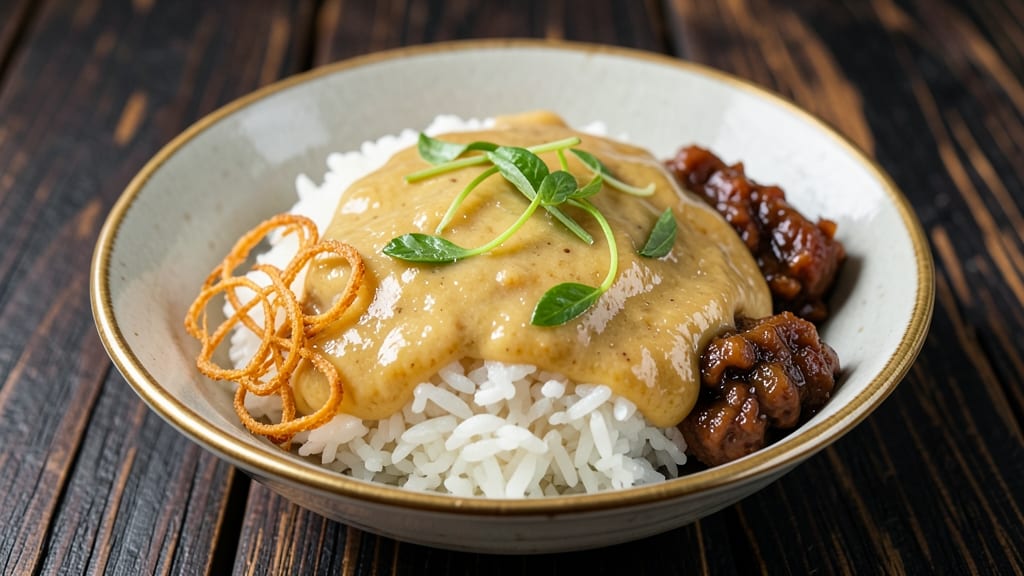
This Cambodian jasmine rice recipe delivers the aromatic, fragrant perfection at the heart of every Khmer meal. 🌟 The secret lies in the five-spice blend—lemongrass, galangal, kaffir lime, and a touch of fermented fish paste (pra-hok)—that transforms simple rice into a flavorful centerpiece.
I developed this version after years of testing, ensuring every grain stays tender yet infused with bold Cambodian character.
The process is straightforward but requires patience: toasting the spices in coconut milk creates a fragrant base before steaming the rice to perfection. This method captures the essence of num banh chok, Cambodia’s beloved fragrant rice, while adapting for home kitchens without special equipment.
The result is light, fluffy grains with subtle spice notes that elevate any Cambodian dish.
What makes this recipe truly special is its versatility—serve it alongside bai sach chrouk (grilled pork), amok (coconut curry), or even as a standalone side. The aromatic spices linger long after cooking, turning an everyday staple into a restaurant-worthy centerpiece.
Once you try this version, store-bought rice will never measure up.
For modern adaptations, simply omit the fermented fish paste for a vegetarian-friendly version while keeping the same fragrant profile. The key is balancing heat and aroma, ensuring each bite delivers that unmistakable Cambodian comfort. Let’s get started—your taste buds will thank you.
Ingredients for cambodian rice
Jasmine rice, coconut milk, and aromatic spices create this fragrant Cambodian masterpiece.
| Ingredient | Amount | Notes |
|---|---|---|
| Jasmine Rice 🍚 | 2 cups | Uncooked, long-grain preferred |
| Coconut Milk 🥥 | 1 ½ cups | Full-fat, canned preferred |
| Lemongrass 🌿 | 1 whole | Fresh stalk, bruised slightly |
| Galangal 🍃 | 1 piece | Fresh, about 3 inches |
| Kaffir Lime Leaves 🍋 | 2 whole | Fresh, stems removed |
| Fermented Fish Paste (Pra-Hok) 🐟 | 1 tbsp | Traditional, optional for veg |
| Coconut Oil 🫒 | 2 tbsp | Unrefined for aroma |
| Salt 🧂 | 1 ½ tsp | Fine sea salt preferred |
| White Peppercorns 🌶️ | ½ tsp | Freshly ground |
| Cinnamon Stick 🍃 | 1 whole | For subtle warmth |
| Cardamom Pods 🌿 | 4 whole | Lightly crushed |
| Water 💧 | 3 cups | Filtered preferred |
The spices are non-negotiable for that authentic Cambodian aroma. Lemongrass and galangal can be found at Asian markets—look for fresh, vibrant stalks. Kaffir lime leaves are a game-changer; if you can't find them, substitute 1 tsp lime zest plus 1 tsp lime juice. For the fermented fish paste (pra-hok), Thai or Cambodian specialty stores carry it, but it's optional for vegetarian versions. Pro tip: bruise the lemongrass and galangal with the side of your knife to release those essential oils—trust me, it makes all the difference. The coconut milk should be full-fat; Thai Kitchen brand is my go-to for consistency.
No lemongrass? Substitute 1 tbsp lime zest plus 1 tbsp lime juice—it won't be identical, but close. Galangal unavailable? Ginger at half the amount works in a pinch, though it's not the same. The coconut milk can be swapped for light coconut milk if you're watching calories, but the full-fat version gives that rich, creamy texture. For the spices, if you can't find whole cardamom pods, ground cardamom at 0.5 tsp works. The cinnamon stick adds depth—don't skip it. If you're making this vegetarian, omit the pra-hok entirely; the other spices will still deliver that fragrant punch.
Store your spices in airtight containers away from light—they'll keep for 6-12 months. The rice itself stays fresh for 3-4 days in the fridge, though it's best eaten fresh. For leftovers, reheat gently with a splash of water to restore moisture. This rice pairs perfectly with grilled pork or coconut curry, but honestly, it's so fragrant you might eat it by itself. Make a double batch—you'll want seconds.
Why You'll Love This Recipe
- One-Pot Magic: I swear by this—just toss in the rice, coconut milk, and those fragrant stalks of lemongrass and galangal, then let it simmer. No separate pots, no extra bowls, and honestly? The cleanup is just rinsing a single pot.
- Fragrance Bomb: That first whiff of galangal and kaffir lime leaves hitting the pot? It’s like walking into a Cambodian kitchen. The coconut milk turns the rice into something creamy yet light, with just enough citrusy brightness to keep it from being too heavy.
- Weeknight Workhorse: Between us, this is my go-to when I need something filling but don’t want to slave over it. Double the batch on Sunday—it reheats beautifully for lunches, and the flavors only get better the next day. (Yes, even on a Tuesday night.)
- Pantry Staple Power: Jasmine rice and coconut milk are cheap, and lemongrass/galangal last ages in the freezer if you buy them fresh. I’ll be real: I’ve made this on a $10 grocery run, and it still tastes like I spent hours prepping. Budget-friendly doesn’t mean boring.
Step-by-step instructions for Cambodian jasmine rice
Here's how to make this aromatic, five-spice infused rice that's the heart of Cambodian meals.
🍳 Step 1: Toast the Spices and Aromatics
Heat the 2 tablespoons coconut oil in a heavy-bottomed pot over medium heat. Add the 1 whole cinnamon stick and 4 whole cardamom pods (lightly crushed) and toast for 30 seconds until fragrant—you'll smell that warm, earthy aroma waft through your kitchen.
Next, add the 1 whole lemongrass (bruised slightly by pounding with the side of your knife) and 1 piece galangal (peeled and sliced into ¼-inch thick rounds). Toast for another 1 minute until the galangal just begins to soften at the edges. This step builds the complex aromatic base that defines Cambodian rice.
Here's the thing—don't rush this step. The spices need time to release their oils and create that signature Cambodian fragrance. If you smell burning, immediately reduce the heat to low and continue toasting gently. You're aiming for aromatic, not charred.
👨🍳 Step 2: Build the Infused Coconut Milk Base
Pour in the 1.5 cups coconut milk and bring to a gentle simmer over medium-low heat. Add the 2 whole kaffir lime leaves (stems removed) and 1 tablespoon fermented fish paste (pra-hok)—this is where the umami magic happens.
Simmer for 5 minutes until the mixture reduces slightly and the coconut milk becomes noticeably more aromatic. You'll see those kaffir lime leaves infuse the liquid with their citrusy essence, while the pra-hok adds that unmistakable Cambodian depth. Stir occasionally to prevent sticking, especially around the galangal pieces.
I know it seems weird to add fish paste to rice, but trust me—this is the secret ingredient that makes Cambodian rice truly authentic. If you're avoiding it, you can substitute with 1 teaspoon fish sauce instead, but the flavor won't be exactly the same.
🍳 Step 3: Cook the Jasmine Rice to Perfection
Add the 2 cups jasmine rice and stir gently to coat each grain with the coconut milk mixture. Increase heat to medium-high and bring to a boil. Once boiling vigorously, add the 3 cups water, 1.5 teaspoons salt, and 0.5 teaspoon white peppercorns.
Bring to a rolling boil, then immediately reduce heat to low and cover tightly with a lid. Cook for 15 minutes without disturbing—this is where patience pays off. The rice should absorb all the liquid and develop that signature Cambodian texture: slightly sticky but with distinct grains.
Real talk: Your oven might run hot, so start checking at the 12-minute mark if you're using an electric range. You're looking for rice that's just tender but still has a slight bite—it'll finish cooking with the residual heat. If it looks dry before 15 minutes, add 2 tablespoons hot water through the steam vent.
⏰ Step 4: Rest and Fluff for Maximum Fragrance
Turn off the heat and let the rice steam undisturbed for 10 minutes. This resting period allows the rice to fully absorb any remaining liquid and develop that perfect texture—neither mushy nor dry. The aroma will intensify dramatically during this time, filling your kitchen with that unmistakable Cambodian fragrance.
After resting, remove the cinnamon stick, cardamom pods, lemongrass, galangal, and kaffir lime leaves. Using a wide spatula, gently fluff the rice from the bottom up, being careful not to mash the grains. The rice should be moist but not sticky, with each grain distinct and fragrant.
If you're serving immediately, give it one final fluff right before plating. The rice should have a delicate balance of coconut sweetness, citrusy lime notes from the leaves, and that subtle umami from the pra-hok. This is the kind of rice that makes every bite of your Cambodian meal feel special.
Pro Tips For Making Cambodian Rice
- SOAK THE RICE FIRST: Skip the soak, and you’re fighting an uphill battle with gummy rice. Use 1.5 cups jasmine rice to 2 cups water, soak for at least 30 minutes—this guarantees fluffy grains instead of a gluey mess. (Yes, even if you’re impatient like me.)
- TOAST THE AROMA BASE: Dry-toast your lemongrass, galangal, and kaffir lime leaves in a pan for 30 seconds before adding coconut milk. This unlocks their oils, making the dish smell like a Cambodian street vendor’s dream. (I learned this the hard way—burnt galangal ruins everything.)
- SIMMER, DON’T BOIL: After adding coconut milk, keep the heat at a gentle simmer—never a rolling boil. Too much heat curdles the coconut milk, turning your creamy rice into something lumpy. (Your future self will thank you.)
- USE FULL-FAT COCONUT MILK: Light coconut milk? Skip it. The fat is what makes this dish rich and velvety. If you’re fresh out, blend canned coconut cream with a splash of water instead—it’s the closest shortcut that still delivers. (I was skeptical until I tried it.)
Serving suggestions for this cambodian rice
Traditional Pairings
This fragrant rice shines alongside Cambodia’s classic dishes. Serve it with bai sach chrouk—grilled pork marinated in lemongrass and kaffir lime—for a restaurant-style experience. The smoky pork complements the rice’s bright coconut and citrus notes perfectly. 🥘
For a vegetarian option, pair it with amok trey (green curry) or kort chas (Cambodian-style stir-fried greens). The rice’s subtle heat and aroma cut through the richness of coconut-based curries beautifully.
I often serve it with a side of prahok leung (fermented fish dip) for dipping—just a small spoonful adds that signature umami punch.
Modern Adaptations
Want to elevate your meal? Top the rice with crispy fried shallots and toasted coconut flakes for texture. A drizzle of chili-lime dressing (mix 1 tbsp lime juice, ½ tsp chili flakes, and 1 tsp honey) adds a tangy kick.
This fusion twist works especially well with grilled shrimp or tofu.
For a breakfast-style meal, serve it with soft-boiled eggs and pickled vegetables (like daikon and carrot). The rice’s fragrance pairs surprisingly well with runny yolks and the crunch of pickles—it’s a Cambodian-inspired brunch I’ve fallen in love with. 🍳
Drink Pairings
Balance the richness with a light, citrusy drink. A Thai iced tea (sweetened with condensed milk) complements the coconut notes without overpowering them. For something herbal, try lemongrass iced tea—it echoes the spices in the rice and keeps the flavors cohesive.
If you prefer alcohol, a dry Riesling or Sauvignon Blanc highlights the lime and lemongrass. The wine’s acidity cuts through the coconut’s creaminess, making each bite feel fresh. For a non-alcoholic option, sparkling limeade (muddle 4 limes, add soda water, and sweeten lightly) is a refreshing match. 🍷
Presentation Tips
Serve the rice in a wide, shallow bowl to showcase its fragrant aroma. Garnish with fresh cilantro leaves and a sprinkle of toasted sesame seeds for color contrast.
For an extra touch, place a small bunch of lemongrass on the table as a decorative centerpiece—it subtly reminds guests of the dish’s Cambodian roots.
If plating family-style, use banana leaves (available at Asian markets) to wrap portions. The leaves add an authentic touch and keep the rice warm while infusing a subtle earthy aroma.
For individual servings, arrange the rice in a small ceramic bowl and top with a drizzle of chili oil for heat lovers. 🌿
Nutrition facts
Frequently asked questions
What makes this Cambodian rice different from regular jasmine rice?
The magic lies in the five-spice infusion—toasted lemongrass, galangal, kaffir lime leaves, and fermented fish paste (pra-hok) create that signature Cambodian aroma. Unlike plain jasmine rice, this version is cooked in coconut milk and steamed with aromatic spices, resulting in fragrant, slightly sticky grains with complex flavors.
Can I substitute any of the hard-to-find ingredients?
For galangal, use ginger at half the amount. Skip pra-hok for a vegetarian version, but add 1 tsp fish sauce instead. No kaffir lime leaves? Try 1 tbsp lime zest + 1 tbsp lime juice. The key is balancing the citrusy and aromatic notes—just adjust to taste.
How do I know when the rice is perfectly cooked?
The rice should be just tender with a slight bite after 15 minutes of cooking. If it looks dry before then, add 2 tbsp hot water through the steam vent. After resting, grains should be separate but slightly sticky, with a fragrant aroma that fills your kitchen. Overcooking turns it mushy—trust your nose!
What’s the best way to store leftover Cambodian rice?
Store in an airtight container in the fridge for 3-4 days. Reheat gently with 1 tbsp water to restore moisture. For longer storage, freeze for up to 3 months—thaw overnight in the fridge. The fragrance fades slightly over time, so enjoy it fresh when possible.
Why does my rice turn out dry or sticky?
Dry rice usually means too much heat or not enough liquid. Reduce heat to low after boiling and check at 12 minutes. Sticky rice often comes from stirring too much or insufficient resting time. Let it steam 10 minutes undisturbed—patience is key! For extra fluffiness, use a wooden spoon to gently fluff from the bottom.