
Main Courses
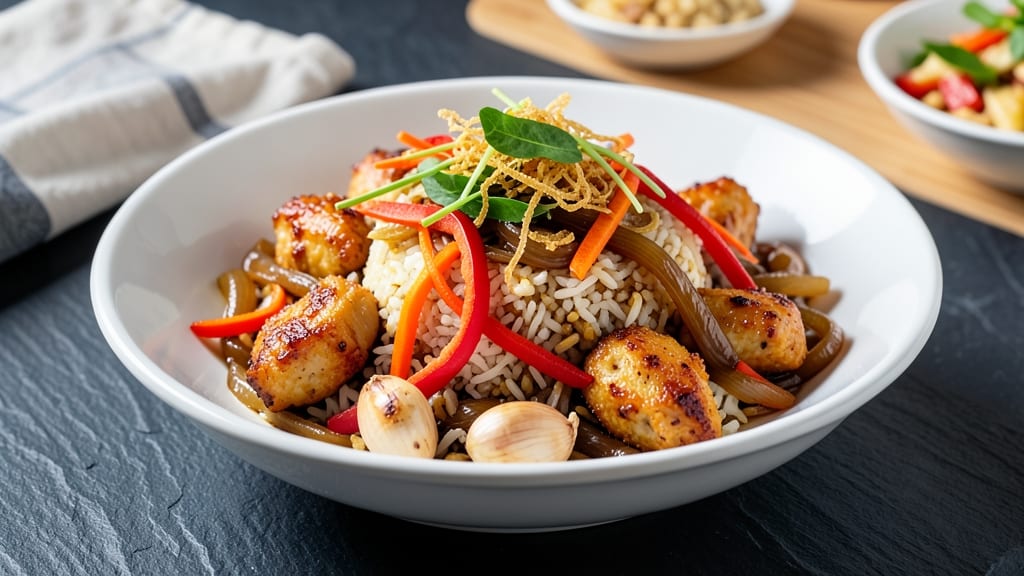
This chicken fried rice recipe with fish sauce delivers bold, umami-rich flavor in every bite—just like your favorite takeout, but better. The secret lies in perfectly stir-fried rice with tender chicken, elevated by the deep savory punch of fish sauce.
I’ve refined this recipe over years of testing, balancing textures and flavors for maximum satisfaction.
What makes this dish special is the one-pan technique, where wok hei (breath of the wok) creates smoky aroma and caramelized edges on the rice. Fish sauce adds that signature umami depth, while a touch of soy sauce rounds out the flavor.
The result? A restaurant-quality meal ready in under 30 minutes—no shortcuts, just bold, authentic taste.
Ingredients for chicken fried rice recipe fish sauce
The perfect balance of umami, texture, and wok hei awaits with these carefully chosen ingredients.
| Ingredient | Amount | Notes |
|---|---|---|
| Day-Old Cooked White Rice 🍚 | 4 cups | Cold, broken up into chunks |
| Boneless Chicken Thighs 🍗 | 1 ½ lb | Cut into 1-inch pieces |
| Red Bell Pepper 🧅 | 1 whole | Diced, seeds removed |
| Carrot 🥕 | 2 medium | Julienned, about 1 cup |
| Green Onion 🧅 | 1 whole | Thinly sliced, white and green parts |
| Garlic Cloves 🧄 | 6 cloves | Minced, for authentic aroma |
| Fish Sauce 🥫 | 2 tbsp | Red Boat preferred |
| Light Soy Sauce 🥫 | 2 tbsp | For balance, not saltiness |
| Sesame Oil 🫒 | 1 tbsp | Toasted, for aroma |
| Vegetable Oil 🫒 | 3 tbsp | High smoke point |
| Eggs 🥚 | 2 large | Beaten, for texture |
| White Pepper 🌶️ | ½ tsp | Freshly ground |
| Salt 🧂 | ½ tsp | Diamond Crystal preferred |
| Sriracha 🌶️ | 1 tbsp | Optional, for heat |
The Red Boat fish sauce is non-negotiable here—its clean, salty-sweet profile elevates everything. Grab the 28g bottle from Asian markets or well-stocked grocery stores like Whole Foods or Trader Joe's. For the chicken, thighs hold up better than breasts to the high heat. Look for organic, free-range if possible, but conventional works fine. The rice should be day-old—fresh rice turns mushy under stir-fry heat. Break it up into 1-inch chunks before cooking for optimal texture. Garlic should be freshly minced right before cooking to preserve its aromatic oils.
No fish sauce? Soy sauce plus a pinch of anchovy paste (1/4 tsp) comes close, but you'll lose that signature umami depth. Red Boat is the gold standard, but Three Crabs is a solid backup. The light soy sauce balances the fish sauce's saltiness—don't substitute dark soy sauce here. Sesame oil adds aroma but should be added at the very end. For the green onions, use scallions if that's what you have, but the white parts are more flavorful. Carrots can be swapped for snap peas or bok choy if you prefer. The eggs should be room temperature for even cooking—crack them into a bowl first, then pour into the wok.
Store cooked fried rice in airtight containers for up to 3 days in the fridge—it reheats beautifully. For longer storage, freeze portions for up to 3 months. The fish sauce keeps indefinitely in the pantry once opened, but the sesame oil should be refrigerated after opening. Prep ahead: Cook the rice and chop all veggies the night before—this dish comes together in under 20 minutes when everything's ready. Leftovers taste even better the next day as flavors meld.
Why You'll Love This Recipe
- Uses Day-Old Rice: I swear by this trick—cold rice fries up perfectly instead of turning mushy. No one will guess it’s not fresh, and it actually tastes better after sitting overnight.
- Fish Sauce Magic: That umami punch from fish sauce? It’s the secret weapon here. A splash turns bland rice into something ridiculously savory—salty, slightly sweet, with a depth you can’t get from soy sauce alone.
- Lunchbox Hero: Pack it cold for work or school—it reheats like a dream. My kids actually ask for leftovers, and honestly? I’d rather they eat this than sad desk lunches.
- Budget-Friendly Feast: Chicken thighs stretch further than breasts, and veggies add color without costing a fortune. One pan, minimal cleanup, and enough to feed the whole family—without breaking the bank.
Step-by-step instructions for chicken fried rice with fish sauce
Master this one-pan technique where umami and texture come together perfectly.
Prep and Cook the Chicken
Cut the 1.5 lb boneless chicken thighs into 1-inch pieces and season immediately with 0.5 tsp salt and 0.5 tsp white pepper. Heat 3 tbsp vegetable oil in a large wok or skillet over high heat until shimmering. Add the chicken in a single layer and cook undisturbed for 3-4 minutes until the edges turn deep golden brown. This creates a crispy exterior while keeping the interior juicy.
Resist the urge to stir frequently—let the chicken develop that perfect crust. Once the chicken releases easily from the pan (about 80% cooked), remove it to a plate and set aside. The residual heat will finish cooking it later in the dish. Keep the wok at high heat for the next steps—this is where the magic happens.
Sauté the Aromatics and Vegetables
In the same wok, add 3 tbsp vegetable oil (if needed) and swirl to coat. Add the 6 cloves minced garlic and stir for 10-15 seconds until fragrant—don't let it brown. Next, add the 1 whole red bell pepper (diced) and 2 medium carrots (julienned). Stir-fry for 2-3 minutes until the vegetables soften but retain their color. Overcooking turns them mushy, so watch closely.
Push the vegetables to one side of the wok and add 1 whole green onion (thinly sliced). Stir for 30 seconds until wilted but still bright green. This quick cooking preserves their freshness and crunch. The vegetables should be tender-crisp at this stage—just enough to hold their shape when mixed with the rice.
Scramble the Eggs and Combine Ingredients
Push the vegetables to one side again and pour in the 2 large beaten eggs. Let them sit undisturbed for 5-10 seconds before gently scrambling with a spatula. Cook until just set but still slightly runny—this creates silky strands that coat the rice perfectly. Remove the eggs to a plate and set aside temporarily.
Add the 4 cups day-old cooked white rice (broken into chunks) to the wok. Stir-fry for 1-2 minutes until the rice is heated through and any excess moisture evaporates. This step is critical—it prevents a soggy final dish. If the rice appears dry, add 1-2 tablespoons of water and stir until absorbed.
Build the Umami Sauce
Return the chicken to the wok and stir to combine with the rice. Add the 2 tbsp fish sauce and 2 tbsp light soy sauce, stirring well to coat everything evenly. The fish sauce adds that signature umami depth, while the soy sauce balances with saltiness. Let the mixture simmer for 1-2 minutes until the sauces meld with the rice.
Drizzle in the 1 tbsp sesame oil and 1 tbsp sriracha (optional). The sesame oil adds a nutty aroma, while the sriracha introduces a subtle heat. Taste and adjust seasoning if needed—you might need a touch more fish sauce for deeper umami or a pinch of salt for balance. The rice should be coated in a glossy, flavorful sauce.
Finish and Serve
Return the scrambled eggs to the wok and toss everything together for 30-60 seconds until the eggs are fully incorporated and the rice is evenly coated. The eggs should melt into the dish, creating a creamy texture that contrasts with the crispy chicken and tender vegetables. If the rice seems dry, add 1-2 tablespoons of water and stir quickly.
Taste one final time and adjust seasoning if necessary. The dish should be savory, slightly sweet from the caramelized chicken, and balanced with umami from the fish sauce. Serve immediately while hot, garnished with extra green onion (white and green parts) for freshness and color. The texture should be a perfect harmony of crispy chicken, tender rice, and silky eggs.
Pro Tips For Making Chicken Fried Rice Recipe Fish Sauce
- STIR-FRY CHICKEN FIRST: I used to toss everything in at once, but the chicken ends up rubbery and the rice soggy. Cook the chicken thighs in a separate pan with a splash of fish sauce and a pinch of sugar until golden—about 6-7 minutes on medium-high. This locks in flavor and gives you crispy edges that’ll hold up in the stir-fry.
- CHOP VEGGIES UNIFORM: Bell peppers and carrots need to be cut into matchsticks no wider than ¼-inch—any thicker and they’ll turn mushy before the rice is done. Use a sharp knife and work in batches if needed; crowded veggies steam instead of sear.
- USE COLD DRY RICE: Spread your day-old rice on a tray and let it sit uncovered for 10 minutes before stirring it into the wok. Cold, dry rice fries up better and soaks up the fish sauce without turning gluey. (Yes, even if you’re impatient like me.)
- SALT THE RICE MIDWAY: Toss in the rice first, stir for 30 seconds, then add the fish sauce and remaining seasonings. Wait another minute before adding the veggies—this lets the rice absorb the sauce evenly instead of getting overwhelmed by liquid. Trust me, it makes a real difference.
Flavor customization for chicken fried rice recipe fish sauce
Umami Boost
Double the fish sauce to 4 tbsp for a deeper umami punch—ideal if you love that salty-sweet depth. I’ve found Red Boat works best here, but Three Crabs adds a slightly funkier profile.
For extra complexity, add 1 tsp oyster sauce alongside the fish sauce. This works especially well with dark meat chicken or pork shoulder as the protein base. 🥫
Spicy Kick
Swap the sriracha for 1 tbsp chili crisp or 1 tsp gochujang for a smoky, fermented heat. If you prefer fresh heat, stir in 1 tbsp minced Thai bird’s eye chilies at the end.
For a sweeter-spicy balance, add 1 tsp honey or 1 tsp brown sugar with the fish sauce. The key is to add heat after the rice is cooked to preserve its texture.
Herb Infusions
Brighten the dish with 1 tbsp chopped cilantro or 1 tsp dried basil—add these at the very end to keep flavors vibrant. For a Thai-inspired twist, stir in 1 tbsp lime zest and 1 tbsp fish sauce together.
If you’re feeling adventurous, try 1 tsp lemongrass paste (found in Asian markets) for a citrusy aroma. Fresh herbs should always go in last to avoid wilting in the wok’s heat.
Protein Swaps
Replace chicken with shrimp (toss in the last 2 minutes of cooking) or tofu (press and cube for texture). For a heartier dish, use ground pork or beef—just brown it thoroughly first.
If using vegetarian protein, add 1 tbsp mushroom powder to mimic umami depth. The protein should always be cooked to 165°F for safety, even if it’s added later in the process.
Sweet Variations
Balance the savory with 1 tbsp hoisin sauce or 1 tsp coconut sugar—both add natural sweetness. For a tropical twist, stir in 1 tbsp pineapple juice and garnish with mandarin orange segments.
If you’re using pineapple, add it after cooking to prevent the rice from turning mushy. The sweetness should complement, not overpower, the fish sauce’s umami.
Texture Tweaks
Add 1 tbsp crispy fried shallots for crunch or top with 2 tbsp crushed peanuts for a Thai-inspired crunch. For extra richness, fold in 2 tbsp shredded coconut (toasted for 2 minutes in the wok).
If you love chewy textures, stir in 1 tbsp chopped water chestnuts—they hold their shape beautifully. Texture contrasts make every bite more exciting! 🌟
Nutrition facts
Frequently asked questions
Why does the recipe call for day-old rice?
Day-old rice works best because it's drier and less sticky, preventing a mushy fried rice. Fresh rice contains too much moisture and releases starch when heated, making the final dish gummy. Break the rice into 1-inch chunks before cooking to ensure even browning and better texture.
Can I substitute fish sauce with something else?
Yes! If you don't have fish sauce, use 2 tbsp soy sauce + ¼ tsp anchovy paste for a similar umami depth. For a vegetarian option, try 1 tbsp coconut aminos + ½ tsp mushroom powder. However, nothing quite matches the complexity of authentic fish sauce—especially Red Boat brand—which adds that signature salty-sweet balance.
How do I prevent the fried rice from being dry?
Keep the wok at high heat and stir constantly to evaporate excess moisture. If the rice seems dry during cooking, add 1-2 tablespoons of water and stir quickly. The key is to use day-old rice and avoid overcrowding the pan—cook in batches if needed. A well-seasoned wok helps too!
What's the best way to reheat leftovers?
Reheat in a skillet over medium heat with 1 teaspoon of oil and 1 tablespoon of water to restore moisture. Stir frequently to prevent sticking. Microwaving works but can make the rice rubbery—always add a splash of water and cover with a damp paper towel. Leftovers taste even better the next day as flavors meld!
Can I make this recipe with a regular skillet?
While a wok gives the best "wok hei" (breath of the wok) aroma, a large, heavy-bottomed skillet works perfectly. Use high heat and keep the pan moving to mimic stir-fry technique. For extra crispiness, press the rice against the pan edges occasionally. A nonstick skillet can help prevent sticking if you're new to stir-frying.