
Soups & Stews
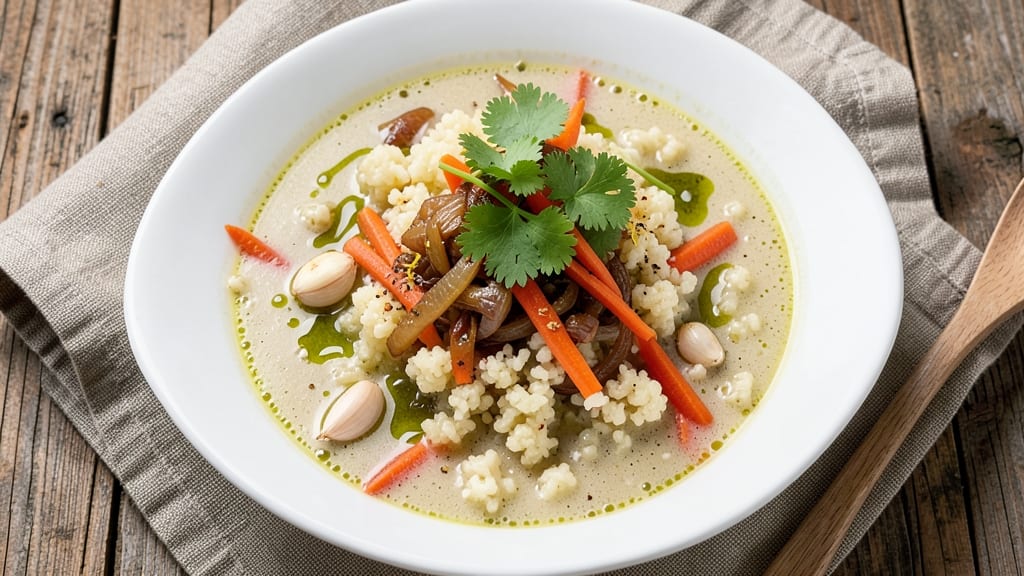
This cauliflower rice soup recipe delivers all the comforting creaminess of traditional soups without the heavy cream—just pure vegetable richness. The secret lies in blending cauliflower rice into a velvety base that absorbs flavors beautifully, creating a dish that's both light and deeply satisfying.
Perfect for those watching their calories or simply craving something wholesome yet indulgent.
With just 15 minutes of prep and 30 minutes of simmering, you'll transform simple ingredients into a soup that's creamy, aromatic, and packed with savory depth.
The blend of garlic, onions, and fresh herbs infuses every spoonful, while the optional garnish of toasted seeds or fresh herbs adds texture and visual appeal. This is the kind of soup that feels like a hug in a bowl—without the guilt.
Ingredients for cauliflower rice soup
Freshly grated cauliflower and aromatic vegetables create this velvety vegetarian soup without heavy cream.
| Ingredient | Amount | Notes |
|---|---|---|
| Fresh Cauliflower Rice 🥬 | 4 cups | Freshly grated or pre-riced |
| Yellow Onion 🧅 | 1 medium | Diced, about 1 cup |
| Garlic Cloves 🧄 | 4 cloves | Minced, for aromatic base |
| Carrots 🥕 | 2 medium | Diced, about 1 cup total |
| Vegetable Broth 💧 | 4 cups | Low-sodium preferred |
| Extra-Virgin Olive Oil 🫒 | ¼ cup | For velvety texture |
| Fresh Thyme Leaves 🌿 | ½ tsp | Dried thyme works too |
| Fresh Parsley Leaves 🌿 | ¼ cup | Chopped, for garnish |
| Lemon Juice 🍋 | 1 tbsp | Freshly squeezed |
| Salt 🧂 | 1 tsp | Diamond Crystal preferred |
| Black Pepper 🌶️ | ½ tsp | Freshly ground preferred |
| Toasted Pumpkin Seeds 🥜 | ¼ cup | Optional garnish |
| Nutritional Yeast 🧀 | 2 tbsp | For cheesy depth |
The cauliflower rice is the star—freshly grated yields the best texture, but pre-riced works in a pinch. Look for organic cauliflower at Whole Foods or your local farmers market for vibrant color and sweetness. Carrots should be crisp with no soft spots, and onions need good papery skins. Garlic cloves should be firm and free of sprouts. Low-sodium vegetable broth is essential for flavor control—Pacific Foods or Imagine brands are excellent choices. Fresh herbs like thyme and parsley elevate the dish, so grab them from the grocery store's produce section if possible.
No fresh cauliflower rice? Steam and pulse cauliflower florets in a food processor until finely chopped. Substitute dried thyme at one-third the amount of fresh. For extra richness, stir in 1/4 cup coconut milk at the end. The lemon juice can be omitted if you prefer a milder flavor, but it brightens everything. Toasted sunflower seeds make a great alternative to pumpkin seeds for garnish. Need to make this ahead? The soup reheats beautifully—just add a splash of water or broth if it thickens.
Store leftovers in an airtight container in the refrigerator for up to 5 days. The soup freezes well for 3 months—portion into individual containers for easy reheating. For extra creaminess when reheating, stir in a splash of vegetable broth. Garnish with fresh herbs and toasted seeds just before serving to maintain texture. This soup tastes even better the next day as flavors meld together—perfect for meal prep.
Why You'll Love This Recipe
- No Chopping Hassle: I swear by this trick—just pulse a whole head of cauliflower in the food processor until it looks like rice. No tiny pieces, no wasted bits, and the texture? So much better than store-bought. Sauté with onions and garlic while it cooks, and suddenly you’ve got a soup base that’s foolproof.
- Umami Bomb: That vegetable broth gets deep, savory magic from the caramelized onions and garlic—honestly, the first time I tasted it, I thought I’d added soy sauce. The carrots add just enough sweetness to balance it out, so you’re not stuck with a one-note bowl.
- Leftover Goldmine: This soup actually tastes better the next day. I’ll be real: I make a big batch on Sundays, and by Wednesday, it’s still my go-to lunch. The cauliflower rice soaks up all the flavors, so reheating just makes it richer—no sad, watery leftovers here.
- Budget Meal Prep: Between us, cauliflower rice is cheaper than regular rice, and this soup stretches for days. I’ve fed four people for under $10 with this recipe, and the carrots and onions bulk it up so it’s filling. Plus, it’s one of those meals where you can toss in whatever’s left in the fridge—spices, greens, even a splash of lemon.
Step-by-step instructions for creamy cauliflower rice soup
Transform simple ingredients into a rich, velvety soup without heavy cream or dairy.
Sauté Aromatics Until Fragrant
Heat the 0.25 cup extra-virgin olive oil in a large pot over medium heat. Add the 1 medium diced yellow onion and cook for 5 minutes until translucent and slightly softened. I press down gently with a wooden spoon to ensure even cooking.
Add the 4 cloves minced garlic cloves and cook for another 30 seconds until the raw garlic aroma disappears. Here's the thing—garlic burns quickly, so keep a close eye on it. You want the edges to just begin turning golden without darkening. Add the 2 medium diced carrots and cook for 4 minutes until they start to soften at the edges.
Build Flavor with Broth and Seasonings
Pour in the 4 cups vegetable broth and bring to a gentle boil. Once boiling, reduce heat to medium-low and add the 4 cups fresh cauliflower rice, 1 tsp salt, and 0.5 tsp black pepper. Stir gently to combine—this prevents the cauliflower from breaking down too quickly.
Add the 0.5 tsp fresh thyme leaves and let the soup simmer uncovered for 15 minutes. You'll notice the cauliflower softening and the broth developing a deeper color. This simmering time is crucial for developing the soup's natural sweetness and allowing the flavors to meld together.
Create Velvety Texture Without Cream
Use an immersion blender to purée the soup directly in the pot. I blend in batches if needed, working from the bottom up to ensure even texture. For a completely smooth soup, blend until there are no visible cauliflower pieces. If you prefer some texture, blend until just smooth.
Return the soup to a gentle simmer and stir in the 2 tbsp nutritional yeast and 1 tbsp lemon juice. The nutritional yeast adds a cheesy depth without dairy, while the lemon juice brightens the flavor profile. Let it simmer for another 5 minutes to allow the lemon to infuse fully and the nutritional yeast to dissolve completely.
Finish and Garnish Professionally
Taste and adjust seasoning with additional salt or pepper if needed. The soup should be well-seasoned but not overly salty. Real talk—this is where many home cooks make their soup taste flat. Take your time with this adjustment.
Remove from heat and stir in the 0.25 cup chopped fresh parsley leaves. Ladle the soup into bowls and garnish each serving with 0.25 cup toasted pumpkin seeds. The pumpkin seeds add a delightful crunch and nutty flavor that contrasts beautifully with the smooth soup. Serve immediately while hot.
Pro Tips For Making Cauliflower Rice Soup
- SAUTÉ ONIONS LOW AND SLOW: I learned this the hard way—blasting onions on high heat turns them bitter before they even soften. Keep the heat at medium-low and stir every 30 seconds until they’re translucent but not browned. That golden moment? It’s where flavor actually builds.
- CHOP CARROTS UNIFORMLY: Uneven carrot pieces mean some stay crunchy while others turn to mush. Cut them into ¼-inch dice—small enough to cook through but big enough to hold shape. If you’re impatient (like me), slice them thinner, but then check them every 5 minutes.
- SALT THE BROTH LAST: Adding salt early dilutes the flavor as the broth absorbs the cauliflower’s water. Wait until the veggies are tender, then season the broth to taste—this guarantees a punchier, more balanced soup. (Yes, even if you’re used to salting everything first.)
- USE FROZEN CAULIFLOWER RICE: Fresh cauliflower rice releases too much water, turning your soup into a sad, watery mess. Frozen rice (thawed and drained) behaves better—it cooks faster and keeps the texture light. Just don’t skip draining it afterward.
Best sauces and condiments for these flavors
Creamy Nutritional Boost
Add 2 tablespoons coconut cream or ½ cup silken tofu purée just before blending for extra creaminess without dairy. The coconut cream adds a subtle sweetness that pairs beautifully with the carrot and cauliflower flavors.
For a protein punch, blend in ½ cup cooked white beans (like cannellini) after simmering—they dissolve completely and add a satisfying thickness. 🥥
Umami Depth
Stir in 1 tablespoon soy sauce or 1 teaspoon miso paste during the final simmer to amplify the savory notes. The miso adds a fermented richness that works especially well with the nutritional yeast.
For a smoky twist, add ½ teaspoon smoked paprika when sautéing the onions—it deepens the flavor profile without overpowering the delicate cauliflower base.
Herb Infusions
Swap thyme for 1 teaspoon dried tarragon or ½ teaspoon fresh dill for a brighter, more aromatic finish. Tarragon adds a subtle anise-like note that complements the carrots beautifully. Fresh dill works wonderfully if you're serving this soup with grilled fish or shrimp as part of a larger meal.
Garnish with extra herbs just before serving to keep them vibrant and flavorful.
Spicy Kick
Add ½ teaspoon cayenne pepper or 1 teaspoon sriracha during the final simmer for a gentle heat. The cayenne brings a slow-building warmth, while sriracha adds a tangy, slightly sweet contrast.
For a smoky-spicy option, stir in ½ teaspoon chipotle powder when sautéing the garlic—it adds depth without overwhelming the dish. Adjust to taste, as preferences for spice vary widely!
Acidity Balance
Brighten the soup with 1 tablespoon apple cider vinegar or 1 teaspoon white wine vinegar instead of lemon juice for a sharper tang. The vinegar cuts through the richness of the cauliflower and nutritional yeast, adding complexity.
For a more refined finish, add 1 teaspoon balsamic glaze just before serving—it adds a sweet-savory contrast that elevates the dish to restaurant-quality.
Texture Contrast
Garnish with crispy fried shallots or toasted breadcrumbs for added crunch. The shallots add a delicate sweetness and crisp texture, while breadcrumbs provide a heartier bite. For a gluten-free option, use crushed pork rinds or toasted coconut flakes—both add texture without gluten.
A sprinkle of freshly cracked black pepper just before serving also enhances the overall presentation and flavor.
Nutrition facts
Frequently asked questions
Can I make this soup without an immersion blender?
Yes! Transfer the soup to batches in a regular blender or food processor. Work in small portions (about 2 cups at a time) to avoid overflow. For extra-smooth results, strain the blended soup through a fine-mesh sieve to remove any remaining cauliflower fibers. This method takes a little more time but achieves the same creamy texture.
How can I make this soup spicier?
Add ½ teaspoon cayenne pepper or 1 teaspoon sriracha during the final 5-minute simmer. For a smoky kick, stir in ½ teaspoon chipotle powder when sautéing the garlic. Adjust to taste—start with less if you're sensitive to heat, as spices intensify during reheating.
Can I use frozen cauliflower rice instead of fresh?
Thaw frozen cauliflower rice completely first, then drain well to remove excess moisture. Use the same 4 cups measurement as fresh, but reduce the broth by ½ cup (to 3½ cups) to prevent a watery soup. Frozen rice works best when cooked immediately after thawing for optimal texture.
Why did my soup turn out too thin?
This usually happens if the cauliflower wasn't cooked enough before blending or if too much broth was used. Simmer the soup uncovered for 5-10 extra minutes to thicken naturally. For quick fixes, stir in 1 tablespoon cornstarch mixed with 2 tablespoons water and simmer for 2 minutes. Alternatively, mash a small portion of cooked cauliflower rice and stir it in.
What are good sides to serve with this soup?
This light yet satisfying soup pairs beautifully with heartier sides like garlic toast, crusty sourdough, or roasted Brussels sprouts. For a complete meal, add a simple kale salad with lemon vinaigrette or grilled chicken (if making a non-vegetarian version). The soup's creamy texture balances well with crispy, fresh, or protein-rich accompaniments.