
Side Dishes
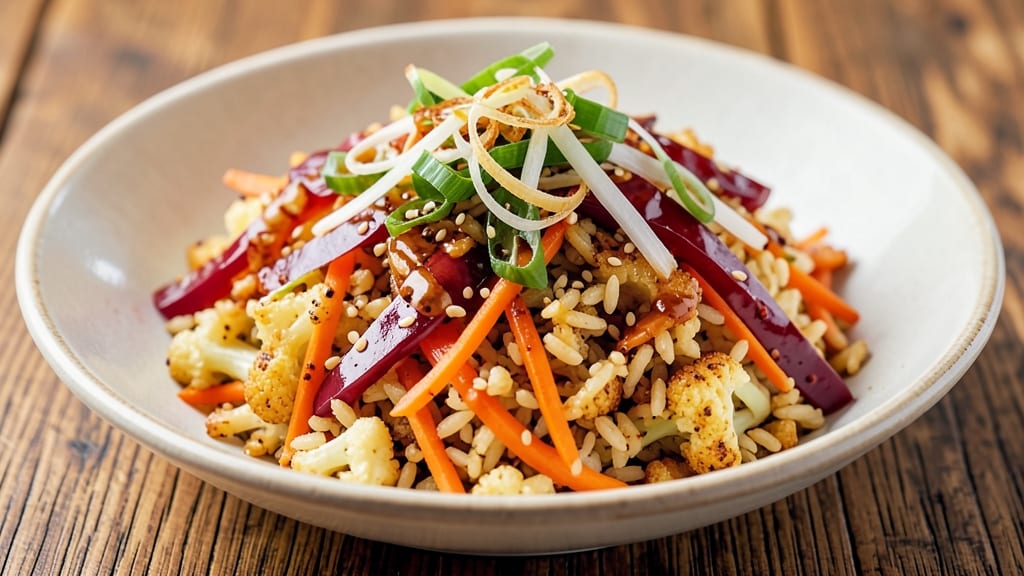
This cauliflower vegetable fried rice recipe delivers restaurant-quality texture and flavor with one key trick: riced cauliflower replaces half the rice for crispy edges and hidden nutrition. The secret lies in high-heat wok technique that creates that signature smoky aroma (wok hei) while keeping the rice perfectly separate from the vegetables.
What makes this recipe stand out is the balance of textures—crispy rice grains, tender cauliflower florets, and bright vegetables that stay vibrant through cooking. We'll use day-old rice for maximum crispiness and a simple soy-ginger sauce that enhances rather than overpowers the natural flavors of each ingredient.
Ingredients for cauliflower vegetable fried rice
Restaurant-quality texture meets hidden veggie nutrition with these carefully chosen ingredients.
| Ingredient | Amount | Notes |
|---|---|---|
| Day-Old Cooked White Rice 🍚 | 3 cups | Unseasoned, cold for crispiness |
| Fresh Cauliflower 🥬 | 1 lb | Riced or finely chopped florets |
| Carrots 🥕 | 1 cup | Julienned or finely diced |
| Red Bell Pepper 🌶️ | 1 whole | Diced, seeds removed |
| Fresh Green Onions 🧅 | 4 whole | White and green parts separated |
| Fresh Ginger 🌿 | 1 tbsp | Finely grated, peeled |
| Garlic Cloves 🧄 | 4 cloves | Minced, peeled |
| Vegetable Oil 🫒 | ½ cup | High smoke point preferred |
| Low-Sodium Soy Sauce 🥢 | 3 tbsp | Or tamari for gluten-free |
| Sesame Oil 🫒 | 1 tbsp | For aroma, added at end |
| Toasted Sesame Seeds 🌾 | 1 tbsp | For garnish |
| Diamond Crystal Kosher Salt 🧂 | ½ tsp | Adjust to taste |
| Black Pepper 🌶️ | ¼ tsp | Freshly cracked |
| Rice Vinegar 🍶 | 1 tbsp | For brightness |
The cauliflower is non-negotiable here—it delivers that crispy edge while sneaking in nutrients. Look for heads with tight florets, as they'll rice more cleanly. The day-old rice is crucial for texture; freshly cooked rice turns mushy. For the ginger and garlic, fresh is essential—jarred minced versions lack flavor. If you can't find fresh, grate your own ginger using a microplane for maximum potency. The vegetable oil should have a high smoke point (like avocado or grapeseed) to prevent burning during high-heat wok action.
No sesame oil? Toasted peanut oil works as a neutral substitute, though it lacks the nutty aroma. Short on green onions? Substitute with scallions or extra bell pepper—just add a pinch of salt to compensate for flavor differences. The soy sauce can be swapped for coconut aminos if you're avoiding gluten. For extra umami, add a dash of fish-free Worcestershire sauce (like Annie's). The rice vinegar is key for brightness—if you only have white vinegar, reduce the amount by half to avoid sourness. And if you're worried about the cauliflower flavor, don't be—it blends seamlessly when cooked properly.
Store cooked fried rice in an airtight container for up to 4 days in the fridge, though it's best enjoyed fresh. For freezing, portion into single servings and reheat in a skillet with a splash of water to restore crispiness. The sesame seeds and oil should be added fresh after reheating to preserve their aroma. This dish reheats beautifully—the flavors actually deepen overnight as everything melds. For meal prep, cook a double batch and freeze half; just thaw and crisp in a hot pan before serving.
Why You'll Love This Recipe
- That’s the secret: stir-fry the cauliflower first until it’s got golden edges, then fold in the rice. The texture contrast—crunchy florets against tender rice—is what makes this dish ridiculously satisfying. (Yes, even on a Tuesday night.)
- I’ll be real: this recipe uses up what’s already in my fridge. Day-old rice? Perfect. A lone carrot? No problem. That half-used bell pepper? Game over. It’s the kind of dish that saves money and keeps your veggies from turning into sad, wilted relics.
Step-by-step instructions for crispy cauliflower vegetable fried rice
Transform day-old rice into golden, crispy bites while hiding nutrient-packed vegetables in every forkful.
Prepare the Vegetable Base
Heat the 0.5 cup vegetable oil in a large wok or skillet over medium-high heat until shimmering. Add the 1 lb fresh cauliflower (riced or finely chopped) and spread it evenly in the pan. Cook for 5-6 minutes until the edges begin to soften and develop a slight golden color—this is your signal to stir.
Push the cauliflower to one side of the pan and add the 1 cup julienned carrots and 1 whole red bell pepper (diced). Stir-fry for 3-4 minutes until the carrots soften slightly and the bell pepper releases its sweet aroma. The vegetables should be tender-crisp, not mushy, so avoid overcooking at this stage. This foundational layer ensures your rice absorbs maximum flavor without turning soggy.
Build Flavor with Aromatics
Add the 4 cloves minced garlic and 1 tbsp finely grated ginger to the pan, stirring constantly for 30 seconds until fragrant. The garlic should sizzle and turn golden without burning—this releases its sweet, mellow flavor. Immediately add the white parts of the 4 whole fresh green onions (chopped) and cook for another 1 minute until softened.
Pour in the 3 tbsp low-sodium soy sauce and 1 tbsp rice vinegar, stirring to combine. Let the mixture simmer for 1 minute to deepen the umami and tang. This step creates the flavor bridge between the vegetables and the rice, ensuring every bite is balanced. The sauce should coat the vegetables evenly, not pool at the bottom.
Add and Crisp the Day-Old Rice
Increase the heat to high and add the 3 cups day-old cooked white rice, breaking up any clumps with a spatula. Press down gently on the rice during the first 1-2 minutes—this prevents it from curling and ensures even contact with the pan. The rice will begin to sizzle and develop crispy edges as it absorbs the oil and aromatics.
Continue stirring for 4-5 minutes until the rice is uniformly golden brown and crispy in spots. You'll hear a satisfying sizzle as the moisture evaporates, transforming the rice from soft to texturally exciting. If the pan feels dry before the rice crisps, add 1-2 tablespoons of water and continue cooking—this steams the rice while maintaining crispiness.
Finish with Sesame Oil and Garnish
Reduce the heat to medium and drizzle in the 1 tbsp sesame oil, tossing the rice until the aroma fills the kitchen. The sesame oil adds a nutty depth that elevates the dish from ordinary to extraordinary. Sprinkle the 1 tbsp toasted sesame seeds and 0.25 tsp black pepper over the top, then adjust seasoning with the 0.5 tsp kosher salt if needed.
Garnish with the green parts of the 4 whole fresh green onions (chopped) for a pop of color and freshness. Serve immediately while the rice is still crispy—this dish loses its texture appeal as it cools. The contrast between the crispy rice, tender vegetables, and aromatic sesame oil creates a harmonious balance of textures and flavors in every bite.
Pro Tips For Making Cauliflower Vegetable Fried Rice
- CRISP THE CAULIFLOWER FIRST: I learned this the hard way—if you toss raw cauliflower florets straight into the wok with everything else, they’ll steam instead of caramelize. Cut them into even 1-inch pieces, then stir-fry them alone in a dry pan for 3-4 minutes until they start browning at the edges. That’s when they’ll actually contribute texture, not just sit there soggy.
- USE DAY-OLD RICE—NO EXCUSES: Cold, dry day-old rice is non-negotiable here. If you’re desperate, spread freshly cooked rice on a tray and fan it for 10 minutes, but it won’t be the same. The starches need time to settle, or your fried rice will turn into glue. (Yes, even if you’re impatient like me.)
- SAUTE ONIONS UNTIL GOLDEN: Skip the urge to rush this step—cook the green onions (both whites and greens) until they’re deep golden, not just softened. That’s where the flavor lives. I used to toss them in for 30 seconds, but now I give them 2-3 minutes until the whites are almost crispy. It makes a real difference.
- STOP STIR-FRYING WHEN IT LOOKS DONE: The rice will keep cooking from the residual heat. Pull it off the heat just as the veggies hit your desired doneness—usually 3-4 minutes after the rice looks dry. Letting it sit too long turns the edges gummy, and no one wants that. (Your future self will thank you.)
Essential equipment for this recipe
Wok Essentials
A carbon steel wok with a 14-inch diameter is my go-to for this recipe—it heats quickly and evenly, creating that signature wok hei (smoky aroma) we all crave. I use a Made In wok (about $80) because its thin walls respond instantly to temperature changes.
For budget-friendly options, a stainless steel wok like T-fal’s 14-inch works well, though it may take slightly longer to heat.
If you don’t have a wok, a large, heavy-bottomed skillet (like a Lodge pre-seasoned cast iron) will do the trick. Just make sure it’s 12 inches or larger to give your ingredients room to sizzle and crisp properly.
A non-stick pan isn’t ideal—it won’t develop the same caramelized flavors or crispy texture.
Rice Prep Tools
Ricing cauliflower efficiently is half the battle. A microplane or box grater works for quick prep, but a food processor with a grating disc (like the Ninja FP101) gives you the most even texture.
For day-old rice, I use a wooden rice paddle (about $10 on Amazon) to break up clumps without mashing the grains—it’s a game-changer for texture.
If you’re short on time, a ricer (like the OXO Good Grips) speeds up the process, but I find it creates slightly larger rice-like pieces. For the best results, I still chop the cauliflower into small florets before ricing to mimic the texture of traditional fried rice.
Heat Control Gear
Monitoring heat is critical for crispy rice and tender veggies. A thermometer probe (like the ThermoWorks Thermapen One) lets you check the wok’s temperature—aim for 400-450°F for that perfect sear. Without one, watch for tiny smoke wisps rising from the oil; that’s your cue the pan is ready.
Tongs are a must for stirring—12-inch stainless steel tongs (like OXO Good Grips) give you the reach to toss everything without overcrowding the pan. Avoid wooden spoons; they can’t handle the high heat and won’t lift crispy rice effectively.
Storage Solutions
For leftovers, I store fried rice in glass Pyrex containers with tight-sealing lids to keep it fresh for up to 4 days. The glass preserves the crispiness better than plastic. If freezing, portion into single-serving bags (like Stasher bags)—they’re reusable and prevent freezer burn.
A steamer basket (like Farberware’s 12-inch) is handy for reheating. Place the fried rice in the basket, cover with a damp paper towel, and steam for 3-4 minutes over boiling water. The steam restores crispiness without drying out the rice.
Nutrition facts
Frequently asked questions
Why does this recipe use day-old rice instead of freshly cooked rice?
Day-old rice has released its excess moisture, making it perfect for achieving that signature crispy texture. Freshly cooked rice is too wet and will turn mushy when stir-fried. The slight dryness helps the grains crisp up beautifully while absorbing all those delicious aromatics.
Can I make this cauliflower fried rice without a wok?
A large, heavy-bottomed skillet (like cast iron) works perfectly. The key is using high heat and keeping your ingredients moving. Just make sure your pan is at least 12 inches wide to give everything room to crisp up properly.
How do I prevent the cauliflower from turning mushy?
Cook the cauliflower separately first until it's just tender (about 5-6 minutes), then remove it from the pan before adding the rice. This prevents the cauliflower from absorbing too much moisture from the rice. Also, avoid overcrowding the pan—cook in batches if needed.
What if I don't have sesame oil?
You can substitute with toasted peanut oil or even a neutral oil like avocado oil. Just add it at the very end to maintain flavor. The nutty aroma from sesame oil is special, but the dish will still taste delicious without it.
Can I add protein to this vegetarian fried rice?
Yes! Try adding tofu, tempeh, or chickpeas for extra protein. Cook them separately first until crispy, then stir them into the fried rice at the end. For a cheesy version, sprinkle with shredded mozzarella and let it melt into the hot rice.