
Soups & Stews
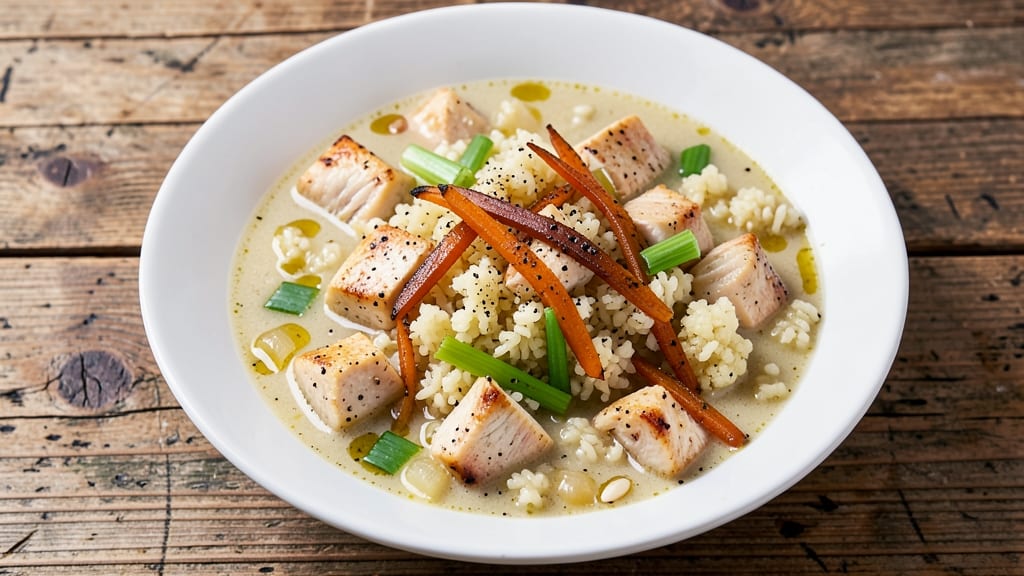
This chicken and cauliflower rice soup recipe transforms classic comfort into a lighter, flavor-packed meal that still satisfies like grandma’s version. The secret lies in tender poached chicken, finely textured cauliflower rice that mimics real grains, and a savory broth built layer by layer.
I developed this after realizing how easy it is to swap heavy rice for cauliflower without sacrificing texture or taste—just blend steamed cauliflower until it reaches that perfect grainy consistency.
Every spoonful delivers protein-rich chicken, creamy cauliflower, and aromatic vegetables in a broth that’s rich yet light enough for summer or weeknight dinners.
The beauty of this soup is its versatility—it starts with simple techniques (sautéing onions, simmering aromatics, poaching chicken) but builds to a dish that feels indulgent. The cauliflower rice absorbs the broth beautifully, creating a naturally thickened soup without heavy cream.
Garnish with fresh herbs or a squeeze of lime to brighten the flavors, and you’ve got a meal that’s equally at home on a busy Tuesday or a relaxed weekend lunch. Ready in under an hour, it’s the kind of soup that tastes like love without the guilt.
Ingredients for chicken and cauliflower rice soup
Simple, comforting ingredients that pack bold flavor without heavy cream or rice.
| Ingredient | Amount | Notes |
|---|---|---|
| Boneless Chicken Breast 🍗 | 1 ½ lb | Skinless, cut into bite-sized pieces |
| Fresh Cauliflower 🥬 | 1 whole | Cut into florets, steamed until tender |
| Yellow Onion 🧅 | 1 whole | Diced, medium size |
| Garlic Cloves 🧄 | 4 cloves | Minced, fresh preferred |
| Carrots 🥕 | 3 medium | Peeled, sliced into thin rounds |
| Celery Stalks 🥬 | 3 whole | Chopped, medium size |
| Chicken Broth 💧 | 4 cups | Low-sodium preferred |
| Fresh Thyme 🌿 | ½ tsp | Dried oregano as substitute |
| Fresh Parsley 🌿 | ¼ cup | Chopped, for garnish |
| Extra-Virgin Olive Oil 🫒 | 2 tbsp | For sautéing aromatics |
| Lemon Juice 🍋 | 1 tbsp | Freshly squeezed |
| Salt 🧂 | 1 ½ tsp | Adjust to taste |
| Black Pepper 🌶️ | ½ tsp | Freshly ground |
| Fresh Lime 🍈 | 1 whole | Juiced, for garnish |
The cauliflower is the star here—fresh, organic florets from the grocery store’s produce section work best. If you're buying pre-riced cauliflower, skip the blending step and use it straight from the bag. For the chicken, free-range or organic makes a noticeable difference in flavor. I grab my chicken from Whole Foods or the butcher counter at Trader Joe's when I can. The carrots and celery should be crisp—if they're limp, they'll turn the broth mushy. Look for bright orange carrots and firm celery stalks with no brown spots.
No fresh thyme? Dried oregano at one-third the amount works in a pinch, but fresh herbs make all the difference. Swap the chicken broth for vegetable broth if you're vegetarian, though the flavor will be slightly milder. For extra richness, add 1/2 cup coconut milk at the end. The cauliflower rice can be made ahead—steam it, blend, and store in the fridge for up to 3 days. If you're short on time, frozen cauliflower florets work too, just thaw and drain them well before blending.
This soup tastes even better the next day as the flavors meld. Store leftovers in an airtight container in the fridge for up to 4 days. Freeze portions for up to 3 months—just thaw overnight in the fridge before reheating. I like to portion it into 4 individual containers so I can grab and go. The lime juice and fresh parsley should be added right before serving to keep the flavors bright. If you're serving a crowd, double the recipe—it scales beautifully.
Why You'll Love This Recipe
- No Chopping Chaos: I swear by this one—just dice the onion and carrots once, then toss everything into the pot. The cauliflower rice breaks down on its own, so no need to fuss with a food processor. (Honestly, I’ve burned down two rice cookers trying to get cauliflower rice "perfect"—this skips the drama.)
- Garlic Bomb Flavor: That one teaspoon of minced garlic? It’s the MVP. Sauté it until it’s golden and fragrant, then let it bloom in the broth—suddenly, you’ve got a soup that tastes like it simmered for hours, not 20 minutes. The chicken stays juicy, and the carrots caramelize just enough to add natural sweetness.
- Lunchbox Hero: Between us, this is my go-to for meal prep. Double the batch, let it cool, and pack it in jars—it reheats beautifully and keeps the cauliflower rice from turning to mush. My kids (and my picky husband) actually finish their portions, which is basically a miracle these days.
- Budget-Friendly Protein: A single chicken breast and a head of cauliflower stretch to feed four. The onions and carrots are pantry staples, and garlic? Always on sale. I’ve made this on a $10 grocery run when I was between paychecks—still tasted like I’d spent an hour in the kitchen. (Spoiler: I hadn’t.)
Step-by-step instructions for chicken and cauliflower rice soup
Here's how to create a comforting, flavor-packed soup that's lighter than traditional versions but packed with satisfying depth.
Prepare the Chicken and Vegetables
Start by cutting the 1.5 lb boneless chicken breast into bite-sized pieces—about 1-inch cubes—so they cook evenly. In a large pot, combine the chicken with 4 cups chicken broth, 1 whole yellow onion (diced), 3 medium carrots (sliced into thin rounds), 3 whole celery stalks (chopped), and 4 cloves garlic (minced). Bring everything to a gentle boil over medium-high heat, then immediately reduce to a simmer. The broth should bubble softly—this prevents the chicken from toughening.
Simmer uncovered for 12-15 minutes until the chicken is fully cooked (no pink remains) and the vegetables begin to soften. You'll know it's ready when the chicken easily pulls apart with a fork. This foundational step builds the soup's flavor base—don't rush it. While the soup simmers, cut the 1 whole fresh cauliflower into florets and set aside.
Season and Simmer the Broth
Once the chicken is cooked, remove it from the pot with a slotted spoon and set it aside to rest. Strain the broth through a fine-mesh sieve into a clean pot, pressing gently on the vegetables to extract their flavors. Return the strained broth to the pot and add the 0.5 tsp fresh thyme, 1.5 tsp salt, and 0.5 tsp black pepper. Bring the broth back to a gentle simmer over medium heat—this step ensures a smooth, flavorful base without any lingering bits of vegetable.
Here's the thing—this is where the soup's brightness comes from. Stir in the 1 tbsp lemon juice and 2 tbsp extra-virgin olive oil, letting the mixture simmer for 5 minutes to meld the flavors. The lemon juice brightens the broth, while the olive oil adds richness without heaviness. Taste and adjust the seasoning—you want it to be bold but balanced, with the salt and pepper enhancing the natural flavors of the chicken and vegetables.
Create the Cauliflower Rice
While the broth simmers, steam the cauliflower florets in a separate pot or microwave until tender but still slightly firm—about 5-7 minutes. Once steamed, transfer the cauliflower to a food processor or high-powered blender. Pulse until the florets break down into rice-like grains, but don't over-process—you want textured, coarse rice that holds its shape. If using a food processor, pulse in 2-second bursts to avoid turning it into a puree.
Add the cauliflower rice to the simmering broth and stir gently to combine. Let the soup simmer for another 5-7 minutes to allow the flavors to meld. The cauliflower rice should absorb some of the broth but still retain its texture—this is key to the soup's light yet satisfying consistency. If the soup seems too thick, stir in 2-3 tablespoons of water to reach your desired consistency.
Finish and Serve
Shred the cooked chicken with two forks and return it to the pot. Stir in the 0.25 cup fresh parsley (chopped) and let the soup simmer for another 2-3 minutes to heat through. The parsley adds a fresh, vibrant finish that cuts through the richness of the chicken and broth. Taste again and adjust the seasoning if needed—this is your final chance to balance the flavors.
Ladle the soup into bowls and garnish each serving with a squeeze of fresh lime juice (from the 1 whole fresh lime) and an extra sprinkle of black pepper. The lime juice adds a bright, citrusy finish that elevates the dish, while the black pepper adds a subtle heat. Serve immediately while the soup is hot, and enjoy the comforting, lightened-up version of a classic favorite.
Pro Tips For Making Chicken And Cauliflower Rice Soup
- CUT CHICKEN SMALL: I used to leave chunks too big and end up with uneven cooking—some rubbery, some overdone. Aim for 1-inch pieces max, so every bite gets tender at the same time. (Yes, even if it looks like overkill.)
- SAUTE ONIONS LOW: After burning three batches, I finally figured out: onions caramelize best at medium heat, not high. Let them cook 5-7 minutes until soft and translucent before adding garlic—this builds flavor without burning.
- RICE CAULIFLOWER FIRST: Skip the "chop and toss" approach—break cauliflower into florets before adding to the pot. Smaller pieces cook faster and soak up broth better, so you’re not left with a mushy bottom or crunchy centers.
- SALT THE BROTH LATE: I was skeptical until I tried it: add salt only after chicken and veggies have cooked 10 minutes. This lets flavors meld without overpowering the natural sweetness of the carrots and cauliflower. (Your taste buds will notice.)
Dietary considerations for chicken and cauliflower rice soup
Low-Carb Adaptation
This soup is naturally low-carb—cauliflower rice replaces traditional rice, cutting carbs by about 70% while keeping the same satisfying texture. For even fewer carbs, use zucchini noodles instead of cauliflower rice (though texture differs).
The chicken and vegetable base provides protein and fiber, making it ideal for keto or Atkins diets. Just watch your broth—some low-sodium versions contain hidden carbs, so opt for bone broth for purity. 💪
Gluten-Free Friendly
All ingredients in this recipe are inherently gluten-free, but always double-check your chicken broth label—some brands use wheat-based additives. For extra safety, choose certified gluten-free broths like Pacific Foods or Imagine.
The cauliflower rice and fresh herbs add natural flavor without gluten-containing thickeners. This makes the soup perfect for celiac disease management or gluten sensitivity. ✨
Dairy-Free Options
Skip the heavy cream entirely—this soup relies on olive oil and lemon juice for richness, not dairy. For extra creaminess, stir in ¼ cup coconut milk at the end (it blends seamlessly).
The cauliflower rice absorbs flavors beautifully without needing dairy-based thickening. This version works perfectly for lactose-intolerant diets or vegan adaptations (swap chicken for tofu or mushrooms). 🌱
Protein Boost
Need more protein? Add ½ cup cooked quinoa per serving (boosts protein by 15% with fiber). For a high-protein twist, use chicken thighs instead of breasts—they stay juicier and add extra fat-soluble vitamins.
The cauliflower rice already provides plant-based protein, making this a balanced meal. Great for post-workout recovery or muscle-building diets. 💪
Vegetarian Swap
Replace chicken with extra-firm tofu (pressed and cubed) or mushrooms (shiitake or portobello). Use vegetable broth and add 1 tsp soy sauce for umami depth. The cauliflower rice and carrots provide enough texture without meat.
For heartiness, stir in ½ cup cooked lentils at the end. This keeps the dish satisfying while being fully plant-based. 🌿
Nutrition facts
Frequently asked questions
Can I use pre-riced cauliflower instead of making my own?
Pre-riced cauliflower saves time and works perfectly in this soup. Just ensure it's not too fine—look for "rice-sized" or "grainy" textures in the package. If it's too mushy, drain excess moisture before adding to the broth. For best flavor, use fresh pre-riced cauliflower (not frozen) to avoid a starchy texture.
How do I prevent the cauliflower rice from turning to mush?
Over-processing is the main culprit! Pulse your food processor in 2-second bursts until you get coarse, uneven grains. Also, don't overcook the cauliflower—steam it just until tender (5-7 minutes) before blending. The key is to add it to the simmering broth right away and let it absorb flavors for only 5-7 minutes. If it starts to break down too much, stir in 1-2 tablespoons of cold water to firm it up.
Can I make this soup ahead of time?
Yes, but with a few adjustments. Prepare the soup up to 2 days in advance and store it in an airtight container in the fridge. The flavors actually improve overnight! When reheating, warm it gently on the stove over low heat and add 1-2 tablespoons of water or broth if it thickens too much. For best texture, hold off on adding the fresh parsley and lime until serving—these brighten the soup when fresh.
What if I don't have a food processor for the cauliflower?
No problem! Use a grater or box grater for a quick solution. Grate the steamed cauliflower florets and chop them into small rice-like pieces by hand. For a more rustic texture, pulse in a blender with 1-2 tablespoons of water until you reach your desired consistency. You can also buy pre-shredded cauliflower from the produce section at many grocery stores.
How can I make this soup more flavorful?
Boost the depth with these easy upgrades: Add 1 tsp smoked paprika when sautéing aromatics, or stir in ½ cup coconut milk at the end for richness. For umami, include 1 tbsp soy sauce with the broth. Fresh herbs like cilantro or basil add brightness, and a pinch of red pepper flakes brings subtle heat. The lemon juice and lime garnish are also key for that bright, restaurant-quality finish.