
Main Courses
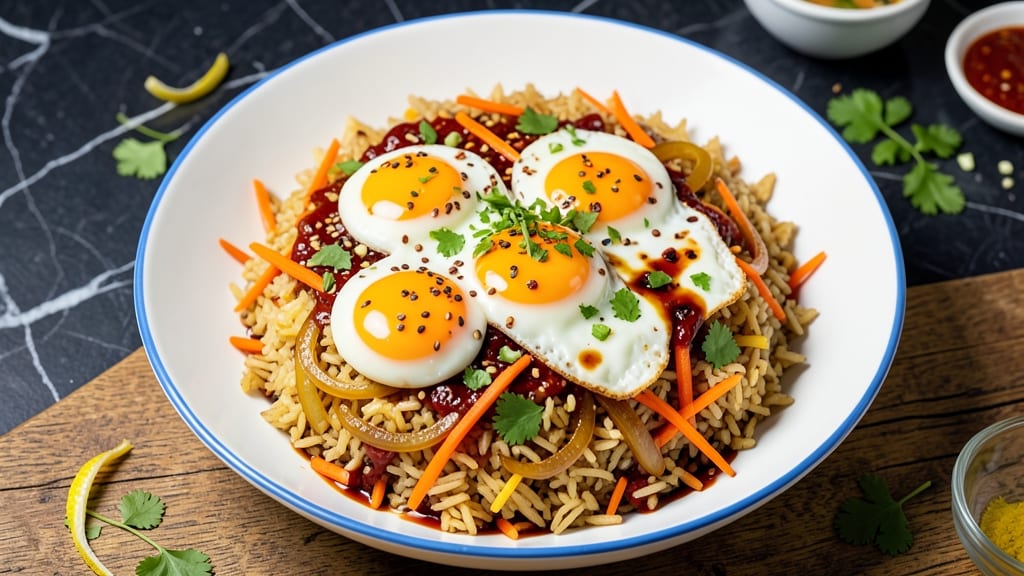
This chilli fried rice recipe delivers restaurant-quality wok-tossed spice and egg fusion in just 20 minutes. The secret lies in perfectly timed stir-frying—crisp vegetables, tender egg ribbons, and fragrant garlic-ginger aromatics all meld together in a bold, savory sauce.
I've perfected this technique over years of testing, ensuring every bite delivers that signature smoky, slightly spicy kick without overpowering the dish.
What sets this recipe apart is the balance of textures and flavors: crisp-tender veggies, silky egg strands, and perfectly seasoned rice that absorbs the chilli sauce just enough to coat each grain.
The wok hei (breath of the wok) technique creates that signature smoky aroma, while high-heat stir-frying keeps everything vibrant. Whether you're feeding a crowd or meal prepping for the week, this dish delivers bold, satisfying results that taste like your favorite takeout—only better.
Ingredients for chilli fried rice
Restaurant-quality chilli fried rice starts with these carefully balanced ingredients for perfect texture and flavor fusion.
| Ingredient | Amount | Notes |
|---|---|---|
| Day-Old Cooked White Rice 🍚 | 4 cups | Cold or room temperature preferred |
| Large Eggs 🥚 | 3 whole | Fresh, room temperature for best texture |
| Yellow Onion 🧅 | 1 whole | Medium size, finely chopped |
| Carrots 🥕 | 2 medium | Julienned into matchsticks |
| Garlic Cloves 🧄 | 4 cloves | Minced for aromatic depth |
| Fresh Ginger 🌿 | 1 ½ tbsp | Finely grated, peeled |
| Chilli Garlic Sauce 🌶️ | 2 tbsp | High-quality, smoky flavor |
| Soy Sauce 🍶 | 3 tbsp | Light or all-purpose preferred |
| Sesame Oil 🫒 | 1 tbsp | Toasted, for aroma |
| Vegetable Oil 🫒 | 2 tbsp | High smoke point for stir-frying |
| Green Onions 🧅 | 3 whole | Thinly sliced, for garnish |
| Salt 🧂 | ½ tsp | Adjust to taste |
| Black Pepper 🌶️ | ¼ tsp | Freshly ground for heat |
| White Pepper 🌶️ | ¼ tsp | For subtle depth |
The foundation begins with day-old rice—fresh rice turns mushy under high heat. Day-old or cold rice holds its shape and absorbs flavors better. For the eggs, room temperature is key—they’ll scramble into delicate ribbons rather than tough clumps. The yellow onion and carrots should be uniformly chopped into matchsticks for even cooking. I prefer organic carrots from Trader Joe’s for their sweetness, but any firm, bright orange carrots work. The garlic and ginger are non-negotiable for that signature aromatic punch—freshly grated ginger adds a bright, peppery note that jarred ginger can’t match.
No chilli garlic sauce? Mix 1 tbsp sriracha with 1 tbsp soy sauce and 1 tsp honey for a quick substitute. Short on green onions? Scallions or chives work in a pinch, though they’ll have a slightly milder flavor. The sesame oil is purely for aroma—use sparingly, as it’s potent. For a vegetarian version, swap the eggs for silken tofu or extra-firm tofu cubes. The soy sauce should be light, not dark—dark soy sauce adds color but overpowers the dish. If you’re meal prepping, cook the rice and chop the veggies ahead, but hold off on seasoning until just before serving to keep flavors vibrant.
This dish reheats beautifully—microwave for 1-2 minutes with a splash of water to restore moisture. Store leftovers in an airtight container for up to 3 days in the fridge, though it’s best enjoyed fresh. For freezing, portion into single servings and freeze for up to 3 months. The flavors deepen over time, so it’s perfect for meal prep. To revive frozen portions, thaw in the fridge overnight and reheat gently on the stovetop with a splash of water. The wok hei technique is what makes this dish shine—high heat and constant tossing create that signature smoky aroma, but even a skillet will work if you keep the heat high and stir frequently.
Why You'll Love This Recipe
- No Leftovers Wasted: I swear by this trick—day-old rice is the secret weapon. It’s dry enough to sizzle perfectly instead of turning mushy, and honestly? It’s how I use up that half-cup of rice from last night’s dinner that’s been sitting in the fridge.
- Garlic Bomb Flavor: That moment when you crush those garlic cloves into the hot oil? Pure magic. The sweetness from the carrots and the sharpness of the chili powder play off the eggs so well—it’s the kind of dish that makes you want to close your eyes and take a second bite.
- Lunchbox Hero: Between us, this is my go-to for packed lunches. The flavors stay bold even cold, and I’ll be real: my kids (and my husband) always pick this over anything else I try to pack. Plus, it reheats like a dream—no sad, soggy rice here.
- Pantry Staple Magic: Onions, eggs, carrots—stuff I always have lying around. No fancy ingredients, no last-minute grocery runs. I’ve made this with whatever was in my fridge, and it’s still spot-on every time. Budget-friendly? Absolutely. Reliable? Even more so.
Step-by-step instructions for wok-tossed spice and egg fusion
Master this classic technique for restaurant-quality chilli fried rice every time.
Prepare the Base Ingredients
Break the 3 whole Large Eggs into a bowl and whisk vigorously until the yolks and whites are fully combined and frothy. Set aside. Finely chop the 1 whole Yellow Onion and julienne the 2 medium Carrots into thin matchsticks—aim for even, ¼-inch thick strips. Mince the 4 cloves Garlic Cloves and grate the 1.5 tbsp Fresh Ginger using a microplane or fine grater. These aromatics should be finely textured to distribute evenly throughout the dish.
Peel and thinly slice the 3 whole Green Onions, reserving half for garnish. Measure out the 2 tbsp Chilli Garlic Sauce, 3 tbsp Soy Sauce, 0.5 tsp Salt, 0.25 tsp Black Pepper, and 0.25 tsp White Pepper into a small bowl and whisk together. This seasoning blend will carry the dish's signature heat and umami depth. Keep the 4 cups Day-Old Cooked White Rice at room temperature for optimal texture.
Cook the Eggs to Perfect Curl
Heat a wok or large skillet over medium-high heat until it's smoking slightly. Add 2 tbsp Vegetable Oil and swirl to coat the surface evenly. Pour in the whisked eggs and let them sit undisturbed for 5-7 seconds—this allows the bottom to set slightly before gently pushing the edges toward the center with a spatula. Continue folding the eggs until they form soft, delicate curls that are just set but still slightly runny in the center.
Remove the eggs from the wok and set aside on a plate. The residual heat will continue cooking them slightly, but you want them tender, not fully scrambled. This step is critical—overcooked eggs will turn rubbery in the final dish. If the eggs release easily from the pan in one piece, you've nailed the texture.
Stir-Fry Aromatics and Vegetables
Return the wok to medium-high heat and add another 1 tbsp Vegetable Oil. Toss in the minced garlic cloves and fresh ginger, stirring constantly for 20-30 seconds until they become fragrant and just begin to color. Add the julienned carrots and chopped yellow onion, spreading them evenly across the wok's surface. Stir-fry for 2-3 minutes until the vegetables soften but retain a slight crunch—this ensures they contribute texture rather than mushiness.
Pour in the prepared seasoning blend and toss vigorously for 30 seconds to coat the vegetables evenly. The sauce should sizzle and bubble slightly, indicating it's hot enough to develop proper flavor. If the mixture appears dry, add 1 tablespoon water to help steam the vegetables gently. This step builds the foundation of flavor that carries through the entire dish.
Combine Rice and Finish with Sesame Oil
Add the 4 cups Day-Old Cooked White Rice to the wok, breaking up any clumps with your spatula. Toss everything together for 2-3 minutes until the rice is heated through and begins to absorb the flavors. Sprinkle the 1 tbsp Sesame Oil over the top and toss once more to distribute it evenly. The sesame oil adds a nutty aroma that elevates the dish's complexity.
Return the curled eggs to the wok and gently fold them into the rice mixture. Taste and adjust seasoning—you may need to add an extra ½ teaspoon Soy Sauce or Chilli Garlic Sauce depending on your preference for heat. The rice should be evenly coated with sauce, with visible flecks of carrot, onion, and egg throughout. If it appears dry, add another 1 tablespoon water and toss once more.
Garnish and Serve Immediately
Transfer the chilli fried rice to serving plates and garnish with the reserved sliced green onions. The dish should be vibrant in color—bright from the carrots, deep red from the chilli sauce, and speckled with egg curls. Serve immediately while the rice is hot and the aromatics are at their peak intensity. The texture should contrast perfectly: tender rice, slightly crunchy vegetables, and silky egg curls in every bite.
This dish is best enjoyed fresh, as the flavors meld and intensify with each bite. The combination of smoky chilli, umami soy, and nutty sesame oil creates a balanced flavor profile that's both comforting and exciting. Leftovers can be refrigerated for up to 2 days, but reheating will slightly alter the texture—best served immediately after cooking.
Pro Tips For Making Chilli Fried Rice
- STIR-FRY RICE DRY: Break up clumps with your spatula before adding oil—cold rice sticks together like glue, and you’ll end up with a gummy mess. Spread it out on the pan and let it sizzle for 30 seconds to dry the surface first.
- SALT THE EGGS FIRST: Crack eggs into a bowl, add a pinch of salt, and whisk like you mean it. Cooked eggs in chili fried rice taste bland if you wait until after they’re scrambled—seasoning them upfront makes a real difference.
- DON’T OVERCOOK THE CARROTS: Cut them into matchsticks and toss them in last—once the rice is halfway done. Carrots turn mushy fast, and you’ll regret it if they’re limp by the end. Think "al dente," not "soupy."
- USE GARLIC BUTTER: Melt 1 tablespoon of butter with minced garlic instead of just oil—it adds richness and depth without overpowering. Skip the butter, and your dish will taste like it’s missing something. (Yes, even if you’re not a fan of garlic butter.)
Regional styles of this chilli fried rice
Hong Kong Style
In Hong Kong, chilli fried rice is all about bold, smoky heat and perfectly balanced textures. The local version often includes Chinese sausage (lap cheong) and sometimes dried shrimp for extra umami depth.
I love adding 1 tbsp of oyster sauce alongside the soy sauce for a richer, more complex flavor profile. The dish is typically served with a side of pickled vegetables to cut through the richness. 🌶️
Singapore Spiced
Singapore takes chilli fried rice to another level with its signature sambal oelek kick. The recipe often incorporates shrimp paste (belacan) and a touch of palm sugar for a sweet-spicy balance.
I like to add 1 tsp of shrimp paste to the seasoning blend and a pinch of palm sugar to sweeten the heat. Garnish with cilantro and lime wedges for a bright, zesty finish that’s distinctly Singaporean.
Thai-Inspired
Thai-style chilli fried rice leans into aromatic spices with lemongrass, kaffir lime leaves, and a hint of fish sauce. I recommend adding 1 stalk of lemongrass (bruised and chopped) and 2 kaffir lime leaves (torn) to the stir-fry for a fragrant, citrusy depth.
Finish with a splash of fish sauce and a squeeze of lime to brighten the dish. The Thai version is lighter on the soy sauce but packs more herbal complexity.
Malaysian Curry Twist
For a Malaysian-inspired take, stir in ½ cup of coconut milk at the end for creaminess and add 1 tsp of curry powder to the seasoning blend. I also like to include peanuts or cashews for crunch.
The coconut milk mellows the heat while adding a rich, tropical dimension. Serve with a side of sambal for those who crave extra spice. 🥥
Japanese Egg-Focused
In Japan, chilli fried rice is often called "chahan" and emphasizes perfectly cooked eggs. The Japanese version uses less chilli sauce and more mirin for sweetness. I recommend reducing the chilli garlic sauce to 1 tbsp and adding 1 tbsp of mirin to the seasoning blend.
The eggs are cooked to a slightly firmer curl, and the dish is garnished with furikake (Japanese seasoning) for a nutty, savory finish.
Nutrition facts
Frequently asked questions
Why does my chilli fried rice turn out mushy?
Using fresh rice is the #1 mistake—it releases too much moisture when stir-fried. Always use day-old or cold rice that's completely cooled and slightly dry. Also, avoid overcrowding the wok and cook in batches if needed to maintain high heat. The rice should sizzle and develop a light crust on the outside while staying tender inside.
Can I make chilli fried rice without a wok?
A heavy-bottomed skillet or cast-iron pan works perfectly. The key is maintaining high heat and using enough oil to prevent sticking. A 12-inch skillet should work for 4 servings. Just stir-fry in batches if needed—vegetables first, then rice, then eggs at the end to keep them tender.
How do I adjust the spice level? For milder heat, reduce the chilli garlic sauce to 1 tbsp and add ½ tsp honey or sugar to balance. For extra spice, add ½ tsp of chilli flakes or 1 tsp of sambal oelek at the end.
What's the best way to store leftovers?
Store in an airtight container in the fridge for up to 3 days. For reheating, microwave with a splash of water for 1-2 minutes or heat on the stovetop with a little oil until steaming. The texture won't be identical to fresh, but it's still delicious. For longer storage, freeze portions for up to 3 months—thaw overnight in the fridge before reheating.
Can I add protein besides eggs?
Yes! Swap eggs for chicken, shrimp, or tofu—just cook the protein separately first. For chicken, cut into small pieces and stir-fry until fully cooked before adding rice. For shrimp, cook until just pink (2-3 minutes) and add at the end. Tofu should be pressed and cubed for better texture. Each protein adds about 100-150 calories per serving.