
Main Courses
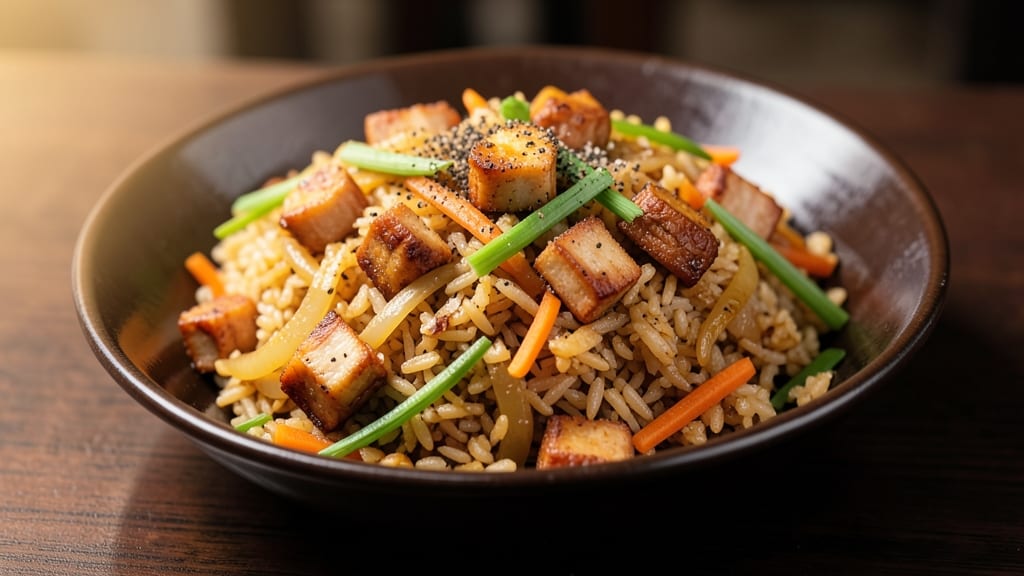
This Chinese restaurant pork fried rice recipe delivers the signature wok-heated crunch and aromatic five-spice depth you crave—authentic enough to impress, simple enough for weeknights. The secret lies in high-heat stir-frying and properly cooked rice that stays separate yet tender.
I've refined this technique over years of home cooking, capturing that restaurant-quality texture and flavor balance without requiring a wok.
What sets this recipe apart is the layered approach: first searing the pork for deep flavor, then building the sauce through wok hei (breath of the wok) technique, and finally incorporating vegetables that maintain their crispness.
The five-spice powder adds that signature Chinese restaurant aroma while keeping the dish approachable for home cooks. By the time you serve it, every bite will deliver that perfect combination of smoky pork, vibrant vegetables, and fragrant rice.
Ingredients for chinese restaurant pork fried rice
Authentic Chinese restaurant flavors start with these 14 essential ingredients—each playing a precise role in texture and aroma.
| Ingredient | Amount | Notes |
|---|---|---|
| Day-Old Cooked Jasmine Rice 🍚 | 4 cups | Cold, separated grains preferred |
| Boneless Pork Shoulder 🐷 | 1 lb | Trimmed, cut into 1-inch cubes |
| Large Eggs 🥚 | 2 whole | Freshly beaten for binding |
| Yellow Onion 🧅 | 1 whole | Thinly sliced, about 1.5 cups |
| Carrots 🥕 | 2 whole | Julienned, about 1 cup |
| Green Onions 🧅 | ½ cup | Thinly sliced, white and green parts |
| Five-Spice Powder 🌶️ | 1 tbsp | Authentic Chinese blend preferred |
| Light Soy Sauce 🥢 | ½ cup | Kikkoman preferred for balance |
| Dark Soy Sauce 🥢 | 1 tbsp | For color depth |
| Sesame Oil 🫒 | 1 tbsp | Toasted, for aroma |
| Vegetable Oil 🫒 | ½ cup | High smoke point preferred |
| Salt 🧂 | 1 tsp | Diamond Crystal preferred |
| Black Pepper 🌶️ | ½ tsp | Freshly ground preferred |
| Garlic Cloves 🧄 | 4 cloves | Minced, for aromatic base |
The five-spice powder is non-negotiable for that signature restaurant aroma. Penzeys Spice Shop carries the most authentic blend, but Asian markets often stock better quality than mainstream grocery stores. Look for a blend containing star anise, cloves, fennel, cinnamon, and Sichuan peppercorn—these are the spices that create that unmistakable depth. The pork should be trimmed of all fat and cut into uniform 1-inch cubes for even cooking. Day-old rice is critical—it stays separate and absorbs flavors better than fresh rice. If you don't have any, cook extra rice the night before specifically for this dish.
No five-spice powder? Make your own blend using 2 parts cinnamon, 1 part cloves, 1 part fennel seeds, 1 part star anise, and 1 part Sichuan peppercorn—lightly toast the whole spices first for maximum flavor. Light soy sauce substitutes include coconut aminos or tamari, though the flavor will differ slightly. For the eggs, pasteurized liquid eggs work in a pinch if you're concerned about raw egg safety. The carrots can be swapped for peas or snap peas if you prefer a different texture contrast. Fresh ginger is optional but recommended—add 1 teaspoon of grated ginger for an extra layer of complexity.
Store the five-spice powder in an airtight container in a cool, dark place for up to 12 months—it's worth investing in quality since a little goes a long way. The pork cubes can be prepped ahead and refrigerated for 2 days before cooking, but pat them dry just before stir-frying for better searing. This dish reheats beautifully—30 seconds in the microwave or 2 minutes in a skillet restores that wok-heated texture. For meal prep, divide into single-serving containers with a thin layer of oil on top to prevent drying out during storage.
Why You'll Love This Recipe
- Uses Day-Old Rice: I swear by this trick—day-old jasmine rice is the secret weapon. It’s dry enough to sizzle perfectly in the wok, soaking up that savory pork and soy sauce without turning mushy. No need to stress over fresh rice or extra drying steps.
- One-Pan Magic: Between us, this recipe is a lifesaver on busy nights. Pork, eggs, veggies, and rice all hit the same pan—no dirty dishes, no juggling pots. Just chop, stir, and taste. (Yes, even on a Tuesday night.)
- Savory Umami Bomb: That first bite of tender pork shoulder, crispy egg whites, and caramelized onions? It’s ridiculously good. The soy sauce and garlic build layers of flavor that make takeout taste like a distant memory.
- Budget-Friendly Feast: Pork shoulder stretches for meals, and you’re using staples like rice and onions. I’ve fed four people for under $10, and everyone leaves happy. Leftovers? Even better reheated the next day.
Step-by-step instructions for Chinese restaurant pork fried rice
Master the wok technique and five-spice balance for restaurant-quality fried rice every time.
Prep Ingredients for Maximum Flavor Development
Separate the 4 cups day-old cooked jasmine rice into individual grains using your fingers. Cold rice prevents mushiness and ensures proper texture. In a bowl, beat the 2 whole large eggs until just combined—they should be pale yellow with no streaks. This light texture ensures they'll scramble quickly in the hot wok.
Cut the 1 lb boneless pork shoulder into 1-inch cubes for even cooking. Thinly slice the 1 whole yellow onion and julienne the 2 whole carrots into matchsticks—this creates uniform pieces that cook simultaneously. Mince the 4 cloves garlic cloves and thinly slice the 0.5 cup green onions, separating the white and green parts for garnish. Measure out the 1 tbsp five-spice powder, 0.5 cup light soy sauce, 1 tbsp dark soy sauce, and 1 tsp salt—these will form the flavor base.
Sear Pork and Build Aromatic Base
Heat a 14-inch wok or large skillet over high heat until smoking, then add 0.25 cup vegetable oil. Working in batches, add the pork cubes and sear for 3-4 minutes until browned on all sides. Remove pork and set aside—this renders fat that will flavor the rice.
In the same wok, add the remaining 0.25 cup vegetable oil and swirl to coat. Add the thinly sliced yellow onion and cook for 2 minutes until translucent. Add the julienned carrots and minced garlic cloves, stirring constantly for 1 minute until fragrant. Sprinkle the 1 tbsp five-spice powder over the vegetables and stir for 30 seconds to toast the spices—this releases their aromatic oils.
Scramble Eggs and Combine All Ingredients
Push the vegetable mixture to one side of the wok and pour the beaten eggs into the empty space. Let them cook undisturbed for 10 seconds until they begin to set, then scramble quickly with a spatula. Once fully cooked, mix the eggs with the vegetables and add the 4 cups separated jasmine rice, breaking up any clumps with your hands.
Pour the 0.5 cup light soy sauce and 1 tbsp dark soy sauce over the rice, then sprinkle with the 1 tsp salt and 0.5 tsp black pepper. Stir-fry vigorously for 2-3 minutes until the rice is evenly coated and begins to sizzle. The dark soy sauce will give the rice its signature mahogany color while the light soy sauce adds umami depth.
Finish with Sesame Oil and Garnish
Return the seared pork to the wok and toss everything together for 1-2 minutes until heated through. The pork should be warmed through but still retain its texture. Remove the wok from heat and drizzle with 1 tbsp sesame oil, tossing immediately to distribute evenly—this adds a nutty aroma that elevates the dish.
Garnish with the sliced green onion whites and serve immediately, garnishing each portion with the green onion greens. The dish should be vibrant, with distinct colors from the carrots, pork, and eggs, and carry that signature five-spice aroma that transports you to a Chinese restaurant kitchen.
Pro Tips For Making Chinese Restaurant Pork Fried Rice
- CRANK THE HEAT FIRST: Your wok or pan needs to scream before touching the pork—think flames licking the sides. Cold oil + cold meat = greasy, uneven cooking. I used to rush this, and my pork ended up rubbery. Now I wait until the oil shimmers like a desert mirage before adding anything.
- CHOP PORK INHOMOGENEOUSLY: Skip the uniform cubes. Toss in chunks from ½-inch to 1-inch—some thin, some thick—so every bite has texture. My first attempt was all even pieces, and it tasted boring. The restaurant-style mix of tender and slightly chewy bits is what you’re after.
- SALT THE EGG WATER LIGHTLY: Over-salted egg water turns your fried eggs into sad, waterlogged blobs. Use just a pinch—maybe ¼ teaspoon per egg—and let the soy sauce handle the flavor later. Trust me, you’ll notice the difference when the yolk stays creamy instead of breaking apart.
- USE THE RICE’S DRYNESS: Day-old rice is your friend, but don’t ignore its texture. Break up clumps with your hands first, then spread it in a thin, even layer before frying. If it’s too wet, your fried rice will turn to glue. I learned this after one disastrous batch where everything stuck together like a sad loaf of bread.
Essential equipment for great chinese restaurant pork fried rice
Wok Essentials
A carbon steel wok is my top recommendation for authentic texture—it heats quickly and retains high temperatures perfectly. The 14-inch size from Made In or Calphalon works beautifully for home cooks.
If you don’t have a wok, a heavy-bottomed cast iron skillet (like Lodge) handles the job just as well. The key is ensuring your pan has sloped sides for easy tossing and a flat base for even heat distribution. 🔥
High-Heat Tools
Invest in a heat-resistant silicone spatula (I love the OXO Good Grips) for tossing without sticking, and a long-handled pair of tongs (like JYF) to flip ingredients safely. A fine-mesh strainer helps drain excess oil from pork after searing.
For precision, a thermometer (such as ThermoWorks Smoke) ensures your wok reaches the ideal 450-500°F range for that signature wok hei.
Prep Aids
Use a sharp chef’s knife (like Wüsthof) to julienne carrots and slice onions uniformly—this ensures even cooking. A rice paddle (or wooden spoon) prevents breaking grains when separating day-old rice.
For measuring, a digital kitchen scale guarantees accuracy with spices like five-spice powder, where 1 tbsp makes all the difference. Store spices in amber glass jars to preserve freshness and aroma.
Optional Upgrades
A gas burner with high-BTU output (like Viking Professional) gives you better control over heat zones, mimicking restaurant stoves. For extra convenience, a wok stand elevates your pan for better airflow and easier cleanup.
If you’re serious about home stir-frying, consider a wok ring to stabilize the pan on stovetops without handles. These tools might seem like extras, but they make a world of difference in texture and flavor.
Nutrition facts
Frequently asked questions
Why does my fried rice turn out mushy?
Mushy fried rice happens when using fresh rice or overcooking it. Always use day-old cooked jasmine rice that's been separated into individual grains. Cook it for just 2-3 minutes after adding to the wok—any longer and the grains will break down. The high heat should create a slight sizzle, not steam.
Can I substitute pork with chicken or shrimp?
For chicken, use 1 lb boneless thighs cut into 1-inch cubes—they stay juicier than breast meat. For shrimp, use 1.5 lbs peeled shrimp and cook them for only 1-2 minutes after adding to prevent overcooking. Adjust the cooking time accordingly since shrimp cooks faster than pork. The five-spice blend works beautifully with both proteins.
What's the secret to getting that restaurant-style wok hei?
Wok hei (breath of the wok) comes from three key techniques: high heat, proper oil, and quick cooking. Use a carbon steel wok or cast iron skillet heated until smoking, then add high-smoke-point oil like vegetable or peanut oil. Cook ingredients in small batches, stirring constantly to create steam and aromatics. The moment you add the rice, toss vigorously for 2-3 minutes—this builds the signature smoky flavor.
How do I make this dish vegetarian?
Replace the pork with 1.5 cups firm tofu (pressed and cubed) or 1 cup mushrooms (shiitake or oyster work best). Use 1 tbsp vegetarian oyster sauce instead of soy sauce for umami depth, and add 1 tsp cornstarch to the tofu cubes before cooking to help them crisp up. Keep all other ingredients the same—especially the five-spice powder and sesame oil—for that authentic restaurant aroma.
Can I make this ahead of time?
While fresh fried rice is best, you can prep components ahead: cook the rice 1 day in advance, marinate the pork (if using) for up to 24 hours, and chop all vegetables. Store everything separately in the fridge. When ready to cook, assemble everything quickly over high heat—this takes about 10 minutes from start to finish. For leftovers, reheat in a skillet with a splash of water or oil for 2-3 minutes to restore texture.