
Main Courses
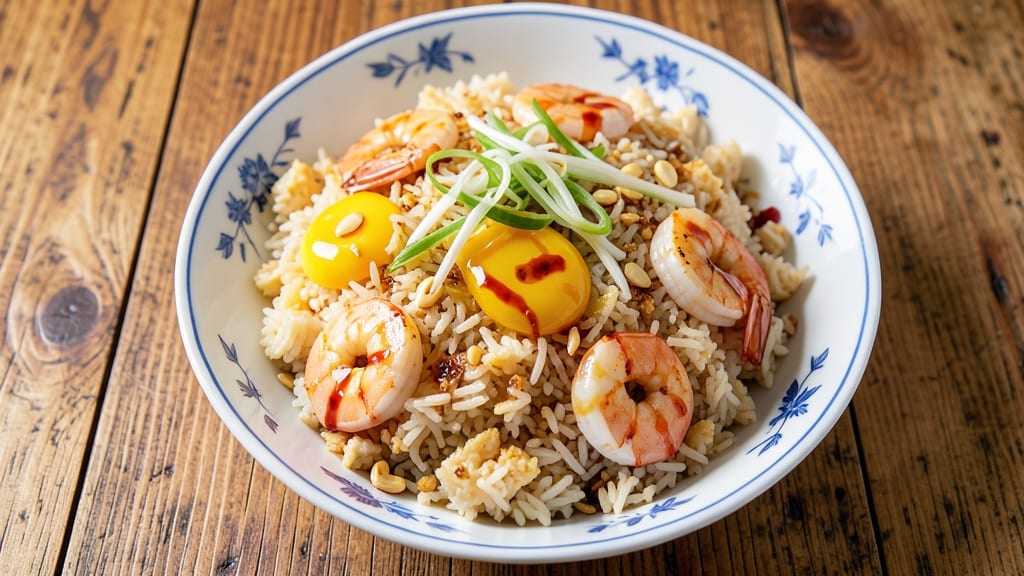
This Chinese white fried rice recipe transforms day-old rice into a restaurant-quality dish with scrambled eggs and shrimp. The secret lies in using cold, dry rice and high heat to achieve that signature wok hei—smoky, aromatic flavor that defines authentic Chinese cooking.
I've perfected this technique over years of testing, ensuring every bite delivers crisp edges, tender shrimp, and perfectly scrambled eggs.
What sets this recipe apart is the balance of textures and flavors: the slight chew of cold rice, the tender snap of shrimp, and the creamy richness of eggs.
It's a complete dish that's quick to prepare, packed with protein, and versatile enough to serve as a standalone meal or alongside egg rolls and soup. The key steps—proper rice preparation, high-heat stir-frying, and garnishing with scallions and sesame oil—make all the difference in achieving authentic results.
Ingredients for chinese white fried rice
Cold rice, fresh shrimp, and perfectly scrambled eggs—these are the pillars of authentic Chinese white fried rice.
| Ingredient | Amount | Notes |
|---|---|---|
| Day-Old Jasmine Rice 🍚 | 4 cups | Cold and dry, broken into pieces |
| Large Eggs 🥚 | 4 whole | Fresh, room temperature |
| Shrimp 🦐 | 1 lb | Peeled, deveined, tail-on, medium size |
| Green Onions 🧅 | ½ cup | White and green parts, chopped |
| Garlic Cloves 🧄 | 4 cloves | Minced, fresh preferred |
| Sesame Oil 🫒 | 1 tbsp | Toasted, for aroma |
| Vegetable Oil 🫒 | 3 tbsp | High smoke point, neutral flavor |
| Soy Sauce 🍶 | 2 tbsp | Light or all-purpose |
| Oyster Sauce 🍶 | 1 tbsp | High-quality, for depth |
| White Pepper 🌶️ | ¼ tsp | Freshly ground for subtle heat |
| Salt 🧂 | ½ tsp | Kosher or sea salt |
| Black Pepper 🌶️ | ¼ tsp | Freshly ground for balance |
| Toasted Sesame Seeds 🌾 | 1 tbsp | For garnish, optional |
The rice is non-negotiable—it must be day-old, cold, and completely dry. Jasmine rice is ideal for its distinct aroma, but any long-grain white rice works. Break it into smaller pieces with your hands before cooking to mimic restaurant-style texture. For shrimp, medium-sized, tail-on varieties like Gulf or Pacific shrimp hold their shape best during stir-frying. Purchase live or frozen and thaw thoroughly in the fridge overnight. The Kroger or Whole Foods seafood counters typically carry high-quality options, but frozen shrimp from Trader Joe's is a budget-friendly alternative that performs exceptionally well.
No shrimp? Chicken breast or tofu works beautifully—cut the chicken into bite-sized pieces and marinate in soy sauce for 10 minutes. Fresh garlic is essential, but if you're short on time, garlic powder at half the amount suffices. For the eggs, room temperature is critical for even scrambling; simply remove them from the fridge 30 minutes before cooking. The sesame oil should be toasted—look for bottles labeled 'toasted' or 'aromatic' at Asian markets or the international aisle of Walmart. If unavailable, regular sesame oil works, but you'll miss that nutty depth. For extra umami, add a dash of fish sauce to the soy-oyster mixture, though it's optional for vegetarian versions.
Rice can be prepped a day ahead and stored in an airtight container in the fridge. Shrimp should be thawed in the fridge, not at room temperature, to prevent bacterial growth. Once cooked, fried rice reheats beautifully—simply stir-fry again with a splash of water to restore moisture. Garnishes like sesame seeds and green onions keep for 1 week in the fridge, while sesame oil lasts 6-12 months unopened. For meal prep, divide cooked fried rice into portions and refrigerate for up to 4 days. Reheat in a skillet with a touch of oil to revive crispness.
Why You'll Love This Recipe
- No Leftovers Wasted: I swear by this trick—using day-old rice means no soggy grains, and the texture? Chef’s kiss. That slight dryness soaks up the garlic and shrimp flavor like a sponge, turning last night’s dinner into today’s star.
- Garlic-Shrimp Magic: Between us, the secret’s in the timing: crisp the shrimp first, then scramble the eggs in the same pan, and finally fold in that rice. The garlic hits you right away, but the shrimp’s sweetness lingers—like a flavor hug in every bite.
- Lunchbox Hero: Pack this cold or at room temp—it’s the only fried rice that won’t turn mushy in a bag. My kids actually eat their lunches now (yes, even on a Tuesday), and I’ve got proof it reheats like a dream.
- One-Pan, Zero Guilt: Honestly, this is my go-to when I’m broke or lazy—both work. Shrimp’s cheap in bulk, eggs stretch forever, and that jasmine rice? You can buy it in 10-pound bags. Plus, one pan, one spatula, and I’m out in 20 minutes. Budget and sanity saved.
Step-by-step instructions for Chinese white fried rice
Transform day-old rice into restaurant-quality fried rice with this precise technique.
Prepare the Shrimp and Break the Rice
Pat the 1 lb shrimp dry with paper towels and season lightly with 0.25 tsp salt and 0.25 tsp black pepper. Set aside. In a large bowl, break apart the 4 cups day-old jasmine rice with your hands until you have small, uneven pieces—this prevents large clumps in your final dish. The rice should be completely dry; if it feels damp, spread it on a baking sheet and let it air-dry for 10 minutes.
Real talk: Using cold, dry rice is non-negotiable. Freshly cooked rice releases too much moisture, resulting in mushy fried rice. The broken pieces also create that signature textural contrast we're after—crispy edges with tender centers. Work quickly here; we'll be cooking in no time.
Scramble the Eggs to Perfect Texture
Heat 2 tablespoons vegetable oil in a 14-inch wok or large skillet over medium-high heat until shimmering. Crack the 4 whole large eggs into a separate bowl, then whisk vigorously until the yolks and whites are fully combined. Pour the eggs into the hot wok and let them sit undisturbed for 5-7 seconds—this creates a smooth, thin layer.
Using a spatula, gently push the eggs from one side of the wok to the other in quick, even strokes. You're aiming for soft, custardy curds—not scrambled eggs. When the eggs are 90% set (still slightly runny in the center), remove them from the wok and set aside on a plate. We'll add them back later to keep them warm and absorb the rice's flavors. Don't overcook them now; they'll finish cooking when combined with the rice.
Stir-Fry Aromatics and Shrimp
Return the wok to medium-high heat and add the remaining 1 tablespoon vegetable oil. Add the 4 cloves minced garlic and 0.5 cup chopped green onions (white parts only), stirring constantly for 30 seconds until fragrant but not browned. Add the 1 lb shrimp in a single layer and cook undisturbed for 1 minute—this creates a good sear.
Stir the shrimp for 1-2 minutes until they turn pink and opaque throughout. Remove them from the wok and set aside with the eggs. Here's where it gets critical: Don't overcrowd the wok. If you're working in batches, keep the cooked shrimp warm in a separate bowl. The shrimp should cook quickly over high heat to maintain tenderness.
Fry the Rice with Perfect Timing
Add the remaining 1 tablespoon vegetable oil to the wok and increase heat to high. Add the broken rice in a single layer, spreading it evenly. Let it sit undisturbed for 30 seconds—this allows the rice to crisp slightly at the edges. Stir vigorously for 2-3 minutes until the rice becomes light golden and most grains are separate.
Push the rice to one side of the wok, then add 1 tablespoon sesame oil, 2 tablespoons soy sauce, and 1 tablespoon oyster sauce. Stir to combine, then add the scrambled eggs and shrimp back into the wok. Cook for another 1-2 minutes, tossing constantly, until everything is evenly coated and heated through. The rice should be hot and fragrant, with no cold spots remaining.
Finish and Garnish for Restaurant-Quality Results
Reduce heat to medium-low and stir in the 0.25 tsp white pepper. Taste and adjust seasoning with additional soy sauce if needed—you want a balance of savory, umami, and slightly sweet flavors. The rice should be tender but not mushy, with crispy edges from the initial sear.
Transfer the fried rice to a serving platter and garnish with the remaining 0.5 cup chopped green onions (green parts only) and 1 tablespoon toasted sesame seeds. Serve immediately while hot, with extra green onions on the side for garnish. The dish should have bright colors, enticing aromas, and a perfect balance of textures—crispy rice, tender shrimp, and silky eggs in every bite.
Pro Tips For Making Chinese White Fried Rice
- CRACK THE EGGS FIRST: I used to scramble the eggs last, but that’s when they turn out rubbery and sad. Crack them into a bowl first, beat them hard with a splash of water (about 1 tablespoon), then let them sit for 2 minutes. This makes them fluffier and less likely to stick to the wok—trust me, your rice will thank you.
- DON’T SKIP THE SHRIMP SWIM: Raw shrimp in fried rice? Nope. Toss them in a bowl with 1 teaspoon soy sauce, ½ teaspoon cornstarch, and a pinch of white pepper before cooking. Let them sit 5 minutes—this keeps them juicy and prevents that rubbery texture that ruins everything. (Yes, even if you’re impatient like me.)
- STOP STIR-FRYING WHEN IT’S DONE: The rice should be just cooked through when you plate it—no more. Overstirring turns it gummy, and that’s a fast track to regret. Test a grain: if it’s still slightly firm, keep moving. If it’s mushy, you’ve waited too long. High heat is your friend here.
- CHOP GREEN ONIONS IN HALF: Whole green onions? Wrong. Cut them into ½-inch pieces and sear them with the garlic at the start—this builds flavor instead of just garnishing. Save the tips for topping if you’re feeling fancy, but don’t waste the rest. (Your future self will thank you.)
Regional styles of this dish
Cantonese Classic
The original Cantonese version of white fried rice is all about simplicity and balance. In this style, you'll find day-old jasmine rice stir-fried with scrambled eggs, shrimp, and just a touch of light soy sauce and oyster sauce.
The key is achieving that signature wok hei—the smoky aroma from a well-heated wok. I recommend using a carbon steel wok for authentic results, as it retains heat better than stainless steel. Garnish with green onions and a drizzle of toasted sesame oil to elevate the dish. 🔥
Sichuan Spicy Twist
For a bold flavor profile, the Sichuan region adds heat and complexity. Start by stir-frying 1 tbsp Sichuan peppercorns in the wok until fragrant, then add 1 tbsp minced ginger and 1 tbsp doubanjiang (fermented chili bean paste) for depth.
The shrimp and eggs are cooked as usual, but the rice gets a kick from 1 tsp chili crisp or 1 tbsp chili oil at the end. Finish with pickled mustard greens for tangy contrast. This version is fiery but balanced—perfect for spice lovers. 🌶️
Hong Kong Street Food
Hong Kong-style fried rice is all about texture and bold flavors. Here, you'll find char siu (Chinese BBQ pork) mixed in alongside shrimp and eggs. The pork is typically pre-cooked and sliced thinly, adding a sweet, smoky depth.
Use dark soy sauce instead of light for a richer color, and don’t forget to add 1 tbsp hoisin sauce for extra umami. Garnish with crispy fried shallots for crunch and a sprinkle of chopped cilantro for freshness.
This version is heartier and more indulgent—just like the street food stalls in Hong Kong. 🗺️
Taiwanese Egg-Focused
In Taiwan, the star of the dish is often the eggs. The technique here involves scrambling the eggs first and then breaking them into small, soft curds before adding them to the rice. This creates a creamy, custard-like texture that contrasts beautifully with the chewy rice.
Add dried shiitake mushrooms (rehydrated and sliced) for an earthy note, and finish with a sprinkle of black pepper and a drizzle of chili oil. The result is a dish that’s rich, savory, and slightly spicy—just like the fried rice you’d find in Taipei’s night markets. ✨
Modern Fusion Adaptation
For a contemporary twist, try adding avocado slices or crispy bacon bits for a Western-inspired fusion. Swap shrimp for chicken thighs (marinated in 5-10 minutes of soy sauce) and add 1 tbsp sriracha for heat.
Top with crumbled feta cheese and fresh cilantro for a bright, creamy finish. This version keeps the essence of fried rice but adds a fresh, unexpected twist that’s perfect for brunch or lunch. 💫
Nutrition facts
Frequently asked questions
Why does my fried rice always turn out mushy?
The key is using day-old, completely dry rice that's been broken into small pieces. Freshly cooked rice releases too much moisture, while damp rice creates steam that makes everything soggy. Spread your rice on a baking sheet for 10 minutes before cooking to remove any lingering moisture. Also, avoid overcrowding the wok—cook in batches if needed to maintain proper heat and crisp edges.
Can I make this recipe without shrimp?
Swap shrimp for chicken breast or thigh (cut into bite-sized pieces), tofu (pressed and cubed), or even char siu (Chinese BBQ pork). For chicken, marinate in 1 tbsp soy sauce for 10 minutes before cooking. Tofu should be pan-fried until golden before adding to the rice. The protein-to-rice ratio should remain balanced—aim for about ½ cup protein per 4 cups rice for proper texture.
What's the difference between white and yellow fried rice?
White fried rice uses white rice and relies on aromatics like garlic, scallions, and sesame oil for flavor, while yellow fried rice gets its color from turmeric or annatto and often includes more ingredients like peas, carrots, and sometimes pork. White versions focus on simplicity and texture contrast (crispy rice, tender protein), whereas yellow versions tend to be more ingredient-heavy and slightly sweeter from added sauces like hoisin. Both are delicious—it's really about preference!
How do I achieve that smoky 'wok hei' flavor at home?
Wok hei comes from high heat and proper technique. Use a carbon steel or cast iron wok (they retain heat better than stainless steel), and heat it until it's smoking hot before adding oil. Cook in small batches to avoid steaming, and work quickly—this creates steam that carries aromatic compounds. Another trick: Add a dash of Shaoxing wine when stir-frying the aromatics for extra depth. The result should be fragrant, slightly smoky rice with crisp edges.
Can I make this ahead of time?
Cooked fried rice reheats beautifully! Store in an airtight container in the fridge for up to 4 days. To reheat, spread it on a baking sheet and warm in the oven at 350°F for 10-15 minutes, or stir-fry in a skillet with a splash of water until hot. For best texture, add a drizzle of sesame oil and fresh green onions after reheating to revive the aroma. It won't be as crispy as fresh, but the flavors will still be delicious!