
Main Courses
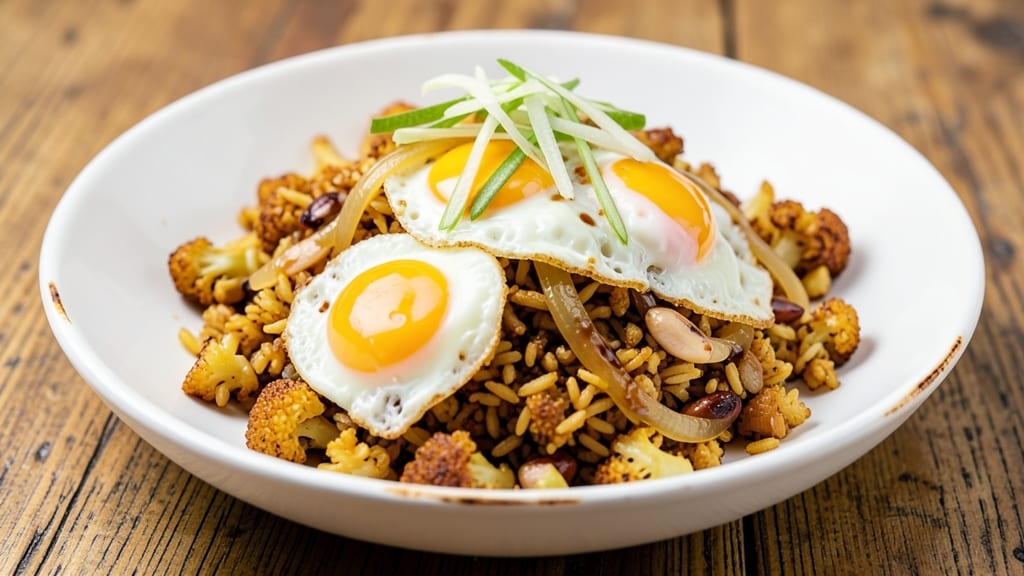
This cauliflower egg fried rice recipe transforms low-carb cauliflower rice into crispy golden bites that perfectly balance silky scrambled eggs and aromatic stir-fry seasonings. The secret lies in high-heat wok technique—quick cooking preserves texture while building layers of savory depth through garlic, ginger, and soy sauce.
I developed this version after realizing how easily cauliflower rice could mimic traditional fried rice when cooked right.
What sets this recipe apart is the texture contrast: crispy cauliflower edges meet tender scrambled eggs, all tossed in a fragrant sauce that clings perfectly. The dish delivers restaurant-quality flavor with simple ingredients—no complicated techniques required.
Whether you're adapting for dietary preferences or simply craving a lighter take on fried rice, this method ensures every bite is satisfying.
Ingredients for cauliflower egg fried rice
Simple ingredients that deliver crispy texture and rich, savory depth in every bite.
| Ingredient | Amount | Notes |
|---|---|---|
| Fresh Cauliflower Rice 🥬 | 4 cups | Freshly grated or pre-riced |
| Large Eggs 🥚 | 4 whole | Room temperature preferred |
| Yellow Onion 🧅 | ¾ cup | Diced small, about 1/2-inch pieces |
| Garlic Cloves 🧄 | 4 cloves | Minced finely for aromatic base |
| Fresh Ginger 🌿 | 1 tbsp | Finely grated, about 1-inch piece |
| Low-Sodium Soy Sauce 🍶 | 3 tbsp | For authentic umami flavor |
| Sesame Oil 🫒 | 1 tbsp | Toasted for nutty aroma |
| Vegetable Oil 🫒 | 2 tbsp | High smoke point for crisping |
| Green Onions 🧅 | ¼ cup | Thinly sliced, white and green parts |
| Sesame Seeds 🌾 | 1 tbsp | Toasted lightly for garnish |
| Salt 🧂 | ½ tsp | Diamond Crystal kosher preferred |
| Black Pepper 🌶️ | ¼ tsp | Freshly ground for brightness |
| Vegetable Broth 💧 | ½ cup | Low-sodium for balanced flavor |
The cauliflower rice is the foundation—freshly grated yields the best texture, but pre-riced works in a pinch. Look for organic cauliflower at Whole Foods or your local farmers market for vibrant color and sweetness. The eggs should be large and room temperature—they scramble more evenly. For the aromatics, fresh ginger is non-negotiable; dried just won't cut it. Minced garlic and grated ginger should be finely chopped—think almost paste-like consistency for maximum flavor infusion during the quick stir-fry.
No sesame oil? Avocado oil works in a bind, though it lacks that nutty depth. Substitute low-sodium tamari for soy sauce if you're gluten-sensitive. The vegetable broth can be swapped for water plus 1 tsp bouillon powder, but the umami will be noticeably lighter. For the green onions, scallions. If you're short on time, pre-minced garlic and ginger from the freezer section saves steps without sacrificing quality. The key to crispy cauliflower is high heat—don't rush this part.
Freshly grated cauliflower releases moisture quickly, so pat it dry thoroughly before cooking to maximize crispiness. Store any leftovers in an airtight container for up to 3 days—reheat in a skillet with a splash of water to restore crispiness. For meal prep, freeze portions in single-serving containers for up to 3 months. The eggs scramble best when cooked fresh, but you can pre-scramble and store them separately, then reheat gently before tossing with the rice.
Why You'll Love This Recipe
- No-Chop Chaos: I swear by this recipe when I’m too tired to dice anything. Fresh cauliflower rice? Just pulse it in the food processor—no knife skills required. The onions and garlic go in whole, sliced thick, so they soften perfectly without needing minced precision.
- Umami Bomb: That crispy edge on the eggs and the way the ginger lingers like a warm hug—this isn’t your basic rice. The garlic and onion caramelize just enough to make every bite sing, and the cauliflower soaks up all the flavor like a sponge.
- Lunchbox Hero: Honestly, this is my go-to for packed lunches. Make a big batch on Sunday, and it stays fresh in the fridge for days. Toss in some leftover veggies or protein, and suddenly you’ve got a meal that’s ready in seconds—no reheating drama.
- Budget Win: Eggs, onions, garlic, and ginger? All affordable staples that stretch into multiple meals. I’ve fed four people for under $10 with this, and the leftovers reheat like a dream. Plus, it’s one of those recipes where you end up with extra because it’s just that good.
Step-by-step instructions for crispy cauliflower egg fried rice
Master the art of achieving crispy cauliflower rice while maintaining silky eggs—this method delivers perfect texture every time.
Prepare the Cauliflower Rice for Maximum Crispiness
Pat the 4 cups fresh cauliflower rice completely dry with paper towels. This step is non-negotiable—excess moisture prevents proper crisping. I like to spread the rice in a single layer on a clean kitchen towel and gently press to absorb any lingering water droplets.
Heat a large nonstick skillet over medium-high heat and add the 2 tablespoons vegetable oil. Swirl to coat the pan evenly. The oil should shimmer but not smoke—if it smokes, lower the heat slightly. Add the cauliflower rice in a single layer, spreading it out so pieces don't overlap. Cook undisturbed for 5-6 minutes until the edges turn golden brown and crispy.
Here's the thing—don't stir during the initial cooking. Stirring too soon creates steam that softens the rice. Instead, let it develop that perfect crispy texture on one side before gently flipping with a spatula. This two-stage cooking method ensures both sides achieve that satisfying crunch.
Cook the Aromatic Base and Set Aside
In the same skillet (no need to clean it—the fond adds flavor), reduce heat to medium and add the 2 tablespoons sesame oil. Swirl to coat, then add the 0.75 cup diced yellow onion. Cook for 3-4 minutes until softened but not browned—you want to preserve their color for visual appeal.
Add the 4 cloves minced garlic and 1 tablespoon finely grated fresh ginger, stirring constantly for 30 seconds until fragrant. The moment you smell that aromatic punch, you know they're ready. Immediately transfer this mixture to a small bowl and set aside—we'll use it later to finish the dish.
Scramble the Eggs to Silky Perfection
Return the skillet to medium heat and add the 4 whole large eggs. Let them sit undisturbed for 5-7 seconds before gently pushing them around with a spatula, creating soft curds. This technique creates that signature silky texture rather than dry, rubbery eggs.
Once the eggs are about 80% set but still slightly runny in the center, remove them from the skillet and set aside on a warm plate. The residual heat will finish cooking them to perfect doneness. Here's a pro tip: if you're worried about overcooking, use a lower heat setting—eggs cook faster than you think.
Combine All Ingredients for the Final Fusion
Return the crispy cauliflower rice to the skillet and add the 3 tablespoons low-sodium soy sauce, 0.5 teaspoon salt, and 0.25 teaspoon black pepper. Stir gently to combine, letting the soy sauce coat each piece of rice evenly. Pour in the 0.5 cup vegetable broth and stir for 1-2 minutes until the rice is heated through and the liquid has mostly evaporated.
Add the reserved onion-garlic-ginger mixture back to the skillet and toss everything together. The aromatics will infuse the rice with their flavor while the broth helps create a slightly saucy consistency. This is where all the flavors come together—don't rush this step. Taste and adjust seasoning if needed, adding a splash more broth if the rice seems too dry.
Finish and Garnish for Restaurant-Quality Presentation
Return the scrambled eggs to the skillet and gently fold them into the cauliflower rice mixture. Cook for an additional 1-2 minutes just to heat everything through. The eggs should be warm but still maintain their silky texture.
Remove from heat and transfer to serving plates. Garnish with the 0.25 cup sliced green onions and 1 tablespoon toasted sesame seeds. I like to sprinkle them evenly across each serving for both visual appeal and added texture contrast. Serve immediately while the cauliflower rice is still crispy and the eggs are warm.
Pro Tips For Making Cauliflower Egg Fried Rice
- STIR-FRY CAULIFLOWER FAST: Use pre-riced cauliflower straight from the bag—no chopping, no soggy mess. If making fresh, pulse in a food processor until it’s tiny (like rice grains), or it’ll turn to mush when you stir-fry.
- SALT EGGS BEFORE COOKING: Crack eggs into a bowl, add a pinch of salt, and whisk vigorously. The salt breaks down proteins faster, giving you fluffier, more cohesive curds that won’t turn to scrambled rubber in your rice.
- DON’T OVERCROWD THE PAN: Work in batches if needed—cauliflower rice releases water like a faucet. A packed pan steams instead of sears, leaving you with sad, limp rice. Keep it loose and let it crisp.
- GINGER-GARLIC PASTE SAVES TIME: Mince garlic and ginger together, then mix with 1 tsp oil to form a paste. Store it in the fridge for up to a week—no chopping mid-cook, and the flavors meld better than fresh minced bits.
Health benefits of cauliflower egg fried rice
Low-Carb Advantage
One of the biggest perks of this cauliflower egg fried rice is its low-carb profile—replacing traditional rice with 4 cups of cauliflower rice cuts carbs dramatically while keeping you full.
A standard serving of white rice contains about 45 grams of carbs, while this version has just 8-10 grams per serving. That’s a game-changer for anyone watching their carb intake or managing blood sugar levels. 💪
High-Protein Power
The 4 large eggs in this recipe add a substantial protein boost—about 24 grams per serving. Eggs are a complete protein, meaning they contain all nine essential amino acids your body needs for muscle repair and energy.
This makes the dish especially satisfying for breakfast or post-workout meals when you need protein to fuel recovery.
Rich in Fiber
Cauliflower is packed with dietary fiber, which supports digestive health and keeps you feeling full longer. The 4 cups of cauliflower rice provide about 6 grams of fiber per serving, helping to regulate digestion and stabilize blood sugar.
Fiber also plays a key role in maintaining a healthy gut microbiome, which is linked to overall wellness.
Antioxidant Boost
Cauliflower is a nutrient-dense cruciferous vegetable rich in antioxidants like vitamin C, vitamin K, and sulfur compounds. These compounds help combat oxidative stress in the body, reducing inflammation and supporting cellular health.
The garlic and ginger in this recipe add even more antioxidant power, enhancing the dish’s health benefits beyond just being delicious. 🌿
Low-Calorie, High-Flavor
This recipe is surprisingly light on calories—a full serving clocks in at around 350-400 calories, making it a great option for weight management without sacrificing flavor.
The sesame oil and soy sauce add depth, while the crispy cauliflower and silky eggs create a satisfying texture that keeps you coming back for more. It’s proof that healthy eating can be just as flavorful as traditional fried rice.
Versatile for Dietary Needs
This dish is naturally gluten-free (if using tamari instead of soy sauce) and can easily be adapted for vegan diets by replacing eggs with tofu or mushrooms. The low-sodium soy sauce and vegetable broth also make it heart-healthy, reducing excess sodium while keeping the umami flavor intact.
It’s a flexible, nutrient-packed meal that works for almost anyone. ✨
Nutrition facts
Frequently asked questions
Can I use pre-riced cauliflower instead of freshly grated?
Yes, but with one key adjustment: pre-riced cauliflower often contains more moisture. Drain it thoroughly in a fine-mesh strainer and pat it completely dry with paper towels before cooking. This extra drying step is crucial for achieving that crispy texture—skip it, and you'll end up with soggy rice.
Why do my eggs turn rubbery in fried rice?
Overcooking or stirring too aggressively creates rubbery eggs. The secret is to cook them just until 80% set (about 5-7 seconds undisturbed), then remove them from heat immediately. For extra insurance, use a lower heat setting—eggs cook faster than you think! Return them to the skillet only at the very end to warm through.
How do I make this dish spicier?
Add 1/2 teaspoon red pepper flakes or 1/2 teaspoon gochujang (Korean chili paste) when combining the rice with soy sauce. For heat without dryness, stir in 1/4 cup chopped jalapeños along with the onions. Always taste before serving—you can adjust spice levels to your preference.
Can I make this ahead of time?
The cauliflower rice loses crispiness when reheated, so this dish is best served fresh. However, you can prep components ahead: cook the cauliflower rice and store it separately (it stays crispy for 1 hour at room temperature), scramble the eggs fresh, and mix everything together just before serving. For meal prep, focus on the flavor base (onions, garlic, ginger) and assemble the dish when ready to eat.
What's the best pan for crispy cauliflower rice?
A carbon steel or cast iron skillet creates the best crispy texture due to their excellent heat retention. If you don't have either, a heavy stainless steel pan works well. Avoid nonstick pans for this step—they don't get hot enough to properly crisp the cauliflower. Remember: high heat is your friend for that satisfying crunch!