
Main Courses
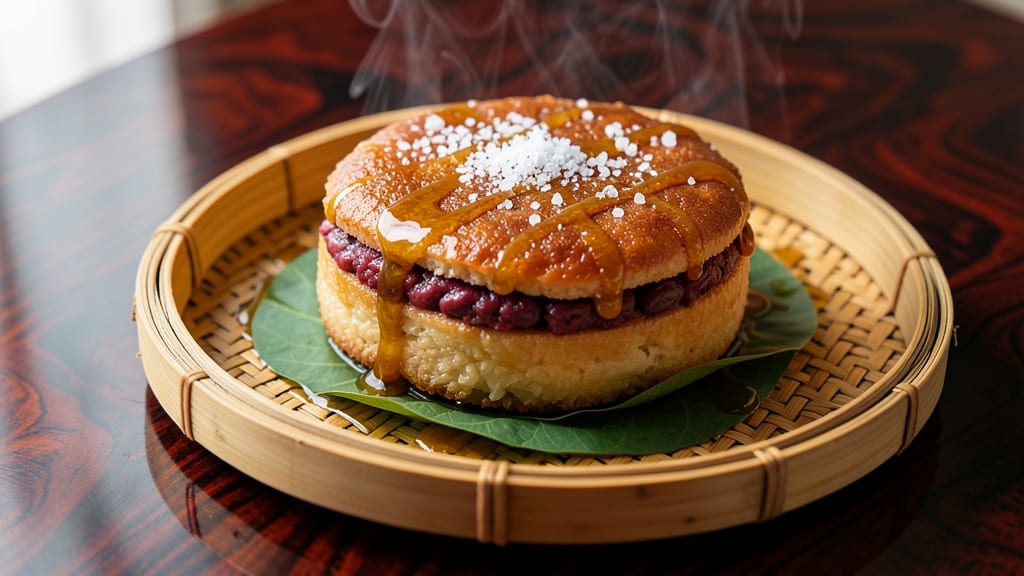
This Chinese red bean rice cake recipe brings New Year traditions to your kitchen with its signature nutty crunch and delicate texture. The steamed delight combines sweet red bean paste with a fragrant glutinous rice batter, creating a dish that's both comforting and culturally meaningful.
What makes it special is the balance of textures—soft inside, crispy outside—achieved through precise steaming techniques.
The beauty of this recipe lies in its versatility. While traditionally served during Lunar New Year for good fortune, it's equally perfect for breakfast or dessert year-round.
The sweet-savory filling of red bean paste pairs beautifully with the subtle nuttiness of the rice cake, offering a harmonious blend of flavors that's both familiar and exciting. Ready in just 30 minutes of prep plus steaming time, this dish delivers restaurant-quality results without the fuss.
Ingredients for chinese red bean rice cake
Authentic ingredients for a traditional yet approachable Chinese New Year dessert.
| Ingredient | Amount | Notes |
|---|---|---|
| Glutinous Rice Flour 🍚 | 2 cups | High-quality for optimal texture |
| Sweet Red Bean Paste 🍫 | 1 ½ cups | Store-bought or homemade |
| Granulated Sugar 🍚 | ½ cup | White or brown preferred |
| Water 💧 | 1 ½ cups | Room temperature preferred |
| Vegetable Oil 🫒 | 2 tbsp | For greasing steaming basket |
| Peanut Oil 🥜 | 1 tbsp | For crispy exterior finish |
| Sesame Seeds 🌰 | 2 tbsp | Toasted for nutty aroma |
| Coconut Milk 🥥 | ¼ cup | For enhanced richness |
| Salt 🧂 | ½ tsp | Fine sea salt preferred |
| Vanilla Extract 🌸 | ½ tsp | Pure vanilla for depth |
| Baking Soda 🧪 | ¼ tsp | For texture enhancement |
| Lotus Leaf 🌿 | 1 whole | For traditional presentation |
The glutinous rice flour is the foundation—Bob's Red Mill or King Arthur brands deliver consistent results. For the red bean paste, Asian grocery stores offer the best quality, often with a smoother texture than Western brands. Look for paste without added sugar if you prefer to control sweetness levels. Sesame seeds should be toasted until golden for maximum aroma—Trader Joe's sells pre-toasted for convenience. The lotus leaf adds authenticity; substitute parchment paper if unavailable, though the flavor won't be identical. For peanut oil, La Choy or Three Crabs brands provide reliable quality at reasonable prices.
No glutinous rice flour? Sweet rice flour works in a pinch, though texture will differ slightly. Substitute coconut milk with cashew cream for a similar richness. The vanilla extract can be omitted if unavailable, but the flavor depth will be noticeably reduced. For a less sweet version, reduce sugar to 0.375 cup while increasing water to 1.75 cups to maintain batter consistency. If you can't find lotus leaf, banana leaf makes an excellent alternative for presentation. The baking soda is optional but enhances the cake's signature crispy exterior—omit only if avoiding all leavening agents.
Store-bought red bean paste keeps for up to 6 months in the pantry, while glutinous rice flour maintains quality for 12 months in a cool, dry place. Prepared batter can be refrigerated for up to 24 hours before steaming. For long-term storage, freeze the steamed cakes between layers of parchment paper for up to 3 months. Reheat in a steamer for 2-3 minutes to restore crispiness. The sesame seeds should be toasted fresh before sprinkling to preserve their aroma—5 minutes in a dry pan over medium heat is ideal.
Why You'll Love This Recipe
- Steam-and-Go Magic: I swear by this recipe because it’s literally steam-and-wait. Mix the glutinous rice flour, red bean paste, and sugar—no fancy techniques, just fold until smooth. The oil keeps it tender without extra fuss, and 20 minutes later, you’ve got golden, chewy perfection. (Yes, even on a Tuesday night.)
- Sweet-Salty Chew: That first bite? Dangerously good. The red bean paste is rich and nutty, while the sugar caramelizes just enough to balance it—no cloying sweetness, just pure satisfaction. The outside stays crispy, the inside melts like a hug. Honestly, I’ll take this over store-bought any day.
- Breakfast to Dessert: This isn’t just a snack—it’s my go-to for morning toast (toasted with peanut butter, obvi), a quick school lunch, or even a dessert with a drizzle of honey. Freeze extras for grab-and-go energy, or slice them thin for tea-time bites. My kids fight over them, and that’s the real win.
- Budget Stretch: A single batch costs pennies and feeds a family for days. Glutinous rice flour and red bean paste are shelf-stable, and you only need a pinch of oil. Not the prettiest, but the taste makes up for it—plus, I’ve made this for years without breaking the bank. Practical? Absolutely. Delicious? Even more so.
Step-by-step instructions for Chinese red bean rice cake
Precision and patience create the perfect balance of chewy texture and sweet-savory flavor in these traditional steamed cakes.
Prepare the Lotus Leaf and Mix Dry Ingredients
Begin by thoroughly cleaning the whole lotus leaf under cool running water, then pat it completely dry with paper towels. This leaf will serve as both a natural nonstick surface and an aromatic wrapper. While the leaf dries, combine the 2 cups of glutinous rice flour, 0.5 cup of granulated sugar, 0.5 teaspoon of salt, and 0.25 teaspoon of baking soda in a large mixing bowl. Sift through a fine-mesh strainer to eliminate any lumps—this ensures your final texture will be silky rather than gritty.
In a separate small bowl, whisk together the 0.5 teaspoon of vanilla extract with the 0.25 cup of coconut milk. This creates a flavor base that will infuse throughout the batter. The vanilla enhances the sweetness while the coconut milk adds subtle richness that complements the red bean paste's earthiness. Set both mixtures aside for the next step.
Combine Wet Ingredients and Create the Batter
Measure the 1.5 cups of sweet red bean paste into the dry ingredients bowl and gently fold using a silicone spatula. The paste should be at room temperature for even distribution. Gradually add the vanilla-coconut milk mixture while continuing to fold—this prevents the formation of dense pockets in the batter.
In a separate small bowl, combine the 1.5 cups of room-temperature water with the 2 tablespoons of vegetable oil. This oil prevents the glutinous rice flour from absorbing all the moisture too quickly, which would make the batter too stiff. Slowly pour this liquid mixture into the dry ingredients while folding continuously. You're aiming for a thick, dough-like consistency that clings to the spatula but isn't sticky enough to drip. If it's too thick, add 1 teaspoon of water at a time until you reach the perfect texture.
Assemble and Steam the Rice Cakes
Lightly grease a steaming basket with the 1 tablespoon of peanut oil—this prevents sticking and creates that signature crispy exterior. Spread the prepared lotus leaf flat on a clean surface and spoon approximately ⅙ of the batter onto the center of the leaf. Using a damp spatula, spread the batter into a 4-inch round cake, about ½-inch thick. The edges should be slightly thicker than the center to create that traditional dome shape.
Carefully transfer the assembled cake to the prepared steaming basket, placing it in the center. Cover with a clean kitchen towel to prevent condensation from dripping onto the cake. Bring 2 inches of water to a rolling boil in your steamer, then place the basket inside and steam over medium-high heat for 25-30 minutes. You'll know it's done when the top springs back slightly when pressed and the edges pull away cleanly from the lotus leaf.
Finish with Crispy Topping and Resting
Remove the steamed cake from the basket and immediately brush the top with the remaining 1 tablespoon of peanut oil. Sprinkle the 2 tablespoons of toasted sesame seeds evenly over the surface—press them gently so they adhere. The peanut oil creates a golden crust while the sesame seeds add nutty aroma and visual contrast.
Let the cake cool completely on a wire rack for at least 1 hour before slicing. This resting period allows the internal structure to set properly, preventing crumbly texture. For best results, serve at room temperature where the contrast between the crispy exterior and chewy interior shines. Each slice should reveal a marbled pattern of red bean paste throughout the glutinous rice, with a delicate fragrance of vanilla and coconut milk.
Pro Tips For Making Chinese Red Bean Rice Cake
- STEAM AT 180°F: I learned this the hard way—steaming these cakes at full blast (212°F) makes them gummy inside. Use a steamer with a tight lid and keep the water at a gentle simmer (180°F is ideal). A thermometer helps, but even without one, just watch for a thin layer of condensation on the lid—if it’s dripping like a waterfall, you’re overdoing it.
- CHILL THE DOUGH: After mixing your glutinous rice flour, red bean paste, and sugar, resist the urge to rush into shaping. Let the dough sit covered at room temp for 30 minutes first—this relaxes the gluten and makes it way easier to handle. I used to skip this and ended up with cracks and uneven cakes every time.
- SKIP THE EXTRA WATER: The recipe might call for adding water gradually, but trust the flour’s absorption rate instead. Too much liquid = soggy cakes. Mix until the dough just holds together when pressed—it should feel like soft playdough, not wet sand. If it sticks to your fingers, you’ve gone too far.
- SEAR THE BOTTOM: Before steaming, pan-fry the shaped cakes in a lightly oiled pan for 30 seconds per side. The Maillard reaction gives them a subtle nuttiness and prevents that bland, steamed flavor. Use a nonstick pan—these cakes don’t need to brown, just warm through. (Yes, even if you’re impatient like me.)
Storing and reheating this dish
Room-Temp Storage
Store your freshly steamed red bean rice cakes at room temperature in an airtight container for up to 3 days. The cakes will maintain their signature crispy exterior while keeping the chewy interior intact.
I place parchment paper between layers to prevent sticking—this is especially important if you stack them. The natural sweetness intensifies slightly as they sit, making them even more delicious the next day. 💫
Fridge Preservation
For longer storage, refrigerate the cakes in an airtight container for up to 5 days. The cold helps preserve the crispy texture, though you may need to steam them for 2-3 minutes before serving to restore some of that signature crunch.
I always wrap each cake individually in plastic wrap before placing them in the container to prevent moisture buildup. 🥶
Freezer Magic
Freezing is perfect for meal prep—wrap each cake tightly in plastic wrap and place them in a freezer bag with all air removed. They'll keep for up to 3 months without losing quality.
When ready to enjoy, thaw at room temperature for 1 hour or steam for 5 minutes to refresh the texture. This method works especially well for gifts or special occasions. ❄️
Reheating Secrets
For that restaurant-quality crispy exterior, steam the cakes for 3-5 minutes over boiling water. Place them in a steamer basket lined with parchment paper to prevent sticking. If you prefer a quicker method, microwave on medium power for 20 seconds—just be prepared for slightly softer edges.
The key is to avoid overdoing it, as the cakes can become gummy if reheated too long. 🔥
Serving Suggestions
Serve your red bean rice cakes at room temperature for the best texture contrast. Pair them with a cup of jasmine tea or black tea to complement the nutty flavors.
For a modern twist, drizzle with mango puree or honey before serving. The cakes also make a beautiful presentation on a lotus leaf for special occasions. 🍵
Texture Tips
If your cakes lose crispiness during storage, brush the exterior with peanut oil and steam for 1-2 minutes to revive it. For extra crunch, sprinkle with extra sesame seeds before reheating. The secret to maintaining texture is always proper storage—keep them dry and protected from moisture. 🌟
Nutrition facts
Frequently asked questions
Can I make this recipe without a lotus leaf?
If you can't find a lotus leaf, use parchment paper or a silicon mat instead. For extra authenticity, try banana leaf—it adds a subtle tropical aroma. The key is to ensure your surface is clean and slightly oiled to prevent sticking. The texture won't be identical, but it'll still taste delicious!
Why does my batter look too thick or too thin?
Glutinous rice batter should have a thick, dough-like consistency—like pancake batter but denser. If too thick, add 1 teaspoon of water at a time. If too thin, stir in 1 tablespoon of glutinous rice flour. The ideal texture clings to a spatula but doesn't drip. Remember, the batter thickens as it steams, so slightly thinner is better than too stiff!
How do I know when the rice cakes are fully steamed?
Your cakes are done when the top springs back slightly when pressed and the edges pull away cleanly from the leaf. The center should be set but still slightly soft—it'll firm up as it cools. Oversteaming can make them gummy, so check at 25 minutes and remove when ready. A toothpick inserted should come out clean with no wet batter.
Can I use this recipe for other fillings besides red bean paste?
Yes! Try black sesame paste, matcha powder mixed with sugar, or even lotus seed paste for variety. For savory versions, use pickled vegetables or shredded mushrooms. Adjust sweetness to match your filling—some pastes are naturally sweeter than others. The batter's texture remains the same, just the flavor changes!
What's the best way to cut these cakes for serving?
Use a serrated knife or clean chef's knife to slice through the cakes. Warm the knife slightly by running it under hot water for 10 seconds before each cut—this prevents tearing. Cut into 6-8 even wedges for portion control. The interior should show beautiful marbled patterns of red bean paste!